Are Naturopaths Referred to as Dr.?
Naturopaths are usually not referred to as Dr. in Australia unless they hold a separate qualification that gives them a clear basis for using that title. A naturopath is not automatically a medical doctor. What “Dr.” means depends on the person’s qualification, where the title appears, and the law in that jurisdiction.
This matters because patients often see “Dr.” as a sign that someone can diagnose disease, prescribe regulated drugs, or give the same care as a registered medical practitioner. The title may look harmless on a website or appointment card. Yet it can shape what a patient believes about the practitioner’s training and scope of practice.
What does “Dr.” tell you about a naturopath?
By itself, the title tells you very little. It may mean the practitioner completed a doctorate, or it may come from a professional custom in another country. It does not prove the person studied medicine, holds medical registration, or works as a physician.
Naturopathy is its own system of health practice. Training often covers nutrition, lifestyle care, herbal products, health checks, and other natural approaches. Course depth can differ between education providers and countries. naturopathic training naturopathic training
So, the word “naturopath” describes a type of practice. “Dr.” is a title, and its basis must be checked on its own.
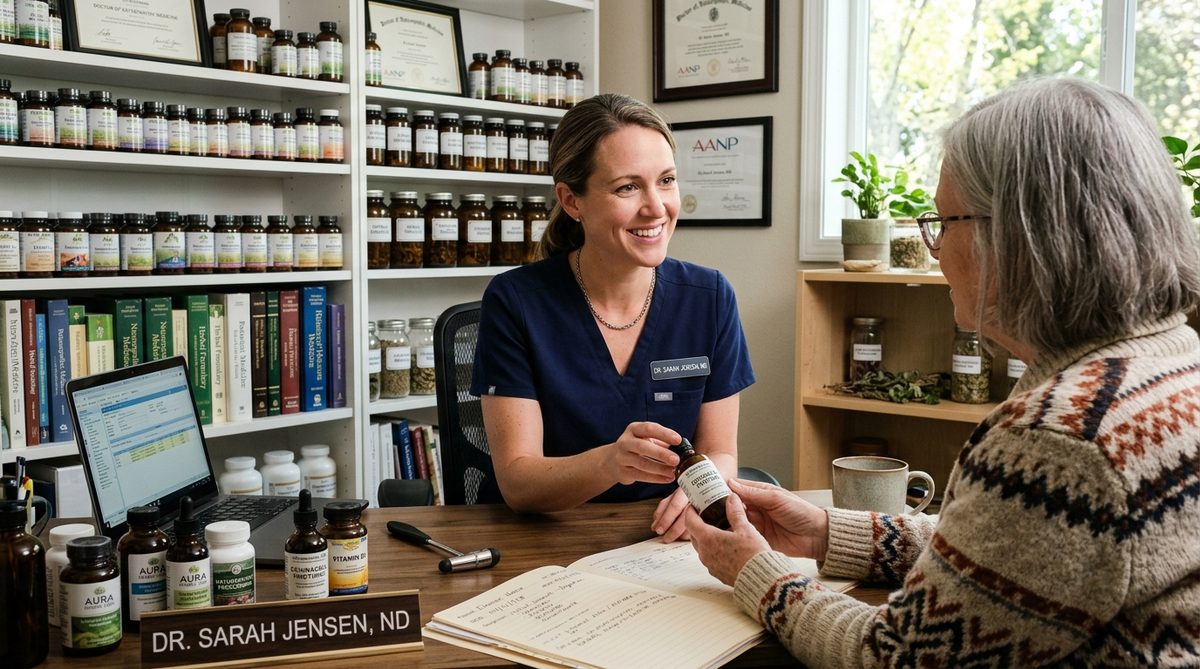
Picture a clinic profile that says, “Dr. Taylor, naturopath.” Many readers will assume Taylor is a medical practitioner who later trained in natural health. Taylor may instead hold a non-medical doctoral degree from an overseas college. The profile needs enough detail for a reasonable patient to grasp the difference.
Why are some naturopaths called doctor overseas?
The answer often lies in North American education and licensing systems. Some naturopathic colleges award degrees called Doctor of Naturopathic Medicine or Doctor of Naturopathy. Graduates may use “Dr.” where local rules allow it, often with wording that names them as naturopathic doctors rather than medical physicians.
That custom does not carry over unchanged to every country. Each jurisdiction has its own rules for professional titles, registration, advertising, and patient safety. A title accepted in one state, province, or nation may need more explanation elsewhere.
Here’s a point many articles miss: having a qualification and having permission to use a title are two separate things. A college can award a doctorate. But local law still controls how the graduate may show that title in health advertising.
The wording must not give a false impression about registration or clinical authority.
Patients who have lived in Canada or the United States may hear “naturopathic doctor” as a defined job title. An Australian patient may hear the same words and picture a registered medical practitioner. What the listener is likely to think matters just as much as what the practitioner meant.
Are Australian naturopaths medical doctors?
No. Finishing naturopathic training does not make someone a medical doctor in Australia. Medical practitioners follow a regulated path that includes approved medical education, supervised training, registration, and ongoing professional duties. Naturopathic education takes a different path and supports a different scope of practice.
One person can hold several qualifications. A registered doctor may also study naturopathy, nutrition, or another complementary approach. In that case, the right to use “Dr.” may come from medical registration, not the naturopathic course.
Patients should still know which role the practitioner is taking during the consultation.
For example, imagine a medically registered practitioner who also offers a separate wellness service. A patient may think every recommendation is part of medical treatment. Clear booking pages, consent forms, and service details should say whether the appointment is medical care or another kind of service. naturopathic services
The reverse can be confusing too. A naturopath with an academic doctoral qualification may have the right to use an academic title in some settings. But that does not turn naturopathic advice into medical care. The source of the title and the type of service are still separate.
Does a doctorate make a naturopath a doctor?
A doctorate can give someone an academic basis for using “Dr.” It does not automatically make that person a physician. Universities award doctoral degrees in fields such as history, chemistry, education, and philosophy. Those graduates may use an academic title, but they do not gain the right to practise medicine.
The same rule applies when a naturopath holds a doctoral degree. Patients need to know the field of study, which institution gave the award, and whether the qualification has recognised accreditation. They also need to know if the person is registered in any regulated health profession.
Accreditation needs a close look. A course name can sound official without meeting the standards of an Australian university degree or regulated professional program. An overseas award may be real but hold a different status in Australia.
Patients should check the institution and qualification, rather than trust the size of a certificate or the words used in an ad.
There’s another key point. “Doctor” can describe an education level or a professional status. Those meanings blur in everyday speech, and that’s where the risk starts. A careful practitioner makes clear which meaning applies.
How should a naturopath with a doctoral title introduce themselves?
The clearest introduction puts the title beside the exact profession and qualification. It should stop patients from assuming medical registration when there is none. “Dr. Lee, PhD, naturopath” gives far more useful detail than “Dr. Lee” alone. If the doctoral degree is in an unrelated subject, the field may need to be named too.
Spoken introductions need the same care. A receptionist who says, “The doctor will see you now,” may create a medical impression, even if the website has a tiny disclaimer. Referral partners, social media pages, and online booking systems can repeat that same message.
Try a simple test. What would a new patient believe after seeing only the practitioner’s name and service description? If the likely answer is, “This person is a registered medical practitioner,” the wording needs more detail.
Good disclosure should sit close to the title. A note buried in the terms and conditions cannot fix a strong claim at the top of a clinic page. Plain words work best. Patients should not need legal training to understand who is treating them.
Can other people refer to a naturopath as Dr.?
Friends, clients, and clinic staff may copy the title a practitioner uses. That alone does not prove the title is accurate or suitable. Repeating it can make the title seem official, even when its basis is still unclear.
Professional introductions carry more weight than casual talk. A client calling a practitioner “Doc” in a testimonial is not the same as a clinic posting “Book with Dr. Smith” next to claims about treating disease. The second example forms part of how the service is sold and may sway a patient’s choice.
A referral from another wellness provider can muddy things too. Suppose a massage therapist tells a client, “You should see Dr. Smith for your fatigue.” The client may expect medical tests and a diagnosis. If Smith is a naturopath without medical registration, the referral should make that role clear before the appointment.
So the better question isn’t whether anyone uses the title. Ask what it leads a reasonable patient to believe in that setting.
What can patients learn from the words around the title?
Context often gives you the quickest answer. Read the practitioner’s biography, qualifications, registration claims, and service details. A clear profile names the profession and explains the basis for each credential, without making readers guess.
Be wary when a page puts “Dr.” beside words linked to medical authority but does not name a medical qualification or registration. Claims about replacing prescribed treatment, curing serious disease, or managing urgent symptoms also call for care. A title does not widen a practitioner’s lawful scope of practice.
Service descriptions may show the role more clearly than the title does. A naturopath may talk about food habits, general wellbeing, or complementary support. A medical doctor can offer services allowed under medical registration. These roles may help the same person at different times, but they cannot be swapped.
Homeopathy is not proof of medical status either. Someone offering homeopathic services may be a naturopath, another type of practitioner, or a person with separate medical training. Check every credential on its own.
How can you verify what “Dr.” means before an appointment?
Begin with the practitioner’s full name and listed qualifications. Write down the exact letters shown after the name. If the person claims to belong to a regulated health profession, search the right official register. Check that the profession, registration status, and any listed conditions all match.
Next, look at the doctoral qualification. Check the awarding institution, field of study, and the course’s accreditation status. If the award came from overseas, ask how Australia recognises it. Membership in a private association is not the same as government registration.
If the profile is still vague, ask the clinic directly: “Is this practitioner a registered medical practitioner, and what qualification is the title Dr. based on?” A trustworthy clinic should give a straight answer.
These checks protect the practitioner as well as the patient. They set clear expectations about the consultation, the records that may be kept, and when a medical referral is needed.
When should you see a medical practitioner instead?
Seek medical care when symptoms are severe, sudden, getting worse, or tough to explain. Do the same if you need a diagnosis, prescription review, medical certificate, regulated treatment, or urgent assessment. A naturopathic visit should never delay needed medical care.
You can use complementary services while staying under suitable medical care. Tell each practitioner about every product and treatment you use. Herbal products and supplements can interact with prescribed drugs or change test results.
A reliable naturopath knows the limits of their scope of practice and refers patients when a condition needs medical assessment. The title before their name does not shift that line.
What should you do before calling a naturopath “Dr.”?
Check the basis of the title first. Find out whether it comes from medical registration, an academic doctorate, or a qualification used under a North American custom. Then choose wording that clearly states the person’s real profession.
Take one action before booking: ask whether the naturopath is a registered medical practitioner and what exact qualification supports the title “Dr.”

What Are 10 Signs That My Body Is Healthy?
Read article →
How to Tell if Your Body Is Unhealthy?
Read article →
What Are Signs of Poor Function Health?
Read article →
What Are Some Weird Signs That My Body Is Healthy?
Read article →
What Are Five Signs That I Might Not Be Healthy?
Read article →