What Is the Best Way to Sleep With Sleep Apnea? A Practical Guide
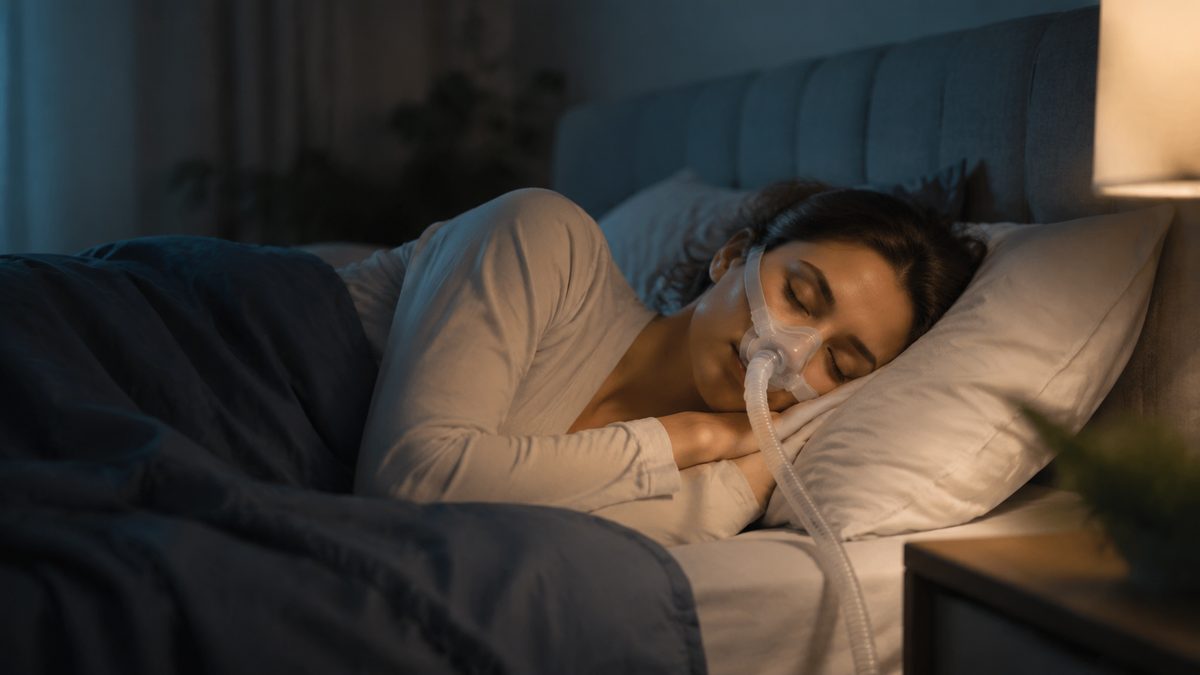
Use your CPAP every single night. That's the single most effective thing you can do. Sleep on your side rather than your back, raise the head of your bed 30 to 45 degrees, and cut alcohol at least three to four hours before bed.
Lose weight if you can. Even a 10 to 15% reduction in body weight can significantly reduce or sometimes eliminate apnea episodes. Most people feel noticeably more alert within one to two weeks of consistent treatment.
Everything else in this article supports that core plan. But if you do nothing else, use your CPAP and sleep on your side.
Why Does Sleep Position Matter So Much With Sleep Apnea?
Sleep apnea happens when the muscles in your throat relax and your airway collapses. When that happens, your breathing stops. Your brain detects the drop in oxygen and jolts you awake just enough to restart breathing.
This cycle can happen dozens or even hundreds of times per night. Most people have no idea it's happening.
Position matters because gravity works either with you or against you. When you lie flat on your back, your tongue and soft tissues fall backward directly into your airway. That makes collapse far more likely. Roll onto your side, and those same tissues fall away from the airway. Simple physics.
One of my clients described it well. She said she woke up every morning with a headache and felt like she hadn't slept at all. After she started consistently sleeping on her left side with a body pillow behind her back to stop herself rolling over, the headaches were gone within a week. She hadn't changed anything else yet.
Is It Better to Sleep Upright or Flat With Sleep Apnea?
Slightly upright wins. Elevating your head and upper body between 30 and 45 degrees uses gravity to keep your airway open and reduces the pressure of soft tissue on your throat. Sleeping completely flat on your back is the worst position for most people with obstructive sleep apnea.
A fully upright position, like sitting in a chair, isn't practical for a full night of sleep and doesn't offer enough extra benefit over a 30 to 45 degree incline. An adjustable bed, a wedge pillow, or even raising the head of your bed frame with blocks can give you that angle.
Sleeping flat on your back is the position to avoid hardest. If you find yourself waking there, a positional device or even a tennis ball sewn into the back of a sleep shirt can train you out of it.
What Is the Pillow Trick for Sleep Apnea?
The pillow trick refers to using a specially shaped or positioned pillow to keep your head and neck aligned in a way that reduces airway collapse. The two most common approaches are a wedge pillow under your upper body to elevate your torso, and a contoured cervical pillow that keeps your neck in a neutral position rather than bent forward or back.
A bent neck can actually restrict airflow even when you're on your side. If your pillow is too high or too flat, your chin tucks toward your chest and narrows the airway. The goal is a straight line from your ear to your shoulder.
For CPAP users, there are also CPAP-specific pillows with cutouts so the mask seal doesn't get disturbed when you turn your head. This is more practical than it sounds. One of my clients kept ripping her mask off in her sleep without realizing it, and switching to a CPAP pillow solved the problem almost immediately. The mask stayed sealed, and her compliance data showed a clear improvement that week.
What Should You Not Do If You Have Sleep Apnea?
Several habits make sleep apnea significantly worse and are worth cutting out directly.
- Alcohol before bed. Alcohol relaxes throat muscles more than normal sleep does. Even one drink within three to four hours of bedtime can increase apnea episodes and reduce oxygen levels through the night.
- Sleeping on your back. Already covered, but worth repeating. This position increases airway collapse risk significantly for most people with obstructive sleep apnea.
- Skipping your CPAP. Even one or two nights off is enough to let symptoms return and disrupt the progress you've made.
- Ignoring weight gain. Excess fat around the neck and throat directly compresses the airway. Obesity is one of the strongest modifiable risk factors for obstructive sleep apnea.
- Sedatives and sleeping pills. Like alcohol, many sedatives relax airway muscles and can worsen breathing during sleep. Talk to your doctor before taking any sleep aid.
- Irregular sleep timing. Inconsistent sleep schedules fragment sleep architecture and make the brain less efficient at managing partial arousals. A regular bedtime and wake time helps.
How Much Does CPAP Actually Help?
CPAP therapy is the most evidence-backed treatment for obstructive sleep apnea. It works by delivering continuous pressurized air through a mask, which acts as a physical splint for the airway and prevents it from collapsing.
The research is consistent. It reduces apnea episodes, improves blood oxygen levels through the night, lowers blood pressure, and reduces risk of cardiovascular complications. People who use CPAP consistently report better quality of life, better mood, better concentration, and significant reductions in daytime sleepiness.
The problem isn't whether CPAP works. It clearly does. The problem is that many people find it uncomfortable to use. Common complaints are mask leaks, pressure against the face, dry mouth, and claustrophobia.
Most people who quit CPAP do so in the first few weeks, before they've adapted. The adjustment period is real. A few things that help:
- Try different mask styles. Full face masks suit some people. Nasal pillows suit others. The fit matters far more than the brand.
- Use the heated humidifier setting. Upper airway dryness is one of the top reasons people remove their mask in the night.
- Wear the mask while awake for short periods first. Watch television with it on. This reduces the claustrophobic sensation before you try to sleep in it.
- Ask your provider about auto-titrating CPAP (APAP). These machines automatically adjust pressure based on your breathing, which many people find more comfortable than fixed pressure.
What Is the 4% Rule for Sleep Apnea?
The 4% rule refers to a threshold used in diagnosing sleep apnea during a sleep study. Specifically, it measures oxygen desaturation events, which are drops in blood oxygen of 4% or more. These drops happen when breathing pauses during sleep.
The number of times this happens per hour is part of how severity is assessed alongside the apnea-hypopnea index (AHI). The AHI counts how many times per hour your breathing fully stops or significantly reduces. Mild sleep apnea is 5 to 14 events per hour. Moderate is 15 to 29. Severe is 30 or more.
The 4% oxygen desaturation index adds another layer to this picture, helping clinicians understand how hard each event is hitting your body in terms of oxygen supply. Two people can have the same AHI but very different oxygen impacts. Tracking both gives a fuller picture of what's actually happening to your body overnight.
Does Losing Weight Fix Sleep Apnea?
For many people, yes. Not always completely, but often significantly. Excess weight around the neck and upper airway is one of the primary physical causes of airway collapse during sleep.
A large clinical trial using tirzepatide in adults with obesity and moderate-to-severe sleep apnea showed that targeted weight reduction significantly reduced apnea-hypopnea index scores, lowered inflammatory markers, and reduced systolic blood pressure over 52 weeks. In my experience, clients who lose around 10% of their body weight often find their CPAP pressure requirements drop noticeably, and some are able to step down to a lower setting entirely.
Weight management isn't a replacement for CPAP while you're losing weight. It's a parallel intervention. Use CPAP now, and work on weight at the same time. The combination delivers better outcomes than either alone.
What About Oral Appliances and Other Options?
If CPAP isn't working for you after a real attempt, oral appliance therapy is the next best-evidenced option. These are custom-fitted mouthguards made by a dentist that reposition your lower jaw slightly forward during sleep, which physically opens the airway.
They work well for mild to moderate obstructive sleep apnea. Research suggests that patients whose airway collapses specifically in the oropharyngeal region respond better to oral appliances than those with collapse at other sites. Your sleep doctor can help determine if this matches your anatomy.
Surgical options such as uvulopalatopharyngoplasty (UPPP) exist for specific anatomical problems, but surgery carries risks and results are variable. It's typically considered only after other treatments have been tried.
One angle most articles miss: sleep quality metrics matter as much as AHI scores. A person can have a reduced AHI on treatment but still feel terrible if deep sleep is fragmented or REM sleep is disrupted. If you're using CPAP and still feel exhausted, ask your doctor to look beyond the AHI data at actual sleep staging and arousal index.
What Most Articles Get Wrong About Sleeping With Sleep Apnea
Three things come up in my experience that most sleep apnea advice glosses over.
First, people treat CPAP compliance as a binary. You either use it or you don't. But partial use, like wearing it for only a few hours before removing it in the night, leaves a significant portion of your sleep unprotected. The goal is full-night use, every night. Consistent use across the whole night is what drives improvements in blood pressure and cardiovascular risk.
Second, partner dynamics affect treatment outcomes more than most guides admit. Bed partners who are disturbed by CPAP noise, or who reinforce the idea that the machine is optional, significantly reduce adherence. When I work with clients on sleep apnea management, the conversation always includes the partner if there is one.
Third, people focus almost entirely on obstructive sleep apnea and miss central sleep apnea. Central sleep apnea is different. It happens not because the airway collapses but because the brain fails to send the right signals to breathing muscles. It requires different treatment. If your CPAP isn't helping despite good compliance, central apnea may be part of the picture and warrants further investigation.
Frequently Asked Questions
Can I sleep without CPAP if my sleep apnea is mild?
For mild sleep apnea, positional therapy, weight loss, and oral appliances may control symptoms without CPAP. But mild apnea still carries health risks over time, particularly cardiovascular risk. Talk to your doctor about monitoring even if you aren't on CPAP.
What sleeping position is best for sleep apnea?
Side sleeping, particularly the left side, is best for most people. It keeps the tongue and soft tissues away from the airway and reduces the frequency of apnea events compared to sleeping on your back.
How quickly does CPAP improve sleep?
Most people notice reduced daytime sleepiness within one to two weeks of consistent use. Full benefits, including blood pressure reduction and cardiovascular risk improvement, build over months of regular use.
Does alcohol really make sleep apnea worse?
Yes. Alcohol relaxes the muscles that hold your airway open. Even moderate alcohol close to bedtime increases the number and length of apnea events and worsens overnight oxygen levels.
Can sleep apnea go away on its own?
It can improve significantly with weight loss, particularly when obesity is the primary driver. But in most adults it doesn't resolve without active intervention. Managing it consistently reduces the long-term health consequences including hypertension, type 2 diabetes, and stroke risk.
Is homeopathy relevant for sleep apnea support?
Homeopathic support can be used alongside conventional treatment as part of a broader approach to sleep and health. If you're exploring complementary options, speak with a qualified practitioner to understand what might suit your situation alongside your primary treatment plan.
What to Do Starting Tonight
Put your CPAP on before you fall asleep, not after you've already been awake for an hour. Set up a body pillow or rolled blanket behind your back so you wake on your side. Stop alcohol by dinner time. If your mask is uncomfortable, book an appointment this week to try a different style.
Those four changes cost nothing except a little organization, and they address the most common reasons sleep apnea stays uncontrolled despite people technically having a treatment in place.
Sources

What Are 10 Signs That My Body Is Healthy?
Read article →
How to Tell if Your Body Is Unhealthy?
Read article →
What Are Signs of Poor Function Health?
Read article →
What Are Some Weird Signs That My Body Is Healthy?
Read article →
What Are Five Signs That I Might Not Be Healthy?
Read article →