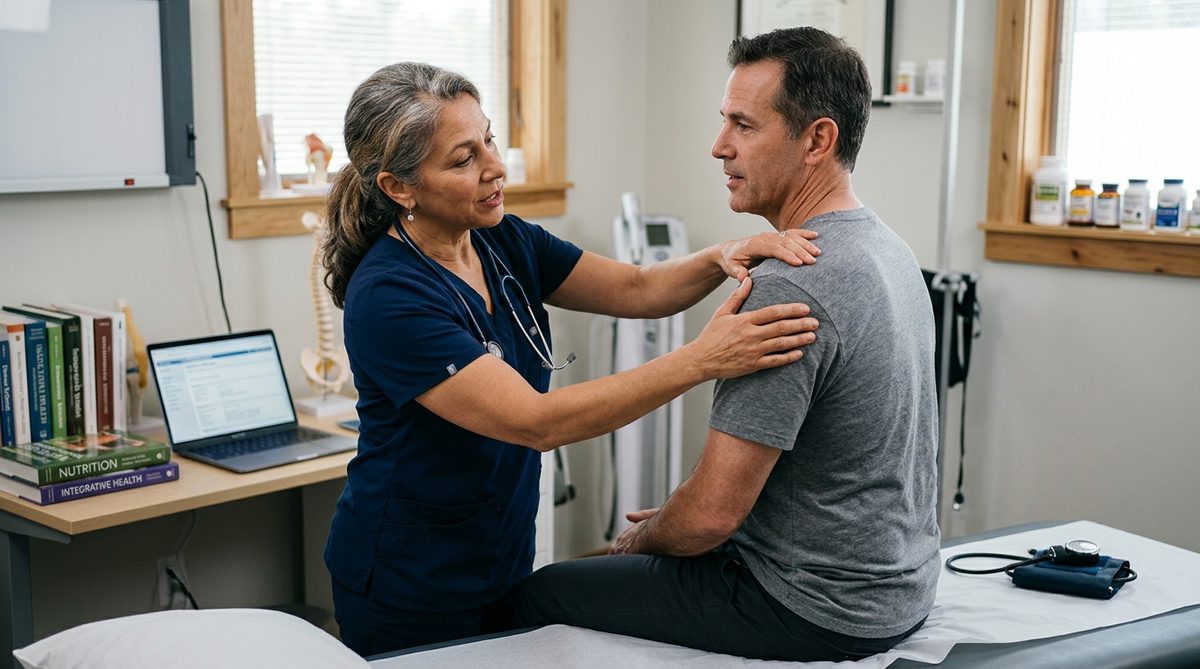
Can a GP Diagnose Sleep Apnea? What Your Doctor Can (and Can't) Do

Yes. A GP can diagnose sleep apnea in most cases. They use validated screening questionnaires, take a detailed history, and order a home sleep test.
If the results show five or more breathing interruptions per hour with symptoms, or fifteen or more without symptoms, that confirms obstructive sleep apnea (OSA). No specialist required.
The real problem isn't whether GPs are capable. It's that most patients with sleep apnea are never screened in the first place. OSA is massively underdiagnosed in primary care, and millions of people are walking around exhausted, unaware of why.
What Is Sleep Apnea, and Why Does It Get Missed?
Obstructive sleep apnea happens when your throat muscles relax during sleep and repeatedly block your airway. Your body wakes itself just enough to breathe again, sometimes dozens or hundreds of times a night. You usually have no memory of this.
The result is fragmented sleep. Even if you were in bed for eight hours, you wake tired. You feel foggy through the day. You might fall asleep in meetings or while watching TV.
Your partner may have noticed the snoring or gasping, but the idea that something medical is happening often takes years to land.
Central sleep apnea is different. The brain fails to send the right signals to the breathing muscles. This is less common and does usually need specialist input. But the vast majority of cases are obstructive, and those can be handled in primary care.
What makes OSA easy to miss is that its symptoms look like a dozen other things. Fatigue gets blamed on stress. Brain fog gets blamed on age. High blood pressure gets treated without anyone asking why it's there.
One of my clients came in having been treated for depression for two years. What she actually had was untreated sleep apnea. Once that was addressed, the depression lifted significantly.
How Does a GP Diagnose Sleep Apnea?
A GP diagnoses sleep apnea through three steps: screening, history, and testing.
Step 1: Screening Questionnaires
GPs have access to validated tools. The Berlin Questionnaire covers snoring frequency and volume, daytime tiredness, and cardiovascular history. In a study of 744 patients, it flagged 37.5% as high risk and showed strong consistency scores of 0.86 to 0.92.
The STOP-Bang questionnaire is fast and practical for primary care. The Epworth Sleepiness Scale measures how likely you are to doze off in everyday situations.
These tools aren't perfect, but they're good enough to identify who needs the next step. In my experience, GPs who use them routinely catch OSA years earlier than those who wait for patients to raise it themselves.
Step 2: Clinical History
The key risk factors a GP looks for include loud snoring, witnessed breathing pauses during sleep, waking unrefreshed, excessive daytime sleepiness, obesity, a large neck circumference, high blood pressure, and being male or postmenopausal female. None of these alone confirms the diagnosis. Together, they build a clear picture.
This is where a thorough GP is worth everything. One of my clients had been snoring for a decade and dismissed it as normal. His GP finally connected it to his new high blood pressure and morning headaches, ordered a home test, and had a diagnosis within two weeks.
Step 3: Home Sleep Testing
This changed everything. For years, diagnosing OSA required an overnight stay at a sleep clinic with electrodes attached. That meant long waits, high cost, and the awkwardness of trying to sleep in an unfamiliar lab.
Home sleep apnea testing changed that. A small device worn during a normal night measures airflow, breathing effort, blood oxygen levels, and heart rate. The results come back with an apnea-hypopnea index (AHI), which is the number of breathing disruptions per hour.
A 2020 comparison of 295 veterans found that home sleep testing at primary care sites matched results at specialist sites. A 2022 meta-analysis across four trials involving 970 participants found no meaningful difference in sleepiness outcomes between GP-led and specialist-led OSA care. GPs manage this well.
Can My Regular Doctor Diagnose Sleep Apnea Without Sending Me to a Specialist?
For mild to moderate OSA, yes. An AHI between 5 and 30 with symptoms is well within the scope of general practice. A GP can confirm the diagnosis, start CPAP therapy, recommend weight loss and positional changes, and monitor your progress.
A 2019 coordinated care study showed that a structured model where GPs handled screening and home monitoring, with specialist backup available, worked well for managing mild to moderate OSA. The outcomes were good. The waiting times were shorter. Patients preferred it.
Current Australian and international guidelines now position the GP as the first point of entry for sleep apnea screening and initial management. This isn't a workaround. It's the recommended pathway.
What Is the 3 Rule for Sleep Apnea?
The "3 rule" is a clinical shorthand some practitioners use to flag OSA risk. If a patient has three or more of these: snoring, observed apneas, daytime sleepiness, obesity, high blood pressure, or age over 50, they're considered high enough risk to test.
It's not a formal diagnostic criterion, but it's a useful filter for busy GPs to decide who gets a home sleep study next.
When Should a GP Refer to a Sleep Specialist?
Not every case stays in primary care. A good GP knows the line.
Refer when the AHI comes back above 30 (severe OSA). Refer when there are heart complications like arrhythmias or heart failure. Refer when the home test fails or gives unclear results. Refer when central sleep apnea is suspected, because that needs different management.
Refer when CPAP has been tried and failed, or when the patient needs an oral appliance fitted by a specialist or surgical assessment.
Outside those situations, the GP can and should manage it. The real bottleneck in the system isn't specialist capacity. It's GPs not doing the screening in the first place.
Is Sleep Apnea Covered by Medicare in Australia?
Home sleep testing ordered by a GP is covered under Medicare in Australia, provided the clinical indication is met. The GP consultation itself is bulk-billed or partially covered depending on your practice.
CPAP machines aren't subsidised by Medicare for adults, though some private health funds cover them partially. In certain states, public hospital sleep clinics offer subsidised pathways for patients who can't afford private care.
The practical upside of GP-led diagnosis is cost. A home sleep test arranged through your GP is significantly cheaper than a private sleep clinic admission. Getting the referral chain started with your GP first is both clinically appropriate and financially sensible.
What Most Articles Get Wrong About GP Sleep Apnea Diagnosis
A few things are consistently misrepresented or left out entirely.
First: The idea that you need a sleep clinic to get diagnosed is outdated. Home testing has been validated and is guideline-supported. Many patients delay getting tested because they assume it means a complicated overnight clinic stay. It usually doesn't.
Second: Sleep apnea isn't just a problem for overweight middle-aged men. Women are significantly underdiagnosed because their symptoms often look different. Instead of loud snoring and gasping, women more commonly report insomnia, morning headaches, and mood changes. When I work with female clients presenting with chronic fatigue, sleep apnea is now one of the first things I want ruled out.
Third: GPs aren't undertreating sleep apnea because they lack capability. They're undertreating it because the screening simply isn't happening at the rate it should. A 2016 review found OSA is substantially underdiagnosed in primary care and concluded GPs need better systems to screen proactively, not just when patients bring it up. The ask is structural, not clinical.
What Happens If Sleep Apnea Goes Untreated?
Untreated OSA raises your risk of high blood pressure, heart disease, stroke, and type 2 diabetes. It impairs memory and concentration. It increases accident risk when driving or operating machinery. It strains relationships when a partner can't sleep in the same room.
I remember when one of my clients finally got his OSA treated after years of assuming his fatigue was just aging. He said it felt like someone had turned the lights back on. The difference in energy, focus, and mood was dramatic within weeks of starting CPAP.
That outcome is available to a lot of people who currently don't know what's wrong with them.
FAQ
Can my regular doctor diagnose sleep apnea?
Yes. Your GP can screen you, order a home sleep test, interpret the results, and start treatment. You don't need a specialist referral for mild to moderate OSA.
How does a GP diagnose sleep apnea?
With a combination of validated questionnaires like the Berlin Questionnaire or STOP-Bang, a clinical history covering snoring, fatigue, and risk factors, and a home sleep test that measures breathing disruptions overnight.
What AHI score confirms sleep apnea?
Five or more events per hour with symptoms confirms mild OSA. Fifteen or more events per hour without symptoms also meets the diagnostic threshold. Scores above 30 are classified as severe.
Is sleep apnea covered by Medicare in Australia?
Home sleep testing is Medicare-rebatable when ordered by a GP with appropriate clinical indication. CPAP equipment isn't covered by Medicare but may be partially subsidised by private health insurance.
Does a GP treat sleep apnea or just diagnose it?
Both. For mild to moderate OSA, a GP can start CPAP therapy, advise on weight loss, sleep positioning, and alcohol reduction, and monitor your progress over time. Specialist referral is reserved for severe or complex cases.
What is the 3 rule for sleep apnea?
It's a clinical shorthand where three or more risk factors, such as snoring, observed apneas, daytime sleepiness, high blood pressure, obesity, or age over 50, are enough to warrant ordering a sleep test.
What to Do Now
If you snore regularly, wake unrefreshed, feel sleepy during the day, or have been told you stop breathing at night, book an appointment with your GP this week. Ask specifically about sleep apnea screening. Ask about a home sleep test.
Don't wait for the fatigue to get bad enough to force the issue. The test is straightforward, the diagnosis is achievable in primary care, and the difference treatment makes is real.
Your GP has the tools. The question is whether you walk in and give them the chance to use them.Sources
Continue with the Sleep article archive collection.

What Are 10 Signs That My Body Is Healthy?
Read article →
How to Tell if Your Body Is Unhealthy?
Read article →
What Are Signs of Poor Function Health?
Read article →
What Are Some Weird Signs That My Body Is Healthy?
Read article →
What Are Five Signs That I Might Not Be Healthy?
Read article →