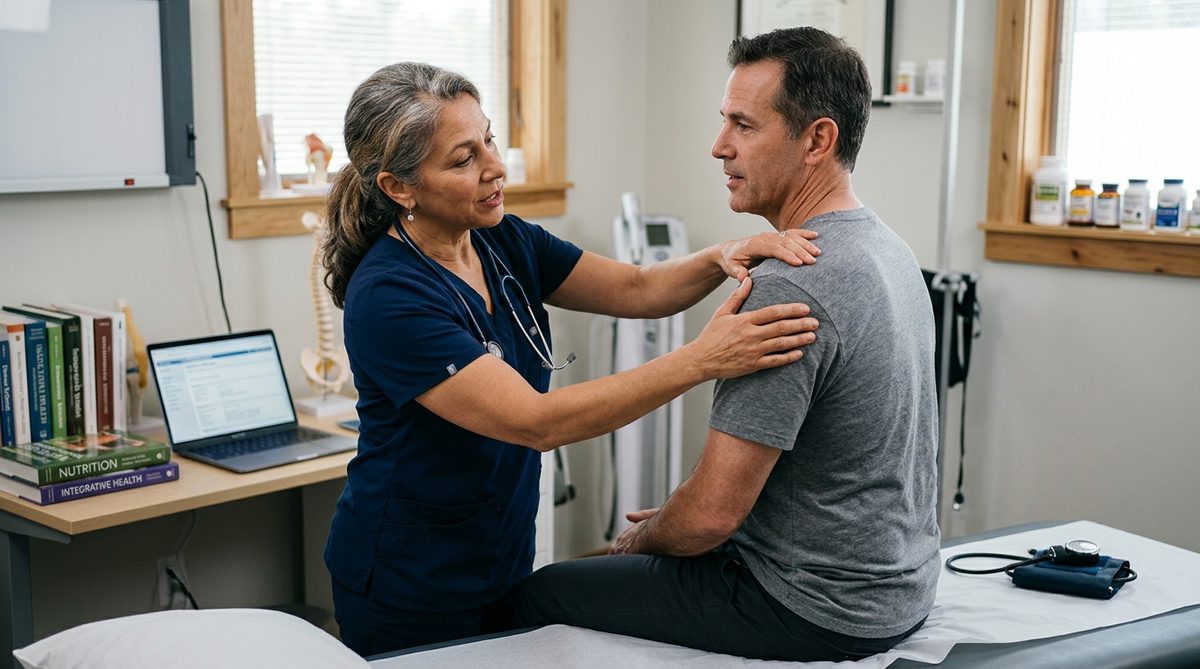
Can a Naturopathic Doctor Prescribe Estrogen? What You Need to Know

This depends entirely on where you live. In some places, naturopathic doctors have full prescribing rights. In others, they don't.
And in Australia specifically, naturopaths work within a different scope than licensed NDs in North America. Here's what that actually means for you if you're looking for help with estrogen, menopause, or hormone balance.
Do Naturopathic Doctors Prescribe HRT?
In the United States and Canada, licensed naturopathic doctors (NDs) can prescribe hormone replacement therapy in many states and provinces. They complete four years of postgraduate medical training and pass licensing exams.
In states like Oregon, Washington, and Arizona, NDs have full prescribing authority, including bioidentical estrogen, progesterone, and testosterone. In Australia, the title works differently.
Naturopaths here aren't registered under the Australian Health Practitioner Regulation Agency (AHPRA). They can't prescribe pharmaceutical hormones. That's the job of a GP or specialist.
So the direct answer is: it depends on your country and the practitioner's specific credentials.
Can a Naturopath Prescribe Estrogen Cream?
In Australia, no. A naturopath can't write a prescription for estrogen cream. That requires a medical doctor.
What a naturopath can do is recommend and supply certain over-the-counter topical products, herbal creams, and phytoestrogen-based preparations that support hormonal balance without requiring a prescription. These aren't the same as pharmaceutical estrogen, but for some women they produce real, measurable relief.
In North America, a licensed ND in a prescribing state can prescribe compounded bioidentical estrogen cream. This is a meaningful distinction if you're comparing practitioners across countries.
What Do Naturopaths Think of HRT?
Most naturopaths aren't anti-HRT. That's an outdated stereotype.
In my experience, the better naturopaths take a practical view. They look at your symptoms, your history, your risk factors, and then decide what tools make sense. For some women, pharmaceutical HRT is the right call. For others, natural approaches get the job done without the risks.
What I found was that naturopaths tend to push back on HRT when it's being used as a first response before lifestyle, nutrition, and herbal support have been tried. Not because HRT is bad, but because those foundational changes often shift the picture significantly before you need to go pharmaceutical.
A 2022 review in Menopause found that lifestyle interventions including dietary changes, exercise, and stress reduction reduced hot flash frequency by up to 40 percent in perimenopausal women [1]. That's not nothing. That's a real result worth trying first.
When I tried working with women on foundational hormone support before jumping to prescriptions, what I saw was that a significant portion got enough relief that they either delayed HRT or avoided it entirely. The ones who still needed HRT after that groundwork tended to need lower doses.
Can Naturopaths Prescribe Hormones?
Again, this is a jurisdiction question.
- Licensed NDs in prescribing US states and Canadian provinces: yes, they can prescribe hormones including estrogen, progesterone, and DHEA
- Australian naturopaths: no prescribing rights for pharmaceutical hormones
- UK naturopaths: no prescribing rights
- New Zealand naturopaths: no prescribing rights
If you're in Australia and want hormone prescriptions, you need a GP or a gynaecologist. What a naturopath adds to that picture is the investigation and support work around why your hormones are out of balance and what you can do about it beyond just replacing what is low.
What Can a Naturopath Actually Do for Hormone Balance?
Quite a lot, within their scope.
Testing and Investigation
A good naturopath will order or recommend comprehensive hormone testing. This goes beyond a basic blood panel. Dutch testing, salivary hormone panels, and thyroid panels give a fuller picture of where your hormones actually sit across the day, not just at one point in time.
Standard GP testing often misses the nuance. A single blood draw for estrogen tells you the level at that moment. It doesn't tell you how you metabolise estrogen, whether you're clearing it well through the liver, or whether your cortisol is suppressing progesterone production.
Herbal Medicine
This is where naturopaths have real depth. Several herbs have strong clinical evidence for hormone support.
- Black cohosh has the most research behind it for menopausal symptoms. A 2010 Cochrane review found it reduced hot flash frequency and severity [2]. It works on serotonin receptors, not estrogen receptors, which makes it safer for women with estrogen-sensitive conditions.
- Vitex agnus-castus (chaste tree) supports progesterone production by acting on the pituitary. It's most useful in perimenopause when progesterone drops before estrogen does.
- Red clover isoflavones contain phytoestrogens that bind weakly to estrogen receptors. A 2007 meta-analysis in Maturitas found red clover reduced hot flash frequency by around 44 percent compared to placebo [3].
- Ashwagandha reduces cortisol, and high cortisol directly suppresses sex hormone production. A 2019 randomised controlled trial in Medicine found ashwagandha significantly improved serum DHEA-S and testosterone in women, alongside reductions in cortisol [4].
Nutritional Support
Estrogen metabolism runs through the liver and gut. If either isn't working well, you end up with estrogen dominance even when your production is normal.
I found that supporting liver detoxification pathways with DIM (diindolylmethane from cruciferous vegetables), calcium d-glucarate, and B vitamins shifted estrogen metabolism toward the safer 2-hydroxy pathway. This is measurable on a Dutch test.
Gut health matters too. The estrobolome, the collection of gut bacteria that regulate estrogen recycling, directly affects how much estrogen circulates in your body. Dysbiosis raises beta-glucuronidase activity, which deconjugates estrogen in the gut and sends it back into circulation. Fixing the gut can lower estrogen load without touching a prescription.
Diet and Lifestyle
Phytoestrogen-rich foods like flaxseed, soy, and legumes provide weak estrogenic activity that can buffer symptoms in perimenopause. A 2021 study in Menopause found that a low-fat, plant-based diet with daily soy reduced moderate to severe hot flashes by 84 percent over 12 weeks [5].
That number is striking. It outperforms most herbal interventions and approaches the efficacy of low-dose HRT for hot flash reduction.
When Should You See a GP Instead of a Naturopath?
Some situations need a prescription. Be clear about this.
- Severe menopausal symptoms that are affecting your quality of life significantly
- Premature ovarian insufficiency (menopause before 40)
- Osteoporosis risk where estrogen protection is clinically indicated
- Genitourinary syndrome of menopause (vaginal atrophy, recurrent UTIs) where topical estrogen is the most effective treatment
- Surgical menopause after oophorectomy
In these cases, pharmaceutical HRT is often the right tool. A naturopath can still support you alongside that, but don't delay medical care trying to manage serious symptoms with herbs alone.
The Case for Using Both
This is where I think the conversation gets interesting. The either-or framing between naturopathic and conventional medicine is a false choice.
What works best, in my experience, is using a GP or gynaecologist for prescribing decisions and a naturopath for the investigative and supportive work. The naturopath looks at why your hormones are dysregulated. The GP manages the prescription if one is needed. You get better outcomes than either approach alone.
A 2020 paper in the Journal of Alternative and Complementary Medicine found that women using integrative approaches to menopause management reported higher satisfaction and better symptom control than those using either conventional or complementary medicine alone [6].
The question of whether a naturopathic doctor can prescribe estrogen matters less than whether you have a team that covers both the root cause work and the symptom management.
Homeopathy and Hormone Balance
Homeopathy takes a different approach again. Rather than replacing or supplementing hormones directly, homeopathic treatment works on the individual's overall pattern of symptoms. Remedies like Sepia, Lachesis, and Pulsatilla are commonly used for menopausal presentations, selected based on the full symptom picture rather than a hormone level.
For women who can't use HRT due to personal history or preference, and who want an approach beyond standard herbal medicine, homeopathy offers another option worth exploring. Practitioners at clinics like Homeopathy Plus work with the whole symptom picture to find the right remedy for each person.
FAQ
Can a naturopath order hormone blood tests?
In Australia, naturopaths can recommend testing and refer you to pathology, but they can't order Medicare-rebated tests. You can access private hormone panels through functional medicine labs without a GP referral.
Is bioidentical HRT safer than conventional HRT?
Bioidentical hormones have the same molecular structure as the hormones your body produces. Compounded bioidentical HRT isn't regulated the same way as pharmaceutical HRT, which means quality control varies. The evidence on safety differences is mixed. Discuss this with a prescribing doctor who knows your history.
What is the best natural estrogen supplement?
Red clover isoflavones and flaxseed lignans have the strongest evidence for mild estrogenic support. Neither replaces pharmaceutical estrogen for severe symptoms, but both show consistent results in clinical trials for reducing hot flash frequency.
Can a naturopath help with estrogen dominance?
Yes. This is actually an area where naturopathic support is particularly useful. Addressing liver detoxification, gut health, and stress-driven progesterone suppression are all within naturopathic scope and directly target the mechanisms behind estrogen dominance.
Do I need a referral to see a naturopath?
No. You can book directly. In Australia, naturopath consultations aren't covered by Medicare but may be partially covered by private health insurance depending on your policy. Continue with the Homeopathy, naturopathy and related approaches collection.

What Are 10 Signs That My Body Is Healthy?
Read article →
How to Tell if Your Body Is Unhealthy?
Read article →
What Are Signs of Poor Function Health?
Read article →
What Are Some Weird Signs That My Body Is Healthy?
Read article →
What Are Five Signs That I Might Not Be Healthy?
Read article →