Can I Carry Homeopathic Medicines in an International Flight? Everything You Need to Know
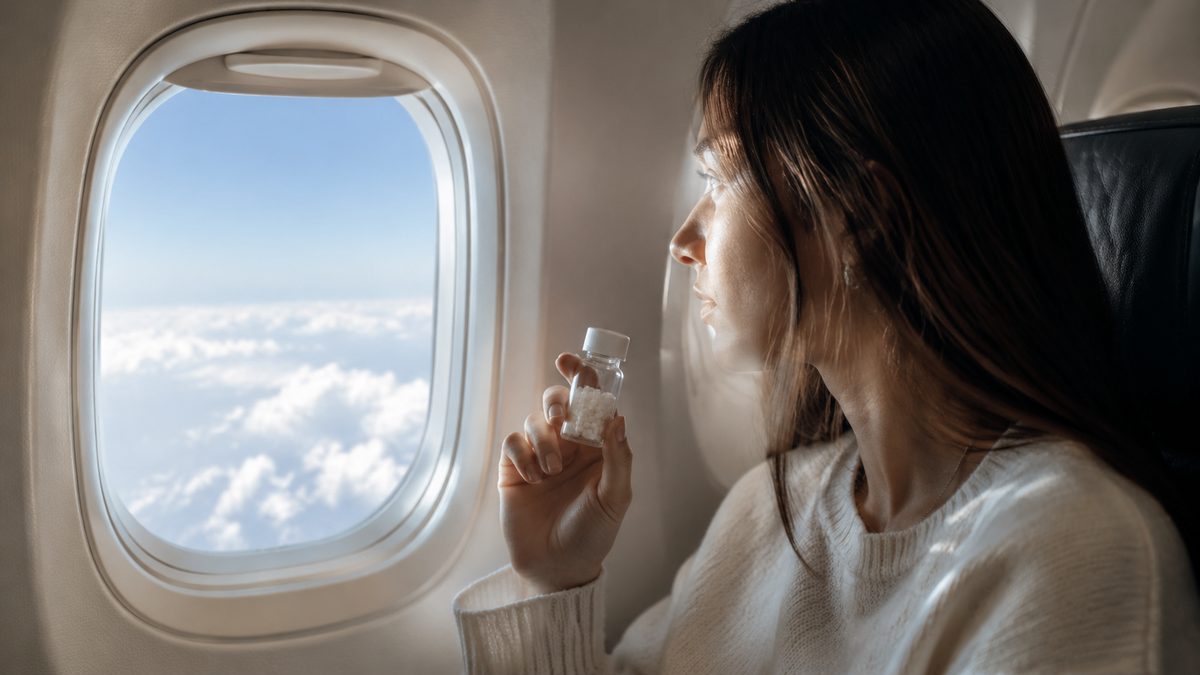
Yes. You can carry homeopathic medicines on an international flight, in both your carry-on and checked luggage. The rules are straightforward once you know them, and most travellers overthink this.
Homeopathic remedies are classified as over-the-counter medicines in most countries. That means they travel the same way paracetamol or vitamin C does. The tiny sugar pellets, liquids, and tablets that make up a homeopathic kit raise almost no flags with security or customs, as long as you follow a few basic steps.
Here's exactly what you need to know before you fly.
Is It Allowed to Carry Homeopathic Medicine in Flight?
Yes, it is allowed. Homeopathic medicines are permitted by the Transportation Security Administration (TSA) in the US, by the Australian Border Force, by UK Border Control, and by equivalent agencies in most countries. They're not controlled substances. They don't contain narcotics, prescription compounds, or restricted biologics.
In my experience travelling with a full homeopathic kit, I've never had a remedy confiscated. Security staff occasionally pick up a bottle for a closer look, but once they see it's a labelled medicine, it goes back in the bag.
One of my clients travels between Sydney and Germany four times a year for work. She carries a 36-remedy travel kit in her carry-on every single time. Her words: "I was nervous the first time. Now I don't even think about it. They've never touched my kit."
The only real watch-out is liquid volume rules for carry-on bags, which we'll cover in a moment.
What Are the Actual Rules for Medicines on International Flights?
Medicines, including homeopathic ones, are treated as medical items by airlines and border agencies. Here's what applies in most international travel:
- Solid forms (tablets, pillules, granules): No quantity restrictions. Pack as much as you need.
- Liquid forms (drops, tinctures, liquids in vials): Subject to the 100ml per container rule for carry-on bags. All liquids must fit in a single clear resealable bag of no more than one litre total.
- Labelled packaging: Keep medicines in their original packaging where possible. This speeds up any inspection.
- Prescription vs over-the-counter: Homeopathic remedies don't require a prescription in Australia, the US, the UK, or most of Europe. They're sold freely. This simplifies everything.
If your homeopathic remedy is in liquid form, the 100ml limit applies per container, not per remedy. A standard 25ml or 30ml dropper bottle is well inside that limit. Most homeopathic liquids come in small bottles by design, so this is rarely a problem.
Can You Take Homeopathic Medicines in a Check-In Bag?
Absolutely. Checked luggage has almost no restrictions on medicines. You can pack a large supply of homeopathic remedies in your check-in bag without any volume or quantity limits applying.
The practical consideration here is protection, not regulation. Homeopathic remedies are sensitive to heat, electromagnetic fields, and strong odours. Checked bags go through X-ray screening and can sit on hot tarmacs. Most experienced homeopathy users pack their main kit in carry-on to keep it close and protected, and use checked bags for backup supplies or bulkier items.
I know this matters because one of my clients packed her entire remedy kit in checked luggage on a trip to Southeast Asia. The bag was delayed by two days. She had nothing to work with for the first night, when her child spiked a fever. Since then, she keeps at least a core kit in her carry-on.
That's a practical reason, not a legal one. Legally, both options are fine.
Do You Have to Declare Medication on International Flights?
It depends on the destination country. Most countries don't require you to declare over-the-counter medicines, including homeopathic remedies, for personal use in reasonable quantities.
Australia, for example, allows travellers to bring in a three-month supply of most over-the-counter medicines without declaration. The US has similar allowances. European Union countries generally permit personal-use quantities of non-prescription medicines without customs declaration. A detailed homeopathy travel guide covers entry requirements for every major destination.
Where declaration becomes relevant:
- You're carrying commercial quantities, meaning far more than personal use
- You're travelling to a country with stricter import rules on natural medicines (some Middle Eastern countries have specific restrictions)
- The product contains any ingredient that might be considered a controlled substance in the destination country
Standard homeopathic pillules, tablets, or small liquid vials in personal quantities won't trigger a customs declaration requirement in most destinations. But if you're unsure about a specific country, check that country's customs authority website before you fly. It takes five minutes and removes all doubt.
When I travel internationally for training, I carry a full kit and have never been required to declare it. The quantities are clearly personal use, and the packaging is labelled.
What Medications Are Allowed on International Flights?
Most medications are allowed. what medicines face restrictions are narrow:
- Narcotics and controlled substances: Require documentation, prescriptions, and sometimes prior approval from the destination country.
- Injectables: Allowed with supporting documentation (a letter from your doctor helps).
- Large liquid volumes: Subject to the carry-on liquids rule unless declared as medically necessary, in which case screening officers can make exceptions.
Homeopathic medicines fall into none of these categories. They're non-narcotic, non-injectable (in standard form), and come in small containers. They travel freely.
The broader rule is this: over-the-counter medicines for personal use are allowed on international flights. Homeopathy is over-the-counter. Personal use is the obvious assumption when you're carrying a travel kit. That combination means you're covered.
Three Things Most Travel Articles Get Wrong About This
Most guides treat this topic as more complicated than it is. Here are three points that get missed or mishandled.
1. X-ray Does Not Harm Homeopathic Remedies
There's a persistent worry in the homeopathy community that airport X-ray machines will antidote remedies. This is debated, and the practical reality for most travellers is that their remedies work fine after screening.
The real risks to homeopathic remedies are strong heat, direct sunlight, powerful electromagnetic fields at very close range, and strong chemical odours like camphor or eucalyptus. A single pass through an airport X-ray machine is low exposure and brief. Most experienced homeopathic practitioners, including myself, haven't found it to be a meaningful problem in practice.
If you're concerned, you can request a manual inspection of your bag instead of X-ray. Security staff are permitted to do this. Just ask politely at the screening point before your bag goes through.
2. You Do Not Need a Doctor's Letter for Homeopathic Remedies
Some travel health guides suggest carrying a letter from your doctor for all medicines. For prescription drugs, this is genuinely useful. For homeopathic remedies, it's unnecessary in almost every case.
homeopathy is legal and unregulated as over-the-counter medicine. A doctor's letter for paracetamol would seem strange. A letter for homeopathic pillules is equally unnecessary. Keep original packaging, and that's enough.
3. The Liquid Rule Applies to Volume Per Container, Not Total Remedies
I've seen people leave homeopathic liquid remedies at home because they misread the liquids rule. The 100ml rule applies per container. A 25ml dropper bottle is one container, well under the limit. You can carry multiple bottles in your liquids bag as long as the total fits in the one-litre clear bag. A standard homeopathic travel kit of liquid remedies fits easily.
How to Pack Your Homeopathic Kit for a Flight
This is what works in practice:
- Keep solid remedies (pillules, tablets) in carry-on. No volume restrictions, and you have access to them during the flight.
- Keep liquids in the clear resealable bag with your other toiletries and medicines. Standard 100ml rule applies.
- Label everything clearly. Original packaging is best. If you use a storage kit with unlabelled vials, write the remedy name on each one.
- Carry a remedy list. A simple handwritten or printed list of what you're carrying is useful if any questions arise. It shows you know what you have and that it's personal use.
- Store away from strong-smelling items. Don't pack remedies next to camphor-based products, essential oils, or menthol items.
Country-Specific Watch-Outs
Most destinations are straightforward. A handful require more care.
United Arab Emirates and Saudi Arabia: Customs rules on natural medicines can be stricter. Check current guidelines before travelling. Some herbal and homeopathic products have been flagged in the past.
India: Homeopathy is widely used and regulated there. Bringing personal supplies is generally fine, but commercial importation has restrictions.
United States: The TSA allows homeopathic medicines in both carry-on and checked bags. US Customs allows personal-use quantities of over-the-counter medicines. No issues in practice.
Australia: The Therapeutic Goods Administration (TGA) regulates homeopathic medicines. Bringing a personal supply in is permitted. Bringing in large commercial quantities without registration is not.
For most destinations, personal-use quantities of labelled homeopathic remedies pass through customs and security without event.
FAQ
Will airport security question my homeopathic remedies?
Occasionally an officer will pick up a bottle for a look. Once they see it's labelled medicine, it goes through. Keep original packaging and this is rarely more than a brief pause.
Can I take a full homeopathic kit in hand luggage?
Yes. Solid forms have no restrictions. Liquid forms follow the 100ml per container rule. A standard travel kit fits within carry-on rules without any issue.
What if my remedy is a high potency or specialist remedy?
Potency doesn't change the rules. A 200C or 1M remedy is still an over-the-counter homeopathic medicine. The potency number is only relevant clinically, not from a customs or security perspective.
Should I declare my homeopathic medicines at customs?
For personal quantities in most countries, no declaration is required. If in doubt about a specific destination, check that country's customs website. When in doubt, declare. It's always safer to declare something that doesn't need declaring than to not declare something that does.
Can I fly with a homeopathic liquid in a bottle larger than 100ml?
In carry-on, no. The 100ml per container limit applies. Put it in checked luggage instead, where no volume restriction applies for medicines.
Do remedies need to be in original packaging?
Strongly recommended. Original labelled packaging makes inspections faster and removes any ambiguity. Unlabelled vials can raise questions that labelled bottles don't.
What to Do Before Your Next Flight
Pack your remedies in your carry-on in original packaging. Put any liquids in your clear toiletries bag with your other medicines. Write a simple list of what you're carrying if you have a large kit. Check the customs website for your destination country if you're travelling somewhere unfamiliar.
That's the whole process. Homeopathic medicines travel well, and the rules around them are much simpler than most travellers expect.
Continue with the Homeopathic remedies and practice collection.

What Are 10 Signs That My Body Is Healthy?
Read article →
How to Tell if Your Body Is Unhealthy?
Read article →
What Are Signs of Poor Function Health?
Read article →
What Are Some Weird Signs That My Body Is Healthy?
Read article →
What Are Five Signs That I Might Not Be Healthy?
Read article →