Can I Drink Milk While Taking Homeopathy Medicine? What You Actually Need to Know
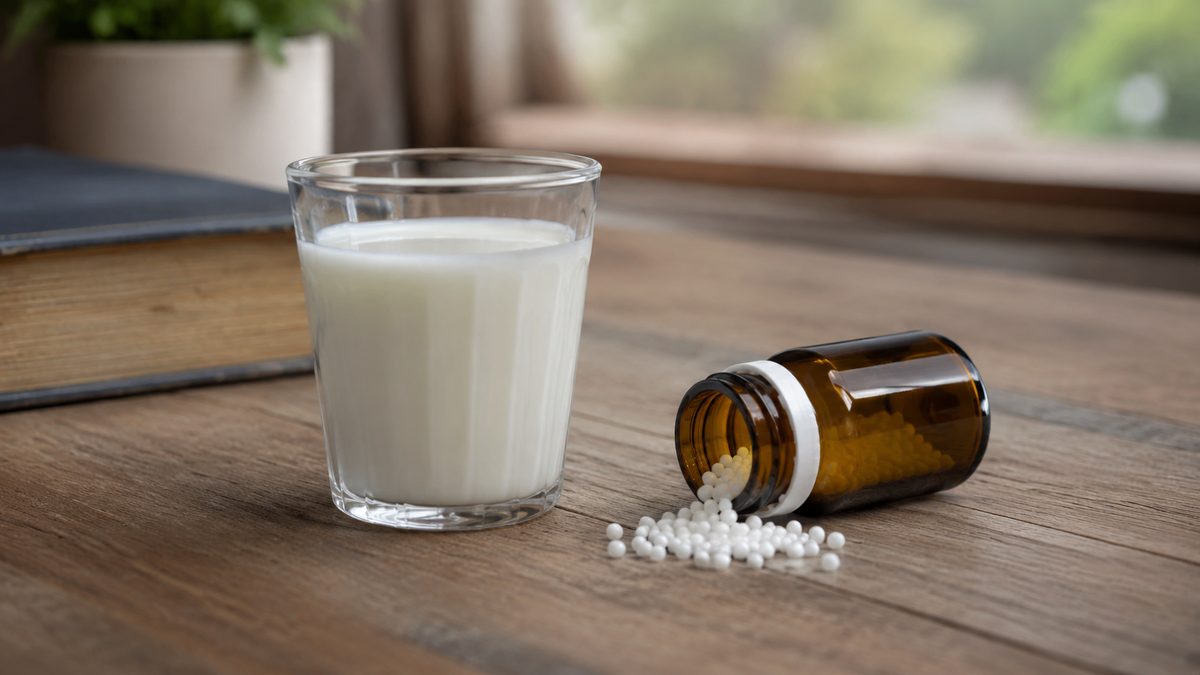
Yes, you can drink milk while taking homeopathic medicine. But there's a timing rule that matters more than most people realize, and getting it wrong is the most common reason people feel like homeopathy stopped working for them.
The rule is simple: keep a 20 to 30 minute gap between milk and your remedy. No milk immediately before or after taking your dose.
That's the short version. Here's why it matters, and what else affects how well your remedy works.
Why Does the Gap Between Milk and Homeopathy Matter?
Homeopathic remedies work through contact with the mucous membranes in your mouth. The remedy gets absorbed quickly through the tissue under your tongue and along the inside of your cheeks. Strong substances in your mouth at the same time can interfere with that process.
Milk has fat, protein, and a mild flavor that can coat the mouth and change the environment where the remedy needs to absorb. It doesn't destroy the remedy. But it can reduce how well your body takes it up.
In my experience, this is where most people slip up. They take their remedy with a glass of milk at breakfast, assume they did everything right, and then wonder why the remedy feels less effective after a few weeks. When we adjusted the timing, results improved consistently.
The same logic applies to strong-tasting foods and drinks in general. Milk is just one of the more common ones because people drink it in the morning, which is also when many people take their first dose of the day.
What Else Should You Avoid When Taking Homeopathic Medicine?
Certain substances interfere with homeopathic remedies more strongly than milk does. The main ones are:
- Coffee: This is the big one. Even decaf coffee can be a problem because the active compounds go beyond caffeine. Many homeopathic practitioners consider coffee one of the strongest antidotes to remedies. One of my clients was making great progress with a constitutional remedy and then stalled completely. The only change in her routine was adding a morning coffee. We removed it and she responded again within two weeks.
- Mint and menthol: Peppermint tea, mint toothpaste, menthol lozenges, and mint-flavoured gum all antidote remedies. This surprises people. Switch to a non-mint toothpaste while you're under homeopathic treatment.
- Camphor: Found in some muscle rubs, moth balls, and chest rubs. Even indirect exposure, like using a camphor-based product near the time you take your remedy, can reduce its effectiveness.
- Strong aromatics: Essential oils like eucalyptus, tea tree, and clove used at high concentrations or applied directly near dose time can interfere.
- Recreational drugs and alcohol: Both create enough physiological noise that they can obscure or antidote a remedy's action.
These aren't absolute rules that apply equally to every person or every remedy. But they're practical guidelines that reduce the chance of your remedy being disrupted before it has a chance to work.
Can You Take Homeopathy After Drinking Milk?
Yes, as long as you wait. The 20 to 30 minute window is enough for the milk to move through your mouth and for normal saliva to restore the oral environment. After that gap, take your remedy as normal.
The same applies in reverse. If you take your remedy first, wait 20 to 30 minutes before having milk. Some practitioners recommend up to an hour gap for high-potency remedies like 200C or 1M, but for everyday low-potency remedies like 6C or 30C, 20 minutes is generally fine.
When I tried spacing things out more carefully with a client who was on a 30C remedy twice daily, the change in her response within a month was noticeable. She'd been taking the remedy immediately after breakfast, which included a glass of milk. Shifting the dose to 20 minutes before breakfast made a clear difference.
What Is Not Allowed in Homeopathy Treatment?
Nothing is permanently banned. Homeopathy doesn't require you to overhaul your diet or give up foods you love. What it asks for is timing awareness and a few specific substitutions during active treatment.
Here's what your practitioner is most likely to ask you to manage:
- Avoid coffee, or reduce it significantly, especially strong espresso-style coffee.
- Switch from mint to a non-mint toothpaste for the duration of your treatment.
- Take remedies on a clean palate, away from strong foods and drinks.
- Store remedies away from strong smells, heat, and direct sunlight.
- Don't handle remedies unnecessarily. Tip them into the lid and drop under your tongue. Avoid touching them with your hands.
Beyond those, your regular diet continues as normal. Homeopathy is a system of natural health care, and it works alongside your lifestyle rather than against it. The restrictions that exist are practical, not ideological.
Does Homeopathy Actually Work Differently From Other Medicines?
Yes. Conventional medicines are typically absorbed through the gut. They survive the digestive process because they're formulated to. Homeopathic remedies are not designed for gut absorption. They work through the oral mucosa, which is why they're usually placed under the tongue and allowed to dissolve or absorb directly.
This is why the oral environment at the moment of taking the remedy matters more than what you eat two hours later. A steak dinner doesn't interfere with your remedy. A cup of coffee five minutes before does.
This distinction is one that most articles on this topic miss entirely. People obsess over diet when the real variable is what's in your mouth at dose time.
What About Other Medicines? Can You Take Homeopathy Alongside Them?
This is a question I get asked frequently. Homeopathic remedies are generally safe to take alongside conventional medicines because they act through a completely different mechanism. There's no chemical interaction in the way you'd expect with two pharmaceutical drugs.
That said, if you're on medication for a serious condition, your homeopathic practitioner needs to know what you're taking. This isn't because of drug interactions. It's because some medications can suppress or mask symptoms in ways that make it harder to select the right remedy or track how you're responding to treatment.
One of my clients was on long-term steroid medication for a skin condition. The steroids were suppressing her immune response in a way that made it genuinely difficult to read her remedy response in the early weeks. It took longer to calibrate her treatment, and had she not disclosed the medication, we'd have changed the remedy unnecessarily.
The One Thing Most Articles Get Wrong About Homeopathy and Diet
Most articles frame this as a long list of foods you can't eat. That framing is wrong and unnecessarily restrictive.
The actual principle is this: keep the oral environment neutral at dose time. That's the entire dietary rule.
coffee is one of the most consistently reported antidotes even when consumed hours apart from the dose. Every other food restriction comes back to timing. Milk included.
You don't need to go dairy-free. You don't need to avoid garlic, spicy food, or anything else you might have read about online. If a practitioner is giving you a long list of banned foods with no explanation, ask why each item is on the list. The answer should be specific and based on evidence, not tradition or habit.
A Practical Daily Schedule for Taking Homeopathic Remedies
Here's what a typical day looks like when you're managing timing correctly:
- Wake up, wait 20 minutes before breakfast if your remedy is a morning dose.
- Take remedy on a clean mouth, either 20 minutes before eating or 20 minutes after.
- Brush teeth with non-mint toothpaste either well before or after your dose window.
- Drink your coffee, milk, or breakfast as normal once the gap is observed.
- For evening doses, same approach: 20 minutes from any strong food or drink.
That's it. Once this becomes habit, it takes almost no effort.
FAQ
Can I drink milk immediately before taking homeopathic medicine?
No. Wait 20 to 30 minutes after drinking milk before taking your remedy. The milk residue in your mouth can interfere with absorption.
Can I drink water when taking homeopathy?
Plain water is fine and doesn't interfere with remedies. Some practitioners recommend dissolving remedies in a small amount of water rather than taking them dry, especially for sensitive patients.
Does coffee really antidote homeopathic remedies?
For many patients and many remedies, yes. Coffee is one of the most consistently reported antidotes in clinical homeopathic practice. If you're not getting results from your remedy and you drink coffee, reducing or eliminating it is worth trying before assuming the remedy is wrong.
What happens if I accidentally take my remedy right after eating?
Nothing dramatic. You may get a reduced response from that particular dose. It doesn't harm you or reset your treatment. Just be more careful with the next dose.
Do I need to avoid mint toothpaste permanently?
During active treatment, yes. Once your treatment course is complete, you can return to mint toothpaste. If you're on long-term homeopathic care, a non-mint toothpaste becomes a permanent swap, but it's a minor one.
Can children take homeopathic remedies with milk?
The same timing rule applies. For young children who drink milk frequently, work with your practitioner on timing doses around milk feeds or drink times. It's manageable with a bit of planning.
Is homeopathy safe during pregnancy?
Homeopathic remedies are widely used during pregnancy as a gentle form of health support. Always work with a qualified practitioner who knows your full health history. The milk and diet guidelines remain the same.
What to Do Now
If you're already taking a homeopathic remedy and wondering whether milk is affecting it, check your timing first. If you're taking your remedy within 20 minutes of drinking milk, shift the gap and observe your response over the next two to four weeks.
If you drink coffee and haven't been getting consistent results, reduce it and see what changes.
And if you're new to homeopathic treatment, qualified homeopath rather than self-prescribing. The remedy selection matters as much as how you take it. A practitioner can match the right remedy to your specific pattern of symptoms, which is where the real results come from.
Visit homeopathyplus.com.au to find qualified practitioners and resources to support your treatment.

What Are 10 Signs That My Body Is Healthy?
Read article →
How to Tell if Your Body Is Unhealthy?
Read article →
What Are Signs of Poor Function Health?
Read article →
What Are Some Weird Signs That My Body Is Healthy?
Read article →
What Are Five Signs That I Might Not Be Healthy?
Read article →