Can We Eat Eggs After Taking Medicine? What You Need to Know
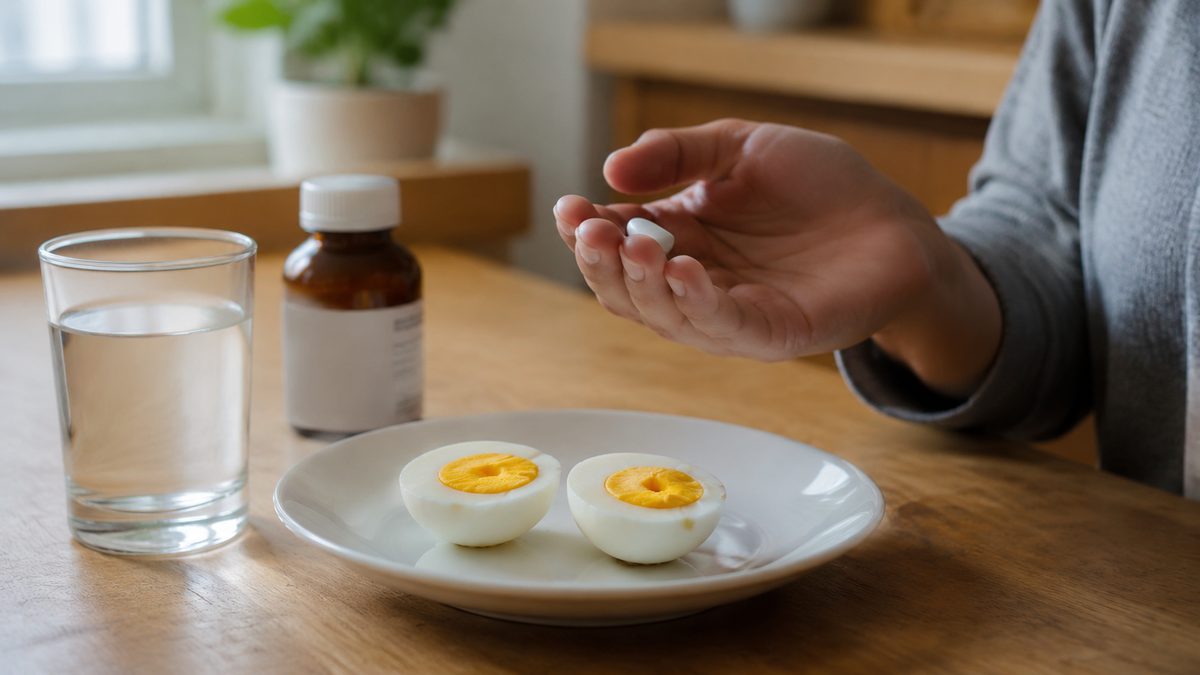
Yes, for most medications eggs are fine. But a handful of drug types do interact with eggs in ways that change how well the medicine works.
Knowing which ones matters more than avoiding eggs entirely.
Why Food and Medicine Mix in the First Place
When you swallow a tablet or capsule, it travels into your stomach, breaks down, and gets absorbed into your bloodstream. Food in your stomach changes that process.
It changes the pH of your stomach acid, slows how fast your stomach empties, and can bind to the drug itself before absorption even starts.
Eggs are protein-dense and moderately fatty. That combination slows stomach emptying. For some drugs, a slower stomach means more time for the medicine to absorb. For others, the protein in eggs binds to the drug and reduces how much actually reaches your bloodstream.
This is basic pharmacology. The drug has to get from your gut into your blood before it can do anything.
What Medications Actually React With Eggs?
Most medications don't care whether you ate eggs or toast or nothing at all. The ones that do fall into a few clear categories.
Thyroid Medications
This is the biggest one. Levothyroxine, the most commonly prescribed thyroid drug, absorbs poorly when taken with food, especially high-protein food. One of my clients took her thyroid tablet every morning with a two-egg breakfast for months and her levels never stabilized.
When we looked at the timing, that was the problem. She shifted to taking it 30 to 60 minutes before eating and her next blood test showed clear improvement.
The issue isn't eggs specifically. It's protein and calcium. Eggs have both, and they bind to levothyroxine in the gut and reduce the amount that gets through.
Certain Antibiotics
Tetracycline antibiotics, including doxycycline, absorb poorly when taken alongside dairy and high-calcium foods. Eggs contain some calcium, though less than dairy. The effect is smaller than with milk, but it's there.
If you're on a tetracycline course, spacing your eggs away from your dose by an hour is reasonable.
Quinolone antibiotics like ciprofloxacin follow a similar pattern. Calcium and protein can reduce their absorption. Eggs aren't as problematic as a calcium supplement, but back-to-back timing isn't ideal.
MAO Inhibitor Antidepressants
This one is about tyramine, not absorption. MAO inhibitors block an enzyme that breaks down tyramine in the body. Egg whites contain very little tyramine, so eggs themselves aren't a major concern here.
But understanding this matters if you're also eating aged cheese, fermented foods, or cured meats alongside those eggs. The meal context can shift the risk even if eggs alone are low risk.
Bisphosphonates for Bone Density
Medications like alendronate are notoriously sensitive to food. They need to be taken first thing in the morning with plain water, and you stay upright for 30 minutes before eating anything.
Any food, eggs included, taken too close to the dose will significantly reduce absorption. This isn't an egg issue. It's a food issue, and eggs are caught in that blanket rule.
What Not to Eat After Medicine: The Bigger Picture
Eggs are mild compared to other food interactions that people ignore. Here's what causes more documented problems.
Grapefruit juice is the most studied offender. It blocks a liver enzyme called CYP3A4 that breaks down dozens of medications including statins, some blood pressure drugs, and immunosuppressants. One glass can change drug levels in your blood for over 24 hours.
High-fat meals in general slow stomach emptying significantly. Some medications rely on that delay to work properly. Others need fast absorption and a fatty meal undermines it. Eggs with butter and cheese push closer to that high-fat threshold than plain boiled eggs.
Vitamin K-rich foods affect warfarin and other blood thinners. Leafy greens are the main culprit, not eggs.
Dairy is the real issue for antibiotics and thyroid medications, not eggs. If you're swapping eggs for a glass of milk to be safe, you've made the situation worse.
Can You Take Medicine After Eating an Egg?
For the vast majority of medications, yes. A standard waiting window of 30 to 60 minutes after eating covers most scenarios where timing matters at all.
I remember one of my clients asking this after starting a new prescription. She had eaten scrambled eggs and then taken her medication about 20 minutes later and worried the whole day that it hadn't worked.
For her specific drug, a mild antihistamine, it made no practical difference. But her question was the right one to ask. Most people never think to ask it.
The general rule is: if your pharmacist or prescriber didn't give you specific timing instructions, food is unlikely to cause a serious interaction. If they did give you instructions and eggs fall in the meal window, follow them.
How Homeopathic Remedies Differ Here
This question comes up often for people using homeopathic treatment. Homeopathic remedies are typically taken as small pillules or drops, and the traditional guidance is to avoid strong flavours close to the dose.
Coffee, mint, camphor, and strongly spiced foods are the ones most practitioners flag.
Eggs on their own aren't usually flagged as a concern with homeopathic remedies. Plain boiled or poached eggs eaten outside the 15 to 30 minute window around a remedy are generally considered fine. What practitioners look for is anything that might strongly stimulate the senses or alter the oral environment at the time of taking the remedy.
When I work with clients on homeopathic protocols, the guidance is practical: take the remedy away from meals, rinse your mouth if you've just eaten something strong, and avoid coffee and mint for at least 30 minutes before and after.
A breakfast that includes eggs, eaten before that window, doesn't interfere.
The Timing Question People Miss
Most food-drug interaction advice focuses on what to avoid. The more useful question is when.
The same meal that disrupts one drug at 8am is irrelevant to another. Because absorption is a time-based process, distance matters more than elimination. This is what most articles get wrong: they imply you need to cut out foods when the real answer is usually just to separate them from the dose by an hour.
One of my clients tried to cut eggs out completely while on antibiotics because she'd read something alarming online. She was eating eggs with dinner while taking her antibiotic at breakfast. There was no overlap.
The concern wasn't relevant to her situation at all. Understanding the mechanism means you stop making unnecessary restrictions and focus on the ones that actually apply. Learning about homeopathy practices helps clarify these distinctions.
FAQ
Can I eat eggs after taking medicine?
Yes, in most cases. Eggs cause documented issues with thyroid medications and some antibiotics when eaten at the same time as the dose. For most other medications, eggs aren't a concern.
How long should I wait to eat after taking medication?
30 to 60 minutes covers most scenarios. For thyroid medications like levothyroxine, the standard recommendation is 30 to 60 minutes minimum, with some practitioners recommending up to four hours for full effect.
What foods should I avoid while taking medication?
Grapefruit juice has the most documented interactions and affects the widest range of drugs. Dairy affects tetracycline antibiotics and thyroid medications more than eggs do. High-fat meals slow absorption for drugs that need fast uptake.
Vitamin K-rich foods affect blood thinners. Your prescriber or pharmacist should flag the relevant ones for your specific medication.
Do eggs affect how the liver processes drugs?
Not directly. The liver processes most medications through enzyme pathways, primarily the CYP450 family. Eggs don't significantly inhibit or induce these enzymes. Grapefruit does. Alcohol does. Eggs don't reach that threshold.
Can protein in food reduce how well medicine works?
For some drugs, yes. Protein competes with certain medications for the same absorption transporters in the gut lining. Levothyroxine is the clearest example.
For most drugs, protein at a normal dietary level doesn't create a meaningful reduction in absorption.
Does cooking eggs change their interaction with medicine?
No. Cooking affects the digestibility of egg protein but doesn't change its basic chemistry in ways that would alter drug interactions. A boiled egg and a fried egg have similar relevance to medication timing.
What to Actually Do
Check your specific medication. If you're on thyroid medication or a tetracycline antibiotic, take your dose at least 30 to 60 minutes before your egg breakfast.
If you're on a bisphosphonate, follow the full fasting protocol your prescriber gave you. For every other medication, eggs aren't the issue.
If you're taking homeopathic remedies, eat your eggs outside the 15 to 30 minute window around your dose. That's enough separation.
If you're unsure about your specific prescription, ask your pharmacist. That conversation takes two minutes and removes the guesswork entirely.
Continue with the Conditions in the archive collection.

What Are 10 Signs That My Body Is Healthy?
Read article →
How to Tell if Your Body Is Unhealthy?
Read article →
What Are Signs of Poor Function Health?
Read article →
What Are Some Weird Signs That My Body Is Healthy?
Read article →
What Are Five Signs That I Might Not Be Healthy?
Read article →