Can You Live With Obstructive Sleep Apnea? What Untreated OSA Actually Does to Your Body
Yes, you can live with obstructive sleep apnea. But untreated moderate-to-severe OSA seriously raises your risk of heart disease, stroke, and early death. Mild cases carry lower risk, but severe untreated OSA substantially increases the chance of fatal heart events over time.
The good news: people who treat their OSA early have a prognosis similar to people who never had it.
That is the honest answer. What happens in between matters most. The years of poor sleep. The daily fatigue. The slow damage building inside your blood vessels.
What Is Obstructive Sleep Apnea Actually Doing to You Each Night?
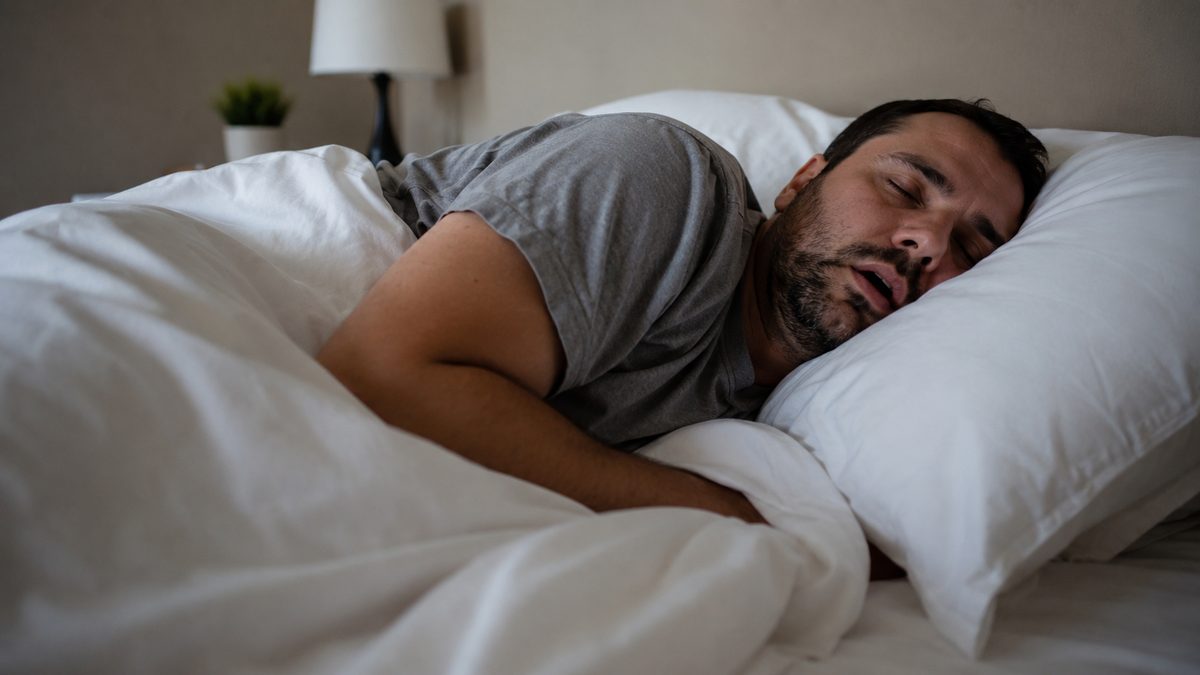
OSA happens when the muscles at the back of your throat relax too much during sleep. Your airway collapses. You stop breathing. Your brain yanks you partially awake to restart airflow. Then it happens again.
In severe cases, this cycle repeats more than 30 times every hour.
Each time your airway closes, your blood oxygen drops. Your body responds like it's under attack. Stress hormones flood your system. Your heart rate spikes. Your blood pressure climbs. Then oxygen returns and the cycle resets, only to repeat minutes later.
This is called intermittent hypoxia, and it's the core mechanism driving almost every complication linked to sleep apnea. The repeated oxygen drops trigger oxidative stress, inflammation, and damage to the inner lining of your blood vessels. Over months and years, this wears down your cardiovascular system the way salt water corrodes metal.
One of my clients described her nights as feeling like she was constantly being startled awake, even though she had no memory of it. She thought she was just a light sleeper. Her apnea-hypopnea index, the count of breathing events per hour, was 42. That's severe.
Her blood pressure had been creeping up for three years and her doctor hadn't yet connected the two.
Does Sleep Apnea Have Side Effects?
The short list surprises most people. OSA is an independent risk factor for hypertension, coronary artery disease, heart failure, atrial fibrillation, stroke, insulin resistance, and obesity. Independent means it raises your risk even after accounting for everything else: your weight, your age, your diet.
The daily side effects are easier to feel. Waking up with headaches is common because carbon dioxide builds up in your blood overnight. Daytime sleepiness affects concentration, memory, and mood. Several of my clients came in thinking they had depression or burnout. What they actually had was severe, undiagnosed OSA draining them every single night.
There's also a road safety issue most articles skip. Daytime sleepiness from untreated OSA significantly raises your risk of motor vehicle accidents. One client told me he had two near-misses on the highway before his wife pushed him to get a sleep study. His AHI came back at 55.
The cardiovascular side effects deserve more detail because that's where the real danger lives. Each apnea episode activates your sympathetic nervous system, your fight-or-flight response. Over time, this keeps your baseline blood pressure elevated. It strains the heart muscle. It makes the heart's electrical system unstable, which is how atrial fibrillation develops.
Atrial fibrillation then raises stroke risk. The chain reaction is direct and well-documented.
What Common Habit Is Linked to Sleep Apnea?
Alcohol. Drinking before bed relaxes the throat muscles more than usual, making airway collapse more likely and more frequent. Even people without OSA can have apnea events after drinking. For someone who already has OSA, alcohol reliably makes each night worse.
Smoking is another one. It causes inflammation and fluid retention in the upper airway, narrowing the space your breath needs to move through.
Sleeping on your back is a mechanical trigger most people overlook. Gravity pulls soft tissue toward the back of the throat in that position. Many people with mild-to-moderate OSA have far fewer events when they sleep on their side. I've seen clients cut their AHI nearly in half just by changing sleep position and stopping alcohol before bed.
Weight is the big one. Excess tissue around the neck and throat physically narrows the airway. OSA is rising globally in direct proportion to obesity rates, and the two conditions feed each other. Poor sleep raises hunger hormones and reduces the motivation to exercise, making weight harder to manage.
How Serious Is Untreated OSA Over Time?
Research from 2008 found that untreated severe OSA was associated with significantly higher mortality compared to people with treated or no OSA. The cardiovascular literature is consistent across decades: OSA increases the risk of myocardial infarction, stroke, and sudden cardiac death, particularly at night when apnea events are most frequent.
Mild OSA, defined as 5 to 14 breathing events per hour, carries lower absolute risk. But symptomatic mild OSA, where you wake exhausted, have headaches, and can barely stay awake at work, is treated by most sleep physicians because the quality-of-life damage is real.
Moderate OSA is 15 to 29 events per hour. Severe is 30 or more. At those levels, the evidence for treating is close to a consensus.
Here's what most articles miss: the risk isn't just about dying. Untreated OSA accelerates metabolic dysfunction. I've worked with clients whose blood sugar control deteriorated steadily over years of poor sleep. Insulin resistance worsens with intermittent hypoxia. Some were managing pre-diabetes for years while the underlying driver, their airway collapsing 40 times a night, went unaddressed.
How to Improve Obstructive Sleep Apnea
Weight loss is the only lifestyle intervention backed by strong evidence. Even modest reductions, around 10 percent of body weight, can meaningfully lower AHI scores. For some people with mild OSA, significant weight loss resolves it entirely.
Beyond weight, the practical steps that reliably help:
- Sleep on your side, not your back
- Cut alcohol, especially in the three hours before bed
- Stop smoking, which reduces airway inflammation
- Treat nasal congestion, because mouth breathing worsens airway instability
- Keep a consistent sleep schedule to reduce sleep debt, which deepens sleep stages where apnea is worst
These aren't alternatives to medical treatment for moderate or severe OSA. They're additions to it. When I work with clients on sleep, the lifestyle changes help most when layered on top of whatever primary treatment they're using.
What Is the New Treatment for Sleep Apnea Without a Mask?
CPAP, continuous positive airway pressure, remains the most effective treatment. It delivers a steady stream of air that keeps your airway open all night. For people who tolerate it, CPAP eliminates apnea events and brings cardiovascular risk back toward normal. The problem is adherence. Many people can't or won't wear the mask consistently, which limits its real-world effectiveness.
For those who can't tolerate CPAP, several alternatives have emerged. Mandibular advancement devices are custom-fitted mouthguards that push the lower jaw forward, keeping the airway open mechanically. They're less effective than CPAP for severe OSA but work well for mild to moderate cases and have much higher adherence rates.
Hypoglossal nerve stimulation is a newer option. A small implanted device monitors your breathing and sends a signal to the nerve that controls your tongue, nudging it forward with each breath to prevent collapse. It's approved for moderate-to-severe OSA in people who can't tolerate CPAP, and clinical results have been promising.
Positional therapy devices, which prevent back sleeping through wearable sensors or vibration alerts, are effective for positional OSA specifically.
Surgical options including uvulopalatopharyngoplasty, which removes excess soft tissue at the back of the throat, exist for anatomical cases but have variable success rates and are generally considered after other options have been tried.
What most articles don't tell you is that many people benefit from a combination approach rather than a single treatment. I've seen clients use a mandibular device, change sleep position, lose weight, and cut alcohol, and their symptoms resolve almost completely without ever tolerating CPAP.
What About Natural and Holistic Approaches?
The evidence base for purely natural treatments as a replacement for CPAP in moderate-to-severe OSA is thin. That needs to be said clearly. But there's genuine room for supportive approaches, particularly in mild OSA and in improving overall sleep quality alongside conventional treatment.
naturopathic care can address contributing factors: reducing inflammation, supporting healthy weight, managing stress hormones that worsen sleep architecture, and addressing nasal congestion that worsens airway obstruction. These aren't claims to cure OSA. They're about addressing the system around the airway, not just the airway itself.
When I work with clients who have mild OSA or who are trying to reduce reliance on CPAP through lifestyle change, addressing their overall inflammatory load, their stress response, their weight, and their nasal health makes the rest of the treatment picture more effective. The airway doesn't exist in isolation from the rest of the body.
Frequently Asked Questions
Can mild sleep apnea go away on its own?
It can, particularly if the cause is weight gain, alcohol, or positional sleep. Mild OSA driven by anatomy is less likely to resolve without direct intervention. A follow-up sleep study after lifestyle changes will show whether your AHI has improved.
Is it safe to leave sleep apnea untreated if I feel fine?
Feeling fine doesn't mean your cardiovascular system is fine. OSA causes damage at a vascular and metabolic level that has no obvious symptoms until something goes wrong. Most people with high blood pressure or early insulin resistance don't feel it either. This is what makes untreated OSA genuinely risky: it's silent until it isn't.
Does sleep apnea get worse with age?
Generally yes. Muscle tone in the throat decreases with age, and weight often increases. Menopause accelerates OSA risk in women because estrogen plays a protective role in airway muscle tone. Post-menopausal women have OSA rates approaching those of men.
Can children have obstructive sleep apnea?
Yes. In children, enlarged tonsils and adenoids are the most common cause. Symptoms in kids often look like behavioral problems, hyperactivity, or poor school performance rather than obvious sleepiness. A pediatric sleep study is the only way to confirm it.
How is OSA diagnosed?
A polysomnography, an overnight sleep study done in a clinic or at home with a portable device, measures your AHI. A score of 5 to 14 is mild, 15 to 29 is moderate, and 30 or above is severe. Your doctor uses this alongside your symptoms to decide on treatment.
What You Should Do Now
If you snore loudly, wake up unrefreshed, or feel sleepy during the day, ask your doctor for a sleep study. Don't wait for something to go wrong. If you already have a diagnosis and aren't using treatment consistently, that's the highest-impact thing to change.
And if you're using CPAP but struggling with it, talk to your sleep physician about alternatives before you give up on treatment entirely.
Treated OSA is a manageable condition. Untreated severe OSA is a slow cardiovascular emergency. The difference between those two outcomes is mostly a decision.
Sources

What Are 10 Signs That My Body Is Healthy?
Read article →
How to Tell if Your Body Is Unhealthy?
Read article →
What Are Signs of Poor Function Health?
Read article →
What Are Some Weird Signs That My Body Is Healthy?
Read article →
What Are Five Signs That I Might Not Be Healthy?
Read article →