Does Function Health Check Hormones?
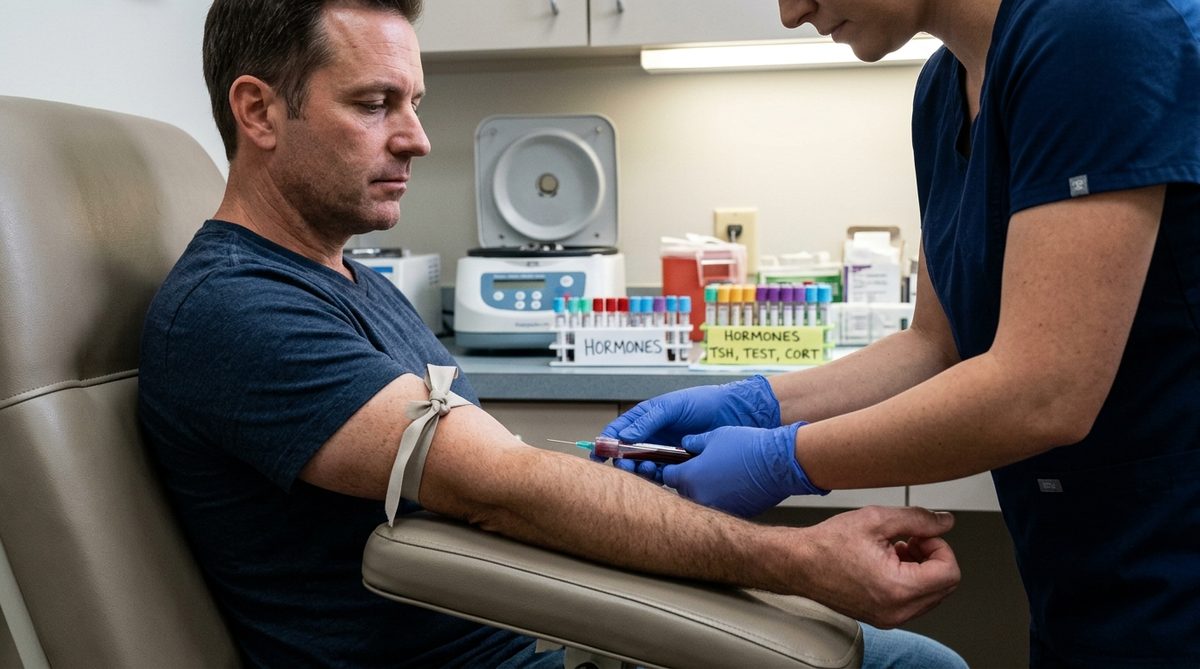
Function Health may check hormone-related biomarkers, but you must confirm the exact tests included in its current membership or test list. Test menus can change, and the supplied evidence does not establish which hormone tests Function Health offers today.
A hormone panel also cannot diagnose a hormonal disorder by itself. An abnormal result is a signal that may need clinical review, repeat testing, or a more focused blood test. Its meaning depends on your symptoms, medicines, health history, and the conditions under which the sample was collected.
Which results can count as hormone checks?
A hormone check may include hormones themselves, proteins that carry them, or markers linked to organs that control hormone release. This distinction matters because a result can relate to hormone health without directly measuring a specific hormone.
Common areas people expect to see include Thyroid function, reproductive hormones, blood sugar control, and stress-related hormones. Possible names on a test list may include Testosterone, Insulin, Thyroid-stimulating hormone, or Sex hormone–binding globulin. Their presence should never be assumed. Check the live test list before paying or arranging a sample.
Read each test name closely. A broad label such as hormone health does not tell you which markers are included. It may refer to one Biomarker, a group of related markers, or an optional test available only under certain conditions.
The safest way to verify coverage is to compare the current list with the exact tests you want. If fertility, menopause, low testosterone, or thyroid disease is your concern, ask whether the membership includes the relevant markers and whether any follow-up testing costs extra.
What can a hormone panel actually tell you?
A hormone panel can show that a measured value falls inside or outside the laboratory reference range. It may also reveal a pattern worth discussing with a clinician. It cannot, on its own, explain why the value changed or prove that it caused your symptoms.
Hormones work through linked control systems. A gland may release a hormone after receiving a signal from another organ. The body may then change production in response to sleep, illness, food intake, medicine, or the time of day. One number captures only one part of that process.
Suppose a person orders tests because they feel tired. A Thyroid result may deserve attention, but fatigue can have many causes. Treating the first unusual value as the answer can delay a better assessment. The useful next step is to connect the result with symptoms and decide whether a repeat or targeted test is needed.
A result within range also does not settle every concern. Reference ranges describe how a laboratory classifies results. They do not replace a medical history or physical assessment. If symptoms are severe, new, or getting worse, a normal panel should not end the investigation.
Why can an abnormal hormone result be misleading?
Hormone levels can move for reasons that do not amount to a lasting disorder. Collection time, recent illness, poor sleep, hard exercise, fasting status, and some medicines can affect what appears on the report. Menstrual cycle timing may also change the meaning of a Sex hormone result.
Laboratory ranges can differ because testing methods and reference groups differ. A value marked high by one laboratory may sit near the limit at another. That does not make either result useless. It means the flag must be read with the units, range, collection details, and reason for testing.
Supplements deserve special attention. Hormone products can alter the hormone being measured. Other supplements may interfere with certain laboratory methods. Give the reviewing clinician a full list of prescription medicines and non-prescription products before acting on a surprising result.
Do not stop prescribed medicine to prepare for a test unless the prescribing clinician tells you to do so. Changing treatment without guidance may create a bigger risk than an imperfect test result.
How should thyroid results be read?
Thyroid testing is a good example of why more data does not always mean a better answer. Thyroid-stimulating hormone, often shortened to TSH, reflects the signal sent to the Thyroid. Free T4 and free T3 measure circulating Thyroid hormones in different forms.
Ordering every available thyroid marker at once is not always useful. A TSH-first process can reduce unnecessary free-thyroid-hormone testing, which shows that adding more markers does not automatically make the diagnosis clearer.
If TSH is unusual, the next test should match the clinical question. A clinician may consider the size and direction of the change, current treatment, pregnancy status, symptoms, or prior results. The right follow-up is targeted, not simply the largest panel available.
Someone taking thyroid medicine needs extra context. Dose timing, recent dose changes, and missed tablets can shape the result. A single value taken under unusual conditions may need confirmation before treatment changes.
What do testosterone and binding proteins reveal?
Testosterone is a Sex hormone found in people of every sex, though usual levels and clinical questions differ. Testing may be considered when symptoms and medical context point toward a possible production or regulation problem.
Total testosterone does not always tell the whole story because much of it travels attached to proteins. Sex hormone–binding globulin affects how much testosterone is bound. Looking at both may help a clinician decide whether another calculation or test is useful.
Timing matters. Testosterone can change across the day, and an unexpected result may need a repeat sample collected under suitable conditions. One low or high result should not become a diagnosis without confirmation and symptom review.
People often expect a testosterone result to explain tiredness, low mood, reduced sexual interest, or changes in strength. Those symptoms are real, but they are not specific to one hormone. A useful review asks whether the result fits the full pattern and whether another cause needs attention.
Does insulin count as a hormone test?
Yes. Insulin is a hormone that helps move glucose from the blood into cells and helps regulate stored energy. If Function Health lists it, it is reasonable to view it as a hormone-related test.
Its interpretation still requires care. Whether the sample was fasting changes the question being asked. A fasting result cannot be compared casually with a result collected after food. Glucose results and health history may also affect what the insulin value means.
An insulin number should not lead to self-treatment with extreme diets or supplements. If it is unexpected, confirm how the sample was collected and discuss whether repeat testing or another metabolic assessment is appropriate.
What about hormones linked to the adrenal gland?
The adrenal gland makes hormones involved in the stress response, salt balance, blood pressure, and other body functions. People may look for cortisol or related markers when they have fatigue, sleep problems, weight changes, or concerns about stress.
These symptoms do not prove an adrenal disorder. Some adrenal-related hormones vary by time of day and testing method. A random value may answer a different question from a timed blood, urine, or saliva sample.
Be cautious with broad claims about adrenal fatigue based on a commercial panel. An unusual result may deserve medical follow-up, but the name placed on a wellness pattern should not replace a defined diagnosis. If an adrenal gland disorder is suspected, the clinician should choose a test designed for that exact concern.
What should you check before ordering?
Start with the current Function Health test list. Search for the exact marker names instead of relying on a category heading. Then check whether testing, clinician review, and repeat samples are included in the quoted cost.
- Write down the symptom or health question you want the test to address.
- Match that question to the exact marker names shown on the current list.
- Check preparation rules, including fasting and collection time.
- Record medicines, supplements, hormone therapy, and recent dose changes.
- Ask how abnormal findings are reviewed and who orders follow-up tests.
This step prevents a common mistake: buying a broad panel that does not contain the test tied to your concern. It also shows whether you need a standard medical appointment first.
If you already have recent results, compare dates before repeating them. Duplicate testing may add noise without changing what happens next. Bring prior reports to the clinician so changes can be judged using the same units and reference ranges where possible.
What should you do when a result is outside the range?
First, do not treat the flag as a confirmed disorder. Check the test name, value, unit, reference range, collection time, and any preparation instructions. Make sure the report belongs to the expected sample date.
Next, arrange a review with a clinician who can assess the result in context. Share your symptoms, medicines, supplements, previous results, and relevant health history. Ask what the result could mean and what would confirm or rule out the main concern.
Follow-up may involve repeating the same Blood test under controlled conditions or ordering a more specific marker. It may also involve no immediate test if the change is small and has a clear temporary explanation. The decision should follow the clinical question.
A repeat test is especially useful when hormone levels naturally vary or when the first sample was collected during illness. Confirmation lowers the chance of changing treatment because of a one-off result.
When should symptoms matter more than the dashboard?
A test dashboard can make every flagged value feel urgent. Colour coding shows distance from a laboratory range. It does not measure how dangerous a result is or prove that it explains how you feel.
Seek prompt medical care for severe or fast-changing symptoms, even if a wellness panel looks normal. Examples include fainting, chest pain, severe weakness, confusion, heavy bleeding, or vomiting that prevents fluid intake. A subscription testing service is not a substitute for urgent assessment.
Persistent symptoms also deserve attention when results sit within range. A clinician may need to look beyond hormone causes. The main goal is to explain and treat the person’s problem, not to force every symptom to match a Biomarker.
Can you prevent confusing hormone results?
You cannot remove every source of variation, but you can make testing easier to interpret. Follow the preparation rules exactly. Use the stated collection window and report anything that may have changed the sample conditions.
Keep a short symptom record before the test. Note when symptoms began, how often they occur, and any link with medicine changes or the menstrual cycle. This gives the reviewer useful context without relying on memory during an appointment.
Avoid ordering frequent panels merely to watch small shifts. More testing can create more out-of-range flags, even when nothing meaningful has changed. Test when the result can answer a clear question or guide a real decision.
How do you judge whether Function Health is useful for this purpose?
Function Health may be useful if its current panel contains the markers relevant to your concern and you have a clear route for clinical interpretation. Its value comes from how well the tests match your question and what happens after the results arrive.
It is a weaker fit if you expect one broad panel to confirm a hormone disorder, explain every symptom, or produce a treatment plan without further assessment. Large panels can find signals. They cannot supply the missing clinical context.
Before joining, compare the included tests with the workup your clinician would choose. Ask whether the service provides access to a qualified reviewer and whether that person can arrange targeted follow-up. Also check how results are shared with your usual health professional.
Actionable takeaway: Confirm Function Health’s live test list, choose tests tied to a clear health question, and take any abnormal hormone result to a clinician before changing medicine, supplements, or treatment.Sources

What Are 10 Signs That My Body Is Healthy?
Read article →
How to Tell if Your Body Is Unhealthy?
Read article →
What Are Signs of Poor Function Health?
Read article →
What Are Some Weird Signs That My Body Is Healthy?
Read article →
What Are Five Signs That I Might Not Be Healthy?
Read article →