Does the pillow for sleep apnea really work?
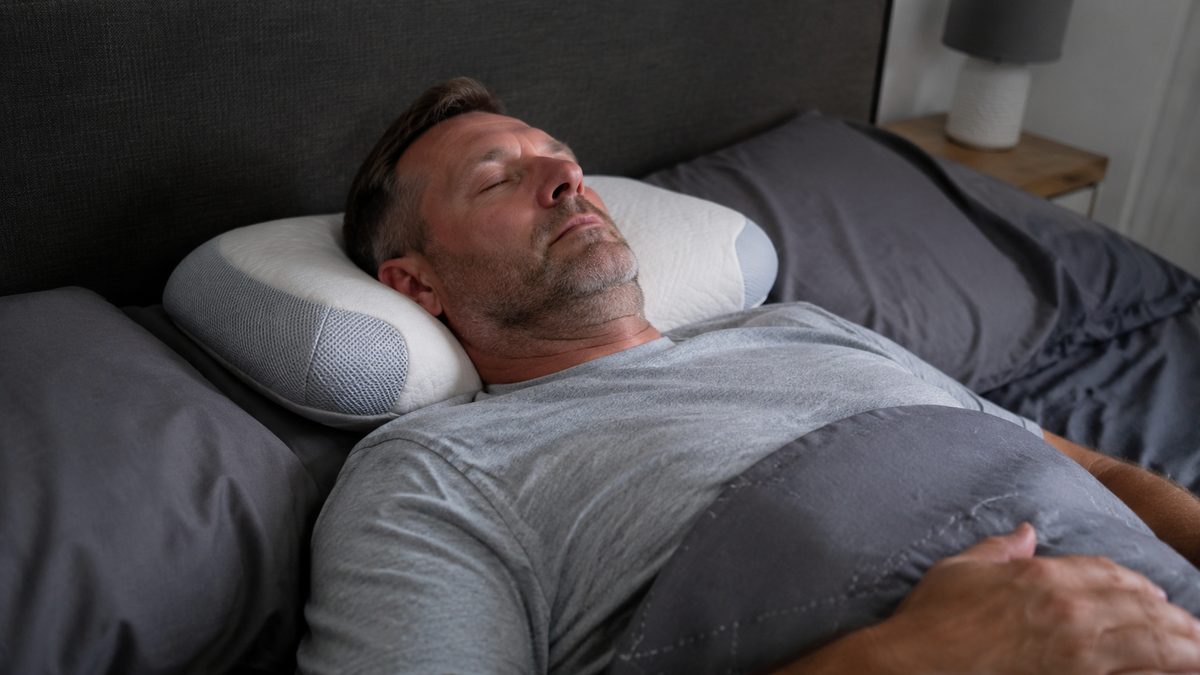
Sleep apnea pillows work for mild positional sleep apnea by keeping the airway open. They do not work for moderate or severe cases where systemic muscle tone is lost. These pillows change your neck angle to keep your airway open. If your throat tissues collapse completely, a pillow cannot keep you breathing. A pillow is a physical tool. It changes how you lie on your mattress. But it does not cure the underlying weakness in your throat tissues or the signals in your brain.
I know this because my client John tried three different pillows to stop his heavy snoring. He bought a wedge pillow, a memory foam contour pillow, and a side sleeping pillow. The side sleeping pillow stopped him from rolling onto his back. His wife reported that he snored less when he stayed on his side. But John still woke up with a dry mouth and a headache. The pillow modified his sleeping position. It did not fix his tissue laxity. He needed a systemic approach to strengthen his throat muscles and improve his overall health.
Is there really a pillow that can help with sleep apnea?
Yes, special pillows can help with sleep apnea if your breathing abnormalities occur mainly when you sleep on your back. Sleep medicine doctors call this mild positional sleep apnea. When you lie flat on your back, gravity pulls your tongue and your soft palate down. This blocks your windpipe. A positional pillow stops you from rolling onto your back. It keeps you on your side.
When we look at sleep physiology, the goal of any breathing aid is to keep the airway clear. Different pillows achieve this in different ways.
wedge pillow lift your upper body at a gentle angle. This elevation keeps your neck straight and stops your jaw from falling backward. It also prevents stomach acid from moving up your throat. Acid reflux can irritate your airways and make breathing worse.
Contour pillows have a hollow center and raised edges. The hollow center supports your head, while the raised edges support your neck. This design keeps your neck aligned. If your head tilts forward, your chin moves toward your chest. This position narrows your airway. A contour pillow stops this head tilt.
CPAP pillows are different. They do not treat sleep apnea on their own. Instead, they help people who use a continuous positive airway pressure machine. These pillows have deep cutouts on the sides. The cutouts give space for the plastic mask and hose. When I talked to my client Sarah, she explained that her mask used to shift and leak whenever she turned. The leaking air blew into her eyes and woke her up. When she switched to a CPAP pillow, the mask stayed in place. The pillow did not cure her sleep apnea, but it allowed her to use her medical therapy without interruption.
If you want a pillow to help your breathing, you must know your sleep patterns. A pillow will fail if your airway collapses regardless of your position. If you stop breathing while sleeping on your side, a pillow will not provide relief.
How positional bedding alters sleep physiology
Your body undergoes major changes when you enter deep sleep. Your muscles relax. This muscle relaxation affects the upper airway. In healthy individuals, the airway remains open. In people with sleep disorders, the tongue falls backward. The airway becomes narrow or closes completely.
Positioning plays a major role in this process. Sleeping on your side keeps the tongue from blocking the throat. Positional pillows use shape and density to keep you in this side position. Some of these pillows have high middle sections and low sides. Others are long rolls that you hug. These designs prevent you from rolling onto your back during REM sleep. When you stay on your side, gravity pulls your tongue sideways instead of backward. This keeps the airway open.
The upper airway is a tube of muscle and soft tissue. It lacks bone support. When we are awake, muscles like the genioglossus keep this tube open. During sleep, muscle tone drops. If you sleep on a flat mattress with a soft pillow, your neck can flex forward. This position acts like a kink in a hose. A specialized pillow keeps the neck slightly extended. This extension pulls the jaw forward and opens the throat.
CPAP pillows versus positional therapy pillows
It is easy to confuse CPAP pillows with positional therapy pillows. They serve different purposes. A positional pillow is designed to keep you on your side or to lift your head. It acts as a primary treatment for mild positional snoring.
A CPAP pillow is designed for comfort and mask stability. It does not treat the airway directly. It features cutouts on the left and right sides. These cutouts prevent the CPAP mask from pressing against the pillow. Without these cutouts, the pillow pushes the mask off your face. This causes air leaks. Air leaks reduce the pressure delivered to your throat, which makes the CPAP machine less effective. If you use a CPAP machine and sleep on your side, a CPAP pillow will help you stay compliant with your treatment.
What is the 4% rule for sleep apnea?
The 4% rule is a diagnostic standard used during a sleep study to measure breathing issues. When you sleep, doctors track your oxygen levels. They use a small sensor on your finger. If your blood oxygen level drops by 4% or more, they record it as an oxygen desaturation event.
To count as an event, this drop must last for at least ten seconds. The event must also match a reduction in your airflow. During a sleep study, doctors count how many times this happens per hour. They combine this with your total pauses in breathing to calculate your oxygen desaturation index.
Different insurance providers and medical groups use different standards. The American Academy of Sleep Medicine accepts both a 3% drop and a 4% drop for diagnosis. However, many government health programs and private insurance companies require the 4% drop to pay for CPAP machines.
This measurement matters because oxygen drops stress your organs. When your oxygen levels fall, your brain enters a state of panic. Your heart beats faster and your blood pressure rises. This shift wakes you from deep sleep. You might not remember waking up, but these interruptions destroy your sleep quality. This leads to morning headaches and daytime fatigue. Over time, constant oxygen drops damage your blood vessels and increase your risk of cardiovascular events.
Why the distinction between 3% and 4% matters
If you have a mild case of sleep apnea, the difference between these two rules can decide whether you get medical coverage. A sleep study analyzed under the 3% rule will show more breathing events. This is because a smaller drop in oxygen is needed to trigger a count. Under the 4% rule, some of your breathing drops might not qualify.
I remember when one of my clients had a sleep study. Under the strict 4% rule, his index score was four. This meant he did not qualify for insurance coverage. However, under the 3% rule, his index score was eight. This would qualify him as having mild sleep apnea. Understanding this rule helps you discuss your results with your doctor.
Doctors use a pulse oximeter to track these drops. The device shines light through the skin to measure oxygen levels in the blood. When you stop breathing, your oxygen drops. A drop of 4% is a severe drop. Some clinics use a 3% threshold because they believe it catches patients who are still suffering but do not meet the harsher 4% standard. This difference affects patient access to CPAP therapy and dental appliances.
What is the new pill for sleep apnea?
The new pill for sleep apnea is a drug combination called AD109. It is currently in clinical trials and is not yet sold in regular pharmacies. The pill combines two active drugs: atomoxetine and oxybutynin. These drugs work together to prevent your airway from collapsing during sleep.
Atomoxetine is a drug normally used to treat attention deficit hyperactivity disorder. It increases noradrenaline in the brain. Noradrenaline helps keep your muscles active. Oxybutynin is a drug used to treat overactive bladder. It blocks specific receptors in your muscles.
In sleep physiology, your throat muscles relax when you fall asleep. In people with sleep apnea, these muscles relax too much. The tongue falls back and blocks the airway. AD109 targets the nervous system to keep these muscles active even during deep sleep. The goal is to keep the airway open without using a mask or a mouthpiece.
Initial studies show that this combination reduces the frequency of breathing stops. It also helps patients feel less tired during the day. However, it is not a perfect cure. Some patients in the trials reported dry mouth and difficulty urinating. Scientists are still studying the long-term safety of this drug.
How the nervous system controls throat muscles during sleep
The brain controls the muscles of the upper airway. During the day, constant signals keep these muscles tense. This tension keeps the airway wide open. When you transition to sleep, these signals decrease.
In patients with obstructive sleep apnea, the decrease in muscle tone is severe. The brain fails to send enough signals to the dilator muscles of the throat. The new pill attempts to restore these chemical signals. By boosting noradrenaline, the drug keeps the nerves firing. This keeps the throat muscles firm.
Researchers are looking at the hypoglossal nerve. This nerve controls tongue movement. The drug combination AD109 targets receptors in the brainstem that control this nerve. By keeping the hypoglossal nerve active, the tongue remains firm. We can contrast this with other attempts to use sleeping pills, which actually make sleep apnea worse by relaxing muscles further.
Can I get tirzepatide if I have sleep apnea?
Yes, you can get tirzepatide if you have obstructive sleep apnea and are overweight. Tirzepatide is a prescription medication sold under the brand names Zepbound and Mounjaro. It mimics two gut hormones that control your appetite and insulin levels.
Doctors prescribe tirzepatide for weight loss and type 2 diabetes. However, recent clinical trials showed that the drug also helps treat sleep apnea. Obesity is a major cause of breathing abnormalities. When you carry extra weight, fat deposits build up around your neck and throat. This extra tissue presses down on your airway when your muscles relax at night.
By losing weight, you reduce the physical pressure on your airway. In clinical trials, patients using tirzepatide lost significant weight and saw their sleep apnea episodes drop by more than half. Some patients even reached a point where they no longer needed their CPAP machines.
To get tirzepatide, you must consult a doctor. You will need a prescription. Most insurance companies require your body mass index to be over thirty, or over twenty-seven with a health condition like sleep apnea. The treatment requires a weekly injection. It also requires changes to your diet and exercise habits to maintain the results.
The link between neck circumference and airway collapse
Neck size is a strong predictor of sleep apnea. When neck circumference exceeds seventeen inches for men or sixteen inches for women, the risk of airway collapse rises. The extra weight pushes down on the windpipe. This narrows the air passage.
When my client Robert started using tirzepatide, his neck circumference was eighteen inches. As he lost weight, his neck size reduced to sixteen inches. This reduction changed his sleep quality. He stopped gasping for air at night. His sleep study showed a dramatic reduction in hypopneas. Reducing neck fat is one of the most effective ways to treat the physical cause of sleep apnea.
Tirzepatide works by mimicking GLP-1 and GIP hormones. It slows stomach emptying and makes you feel full. Beyond weight loss, it reduces systemic inflammation. This is important because inflammation causes swelling in the nasal passages and throat. When my client Robert took this medication, his snoring decreased even before he lost major weight. This suggests that reducing inflammation in the respiratory system helps open the airway.
How do physical remedies compare to systemic treatments?
Physical remedies like pillows or mouthpieces only target the symptoms of sleep apnea. They adjust your body position or hold your jaw forward. These tools are helpful, but they do not address why your tissues became weak in the first place.
Systemic treatments focus on the entire body. Weight loss is a systemic treatment. It removes fat from the tongue and throat. This changes your physical shape and improves your breathing.
Another systemic approach involves looking at the determinants of health, such as genetics and neck size. In my practice, I look at how the body maintains tissue tone. Homeopathy looks at these systemic patterns. When I work with clients who have mild sleep disorders, we do not just look at their bedding. We look at their physical constitution.
For example, some people have a natural tendency toward tissue laxity. Their muscles lose tone quickly as they age. Homeopathic remedies like Calcarea carbonica are sometimes used to address these constitutional weaknesses. The goal is to help the body strengthen its own tissues and reduce inflammation in the respiratory tract.
Constitutional homeopathy looks at the whole person. We examine sleep patterns and physical structure. If a client has weak tissues and suffers from cold sweats, we might select Calcarea carbonica. If they have swollen tonsils and tend to get throat infections, we might look at Baryta carbonica. These remedies do not mechanically open the airway like a pillow. Instead, they support the body's natural healing pathways to improve tissue integrity.
When you combine physical aids with systemic support, you get better results. A pillow can keep your head tilted back tonight. At the same time, systemic treatments can work to strengthen your throat muscles and reduce body fat for long-term health.
Frequently Asked Questions
Can sleep apnea go away with weight loss?
Yes. If excess neck fat is causing your airway to collapse, losing weight can resolve the issue. When you lose weight, the fat deposits around your throat shrink. This reduces the pressure on your airway. Some people find their sleep apnea disappears completely after losing ten to fifteen percent of their body weight.
Why does my sleep apnea feel worse on my back?
When you lie on your back, gravity pulls your jaw and tongue downward. This movement narrows the space in your throat. If you have weak throat muscles, this gravity pull is enough to block your breathing. Sleeping on your side keeps your tongue from falling backward.
Can a mouth guard help with sleep apnea?
Yes. A dentist can make a custom mandibular advancement device. This device pushes your lower jaw forward. By holding your jaw forward, it keeps the airway open. It works well for mild to moderate obstructive sleep apnea.
How does sleep apnea affect your mental state?
Sleep apnea causes your brain to wake up throughout the night to breathe. This deprives you of deep sleep and REM sleep. As a result, you may experience severe daytime fatigue and brain fog. It also increases your risk of depression.
Is sleep apnea hereditary?
Yes. Your physical structure is inherited. If your parents had a narrow throat or a recessed jaw, you are more likely to inherit these features. These physical traits make you more susceptible to breathing blockages during sleep.
Can I cure sleep apnea naturally?
You can manage and sometimes resolve mild sleep apnea through lifestyle changes. These include weight loss and side sleeping. For moderate or severe cases, you should consult a sleep specialist. Exploring comprehensive sleep apnea treatment options can help you find the right approach for your condition.
Your next steps for better breathing
Schedule a sleep study to find out if your breathing issues are positional, then choose a treatment that addresses the root cause of your airway collapse rather than relying solely on a pillow.

What Are 10 Signs That My Body Is Healthy?
Read article →
How to Tell if Your Body Is Unhealthy?
Read article →
What Are Signs of Poor Function Health?
Read article →
What Are Some Weird Signs That My Body Is Healthy?
Read article →
What Are Five Signs That I Might Not Be Healthy?
Read article →