Homeopathy or Ayurveda: Which One Is Actually Right for You?
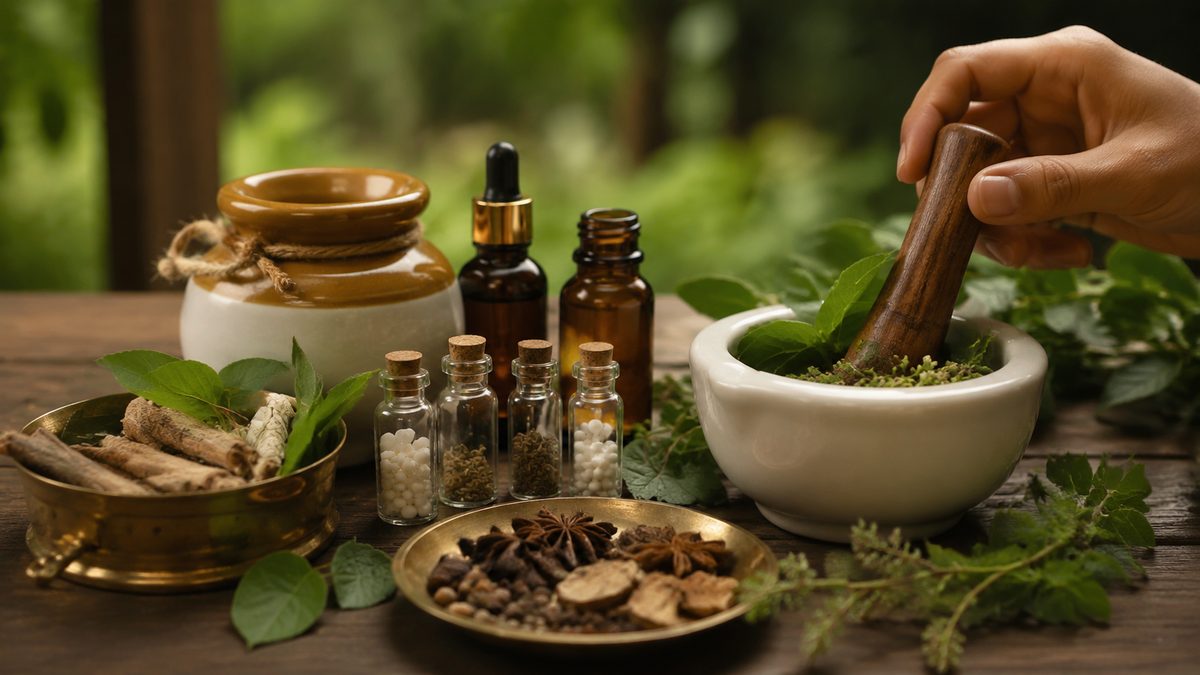
Both systems work. Both have helped real people with real problems. But they work in completely different ways, and choosing the wrong one for your situation means slower results or no results at all.
This isn't a debate about which system is superior. It's about understanding what each one does well, so you can make a useful decision.
What Is the Core Difference Between Homeopathy and Ayurveda?
Ayurveda is a complete lifestyle and medical system from India, over 5,000 years old. It works with diet, herbs, detox protocols, and daily routines to bring the body back into balance.
Your constitution, called your dosha, shapes every recommendation. What works for one person may be wrong for another.
Homeopathy is a system developed in Germany in the late 1700s. It uses highly diluted remedies to stimulate the body's own healing response. A homeopath matches a remedy to the whole person, not just the diagnosis. Understanding how homeopathy differs from other natural medicine systems clarifies its unique mechanism.
Two people with the same condition can receive entirely different remedies.
The practical difference: Ayurveda works heavily through what you consume and how you live. Homeopathy works through energetic signals that prompt the body to correct itself.
Which One Is Safer?
Homeopathy is generally the lower-risk option when it comes to direct side effects. The remedies are diluted to the point where no active chemical compound remains. This means almost no risk of toxicity, organ stress, or drug interaction in the conventional sense.
Ayurveda is safe when practiced correctly, but the herbs used are pharmacologically active. Some Ayurvedic formulas contain heavy metals that have been processed using traditional methods called shodhana. When sourced from reputable practitioners, this is considered safe. When sourced from unknown suppliers, it is not.
One of my clients came to me after trying a low-cost Ayurvedic supplement she found online. Within three weeks she had elevated liver enzymes. The product had no certification and no verified processing. That isn't a problem with Ayurveda. That's a problem with unregulated sourcing.
With both systems, the practitioner matters as much as the method.
Can You Take Homeopathy and Ayurveda at the Same Time?
Yes, in most cases you can. Homeopathic remedies don't interact chemically with Ayurvedic herbs because homeopathic dilutions contain no active molecules to interact with.
The main caution is practical. When you start two systems at once, you can't tell which one is working. If you improve, you don't know what helped. If you react, you can't identify the cause.
What I've seen work well is using Ayurveda for foundational support, things like digestion, diet, and daily rhythm, while using homeopathy to address a specific acute or chronic condition. They occupy different lanes.
If you're working with a homeopath, tell them you're also using Ayurvedic herbs. A good practitioner will factor that into their case-taking and watch for anything unexpected.
Can Ayurveda Cure Disease?
The honest answer: Ayurveda can produce significant results in many chronic conditions, and some people do experience what looks like a complete resolution. But claiming a cure in the medical sense requires a clinical standard of proof that most Ayurvedic treatments haven't yet been put through.
What Ayurveda does extremely well is address the underlying terrain. Rather than suppressing a symptom, it asks why the system became imbalanced. Digestive disorders, hormonal conditions, skin problems, fatigue, and inflammatory states often respond well.
I remember one of my clients with longstanding IBS who went to an Ayurvedic practitioner alongside her homeopathic treatment. The dietary changes and herbal support she received reduced her flare-ups dramatically within eight weeks.
Did Ayurveda cure her? She would say yes. Medically, we'd say she's in remission with sustained management. Either way, her quality of life changed.
Where Ayurveda has real limitations is in acute emergencies, structural damage, and conditions requiring immediate pharmaceutical or surgical intervention. It's not a replacement for those.
What Does Ayurveda Say About Psoriasis?
Ayurveda classifies psoriasis under a condition called Ekakushtha or Kitibha, depending on the presentation. It's viewed as a disorder involving impurities in the blood and lymph, driven by aggravated Vata and Kapha doshas.
The Ayurvedic approach targets internal cleansing through Panchakarma detox protocols, specific herbal formulas like Neem, Turmeric, and Guduchi, and strict dietary adjustments that reduce inflammatory foods.
This is an area where homeopathy also has a strong record. In my experience, the two approaches are genuinely complementary for psoriasis because they target different layers of the problem. Ayurveda works on the gut and blood as contributing factors. Homeopathy addresses the individual's susceptibility and the deeper chronic pattern driving the skin response.
One of my clients with plaque psoriasis covering her elbows and scalp had tried multiple topical treatments with no lasting result. When we started homeopathic treatment and she simultaneously worked with an Ayurvedic practitioner on her diet and digestive health, her plaques reduced by around 70 percent over six months.
I photographed her skin at the start and checked in every four weeks. That's just based on what happened to my client, not a clinical trial, but it was real and consistent progress where years of conventional treatment hadn't delivered it.
Three Things Most Articles Get Wrong About This Comparison
1. They treat this as a competition
Most comparisons set up a winner and a loser. That framing isn't useful. A person with a constitution that responds strongly to dietary changes and lifestyle structure may thrive with Ayurveda as their primary approach.
A person whose condition is deep-seated, genetically influenced, or tied to emotional and mental patterns may find homeopathy more penetrating. Many people benefit from both at different stages.
2. They ignore what evidence-based medicine actually says about each
Neither system has the same volume of randomised controlled trial data as pharmaceutical medicine. But that's largely a funding issue, not a proof-of-failure issue. Systematic reviews of homeopathy show effects beyond placebo in several conditions.
Ayurvedic herbs like Ashwagandha, Boswellia, and Triphala have significant clinical research behind them. Dismissing both systems as unproven ignores the evidence that exists.
3. They assume Ayurveda is gentle and slow
This is a common misread. Some Ayurvedic detox protocols are intense. Panchakarma can produce strong reactions as the body clears accumulated waste. Someone with a depleted constitution can feel significantly worse before they feel better.
Ayurveda is powerful medicine. It deserves the same respect and caution you would give any serious therapeutic intervention.
So Which One Should You Choose?
Choose Ayurveda if your main issues are digestive, metabolic, lifestyle-driven, or connected to long-term imbalances in energy, sleep, and digestion. It gives you tools you can use every day.
Choose homeopathy if your condition is chronic, hard to classify, emotionally driven, or hasn't responded to other approaches. Homeopathy is particularly strong where the symptom picture is complex and individual.
Use both if you have a practitioner guiding each approach and you're clear about the role each one is playing.
What I found was that the people who get the best outcomes aren't loyal to a single system. They understand what each one offers and use that knowledge strategically.
FAQ
Is homeopathy or Ayurveda better for chronic skin conditions?
Both have clinical records with skin conditions. Homeopathy tends to work at the level of individual susceptibility and immune response. Ayurveda addresses gut health and blood toxicity as contributing factors.
For psoriasis, eczema, and acne, combining both under separate practitioners often produces the best outcomes.
Which is faster, homeopathy or Ayurveda?
Neither is a quick fix for chronic disease. For acute conditions, homeopathy can act within hours or days. Ayurvedic protocols for deep chronic imbalances typically require weeks to months of consistent application.
Are Ayurvedic medicines safe with prescription drugs?
Some Ayurvedic herbs have pharmacological activity that can interact with medications. Ashwagandha affects thyroid hormones. Triphala has mild blood-thinning properties.
Always tell your prescribing doctor what Ayurvedic supplements you are taking.
Is homeopathy safe for children?
Yes. The absence of active chemical compounds makes homeopathic remedies well-suited for children and infants. They're used widely in paediatric homeopathy for conditions ranging from ear infections to behavioural difficulties.
Do I need a practitioner or can I self-treat?
For acute, simple conditions you can self-treat with homeopathy using a basic home kit. For chronic or complex conditions in either system, working with a trained practitioner produces significantly better results.
Self-prescribing a chronic case in homeopathy often leads to partial results and muddied symptom pictures.
What does Ayurveda say about autoimmune disease?
Ayurveda views autoimmune-type conditions as disorders involving ama, or unprocessed metabolic waste, combined with an overactive immune response. Treatment focuses on clearing ama, strengthening digestion, and reducing inflammation through specific herbal protocols and dietary change.
What to Do Next
Book a consultation with a qualified homeopath and give them the full picture of your health history. Not just the main complaint, but your energy, sleep, emotional state, and what makes you feel better or worse. That detail is what makes homeopathic prescribing precise.
If you're also drawn to Ayurveda, pursue it through a certified Ayurvedic practitioner and let both practitioners know you're working with both systems.
Continue with the Homeopathy, naturopathy and related approaches collection.

What Are 10 Signs That My Body Is Healthy?
Read article →
How to Tell if Your Body Is Unhealthy?
Read article →
What Are Signs of Poor Function Health?
Read article →
What Are Some Weird Signs That My Body Is Healthy?
Read article →
What Are Five Signs That I Might Not Be Healthy?
Read article →