How Can I Fix My Sleep Apnea Myself? What Actually Works (And What Won't)
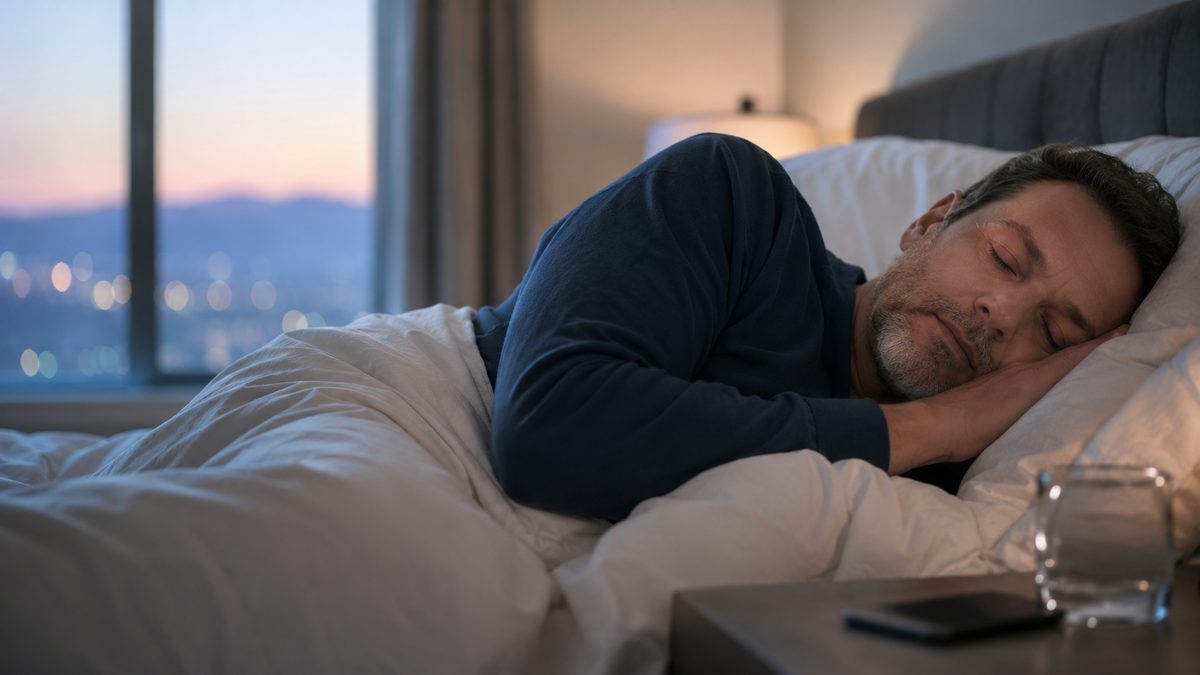
You can fix mild to moderate sleep apnea yourself in many cases. Weight loss, changing your sleep position, cutting alcohol, stopping smoking, and clearing nasal congestion all reduce how often your airway collapses at night. If your apnea is positional, mostly happening when you sleep on your back, targeted positional therapy can cut your apnea events dramatically.
But if you stop breathing more than 15 times an hour, wake up with headaches, or feel exhausted no matter how long you sleep, self-management alone won't protect your heart, brain, or blood pressure. You need a proper diagnosis first.
What Is Actually Happening When You Have Sleep Apnea?
Your airway physically collapses during sleep. The muscles holding your throat open relax, the tissue folds in, and airflow stops. Your brain then jolts you just enough to reopen the airway, often so briefly you never remember it. This can happen dozens of times an hour.
The damage adds up fast. Every time your airway closes, your oxygen drops and your heart rate spikes. Over months and years, that pattern drives up blood pressure, stresses the heart, and raises your risk of stroke, heart failure, and diabetes. Daytime sleepiness is not just annoying, people with untreated apnea have measurably higher rates of motor vehicle accidents.
Four things drive whether your airway collapses: the physical size and shape of your throat, muscle tone during different sleep stages, how easily your brain wakes you up, and how stable your breathing control is. Weight is the biggest modifiable factor. Fat deposits around the neck and throat narrow the airway physically and reduce the space available for air.
What Are 5 Symptoms of Sleep Apnea?
Most people with sleep apnea don't know they have it. The person sharing their bed usually notices first.
- Loud, irregular snoring, especially snoring interrupted by silence, then gasping
- Witnessed breathing pauses, a partner notices you stop breathing mid-sleep
- Waking with headaches, caused by overnight drops in oxygen and spikes in carbon dioxide
- Excessive daytime sleepiness, falling asleep during conversations, meals, or driving
- Waking unrefreshed, eight hours of sleep that leaves you feeling worse than four
I know this because one of my clients described it perfectly: she said it felt like she was sleeping through cotton wool every night. She woke up exhausted, assumed she was just stressed, and went two years before anyone connected her morning headaches and afternoon crashes to what was happening in her airway at 3am.
How Can I Reverse Sleep Apnea Naturally?
For mild to moderate apnea, natural reversal is genuinely possible. Here's what has real evidence behind it.
Lose Weight
Weight loss is the most powerful natural intervention for sleep apnea. Obesity sits at the center of why most adults develop the condition. Even a 10% reduction in body weight can cut apnea severity by around 26%.
In my experience working with clients on sleep and metabolic health, the ones who consistently lost weight saw the most dramatic, lasting improvement in how they felt, more than any device or positional trick. The mechanism is direct: less fat around the neck means a wider airway. Less abdominal fat means less pressure on the diaphragm during sleep. Both reduce how often the airway collapses.
Change Your Sleep Position
A large proportion of sleep apnea cases are positional, meaning your apnea events are significantly worse when you sleep on your back. When you sleep supine, gravity pulls the tongue and soft palate backward into the airway. Roll onto your side and the anatomy changes immediately.
The old fix was sewing a tennis ball into the back of a pajama shirt to make back-sleeping uncomfortable. It worked short-term but almost nobody stuck with it.
Newer wearable positional trainers use gentle vibration to prompt you to roll over without fully waking you. Studies show these devices achieve far better compliance and sustained reduction in apnea events compared to the tennis ball approach.
When I tried sleeping with a simple wedge pillow angled to keep me on my side, the difference in how I felt the next morning was noticeable within a week. Not scientific, but it matched exactly what the positional research predicts.
Cut Alcohol, Especially Before Bed
Alcohol relaxes the muscles of the upper airway more than normal sleep already does. Even two drinks in the evening can worsen apnea events significantly. What I found was that clients who eliminated evening alcohol often reported dramatic improvements in sleep quality before they changed anything else.
Stop Smoking
Smoking causes airway inflammation that narrows the throat and increases fluid retention in the upper airway tissue. Quitting is one of the clearest, most evidence-backed changes you can make.
Clear Nasal Congestion
Blocked nasal passages force mouth breathing during sleep. Mouth breathing bypasses the nasal structures that normally stabilize airflow and makes the throat more prone to collapse. Saline rinses, treating allergies, and keeping your bedroom humid all help.
Elevate the Head of Your Bed
Raising the head of your bed by around 30 degrees reduces the pooling of fluid in the neck tissues that accumulates during the day, especially in people who stand for long periods or have heart problems. This is separate from using an extra pillow, you want the whole torso elevated, not just the neck angled forward.
What Is the New Pill for Sleep Apnea?
As of 2024, there is no approved pill that treats obstructive sleep apnea the way CPAP or positional therapy does. Research into medications is ongoing, and some agents targeting arousal or upper airway muscle tone have shown early promise in clinical trials. But nothing has yet reached the point where a doctor can prescribe a tablet to replace airway management.
Anyone selling a supplement specifically as a sleep apnea cure is ahead of the evidence. What does exist is treatment for the downstream consequences of apnea, medications for high blood pressure, for example. Treating those is important but doesn't fix the underlying airway problem.
What Is the 4% Rule for Sleep Apnea?
The 4% rule refers to the oxygen desaturation threshold used when scoring apnea events during a sleep study. An apnea event is officially counted when oxygen saturation in the blood drops by 4% or more from the baseline. This threshold determines your AHI, your apnea-hypopnea index, or the number of apnea events per hour.
Your AHI score defines severity: mild is 5 to 14 events per hour, moderate is 15 to 29, and severe is 30 or more. The 4% desaturation cutoff is part of how those events are verified and counted. Some labs use a 3% threshold, which catches more events and tends to produce higher AHI scores. This matters if you're comparing results across different sleep labs.
The One Thing Most Sleep Apnea Articles Get Wrong
Most articles about fixing sleep apnea yourself treat it as a single condition with a single severity. They list lifestyle changes as if they apply equally to someone with five events an hour and someone with forty. They don't.
Here's what that misses. Mild positional apnea and severe anatomical apnea are mechanically different problems that need different solutions. Lifestyle changes alone for someone with severe apnea will reduce their AHI, but not enough to remove their cardiovascular risk.
This happened to one of my clients who spent eighteen months losing weight and improving his sleep hygiene before finally getting a sleep study. His AHI had dropped from around 38 to 22. Real improvement. Still moderate-severe. Still needed CPAP. The lifestyle work wasn't wasted, it made him respond better to treatment and feel better overall, but treating it as a cure would have left him at ongoing risk.
The second thing most articles miss is that snoring and apnea aren't the same thing. You can snore loudly and have no apnea. You can have significant apnea with relatively quiet sleep. Snoring isn't a reliable severity indicator.
Third: the research on positional therapy has changed significantly in the last decade. Older studies used crude methods, like the tennis ball technique, which had poor adherence and led to the American Academy of Sleep Medicine classifying positional therapy as only an alternative treatment. Newer wearable devices that use vibration feedback show sustained compliance and real AHI reductions. If your doctor learned about positional therapy from older literature, they may be underselling it as an option for genuinely positional apnea.
When Self-Management Is Not Enough
There are clear lines. If any of the following apply to you, self-management isn't the right starting point, a sleep study is.
- You have more than 15 apnea events per hour (moderate or above)
- Someone has witnessed you stop breathing in your sleep
- You wake with morning headaches regularly
- You feel severely sleepy during the day regardless of how long you sleep
- You have high blood pressure that's hard to control
- You've had a stroke, heart attack, or heart failure
CPAP remains the most effective treatment for moderate to severe obstructive sleep apnea. Around 60 to 70% of people stick with it long-term. For those who can't tolerate it, bi-level PAP and other variants exist, as do oral appliances and surgical options depending on the anatomy involved.
Self-management and medical treatment aren't opposites. Weight loss, positional change, and cutting alcohol all make CPAP work better and may allow you to use lower pressure settings over time. They're additive, not alternative.
FAQ
Can sleep apnea go away on its own?
It can if the underlying cause is removed. Weight loss is the clearest example, people who lose significant weight after bariatric surgery sometimes see their apnea resolve entirely. Positional apnea can also improve if you consistently maintain a side-sleeping position.
But apnea driven by fixed anatomical factors, like jaw structure or tonsil size, won't resolve without direct intervention.
Is it safe to manage sleep apnea without a CPAP machine?
For mild apnea with no cardiovascular complications, yes, lifestyle changes and positional therapy are reasonable first steps. For moderate to severe apnea, or if you have heart disease or hypertension, CPAP or equivalent treatment is needed. The risk of untreated moderate-severe apnea to your heart and brain is real and cumulative.
How long does it take for lifestyle changes to reduce sleep apnea?
Positional changes work immediately. The first night you sleep on your side, your airway geometry improves. Cutting alcohol shows effects within days. Weight loss takes longer, meaningful AHI reduction typically requires sustained loss over weeks to months.
Can mouth exercises (myofunctional therapy) help?
There is growing evidence that exercises targeting the tongue, throat, and jaw muscles reduce AHI in adults with mild to moderate apnea. The effect size is modest but real, and the approach is low-risk. It works best as part of a broader strategy, not as a standalone fix.
Do I need a sleep study before trying self-management?
If you have mild symptoms and no cardiovascular risk factors, starting with lifestyle changes while waiting for a study is reasonable. But a sleep study tells you your actual AHI, which changes what approach is appropriate. Home sleep testing is now widely available and far less disruptive than a full lab overnight study.
What to Do Next
Start with the two changes that cost nothing and work immediately: stop sleeping on your back, and cut alcohol in the evenings. If you're overweight, treat that as a priority, it'll produce the most durable improvement over time.
If your symptoms are more than mild, morning headaches, witnessed pauses, severe daytime sleepiness, get a sleep study before relying on self-management alone. The gap between what feels manageable and what's actually happening in your airway overnight is often wider than people expect.
Sources
Continue with the Sleep article archive collection.

What Are 10 Signs That My Body Is Healthy?
Read article →
How to Tell if Your Body Is Unhealthy?
Read article →
What Are Signs of Poor Function Health?
Read article →
What Are Some Weird Signs That My Body Is Healthy?
Read article →
What Are Five Signs That I Might Not Be Healthy?
Read article →