How Do You Confirm If You Have Sleep Apnea? A Step-by-Step Guide
Take the STOP-Bang questionnaire first. It takes under two minutes, and a score of 3 or higher means you should get tested. A score of 5 to 8 puts you in the high-risk category and needs urgent evaluation.
A score of 0 to 2 makes sleep apnea unlikely. If your score is positive, or you have loud snoring with witnessed breathing pauses, the next step is a home sleep apnea test.
That test measures your breathing, oxygen levels, and heart rate while you sleep in your own bed. Most people get a confirmed diagnosis within 2 to 4 weeks. home sleep apnea test
What Are 5 Symptoms of Sleep Apnea?
The problem with sleep apnea symptoms is that the most telling ones happen while you're unconscious. You can't observe your own breathing stopping. That's why so many people go years without a diagnosis.
The five symptoms that show up most consistently are:
- Loud, chronic snoring, not occasional snoring, but the kind that wakes other people up or gets commented on regularly
- Witnessed apneas, a bed partner or family member notices you stop breathing, gasp, or choke during sleep
- Excessive daytime sleepiness, falling asleep during conversations, at your desk, or while driving, even after a full night in bed
- Morning headaches, caused by low oxygen levels overnight, these tend to clear within an hour of waking
- Waking up unrefreshed, you sleep 7 to 8 hours and still feel exhausted, because your sleep is being fragmented by breathing events you're not aware of
Other common signs include waking with a dry mouth, needing to urinate frequently at night, difficulty concentrating, and mood changes. People often chalk these up to stress or aging before anyone connects them to breathing during sleep.
One thing most articles miss: daytime sleepiness is actually a poor predictor of sleep apnea severity. Some people with severe OSA report no sleepiness at all, while others with mild cases feel exhausted. Don't use how tired you feel as your only gauge.
What Is the STOP-Bang Questionnaire and How Do You Use It?
The STOP-Bang is an 8-item yes/no screening tool. Each letter stands for one question. Answer yes or no to each one, then add up your score.
- S, Do you snore loudly?
- T, Do you often feel tired, fatigued, or sleepy during the day?
- O, Has anyone observed you stop breathing during sleep?
- P, Do you have or are you being treated for high blood pressure?
- B, Is your BMI over 35?
- A, Are you older than 50?
- N, Is your neck circumference greater than 40cm?
- G, Are you male?
Score 0 to 2: low risk. Score 3 to 4: intermediate risk. Score 5 to 8: high risk.
A systematic review of 17 studies covering over 9,000 patients found STOP-Bang had 90% sensitivity for detecting sleep apnea in sleep clinic populations. For moderate-to-severe OSA, a score of 3 or higher showed 93% sensitivity. For severe OSA, sensitivity reached 100%.
A 2024 meta-analysis of 34 studies confirmed it outperforms other common screening tools including the Berlin Questionnaire and the Epworth Sleepiness Scale.
The probability of moderate-to-severe OSA climbs sharply with higher scores. At a score of 0 to 2, the probability sits around 18%. At 7 to 8, it reaches 60%. The score isn't a diagnosis, but it tells you clearly whether testing is worth pursuing.
How Can a Doctor Tell If You Have Sleep Apnea?
A doctor uses three things: your symptom history, a physical examination, and objective sleep testing.
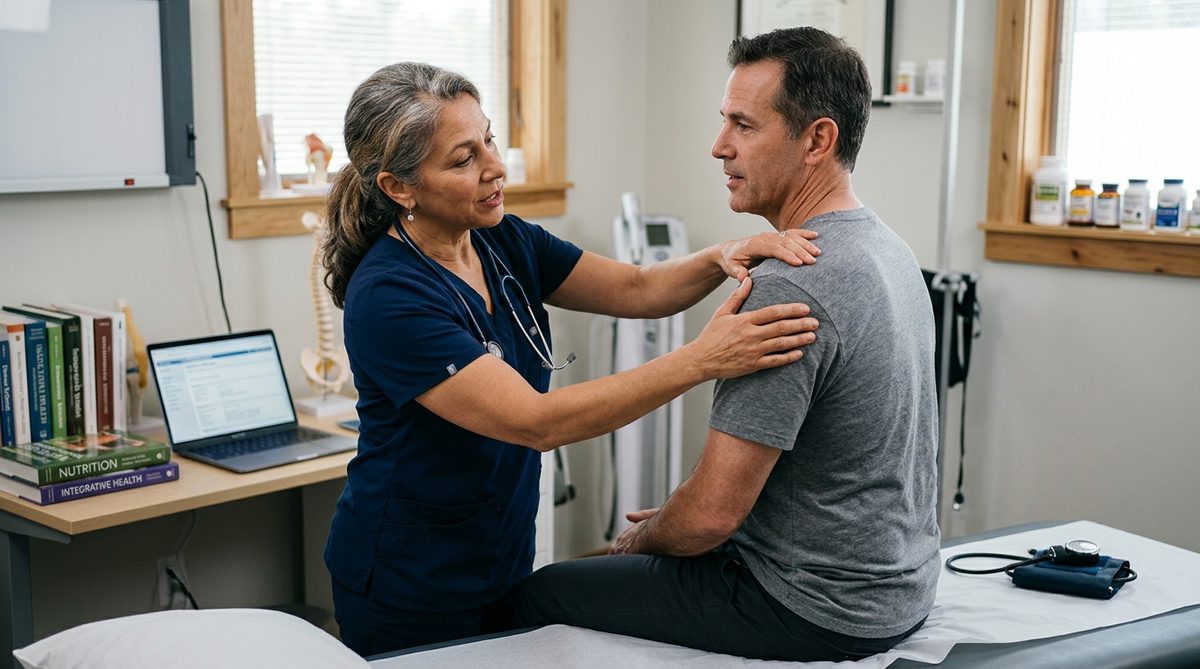
During the clinical assessment, they'll ask about snoring, witnessed apneas, daytime sleepiness, and morning symptoms. They'll also check your neck circumference, look at your throat and airway, and measure your blood pressure. A crowded oropharynx, large neck, and elevated blood pressure are all physical markers associated with obstructive sleep apnea.
But none of that confirms the diagnosis. Only a sleep study does that.
Home Sleep Apnea Testing (HSAT)
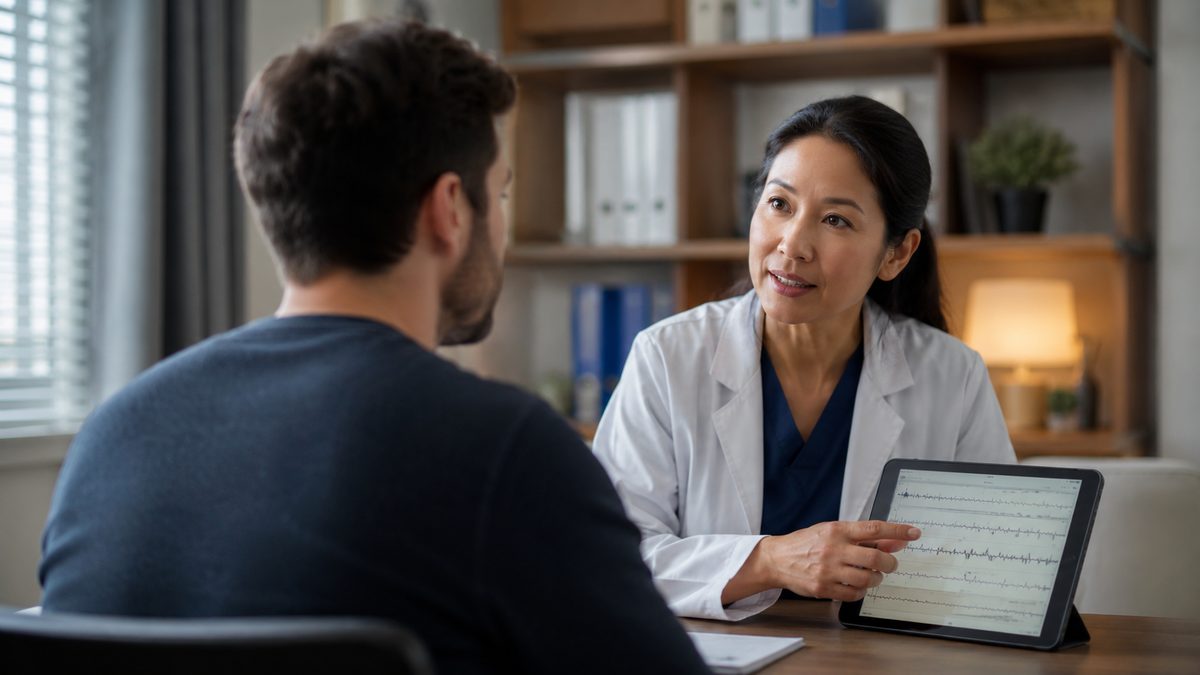
For most people, the first objective test is a home sleep apnea test. You take a small device home, attach sensors before bed, and sleep normally. The device records your breathing patterns, blood oxygen levels, and heart rate through the night.
You return it the next day and a clinician reviews the data.
HSAT is now the standard first step for uncomplicated cases. It has reduced diagnostic barriers significantly and allows primary care providers to manage the full diagnosis and treatment pathway without a specialist referral in many cases.
In-Lab Polysomnography (PSG)
Polysomnography is the gold standard. It measures everything: breathing events, oxygen levels, brain activity, eye movements, muscle activity, and heart rhythm, all simultaneously, in a sleep lab overnight.
PSG is reserved for complex cases, people with other suspected sleep disorders like narcolepsy or periodic limb movement disorder, or when a home test gives inconclusive results.
What the Results Mean: The AHI
Both tests produce an apnea-hypopnea index, or AHI. This is the number of breathing pauses or shallow breaths per hour of sleep.
- AHI below 5: normal
- AHI 5 to 14: mild OSA
- AHI 15 to 30: moderate OSA
- AHI above 30: severe OSA
An AHI of 5 or higher confirms obstructive sleep apnea. The higher the number, the more your breathing is being disrupted each hour, and the greater the strain on your cardiovascular system and sleep quality.
What Is the 4% Rule for Sleep Apnea?
The 4% rule refers to how breathing events are counted during a sleep study. A hypopnea, which is a partial reduction in airflow rather than a complete stop, is only counted as a breathing event if it causes oxygen levels to drop by at least 4% from baseline.
This matters because different scoring rules produce different AHI numbers from the same raw data. The 4% oxygen desaturation threshold is used in many clinical and insurance contexts to define what counts as a significant breathing event. Some guidelines use a 3% threshold instead, which tends to produce higher AHI scores and catches more mild cases.
In practice, this means two sleep studies scored under different rules can give you different severity classifications from the same night of sleep. If your result is borderline, it's worth asking which scoring criteria were applied.
What Is Commonly Mistaken for Sleep Apnea?
conditions that mimic sleep apnea, and misdiagnosis is common in both directions.
Insomnia is the most frequent mix-up. Both cause poor sleep and daytime fatigue. But insomnia is a problem falling or staying asleep, while sleep apnea is a problem breathing during sleep. Many people with untreated sleep apnea are treated for insomnia for years before anyone checks their airway.
Depression and anxiety share the fatigue, concentration problems, and mood changes that come with sleep apnea. Treating the sleep disorder often improves mood significantly, which suggests the mental health symptoms were downstream of the breathing problem rather than a separate condition.
Hypothyroidism causes fatigue, weight gain, and cognitive slowing. These overlap heavily with sleep apnea symptoms. A thyroid panel is worth running alongside sleep screening if these symptoms are present.
Upper airway resistance syndrome (UARS) is a condition where the airway narrows and increases breathing effort without meeting the technical threshold for apnea or hypopnea. It causes fragmented sleep and daytime fatigue but often produces a normal AHI on a standard home test.
UARS is frequently missed because home tests don't measure the effort of breathing, only airflow and oxygen. This is one of the most underrecognized conditions in sleep medicine.
Acid reflux (GERD) can cause nighttime waking, coughing, and disrupted sleep that mimics sleep apnea symptoms. Some people with sleep apnea also have GERD, because the pressure changes from apnea events can pull stomach acid upward.
Who Is Most at Risk?
Risk factors for obstructive sleep apnea include:
- Male sex (though risk in women increases significantly after menopause)
- Age over 50
- BMI over 35
- Neck circumference above 40cm
- High blood pressure
- Family history of sleep apnea
- Anatomical features like a recessed jaw, large tonsils, or a narrow airway
One angle most articles miss: women are significantly underdiagnosed. They tend to present with less obvious snoring and more atypical symptoms like insomnia, fatigue, and mood changes. Screening tools calibrated on predominantly male populations may underestimate risk in women.
If you're a woman with persistent fatigue and unrefreshing sleep, push for a sleep study even if your STOP-Bang score is borderline.
What Happens If Sleep Apnea Goes Undiagnosed?
Each apnea event triggers a stress response. Your body briefly wakes to restart breathing, your heart rate spikes, and your blood pressure rises. Do this hundreds of times a night and the cumulative effect on your cardiovascular system is significant.
Untreated moderate-to-severe OSA is associated with increased risk of hypertension, atrial fibrillation, type 2 diabetes, and impaired cognitive function. The daytime sleepiness alone raises accident risk substantially, particularly for drivers.
The good news is that treatment works. CPAP therapy, the most common treatment, reduces AHI dramatically in most people and improves blood pressure, daytime alertness, and quality of life.
Frequently Asked Questions
Can I diagnose sleep apnea myself at home?
No. You can screen yourself using the STOP-Bang questionnaire and consumer sleep trackers can flag irregular breathing patterns, but only a validated sleep study produces an AHI score that confirms a diagnosis. Self-assessment is a starting point, not an endpoint.
How long does a home sleep test take?
Most home sleep apnea tests require one to two nights of recording. Results are typically reviewed by a clinician within a few days of returning the device.
Can sleep apnea go away on its own?
In some cases, weight loss reduces OSA severity significantly. Positional OSA, where apneas occur mainly when sleeping on your back, can improve with positional therapy. But for most people, the underlying anatomy doesn't change without intervention.
Is snoring always a sign of sleep apnea?
No. Snoring without apnea is common and not medically dangerous on its own. But loud, habitual snoring combined with any other symptom, especially witnessed breathing pauses or daytime sleepiness, warrants screening.
Does a normal home sleep test rule out sleep apnea completely?
Not entirely. Home tests can underestimate severity because they don't capture all sleep stages or measure breathing effort. If your home test is normal but symptoms persist, ask about in-lab polysomnography or evaluation for UARS.
Can children have sleep apnea?
Yes. Pediatric OSA is common and often caused by enlarged tonsils or adenoids. Symptoms in children include snoring, mouth breathing, bedwetting, and behavioral problems. The diagnostic criteria differ from adults.
Your Next Steps
Answer the STOP-Bang questions right now. If you score 3 or higher, book an appointment with your GP and ask specifically for a sleep apnea referral or home sleep test. If you score 5 or higher, treat it as urgent. A professional sleep apnea assessment can guide your next steps.
Bring a list of your symptoms, including how long they've been present and whether anyone has witnessed you stop breathing. If you have a bed partner, ask them what they've noticed. That information is clinically useful and will speed up your assessment.
Don't wait for symptoms to get worse. The pathway from screening to diagnosis typically takes 2 to 4 weeks, and effective treatment can change how you feel within days of starting it. Continue with the Sleep article archive collection.
Sources

What Are 10 Signs That My Body Is Healthy?
Read article →
How to Tell if Your Body Is Unhealthy?
Read article →
What Are Signs of Poor Function Health?
Read article →
What Are Some Weird Signs That My Body Is Healthy?
Read article →
What Are Five Signs That I Might Not Be Healthy?
Read article →