How Do You Know If Sleep Apnea Is Serious? Warning Signs That Matter
Sleep apnea is serious if it causes daytime sleepiness, morning headaches, or brain fog that affects your daily life. It's also serious if your oxygen drops below 90% for extended periods, if you have heart disease, high blood pressure, or diabetes, or if your breathing stops more than 15 times per hour.
Any one of those factors means you need treatment now, not later.
The frustrating part is that most people get an AHI number after a sleep study and are told they have "mild," "moderate," or "severe" apnea, with no explanation of what that actually means for their health. That number alone doesn't tell the full story.
What Is the AHI Number and Why Isn't It Enough?
The apnea-hypopnea index (AHI) measures how many times per hour you stop breathing or breathe too shallowly. An AHI under 5 is considered normal. Between 5 and 14 is mild, 15 to 29 is moderate, and 30 or above is severe.
These categories have been the clinical standard for decades. But researchers are now questioning whether they're actually useful. A 2016 analysis concluded that the traditional AHI severity classification is inadequate as a standalone predictor of health outcomes.
The number counts breathing events. It doesn't measure how long your oxygen stays low, how fragmented your sleep gets, or how your body responds to each episode.
One of my clients came in with an AHI of 9, which put her in the "mild" category. Her GP had told her not to worry. But she was waking up exhausted every morning, couldn't concentrate at work, and had been prescribed blood pressure medication six months earlier.
Her AHI was "mild" but her situation was not.
A large European cohort study confirmed this gap. Even an AHI between 5 and 15 significantly raised the risk of hypertension compared to people who snored but didn't have apnea. The higher end of the mild range carried nearly the same hypertension risk as moderate disease.
So the mild-moderate boundary, which most doctors treat as a turning point, may not be as meaningful as assumed.
What Does Untreated Sleep Apnea Feel Like?
Most people with untreated sleep apnea don't know they have it. They just feel like they've never fully rested, no matter how many hours they sleep.
The most common experiences are:
- Waking up with a headache that clears within an hour
- Feeling unrefreshed after a full night's sleep
- Falling asleep during the day, especially when sitting still
- Difficulty concentrating or remembering things
- Mood changes, irritability, or low motivation that feel unexplained
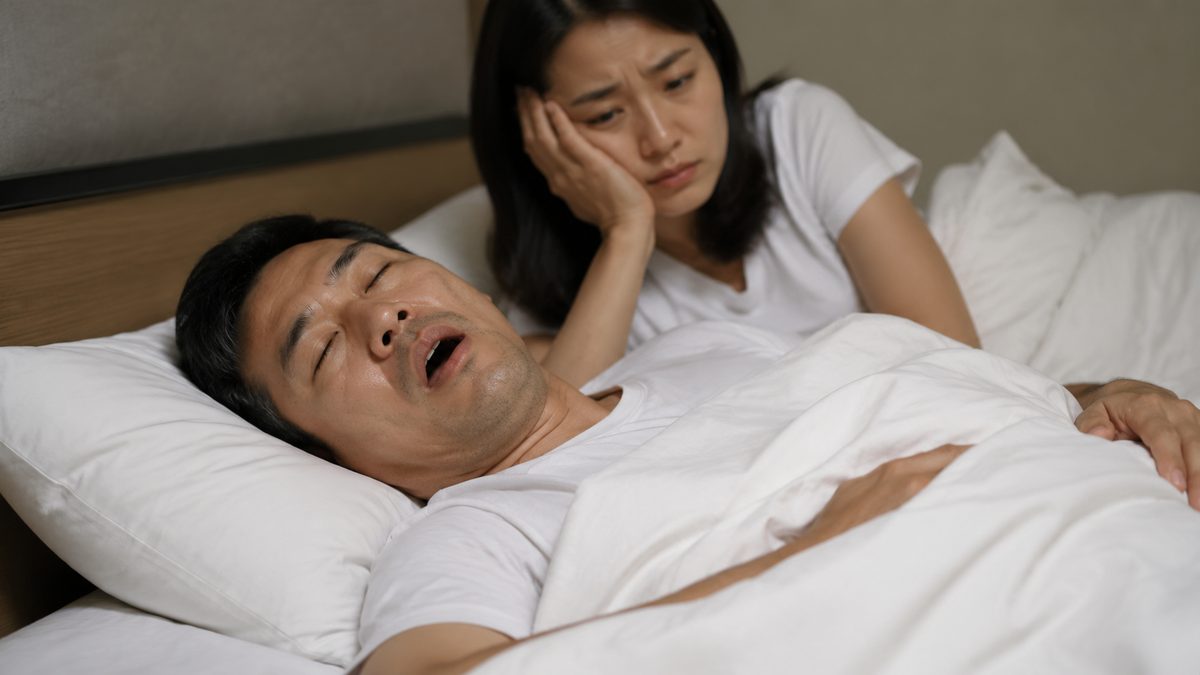
- A partner reporting loud snoring, gasping, or pauses in breathing
I remember when one of my clients described it as "feeling like I'm always running on half a battery." She'd been living that way for years and assumed it was just stress or getting older. When she finally got a sleep study done, her AHI was 22 and her oxygen was dropping into the low 80s several times a night. Learning the best way to sleep with sleep apnea can help minimize disruptions.
The oxygen drops matter more than most people realise. When your blood oxygen repeatedly falls below 90%, your body treats it as a physiological emergency. Your heart rate spikes, stress hormones flood your system, and your brain shifts out of deep sleep to restart your breathing.
This happens dozens or hundreds of times a night. Most people sleep through all of it.
When Should You Worry About Sleep Apnea?
Worry when any of these apply to you:
- Your AHI is 15 or above
- Your oxygen saturation drops below 90% for significant portions of the night, or below 80% at any point
- You have high blood pressure, heart disease, atrial fibrillation, or type 2 diabetes
- You feel sleepy during the day despite sleeping 7 or more hours
- Your symptoms are getting worse over time
- You've gained weight since your last sleep study
If your AHI is between 5 and 14 but you have no symptoms and no cardiovascular risk factors, the urgency is lower. But watching and waiting without any plan is still a mistake.
Does Sleep Apnea Get Worse Over Time?
Yes. In most people who don't treat it, sleep apnea progresses.
A longitudinal study tracking 538 adults who declined treatment found that both AHI and nocturnal hypoxemia (low overnight oxygen) worsened significantly over an average follow-up of 3.8 years. The people most likely to get worse were those with a higher starting BMI, those who gained weight during the study, and those with worse baseline oxygen levels.
The starting AHI alone didn't predict who would deteriorate fastest.
This is something most articles on sleep apnea miss. Your weight trajectory matters more than your current AHI number when predicting where your condition is headed. A person with an AHI of 10 who gains 10 kilograms over the next two years is on a very different path than someone with an AHI of 18 who loses weight and improves their sleep habits.
I know this because one of my clients tried the "let's just monitor it" approach for two years. His initial AHI was 13. When he retested, it was 27. He'd gained around 8 kilograms in that time and his morning headaches had gone from occasional to daily.
What had felt manageable had become a cardiovascular concern.
How Can You Tell If Sleep Apnea Is Severe?
Clinically, severe means an AHI of 30 or above. But in practice, severity is better understood as a combination of your AHI, your oxygen data, your symptoms, and your existing health conditions.
New classification systems are moving in this direction. The modified Baveno classification integrates AHI with symptom burden and cardiovascular risk factors including established heart disease, diabetes with complications, difficult-to-treat hypertension, and atrial fibrillation.
Preliminary analysis suggests this approach produces better outcomes than AHI alone.
What this means practically: a person with an AHI of 12 and atrial fibrillation may need more urgent treatment than someone with an AHI of 35 who is young, healthy, and asymptomatic. The number matters. But it's the whole picture that determines severity.
The cardiovascular mechanisms driving this are well documented. Repeated oxygen drops trigger sympathetic nervous system activation, raise blood pressure, promote inflammation, and cause pressure swings inside the chest that stress the heart muscle. Over years, this contributes to hypertension, arrhythmias, and increased risk of myocardial infarction.
Large observational studies have linked moderate-to-severe untreated OSA with increased risk of a first cardiovascular event and higher all-cause mortality.
What Is the 4% Rule for Sleep Apnea?
The 4% rule refers to how hypopneas (partial airway obstructions) are counted during a sleep study. A hypopnea is recorded when airflow drops by at least 30%, paired with either a 3% or a 4% drop in blood oxygen, or an arousal from sleep.
Whether a lab uses the 3% or 4% oxygen desaturation threshold changes your AHI score. The 4% rule produces a lower AHI because it only counts the more significant breathing events. The 3% rule catches more subtle disruptions and produces a higher score.
This matters because the same patient can receive a different diagnosis depending on which rule the lab used. Research confirms that the choice of hypopnea definition meaningfully affects both calculated severity and estimated cardiovascular mortality risk, particularly in women and older adults.
In my experience, most people are never told which rule their lab applied. If you've had a sleep study and your result felt borderline, it's worth asking.
The Thing Most Articles Get Wrong About Mild Sleep Apnea
Most articles treat mild apnea as a near non-issue. The evidence doesn't support that framing.
Even an AHI between 5 and 15 raises hypertension risk by 56% to 79% compared to non-apneic snorers. That's not a trivial number. Hypertension is one of the leading contributors to stroke and heart disease.
If your apnea is driving your blood pressure up, treating the apnea may reduce that risk even if your AHI is technically in the mild range.
The second thing that gets missed: symptom burden is independent of AHI. Some people with an AHI of 8 are functionally impaired during the day. Others with an AHI of 40 feel fine.
Daytime impairment matters on its own, regardless of the number, because it affects cognitive performance, driving safety, and quality of life.
The third overlooked issue is that oxygen saturation data from a sleep study is often under-discussed. Two people can have the same AHI but very different oxygen profiles. Someone who dips to 75% for 30 seconds repeatedly is at different risk than someone whose oxygen stays above 88% throughout.
Hypoxic burden (the total time and depth of oxygen drops) is emerging as a stronger predictor of cardiovascular outcomes than AHI alone.
Frequently Asked Questions
Can sleep apnea be dangerous even if I feel okay during the day?
Yes. The cardiovascular effects of repeated oxygen drops and sympathetic activation happen whether or not you feel sleepy. You can have significant overnight hypoxemia and still feel functional during the day.
This is one reason sleep apnea is sometimes called a silent risk factor for heart disease.
How quickly does untreated sleep apnea cause damage?
There's no single timeline. But longitudinal data shows meaningful worsening of both breathing events and oxygen levels over 3 to 4 years in people who go untreated.
Cardiovascular risk accumulates gradually through repeated inflammation and pressure changes, not from a single event.
Does losing weight fix sleep apnea?
In some people, significant weight loss reduces AHI substantially or resolves apnea entirely. But it doesn't work for everyone, especially those with anatomical factors like a narrow jaw or large tonsils.
Weight loss is worth pursuing for its broader health benefits. But it's not a reliable sole treatment if your apnea is moderate to severe.
Is a home sleep test accurate enough to diagnose severity?
Home tests measure breathing events and oxygen levels but miss some data that a full polysomnography captures, including sleep stages and arousals. They typically underestimate AHI.
If your home test shows moderate or severe apnea, the result is reliable. If it shows mild apnea but your symptoms are significant, a full in-lab study gives a clearer picture.
Can sleep apnea cause anxiety or depression?
Sleep fragmentation and chronic hypoxemia affect mood, emotional regulation, and cognitive function. Many people with untreated apnea are treated for depression or anxiety for years before the underlying sleep disorder is identified.
When we address the apnea, the mood symptoms often improve significantly.
What role can natural and integrative approaches play?
For people with mild apnea or those looking to support their treatment, integrative approaches that address inflammation, nervous system regulation, and metabolic health can play a supporting role. At HomeopathyPlus, we work with clients to look at the full picture of health, not just the AHI number, and support the body systems affected by disrupted sleep and chronic stress. HomeopathyPlus
What to Do Now
If you've been diagnosed with sleep apnea, or you suspect you have it, here are your concrete next steps:
- Get your oxygen data, not just your AHI. Ask your doctor or sleep specialist for your average oxygen saturation, the percentage of time below 90%, and your lowest recorded saturation. These numbers matter as much as your AHI.
- Factor in your health history. If you have high blood pressure, heart disease, atrial fibrillation, or type 2 diabetes, treat apnea more urgently regardless of your AHI score.
- Don't treat mild as harmless. If your AHI is between 5 and 15, talk to your doctor about whether treatment is appropriate based on your symptoms and cardiovascular risk, not just the number.
- Retest if you gained weight or feel worse. Sleep apnea progresses with weight gain. A test from three years ago may no longer reflect your current situation.
- Look at the whole picture. Work with practitioners who treat you as a person, not a metric. Your symptoms, your oxygen profile, your cardiovascular risk, and your quality of life all belong in the conversation.

Sources
- Lavie P (2026) "Predicting sleep apnea worsening and cardiometabolic risk without treatment" Sleep & breathing = Schlaf & Atmung. PMID: 42012562
- Bouloukaki I, Grote L, McNicholas WT, Hedner J, Verbraecken J, Parati G, et al. (2020) "Mild obstructive sleep apnea increases hypertension risk, challenging traditional severity classification" Journal of clinical sleep medicine : JCSM : official publication of the American Academy of Sleep Medicine. PMID: 32043960
- Hudgel D (2016) "Sleep Apnea Severity Classification — Revisited" Sleep. DOI: 10.5665/sleep.5776
- Kendzerska T, Leung R, Gershon A, Hawker G, Tomlinson G (2013) "Obstructive sleep apnea in risk for first cardiovascular event and all-cause mortality: a competing risks approach" Sleep Medicine. DOI: 10.1016/j.sleep.2013.11.028
- (2008) "Sleep Apnea as an Independent Risk Factor for All-Cause Mortality: The Busselton Health Study" Sleep. DOI: 10.5665/sleep/31.8.1079
- O'Donnell C, O'Mahony AM, McNicholas WT, Ryan S (2021) "Cardiovascular manifestations in obstructive sleep apnea: current evidence and potential mechanisms" Polish archives of internal medicine. PMID: 34184854
- Matthes S, Treml M, Schiza SE, Bouloukaki I, Trakada G, Pataka A, et al. (2026) "The modified Baveno classification for obstructive sleep apnoea: design of a pan-European prospective study" Sleep medicine. PMID: 41554237
- Campos-Rodriguez F, Martínez-García M, Reyes-Nuñez N, Selma-Ferrer M, Punjabi N, Farre R (2016) "Impact of different hypopnea definitions on obstructive sleep apnea severity and cardiovascular mortality risk in women and elderly individuals" Sleep Medicine. DOI: 10.1016/j.sleep.2016.05.020

What Are 10 Signs That My Body Is Healthy?
Read article →
How to Tell if Your Body Is Unhealthy?
Read article →
What Are Signs of Poor Function Health?
Read article →
What Are Some Weird Signs That My Body Is Healthy?
Read article →
What Are Five Signs That I Might Not Be Healthy?
Read article →