How Long Can a Person Live With Sleep Apnea? What the Evidence Actually Shows
You can live decades with sleep apnea. People do it all the time, many without even knowing they have it. But untreated moderate to severe sleep apnea roughly doubles your hypertension risk and raises your heart disease risk by 70% over 10 to 15 years.
The real question isn't how long you survive. It's how much damage stacks up while you wait.
The cardiovascular system takes the hardest hit. Every night, your breathing stops repeatedly, oxygen drops, your heart strains, and inflammation builds. Over years, that adds up to a significantly higher chance of heart attack, stroke, heart failure, and atrial fibrillation. Treatment changes that picture.
What Is Sleep Apnea Actually Doing to Your Body?
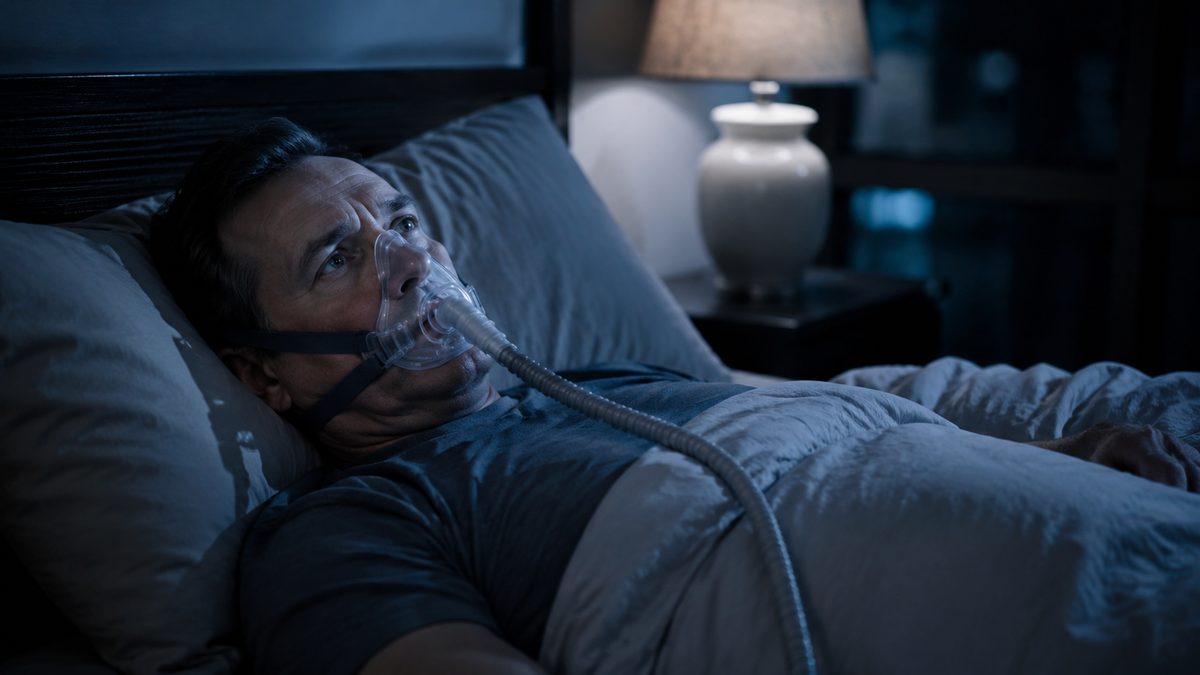
Sleep apnea interrupts your breathing during sleep, sometimes hundreds of times a night. Each pause drops your blood oxygen level. Your brain notices, jolts you partially awake, and restarts breathing. You rarely remember any of it.
But your cardiovascular system registers every single event.
The main driver of long-term damage is intermittent hypoxemia: repeated oxygen drops and recoveries. That cycle triggers your sympathetic nervous system, meaning your body keeps spiking stress hormones throughout the night. It also drives oxidative stress and chronic inflammation throughout your blood vessels.
Over time, this translates into measurable damage: stiffened arteries, elevated blood pressure that won't respond normally to medication, irregular heart rhythms, and strain on the heart muscle itself. Sleep apnea doesn't just make you tired. It quietly reshapes your cardiovascular system in ways that shorten your life.
There are two main types. Obstructive sleep apnea (OSA) happens when the throat muscles relax and physically block the airway. Central sleep apnea happens when the brain fails to send the right signals to breathing muscles. Central sleep apnea, particularly the Cheyne-Stokes pattern seen in heart failure patients, is especially dangerous and strongly predicts mortality in that group.
Does Untreated Sleep Apnea Actually Shorten Your Life?
Yes. The evidence is consistent across large observational studies. A 2022 European study found that people with both sleep apnea and insomnia (a combination called COMISA) had significantly higher all-cause mortality over 15 years compared to people with neither condition. In that same group, hypertension risk doubled (OR 2.00) and cardiovascular disease risk rose 1.7-fold (OR 1.70).
Earlier research confirmed a similar pattern. Observational data across nine studies consistently showed lower rates of major cardiovascular events in patients who used PAP therapy compared to those who went untreated. One of my clients came to us after being told her high blood pressure was just genetic. She'd had loud snoring and morning headaches for years. Once she was tested, she had severe OSA. The hypertension wasn't genetic, it was being driven by a decade of untreated oxygen drops every night.
The mechanism is direct. Sleep apnea accelerates the development of coronary heart disease, heart failure, stroke, and atrial fibrillation. These aren't rare complications. They're the expected downstream result of years of untreated intermittent hypoxemia.
Does Treated Sleep Apnea Reduce Life Expectancy?
Treated sleep apnea does not reduce life expectancy. The concern some people raise usually comes from misreading trial data.
Observational studies show clearly that treatment with positive airway pressure (PAP) therapy is associated with fewer cardiovascular events and lower mortality compared to no treatment. A 2025 systematic review and meta-analysis examined this question directly, looking at both randomised controlled trials and adjusted non-randomised studies. The picture from randomised trials was inconsistent, but this reflects something important: most of those trials specifically excluded patients with excessive daytime sleepiness, which means they were testing treatment in people with mild or asymptomatic OSA.
When you look at trials including symptomatic patients, or at real-world data, treatment consistently reduces risk. The key is that the people most likely to benefit are those with symptoms: daytime sleepiness, witnessed breathing pauses, morning headaches, high blood pressure that doesn't respond normally to medication.
One adaptive servo-ventilation trial (SERVE-HF) did show increased mortality, but that was a specific therapy used for central sleep apnea in heart failure patients with preserved respiratory drive, a very different situation. That finding doesn't apply to standard CPAP for obstructive sleep apnea.
Can You Live With Untreated Sleep Apnea?
You can. Millions of people do, often for years before diagnosis. But living with it and living well with it are different things.
In the short term, untreated sleep apnea fragments your sleep, even if you don't feel it. You wake up unrefreshed. Concentrating becomes hard. Your mood is affected. Your reaction time slows. Drowsy driving becomes a real risk. These are immediate, functional consequences that affect quality of life before any long-term damage shows up on a scan.
I remember when one of my clients described it as just feeling like a tired person. She'd been that way for so long it felt normal. She thought she was just a bad sleeper. When she finally got a diagnosis at 52, she had moderate OSA and stage 1 hypertension. Two conditions, both years in the making, that she'd been told were separate issues.
The long-term picture is harder to ignore. Untreated OSA is associated with increased incidence and progression of coronary heart disease, heart failure, stroke, and atrial fibrillation. Severity matters too. Mild OSA carries lower absolute risk than severe OSA. But the biology is the same: intermittent hypoxemia, inflammation, and sympathetic activation, just happening less frequently.
How to Reverse Sleep Apnea
Sleep apnea can be significantly reduced, and in some cases fully resolved, depending on what's driving it. The word "reverse" is accurate for a meaningful subset of people.
Weight loss is the most powerful reversible factor in obstructive sleep apnea. Fat deposits in the throat and around the airway physically narrow the space available for breathing during sleep. A 10% reduction in body weight has been shown to reduce apnea severity by approximately 26% in clinical research. Some patients with moderate OSA who lose significant weight see their sleep study results normalise entirely.
Positional therapy helps people whose apnea occurs mainly or exclusively when sleeping on their back. Training yourself to sleep on your side, using positional devices or specially designed pillows, can reduce event frequency substantially in these cases.
Alcohol and sedative reduction matters more than most people realise. Alcohol relaxes the upper airway muscles and worsens apnea significantly. I know this because my client tried cutting out alcohol for a month before his follow-up sleep study and his AHI dropped from 22 to 11 events per hour. He still had OSA, but it moved from moderate to mild.
Myofunctional therapy is an area most articles miss entirely. Targeted exercises for the tongue, soft palate, and throat muscles improve muscle tone in the upper airway and have randomised controlled trial evidence showing reductions in apnea severity. A 2015 meta-analysis found myofunctional therapy reduced AHI by approximately 50% in adults. It requires consistency, but it's a genuine intervention.
PAP therapy doesn't reverse apnea, but it eliminates the harm while you use it. CPAP or BiPAP prevents the airway from collapsing by delivering a continuous stream of pressurised air. It eliminates hypoxemic events, lowers blood pressure, and reduces cardiovascular risk in symptomatic patients. Consistency matters: benefit tracks with use of at least four hours per night.
Surgical options exist for structural causes, enlarged tonsils, adenoids, or specific anatomical patterns. These are assessed case by case and are most appropriate when there's a clear, correctable cause.
Is Sleep Apnea a Lifelong Condition?
It depends on the cause, and that has a real answer. For people whose apnea is driven primarily by anatomy, like a narrow jaw, recessed chin, or post-nasal anatomy, it tends to be chronic without structural intervention. For people whose apnea is driven by weight, muscle tone, sleeping position, or nasal obstruction, meaningful reversal is achievable.
Age is a complicating factor. Upper airway muscle tone naturally decreases with age, which is why OSA prevalence rises significantly after 50. Someone who reverses apnea through weight loss in their 40s may see it return as they age, even if weight stays stable. That's not a reason not to treat it. It's a reason to monitor it.
The framing of "lifelong condition" also misses the more useful question: are you treating it effectively? For many people, PAP therapy long-term is the right answer. It stops the damage regardless of whether the underlying anatomy changes. Some clients find that frustrating, like they haven't solved the problem. What I found was that reframing it as ongoing cardiovascular protection, rather than a failed cure, helped them stay consistent with treatment.
Warning Signs That Sleep Apnea Is Affecting Your Heart
Some patterns suggest your cardiovascular system is already under strain from untreated or undertreated sleep apnea.
- Blood pressure that's high despite medication, or high first thing in the morning
- Waking with headaches that clear within an hour
- Atrial fibrillation diagnosed without a clear cause
- Unexplained fatigue that doesn't improve with more sleep
- Heart failure with no identified cause
- Witnessed apneas reported by a bed partner
If you have any of these alongside snoring, unrefreshing sleep, or obesity, a sleep study is the appropriate next step. The test is non-invasive and often available as a home-based study. It tells you your apnea-hypopnea index (AHI), which is the number of breathing disruptions per hour and the number used to classify severity.
What Most Articles Get Wrong About Sleep Apnea and Lifespan
Most articles focus almost entirely on CPAP as the answer and treat everything else as a footnote. That misses the people for whom CPAP compliance is poor, which is a large percentage. Research consistently shows that a significant portion of people prescribed CPAP don't use it consistently enough to get cardiovascular benefit.
The second thing most articles miss is that sleep apnea doesn't damage your health in a straight line. Severity, duration, whether you have daytime symptoms, your existing cardiovascular health, and whether you have co-existing conditions like insomnia all affect your actual risk. A 35-year-old with mild asymptomatic OSA faces meaningfully different risk than a 60-year-old with severe symptomatic OSA and pre-existing hypertension.
Third, most articles treat sleep apnea as a pulmonology problem. Cardiologists, ENT specialists, dentists trained in oral appliance therapy, physiotherapists doing myofunctional work, and general practitioners all have roles in its management. When we treat it as purely a breathing device problem, we leave a lot of effective options unused. A multidisciplinary approach to comprehensive sleep apnea management yields better outcomes.
Frequently Asked Questions
Can sleep apnea kill you in your sleep?
Death during sleep directly from apnea alone is rare. The danger is cumulative cardiovascular damage over years, leading to heart attack, stroke, or arrhythmia. Sudden cardiac death does occur at higher rates overnight in people with severe untreated OSA, linked to the autonomic stress of repeated hypoxemic events.
How many years does sleep apnea take off your life?
No clean number exists, and anyone who gives you one is extrapolating beyond the evidence. What the evidence shows is significantly increased risk of cardiovascular disease and all-cause mortality over 10 to 15 years in untreated moderate to severe OSA. The more severe the apnea and the longer it goes untreated, the larger the cumulative risk.
Is mild sleep apnea dangerous?
Mild OSA (5 to 14 events per hour) carries lower cardiovascular risk than moderate or severe. For asymptomatic mild OSA, randomised trials have not shown strong benefit from PAP therapy. If you have symptoms like daytime sleepiness or morning headaches, treatment is still worth considering. Lifestyle changes like positional therapy and alcohol reduction can often resolve mild OSA entirely.
Can you treat sleep apnea without a CPAP machine?
Yes. Weight loss, positional therapy, myofunctional therapy, oral appliance therapy, and in some cases surgery are all legitimate alternatives or adjuncts. Oral appliances fitted by trained dentists are evidence-based for mild to moderate OSA and have better compliance rates than CPAP in many patients. The right option depends on your anatomy, severity, and symptoms.
Does sleep apnea get worse with age?
Generally yes. Upper airway muscle tone decreases with age, and weight gain is more common in middle age. Both worsen OSA severity. Someone with mild apnea at 40 may have moderate or severe apnea by 60 without any other change. Regular reassessment matters, especially if symptoms change.
What to Do Now
If you snore loudly, wake unrefreshed, feel sleepy during the day, or have been told you stop breathing at night, get a sleep study. Home-based sleep tests are widely available, accessible, and give you the data you need to make a real decision. If you already have a diagnosis and aren't using treatment consistently, the four-hour-per-night threshold is the evidence-based minimum for cardiovascular benefit. Below that, the protection largely disappears.
Start there. Get the test, know your AHI, then look at every tool available, not just the one your GP mentions first.Sources
Continue with the Sleep article archive collection.

What Are 10 Signs That My Body Is Healthy?
Read article →
How to Tell if Your Body Is Unhealthy?
Read article →
What Are Signs of Poor Function Health?
Read article →
What Are Some Weird Signs That My Body Is Healthy?
Read article →
What Are Five Signs That I Might Not Be Healthy?
Read article →