How to Fix Sleep Apnea Without CPAP: What Actually Works
If CPAP isn't working for you, the most effective alternative is a custom mandibular advancement device (MAD) fitted by a dental sleep medicine specialist. Research shows MADs reduce apnea severity by 48, 67% in mild-to-moderate cases and around 62% in severe obstructive sleep apnea.
Clinical guidelines back them as first-line therapy for anyone who can't tolerate CPAP, regardless of severity. You'll need proper fitting, a titration period, and a follow-up sleep study. For most people, this is the clearest path forward.
Why Do So Many People Abandon CPAP?
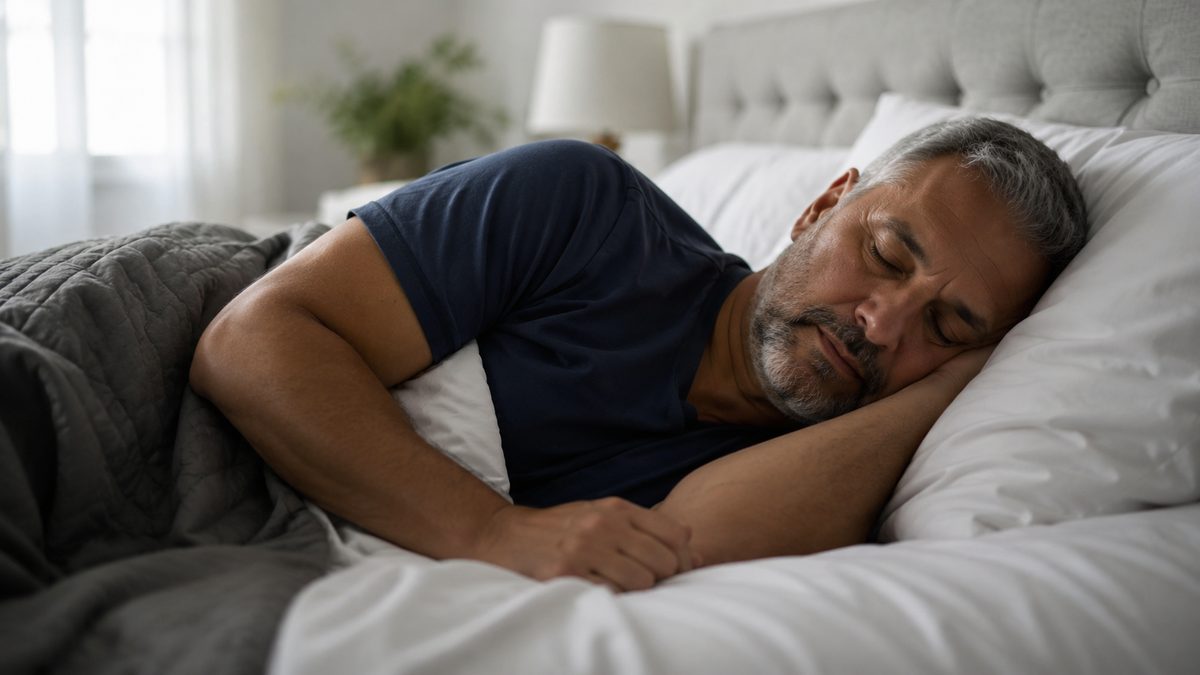
CPAP works well in controlled trials. In real life, up to half of people stop using it within a year. The mask is uncomfortable. The air pressure feels claustrophobic. Some people tear it off in the middle of the night without even waking up. Understanding what your body does during apnea events helps explain why alternatives matter.
One of my clients described wearing CPAP as "sleeping with my face in a leaf blower." She tried three different masks over six months. Each one either leaked, left pressure marks, or made her feel anxious the moment she put it on.
She stopped sleeping with it entirely and came to me exhausted, frustrated, and convinced nothing would help.
She isn't unusual. Real-world adherence data consistently shows that a therapy you actually use outperforms a therapy that's theoretically superior but sits on the nightstand. That's the core argument for exploring alternatives seriously.
What Is a Mandibular Advancement Device and How Does It Work?
A mandibular advancement device is a custom-fitted oral appliance that holds your lower jaw slightly forward while you sleep. That forward position physically opens the airway behind your tongue and soft palate, reducing the collapse that causes obstructive sleep apnea.
This isn't the same as the cheap boil-and-bite guards you find online. A properly fitted MAD is made from a dental impression, adjusted over several appointments, and titrated. The dentist moves the jaw forward in small increments until you hit the sweet spot between comfort and effectiveness. dental sleep medicine specialist
A 2024 meta-analysis covering 42 studies and over 2,200 patients found MADs reduced apnea-hypopnea index (AHI) by 48% in mild OSA, 67% in moderate OSA, and 62% in severe OSA. Those aren't small numbers.
Because people actually wear them, the real-world outcomes on daytime sleepiness, quality of life, and cardiovascular health are comparable to CPAP, even though CPAP wins on raw AHI reduction in lab settings. It's worth noting that sleep apnea can develop later in life, making early intervention even more critical.
Blood pressure reductions have also been observed in people using MADs, particularly those with moderate-to-severe disease. That matters because untreated sleep apnea is a known driver of hypertension and cardiovascular risk.
Can Sleep Apnea Be Cured Without CPAP?
For some people, yes. "Cured" is a strong word, but a meaningful subset of patients achieve near-complete resolution of apnea with an oral appliance alone, confirmed by follow-up sleep study. For others, MADs significantly reduce severity without eliminating it entirely. Either outcome is clinically valuable.
The honest answer is that response varies. Some people go from severe OSA to normal AHI on a MAD. Others see modest improvement. The research community is actively working on phenotyping tools to predict who responds best, but those tools aren't standard clinical practice yet.
Right now, the way to know if it will work for you is to try it properly, fitted, titrated, and tested with a follow-up study.
Weight loss adds another layer. Losing 10% or more of body weight can reduce apnea severity by 20, 50% in people with obesity-related OSA. I've seen this play out with clients who combined a MAD with a structured weight loss program and ended up with AHI values that no longer met the diagnostic threshold for sleep apnea.
It doesn't work for everyone, but it's worth taking seriously alongside device therapy.
How Can I Reverse Sleep Apnea Naturally?
The most evidence-backed natural approach is weight loss, particularly if excess weight is contributing to airway narrowing. Upper airway fat deposits directly reduce the space available for airflow. Losing that weight can meaningfully open the airway.
Sleeping position also matters for a specific group of patients. Positional sleep apnea means your AHI is significantly higher when you sleep on your back (supine) than on your side. For this group, staying off your back can reduce event frequency.
A 2025 meta-analysis found positional therapy significantly reduced AHI in the supine position compared to placebo. The catch: it showed no meaningful difference in overall AHI compared to placebo or oral appliances in most patients. So positional therapy on its own usually isn't enough unless your apnea is strongly positional.
Myofunctional therapy, exercises targeting the muscles of the tongue, throat, and jaw, shows some promise in reducing apnea severity, particularly in mild cases and in children. The evidence in adults is less robust, but it carries almost no downside and may complement other treatments.
Alcohol and sedative medications relax the pharyngeal muscles and reliably worsen apnea. Cutting both before bed is a practical step that costs nothing. Same with nasal congestion: a blocked nose increases airway resistance and can worsen obstructive events. Treating allergies or structural nasal issues can have a real impact.
What Is the 4% Rule for Sleep Apnea?
The 4% rule refers to how apnea events are scored during a sleep study. An apnea or hypopnea event is counted when airflow drops significantly and oxygen saturation falls by 4% or more from baseline. This is the standard used in most clinical and insurance contexts in Australia and the US to calculate your apnea-hypopnea index (AHI).
Some older studies and devices used a 3% threshold, which captures more events and produces higher AHI scores. The difference matters when comparing results across sleep studies done at different labs or when discussing your diagnosis with different specialists.
If your AHI score seems inconsistent across two studies, ask which desaturation threshold was used.
What Is the New Pill for Sleep Apnea?
Tirzepatide, a GLP-1/GIP receptor agonist used for weight loss, has shown significant reductions in AHI in clinical trials for people with obesity-related obstructive sleep apnea. The mechanism is primarily through weight reduction rather than any direct airway effect.
In a 2024 trial, participants saw AHI reductions of around 55, 63% alongside substantial weight loss.
This is a genuinely promising development. But it's worth being clear about what it is: a weight loss medication that helps sleep apnea by reducing the obesity component. It's not a standalone sleep apnea treatment, and it's not appropriate or necessary for people whose apnea isn't driven by excess weight.
It's also expensive, requires ongoing use, and carries its own side effect profile. Discuss it with your doctor if obesity is a factor in your diagnosis.
What About Surgery or Nerve Stimulation?
Hypoglossal nerve stimulation (HNS) is a surgically implanted device that stimulates the nerve controlling tongue movement, keeping the airway open during sleep. It's approved for moderate-to-severe OSA in patients who can't tolerate CPAP and who meet specific anatomical criteria. Results are strong for the right patient, but it involves surgery, a recovery period, and careful patient selection.
Upper airway surgery, including procedures like uvulopalatopharyngoplasty (UPPP) that remove or reposition soft tissue in the throat, has been used for decades. Results vary widely depending on the anatomy involved. Surgery is generally considered after other approaches have failed rather than as a first step.
Both are real options. Neither is a first resort.
What Most Articles Get Wrong About CPAP Alternatives
Most articles frame CPAP alternatives as inferior fallbacks. The evidence doesn't support that framing.
First, efficacy measured in a lab and effectiveness in real life are different things. CPAP reduces AHI more in controlled trials. But if you use a MAD for seven hours a night and CPAP for three, the MAD wins on health outcomes. Adherence is part of the treatment equation, not a footnote.
Second, the clinical practice guideline from the American Academy of Sleep Medicine doesn't recommend MADs only for mild cases. It recommends oral appliances as first-line therapy for patients who prefer them over CPAP, and for CPAP-intolerant patients at any severity level.
That's a stronger recommendation than most articles acknowledge.
Third, the response to MADs is genuinely unpredictable, but that's not a reason to avoid them. It's a reason to follow up properly. You need a sleep study after titration to confirm the device is working. Skipping that step is where people go wrong, not the device itself.
Frequently Asked Questions
Is a mandibular advancement device as good as CPAP?
In controlled trials, CPAP reduces AHI more. In real-world use, MADs produce comparable outcomes on daytime sleepiness, quality of life, and blood pressure because people actually wear them. For mild-to-moderate OSA, they're clinically equivalent in practice for most patients.
What are the side effects of oral appliances?
Jaw soreness, tooth sensitivity, excessive saliva, and in some cases minor changes in bite over time. Temporomandibular joint discomfort can occur. These are generally manageable and less severe than CPAP's mask-related problems.
A good dental sleep specialist monitors for them during titration.
Can I use a MAD if I have severe sleep apnea?
Yes, under proper supervision. The 2015 clinical guideline explicitly recommends oral appliances for CPAP-intolerant patients regardless of severity. The 2024 meta-analysis found 62% AHI reduction in severe OSA with MADs.
You need close monitoring and a follow-up sleep study to confirm adequate response.
Does sleeping on your side cure sleep apnea?
For positional sleep apnea, it helps significantly. For non-positional OSA, it's unlikely to be enough on its own. A 2025 meta-analysis found positional therapy reduced supine AHI but not overall AHI in most patients. Know your phenotype before relying on position alone.
How long does it take for a mandibular advancement device to work?
Titration typically takes four to eight weeks. During that period, the dentist adjusts the jaw position in small increments. Once titrated, a follow-up sleep study confirms effectiveness.
Most people notice improved sleep quality within the first few weeks of wearing the device.
Will losing weight fix sleep apnea?
It can, especially when excess weight is driving airway narrowing. Losing 10% or more of body weight can reduce AHI by 20, 50% in appropriate patients. It rarely resolves apnea completely on its own, which is why combining weight loss with device therapy gives the best outcomes.
What to Do Next
Start with a referral to a dental sleep medicine specialist. Get a custom MAD fitted, go through the titration process, and do a follow-up sleep study to confirm it's working.
If you're carrying excess weight, work on reducing it alongside device therapy. The combination gives better results than either alone. If you've failed both approaches, ask your sleep physician about hypoglossal nerve stimulation.
Skip the boil-and-bite devices sold online. They aren't the same thing and the research doesn't apply to them.
The single most useful action you can take today: call your GP and ask for a referral to a dental sleep medicine specialist or a sleep physician who works with oral appliance therapy. Bring your sleep study results. That one conversation starts the process.
Sources
Continue with the Sleep article archive collection.

What Are 10 Signs That My Body Is Healthy?
Read article →
How to Tell if Your Body Is Unhealthy?
Read article →
What Are Signs of Poor Function Health?
Read article →
What Are Some Weird Signs That My Body Is Healthy?
Read article →
What Are Five Signs That I Might Not Be Healthy?
Read article →