Is Homeopathy the Same as Natural? What Most People Get Wrong
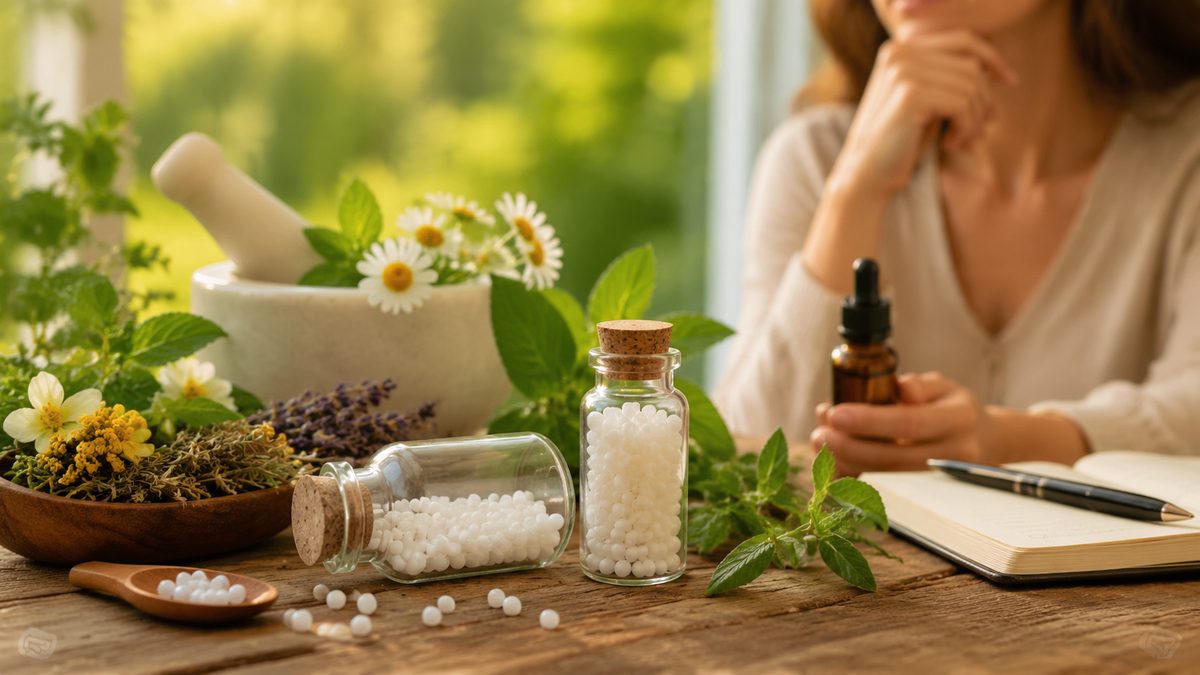
Homeopathy is natural. But natural medicine is not homeopathy. Most people use the two words as if they're the same thing, and that confusion leads to real problems when someone is trying to choose the right care for themselves or their family.
This article explains what each system actually is, where they overlap, and where they're completely different. By the end, you'll know exactly what you're choosing when you book a homeopathy appointment versus a naturopathy appointment, and why that choice matters.
What Does "Natural Medicine" Actually Mean?
Natural medicine is a broad umbrella. It covers any approach to health that uses substances or methods found in nature rather than synthetic pharmaceuticals. That includes herbal medicine, nutrition, homeopathy, naturopathy, acupuncture, and several others.
Think of it like the word "sport." Tennis and swimming are both sports, but they're not the same sport. Homeopathy and herbal medicine are both natural medicine, but they're not the same practice. Using one word for all of them blurs a distinction that matters when you're unwell and need the right kind of help.
So What Exactly Is Homeopathy?
Homeopathy is a specific system of medicine developed by Samuel Hahnemann in the late 1700s. It works on two core principles.
The first is "like cures like." A substance that causes symptoms in a healthy person can, in a very small dose, help a sick person with similar symptoms. Onion makes your eyes water and your nose run. The homeopathic remedy Allium cepa, made from onion, is used for those exact symptoms in colds and hayfever.
The second is potentisation. The original substance is diluted and succussed (shaken vigorously) many times over. The more it's diluted this way, the stronger the therapeutic effect is considered to be. This is what confuses people most, and it's also what makes homeopathy distinct from every other natural therapy.
One of my clients once said, "I thought I was just getting a weaker version of a herb." That assumption is common. What she was actually getting was something that carries an energetic imprint of the original substance, not a measurable physical dose of it. The shift changed how she approached her treatment entirely.
Is Homeopathy the Same as Natural Medicine?
Homeopathy is a form of natural medicine. It's not the whole of it. The term natural medicine includes dozens of disciplines. Homeopathy is one specific one with its own philosophy, its own training requirements, its own prescribing method, and its own body of clinical knowledge.
What sets homeopathy apart from other natural therapies is that it treats the whole person, not the condition. A homeopath doesn't look at your hayfever in isolation. They look at how you experience it, when it started, what makes it better or worse, what else is happening in your life and body at the same time. Two people with hayfever may receive entirely different remedies because their symptom pictures are different.
Herbal medicine, by contrast, tends to prescribe based on the condition and the action of the herb on that condition. That's a meaningful philosophical difference, not just a difference in substances used.
Is Naturopathy or Homeopathy Better?
Neither is universally better. They serve different purposes and work well together in many cases.
Naturopathy is a whole health system that draws on multiple therapies: nutrition, herbal medicine, lifestyle medicine, and sometimes homeopathy. A naturopath looks at your diet, your gut, your sleep, your stress, and your environment as a whole picture. Their toolkit is wider and often more physically focused.
Homeopathy is narrower in scope but goes deeper into the individual. The case-taking process in classical homeopathy can take an hour or more. The practitioner is looking for the specific remedy that matches not just your symptoms but your mental and emotional state, your sensitivities, your history. It's precise work.
In my experience, people with complex chronic conditions often benefit from both. A naturopath might address nutritional gaps and digestive function while a homeopath works on the constitutional picture. They're not competing. They complement each other.
If you're dealing with an acute illness like a cold, fever, or injury, homeopathy can work fast and well on its own. If you're dealing with something systemic like fatigue, hormonal imbalance, or recurring infections, naturopathy's broader approach may be the better starting point, with homeopathy adding a layer of depth.
Are Homeopathic and Naturopathic Doctors the Same?
No. Their training and scope are different.
A naturopath typically completes a four-year degree in naturopathic medicine. Their training covers anatomy, physiology, pathology, nutrition, herbal medicine, and various other modalities. In Australia, a qualified naturopath may hold an Advanced Diploma or a Bachelor's degree in health science.
A homeopath completes training specifically in homeopathy, which includes study of the materia medica (the body of knowledge about remedies), repertory (the index of symptoms used to find the right remedy), case-taking, and philosophy. In Australia, this can be completed at diploma or degree level.
Some practitioners are trained in both. A naturopath may have also trained in homeopathy and use it as one of several tools. But that's not always the case, and you should ask directly about their qualifications if it matters to you.
The title "homeopathic doctor" is also sometimes used, particularly in countries like India where homeopathy is a government-regulated medical degree. In Australia, the terminology differs, so it pays to ask what training a practitioner holds rather than assuming a title tells you the full story.
What Is Another Name for Homeopathy?
Homeopathy is sometimes called homoeopathy, which is the older British spelling still used in Australia and the UK. The meaning is identical. You may also see it referred to as classical homeopathy when a practitioner follows the original single-remedy method developed by Hahnemann, as opposed to combination remedies or complex homeopathy, which use multiple remedies together in one formula.
Some people use the phrase "energy medicine" when referring to homeopathy, though that term is broader and includes other approaches. The most accurate name remains homeopathy or homoeopathy.
The Part Most Articles Get Wrong About This
Most articles about homeopathy spend all their time either defending it from criticism or attacking it. Very few explain what it actually does, how a consultation works, and how it fits alongside other care. Here are a few things that tend to get missed entirely.
Homeopathy does not replace diagnosis
A good homeopath still wants to know what's happening physiologically. They may refer you for blood tests or ask that you continue seeing your GP. Homeopathy works alongside conventional medicine, not against it. I know this because one of my clients was managing an autoimmune condition with both a rheumatologist and a homeopath simultaneously. Her rheumatologist tracked her inflammatory markers. Her homeopath tracked her energy, mood, and symptom patterns. Both pieces of information were useful.
"Natural" does not automatically mean safe or effective for everyone
This is a point most natural health articles avoid. A substance being natural doesn't make it appropriate for every person in every situation. Herbal medicines can interact with pharmaceutical drugs. Nutritional supplements taken in the wrong dose can cause problems. Even water is harmful in excess.
The word natural tells you something about the origin of the substance. It doesn't tell you whether it's right for you specifically. That's what a qualified practitioner is for.
Homeopathy's mechanism is still debated, but clinical use predates that debate by two centuries
The honest answer is that scientists don't yet have a full explanation for how homeopathic dilutions work at a physical level. That's a genuine gap in the research. What exists alongside that gap is a long clinical history and a growing body of observational and trial-based evidence showing outcomes in patients. The mechanism being unclear doesn't mean the outcomes are fabricated. It means the mechanism needs more research. These are two different statements that often get collapsed into one.
When I first came across this debate, I found it more useful to ask: is this person getting better? And to track that alongside whatever the current science does and doesn't explain.
How the Two Systems Sit Within the Wider Health Picture
Both homeopathy and naturopathy belong to what is broadly called alternative medicine or complementary medicine. The word alternative has some baggage attached to it, mostly because it implies these practices exist in opposition to conventional medicine. Complementary is more accurate for how most practitioners and patients actually use them.
Health care quality in any discipline comes down to the skill of the practitioner, the appropriateness of the treatment for the condition, and how well the patient and practitioner communicate. A poorly trained homeopath and a poorly trained GP are both a problem. A well-trained homeopath working alongside a well-trained GP is a resource most people never access because they don't know it's available.
The health movements that gave rise to naturopathy and homeopathy were, at their core, a reaction to medicine that treated symptoms without looking at the person. That philosophy still holds value today, regardless of the debate around specific mechanisms.
Frequently Asked Questions
Can I use homeopathy and naturopathy at the same time?
Yes. Many people do. They address different layers of health, and when both practitioners communicate well, the results can be better than either approach alone. Working with a qualified homeopathy practitioner ensures you're getting proper guidance.
Is homeopathy regulated in Australia?
Homeopathy is not currently regulated under the Australian Health Practitioner Regulation Agency (AHPRA), but practitioners can be members of professional associations such as the Australian Homeopathic Association, which has its own code of ethics and training standards.
Can children use homeopathy?
Yes. Homeopathic remedies are commonly used for infants and children. They contain no chemical dose of the original substance and are generally well-tolerated. Always consult a qualified practitioner rather than self-prescribing for children.
Does homeopathy treat the same conditions as herbal medicine?
There's overlap, but the prescribing logic is different. Herbal medicine tends to match herbs to conditions and organ systems. Homeopathy matches a remedy to the whole symptom picture of the individual. Two practitioners might help with the same complaint through entirely different reasoning processes.
Do I need a referral to see a homeopath?
No. You can book directly. In Australia, homeopathy appointments are generally not covered by Medicare but may attract a private health fund rebate depending on your policy.
What to Do Next
If you've been using the words homeopathy and natural medicine interchangeably, now you have a clearer picture. Homeopathy is one specific, well-defined system within the broader natural health space. It has its own philosophy, its own training, and its own way of working with you as an individual.
Here's exactly what to do if you want to explore it:
- Write down your main health concern and note everything about how it feels, when it started, what makes it better or worse, and what else is happening in your life and body right now. That detail is exactly what a homeopath needs.
- Check the practitioner's qualifications. Look for membership with a professional association and ask how long they've been practicing.
- Book an initial consultation and treat it as a conversation, not a transaction. The relationship matters.
Homeopathy works best when you bring your full picture to the table. The more specific you are, the more specific the help you get back.

What Are 10 Signs That My Body Is Healthy?
Read article →
How to Tell if Your Body Is Unhealthy?
Read article →
What Are Signs of Poor Function Health?
Read article →
What Are Some Weird Signs That My Body Is Healthy?
Read article →
What Are Five Signs That I Might Not Be Healthy?
Read article →