Is Homeopathy the Same as Natural Medicine? What Most People Get Wrong
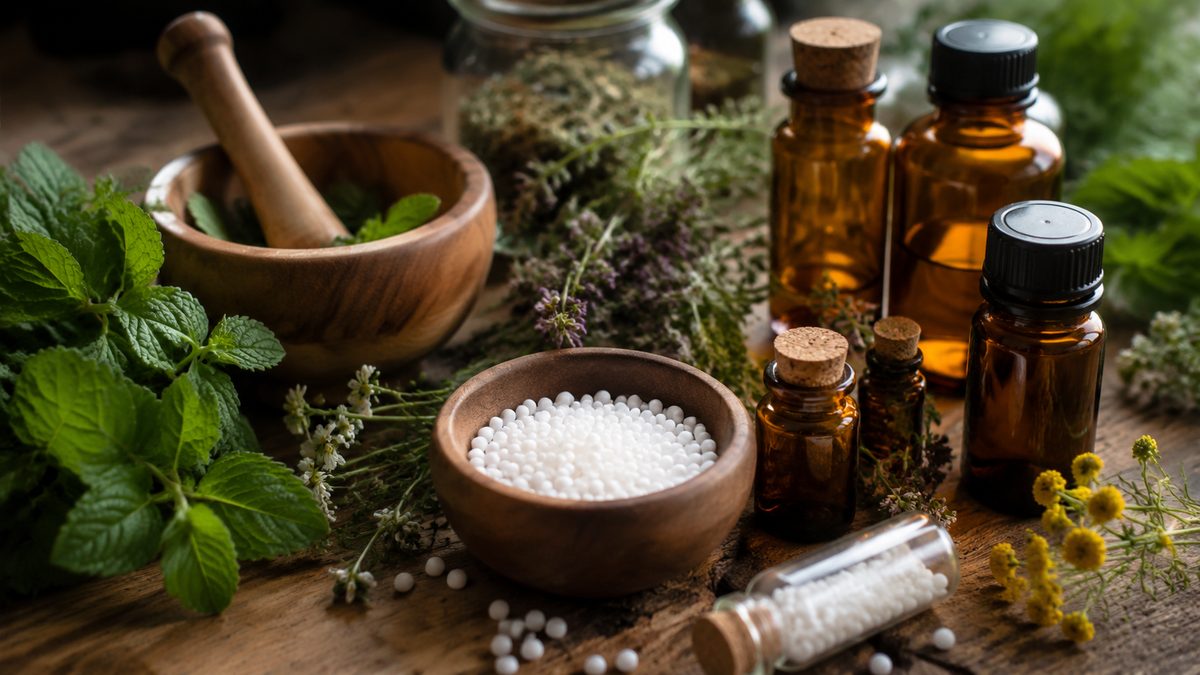
Homeopathy is not the same as natural medicine. Both sit outside conventional pharmaceutical treatment. But how they work, what they use, and what they aim to do are completely different.
Most people use these terms interchangeably. That mistake leads to confusion about what to expect from treatment, and sometimes to choosing the wrong one for what they actually need. HomeopathyPlus
What Does "Natural Medicine" Actually Mean?
Natural medicine is an umbrella term. It covers any health approach that uses non-synthetic substances or non-pharmaceutical methods. Herbal medicine, nutrition therapy, naturopathy, acupuncture, and homeopathy all get grouped under it. how they work, what they use, and what they aim to do are completely different
The problem is that "natural" tells you almost nothing about how a therapy works. Arsenic is natural. So is hemlock. Natural doesn't mean safe, effective, or gentle.
When I work with clients asking for "something natural," I ask first: what do you mean by that? Nine times out of ten, they mean they want to avoid pharmaceutical side effects. That's a fair goal. But herbal medicine, homeopathy, and naturopathy each pursue it in completely different ways.
What Is the Difference Between Natural and Homeopathic Medicine?
Natural medicine in the broad sense works through physical substance. A herbal tincture contains measurable plant compounds. A nutritional supplement contains measurable vitamins or minerals. Your body processes these the way it processes food or any other chemical input.
Homeopathy works on a different principle entirely. It uses substances diluted to the point where little to no original molecule remains. The theory is that water retains an energetic imprint of the original substance, and that imprint stimulates the body's own healing response.
That's not a chemical mechanism. It's an energetic one. This is why homeopathy sits in a separate category, even though it's often sold in health food stores next to herbal products.
One of my clients took a homeopathic remedy thinking it would work like a herbal supplement, then stopped after a week because she didn't feel an immediate physical effect. When I explained that homeopathy works more like a signal than a dose, and that the timeline is different, she tried again with better results. The misunderstanding about mechanism had cost her a month of treatment.
Is Homeopathy a Natural Medicine?
Yes, in the sense that the original substances come from plants, minerals, or animals, and nothing synthetic is added. No, in the sense that the final remedy contains almost none of that physical substance.
This is the detail most summaries leave out. A homeopathic remedy like Arnica 30C started with arnica plant. But after 30 rounds of serial dilution, the mathematical probability of a single molecule of arnica remaining is essentially zero.
So calling homeopathy "natural medicine" is technically accurate but practically misleading. It's natural in origin. It's not natural in mechanism, the way herbal medicine is.
Is Homeopathy Different from Herbal Medicine?
Completely different, despite the fact that both sometimes use the same plants as starting points.
Herbal medicine uses measurable doses of plant material. A St John's Wort tincture contains hypericin and hyperforin, compounds researchers have studied for their effect on serotonin reuptake. You can measure the dose. You can predict interactions with other medications. The mechanism is biochemical.
A homeopathic preparation of St John's Wort (Hypericum perforatum in homeopathic language) is chosen based on symptom matching, not biochemistry. The practitioner asks: does this person's pattern of symptoms match the known symptom picture of this remedy? The selection process is individualised and based on the whole person, not just the condition.
In my experience, people who need quick, measurable physical support, like antifungal action or anti-inflammatory relief, do better with herbal medicine in the short term. People dealing with chronic, layered, or hard-to-diagnose patterns often respond better to homeopathy, because the approach looks at the whole picture rather than targeting one pathway.
I remember one client who had tried three different herbal protocols for recurring sinus infections over two years. Nothing held. When we moved to homeopathic treatment and looked at her full symptom picture, including her sleep, her mood, and the specific time of day her symptoms worsened, the remedy that came up was not what anyone would have predicted from the diagnosis alone. The infections stopped recurring.
That's not because homeopathy is stronger than herbal medicine. It's because the method of selection was different.
Which Is Better, Naturopathy or Homeopathy?
Neither is universally better. They serve different purposes and work at different levels.
Naturopathy is a system of care that draws on multiple tools: nutrition, herbal medicine, lifestyle advice, and sometimes homeopathy as one component. A naturopath identifies deficiencies, toxic loads, structural problems, and lifestyle factors, then addresses them with appropriate interventions. The approach is functional. It asks: what inputs does this body need, and what does it need removed?
Homeopathy is a complete system on its own. It doesn't add or remove physical substances. It works by selecting a single remedy that matches the person's symptom pattern, with the aim of stimulating the body's own regulatory response.
What I found was that naturopathy tends to produce faster results when the problem is clearly nutritional or structural. Homeopathy tends to produce deeper results when the problem is chronic, recurring, or has a strong emotional or constitutional layer.
The two are not in competition. Many practitioners use both. Some clients benefit from starting with naturopathic support to stabilise, then moving to homeopathy for deeper resolution. Some start with homeopathy and add nutritional support as the underlying pattern becomes clearer.
The question isn't which is best in the abstract. It's which one fits where you are right now.
What Most Articles Get Wrong About This
Most comparisons of homeopathy and natural medicine make three errors worth addressing directly.
First, they treat dilution as an obvious flaw. The standard critique is: there's nothing in it, so it can't work. This assumes that biochemical action is the only valid mechanism for a health intervention. Homeopathy proposes a different mechanism. Whether that mechanism is valid is a legitimate scientific debate. Dismissing it because it doesn't fit a biochemical model isn't scientific reasoning. It's circular.
Second, they conflate all alternative medicine into one category. Herbal medicine, homeopathy, naturopathy, and acupuncture have almost nothing in common except that they're not pharmaceutical. Lumping them together produces bad comparisons and bad advice.
Third, they ignore the individualisation factor. Conventional medicine and most herbal medicine give the same treatment for the same diagnosis. Homeopathy gives different remedies to different people with the same diagnosis, based on their individual symptom picture. This makes it extremely difficult to test in standard randomised controlled trials, which assume uniform treatment. The research challenges with homeopathy are partly methodological, not just about efficacy.
How Homeopathy Fits Within the Broader Health Picture
Homeopathy is one system within a wide field of health care that prioritises the body's capacity to heal. That field includes naturopathy, herbal medicine, nutrition therapy, and others.
What connects them is not the method. It's the underlying assumption: the body has regulatory intelligence, and the job of the practitioner is to support that intelligence rather than override it.
Where they differ is in how they do that. Herbal medicine provides chemical support. Nutrition therapy corrects inputs. Naturopathy integrates multiple approaches based on what the system is missing. Homeopathy sends a signal.
None of these is a replacement for emergency medicine or serious acute care. When I work with clients, I'm always clear about the boundary. A homeopathic remedy isn't appropriate for a burst appendix. A herbal anti-inflammatory isn't a substitute for a fracture assessment. Knowing what each system is designed for matters.
FAQ
Can you take homeopathic remedies and herbal medicine at the same time?
Yes, in most cases. They work through different mechanisms and don't generally interact the way two pharmaceutical drugs might. That said, a qualified practitioner should oversee any combination, particularly if strong herbal doses are involved.
Is homeopathy regulated like herbal medicine?
In Australia, both homeopathic and herbal products are regulated by the Therapeutic Goods Administration (TGA) under the complementary medicines framework. Registration or listing requirements apply to both. This doesn't mean efficacy is guaranteed, but it does mean safety standards and labelling requirements exist.
Does homeopathy have side effects?
Homeopathic remedies can produce what practitioners call an aggravation, a temporary worsening of symptoms before improvement. This is considered a response sign, not toxicity. Because the physical dose is so small, the kind of side effects seen with herbal or pharmaceutical medicines are rare. If you're pregnant, always check with a practitioner before starting any treatment.
Why do some health food stores sell homeopathic and herbal products side by side?
Retail placement is based on market category, not mechanism. Both are classified as complementary medicines and both appeal to people seeking non-pharmaceutical options. That proximity creates the impression they're the same kind of thing. They're not.
If there is no physical substance in a homeopathic remedy, how can it do anything?
This is the central question in homeopathy research. The proposed answer is that water holds a structural or energetic memory of the substance used in preparation. Current mainstream science doesn't have a confirmed mechanism for this. What exists is a body of clinical observation, some positive research trials, and ongoing methodological debate. The honest answer is that how it works isn't yet fully explained, but practitioner and patient experience with it spans over 200 years across many countries.
What to Do Next
If you've been using "natural medicine" as a catch-all and aren't sure what you actually need, start by identifying your goal. Do you want to address a measurable deficiency or a specific biochemical problem? Start with nutrition or herbal medicine. Do you have a chronic pattern that hasn't responded to other approaches, or a set of symptoms that no single diagnosis seems to capture? Homeopathy is worth a proper consultation.
The clearest action: book a consultation with a qualified homeopath, not a general health food store session, but a full case-taking appointment. Bring your full history. The symptom picture they build from that consultation will tell you more about which system fits your situation than any general comparison article can.
For professional homeopathic care in Australia, HomeopathyPlus offers consultations grounded in classical homeopathic practice, with clear guidance on when homeopathy fits and when another approach serves better.
Continue with the Homeopathic remedies and practice collection.

What Are 10 Signs That My Body Is Healthy?
Read article →
How to Tell if Your Body Is Unhealthy?
Read article →
What Are Signs of Poor Function Health?
Read article →
What Are Some Weird Signs That My Body Is Healthy?
Read article →
What Are Five Signs That I Might Not Be Healthy?
Read article →