Is It Okay to Eat Bananas After Taking Medicine? What You Need to Know
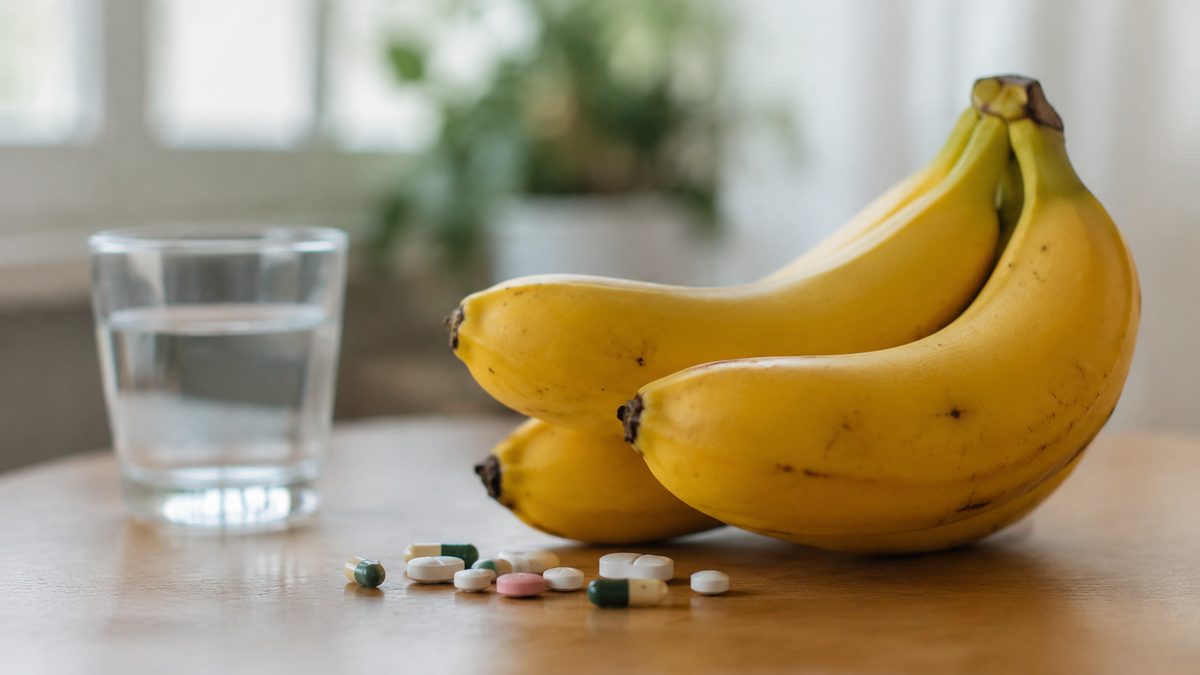
For most people on most medications, eating a banana is completely fine. But for a specific group of drugs, bananas can cause a real problem. One that builds slowly and can become dangerous before you notice anything is wrong.
The issue is not the banana itself. It's the potassium inside it. One medium banana carries roughly 422 mg of potassium, a meaningful amount. When certain medications are already raising your potassium levels, adding that load regularly can push things too far.
Here's what you actually need to know.
What Medications Are Not Good With Bananas?
The main category to know is potassium-sparing diuretics. These drugs help your body get rid of water and sodium without flushing out potassium at the same time. The problem is that potassium then builds up in your blood. Eat a banana a day on top of that, and you're adding more potassium to an already rising pool.
Common potassium-sparing diuretics include spironolactone, amiloride, and triamterene. Doctors prescribe them for heart failure, high blood pressure, and certain hormonal conditions.
Beyond diuretics, ACE inhibitors and ARBs also raise potassium levels. These are widely prescribed for blood pressure and kidney protection. Drugs like lisinopril, ramipril, losartan, and valsartan all work through mechanisms that slow potassium loss from the kidneys. One client of mine was on lisinopril for years, eating two bananas a day because she thought fruit was always a safe choice. Her follow-up blood test showed elevated potassium, and her doctor had to adjust her diet before touching her medication. She had no idea the two were connected.
A third category worth knowing: potassium supplements. If you're already taking a prescribed potassium supplement, eating high-potassium foods like bananas, avocado, and spinach on top of that requires careful tracking. Too much potassium in the blood is called hyperkalemia, and it affects how your heart beats.
Why Do Some Doctors Say Not to Eat Bananas?
When a doctor says to watch your banana intake, they're almost always managing your potassium balance. The kidney is the main regulator of potassium in the body. Healthy kidneys handle extra potassium well. But certain medications interfere with that process, and so do conditions like chronic kidney disease.
Hyperkalemia, too much potassium in the blood, doesn't usually announce itself loudly. Early symptoms include muscle weakness, fatigue, and a strange heaviness in the limbs. Most people brush those off. At higher levels, potassium disrupts the electrical signals in heart muscle, which can cause irregular heartbeats. In severe cases, it becomes a medical emergency.
I remember when one of my clients described feeling unusually tired and weak in her legs. She was on spironolactone and had been drinking a potassium-fortified sports drink every day alongside her regular diet. No one had connected the dots for her. When we looked at her total daily potassium intake, it was well above the safe upper range for someone on her medication. Cutting out the supplement drink and moderating high-potassium foods made a clear difference within a few weeks.
The doctor's warning about bananas is really a warning about cumulative potassium load. A banana is just one of the more visible, everyday sources.
Which Fruit Should You Not Eat After Taking Medicine?
This depends entirely on which medication you're taking. There's no single fruit that's universally off-limits with all medicine.
That said, a few fruits come up repeatedly in clinical pharmacology because of how they affect drug absorption and metabolism.
Grapefruit is the most studied. It blocks an enzyme in the gut called CYP3A4, which breaks down a large number of common drugs. When that enzyme is blocked, drug levels in the blood rise higher than intended. This applies to certain statins, some blood pressure medications, immunosuppressants, and a range of other drugs. The effect can last for over 24 hours from a single glass of grapefruit juice. This is a genuine pharmacological interaction, not just a precaution.
Pomelo has a similar effect to grapefruit and is worth treating the same way if you're on any of the medications that grapefruit affects.
Bananas, as covered, matter when potassium management is the concern. For everyone else, they're a reasonable food choice.
What I found was that most people have never been told which specific foods interact with their specific drug. They either avoid everything out of caution or avoid nothing. Neither approach is right. The answer sits in understanding the mechanism behind your particular medication.
What Medication Means You Can't Eat Bananas?
There is no medication that means you can never eat a banana again. What some medications mean is that you need to keep your total potassium intake within a controlled range, and that includes monitoring banana consumption.
The medications most likely to prompt this conversation are:
- Spironolactone, used for heart failure, fluid retention, hormonal acne, and polycystic ovary syndrome
- Amiloride and triamterene, potassium-sparing diuretics often combined with other water tablets
- ACE inhibitors, lisinopril, ramipril, perindopril, enalapril
- ARBs (angiotensin receptor blockers), losartan, valsartan, irbesartan, candesartan
- Heparin, used in anticoagulation, can affect potassium levels with prolonged use
- NSAIDs taken long-term, ibuprofen and similar drugs can impair potassium excretion through the kidneys
If you're on any of these and you eat bananas daily, it's worth raising at your next appointment. Your doctor can check your potassium through a simple blood test and tell you whether your intake needs adjusting.
The Part Most Articles Get Wrong
Most articles frame this as a simple yes or no question. They either say bananas are fine or they list every drug with a potassium warning and leave readers afraid of fruit. Both miss the point.
The real issue is total dietary potassium load over time, not one banana eaten once. A person on spironolactone who eats a banana on a Tuesday is not in danger. A person on spironolactone who eats two bananas a day, drinks a green smoothie with spinach and avocado, and tops meals with tomato paste is building a cumulative load that their kidneys may not be clearing fast enough given the medication.
In my experience, the people most at risk are not the ones who eat a banana occasionally. They're the ones who have been told to eat healthier, interpret that as eating more fruit and vegetables, and don't know that some of the healthiest foods carry high potassium.
Another angle most articles miss: kidney function changes the equation entirely. Someone with early-stage chronic kidney disease and a potassium-sparing diuretic has far less margin than a healthy adult on the same drug. The kidneys regulate potassium excretion. When they're compromised, the diet has to do more of the work of keeping levels stable. A banana that's harmless for one person is a real concern for another taking the same medication with reduced kidney function.
The third thing most sources overlook: timing matters less than quantity. People often ask whether eating a banana before or after taking medication is the issue. For potassium-related interactions, timing isn't the mechanism. The drug is affecting how your kidneys handle potassium systemically. Whether you eat the banana two hours before or two hours after your tablet doesn't change the cumulative blood potassium level. What matters is how much potassium you eat across the whole day, every day.
What About Homeopathic and Natural Medicines?
Most homeopathic remedies don't carry the same food interaction concerns as pharmaceutical drugs. Homeopathy works through a different framework than conventional pharmacology, and the potassium-drug interactions described above are specific to drugs that directly affect kidney function or potassium channels. Learn more about food interactions with homeopathic remedies to ensure safe concurrent use.
That said, when working alongside conventional prescriptions, it's always worth being transparent with the practitioners involved. If you're taking a prescribed ACE inhibitor alongside homeopathic support, the dietary guidance that applies to the pharmaceutical drug still applies. The homeopathic remedy doesn't cancel out the interaction risk from the conventional medication. Understanding precautions when combining treatments helps you protect your health.
Frequently Asked Questions
Can I eat a banana while taking blood pressure medication?
It depends on which blood pressure medication. If it's an ACE inhibitor or ARB, moderate banana intake is usually fine, but daily high intake alongside other potassium-rich foods is worth discussing with your doctor. If it's a standard calcium channel blocker or beta-blocker, bananas aren't generally an issue.
Does banana affect antibiotic absorption?
No meaningful interaction exists between bananas and most antibiotics. Absorption of some antibiotics is affected by food in general, but banana specifically isn't a concern. Check the instructions on your antibiotic packaging. If it says take on an empty stomach, that applies to all food, not bananas specifically.
Is it safe to eat bananas while taking lisinopril?
In moderation, yes. Lisinopril raises potassium levels, so eating several bananas a day alongside other high-potassium foods isn't advisable. One banana occasionally is unlikely to cause a problem in someone with normal kidney function. Your doctor can monitor your potassium with a blood test if you're unsure.
What are the symptoms of too much potassium from food and medication combined?
Early signs include muscle weakness, fatigue, and tingling or numbness in the hands and feet. More serious signs include chest discomfort and irregular heartbeat. If you experience these and you're on a potassium-affecting medication, seek medical assessment promptly.
Are there other high-potassium foods to watch besides bananas?
Yes. Avocado, spinach, tomatoes and tomato-based sauces, potatoes, sweet potatoes, prunes, oranges, and dairy products all carry significant potassium. If your doctor has told you to limit potassium, the focus should be on your total daily intake from all sources, not just bananas.
What to Do Now
Pull out your current medication list. If you're taking a potassium-sparing diuretic, an ACE inhibitor, or an ARB, look up the potassium content in your regular daily diet. If bananas, avocado, spinach, or potatoes feature heavily every day, mention this to your doctor or pharmacist at your next visit and ask for a potassium blood test. Seek professional guidance to create a personalized plan that accounts for your complete medication profile.
If you're on any other class of medication and eating bananas occasionally, you almost certainly don't need to change anything. Eat the banana.
The goal is not to avoid healthy food. It's to understand how your specific medication affects your body so that what you eat works with your treatment, not against it.

What Are 10 Signs That My Body Is Healthy?
Read article →
How to Tell if Your Body Is Unhealthy?
Read article →
What Are Signs of Poor Function Health?
Read article →
What Are Some Weird Signs That My Body Is Healthy?
Read article →
What Are Five Signs That I Might Not Be Healthy?
Read article →