Is There Anything That Can Be Misdiagnosed as Sleep Apnea?
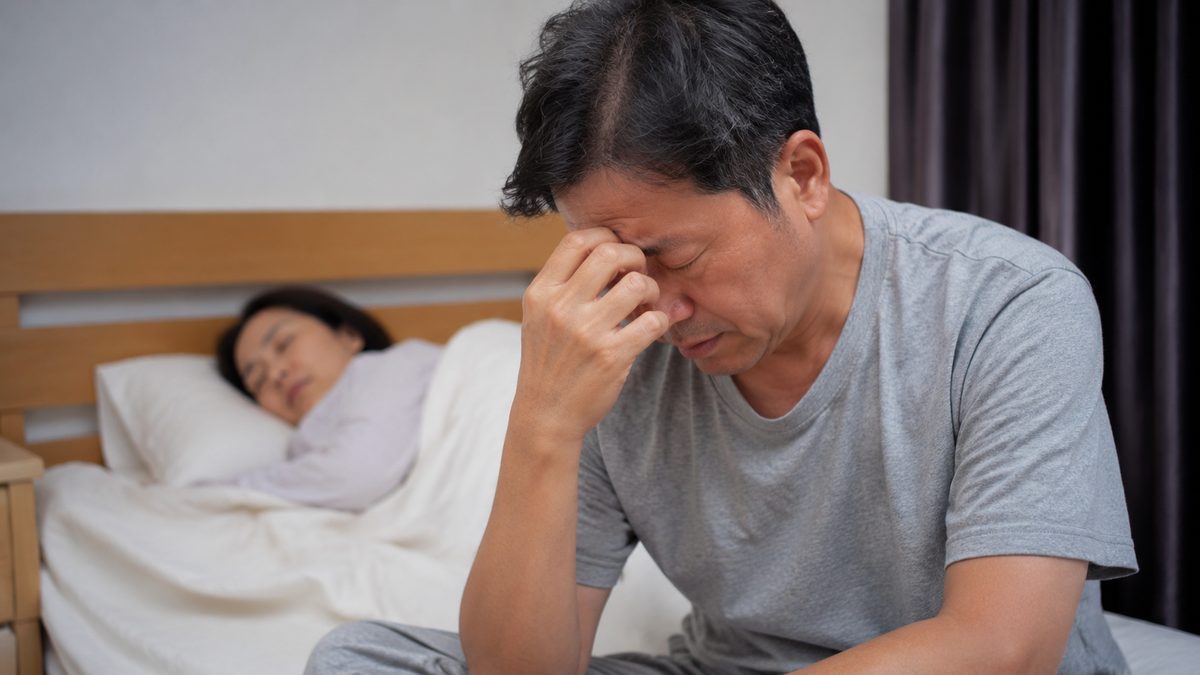
Yes. Several conditions get confused with sleep apnea regularly. REM sleep behavior disorder, narcolepsy, restless legs syndrome, sleep-related epilepsy, depression, and simple sleep deprivation all produce symptoms that look a lot like obstructive sleep apnea (OSA).
Snoring, gasping, daytime fatigue, and broken sleep are not unique to OSA. They show up across a wide range of sleep and neurological conditions. Without objective testing, it's easy to label the wrong thing.
The fix is straightforward: a proper sleep study. Real OSA shows an apnea-hypopnea index (AHI) of 5 or more breathing events per hour combined with symptoms, or 15 or more events per hour without symptoms. If your numbers don't hit those thresholds, or if CPAP isn't helping, the diagnosis deserves a second look.
What Can Be Mistaken as Sleep Apnea?
The conditions below share enough surface symptoms with OSA that they get mixed up in clinical practice. Some are pure mimics. Some can actually occur alongside OSA, making the whole picture harder to read.
REM Sleep Behavior Disorder
This is the most commonly confused condition with OSA. In REM sleep behavior disorder (RBD), the normal muscle paralysis that happens during dreaming breaks down. People shout, kick, punch, or thrash while asleep.
Their bed partners report exactly what OSA bed partners report: disturbed nights, gasping sounds, strange movements.
One of my clients came to me after her husband had been on CPAP for eight months with zero improvement. He was still thrashing at night and waking up exhausted. His original sleep study had been a basic home test. When he finally got video-polysomnography in a lab, the clinician spotted clear RBD activity with normal breathing. He never had OSA. He'd been wearing a mask for nothing.
Antelmi et al. note that OSA is one of the most frequent mimics of RBD, and that the two can also be comorbid, meaning someone can have both at once. This is why video-polysomnography matters. A standard home test won't catch RBD.
Narcolepsy
Narcolepsy causes sudden, uncontrollable sleep attacks during the day. People with narcolepsy also report fragmented nighttime sleep, vivid dreams, and waking up feeling unrefreshed.
That list overlaps almost completely with untreated OSA.
The key difference is cataplexy: a sudden loss of muscle tone triggered by strong emotion, like laughing or being startled. Not everyone with narcolepsy has cataplexy, but when it's present, it points clearly away from OSA. Without cataplexy, narcolepsy and OSA can look nearly identical on a basic history alone.
Restless Legs Syndrome
Restless legs syndrome (RLS) causes an uncomfortable urge to move the legs, usually worse at night. It fragments sleep relentlessly. People wake up tired, report poor sleep quality, and sometimes describe waking throughout the night.
The symptom overlap with OSA is real.
What separates RLS is the sensory component: the creeping, crawling, or aching feeling in the legs that eases when moving. Most clinicians who take a careful history catch this. The problem is rushed appointments where daytime fatigue drives the clinical story and the leg symptoms never get asked about.
Non-REM Parasomnias
Sleepwalking, night terrors, and confusional arousals all happen during non-REM sleep, usually in the first half of the night. A bed partner watching someone sit up, moan, or stumble around at night might describe it as a breathing episode.
The person usually has no memory of the event. Sound familiar? OSA works the same way.
OSA can actually trigger parasomnias by causing arousals from deep sleep. So these can run together. If parasomnias are suspected, a full in-lab polysomnography with video recording is the only way to know what's actually happening.
Sleep-Related Epilepsy
Some forms of epilepsy cause seizures exclusively or primarily during sleep. Sleep-related hypermotor epilepsy produces repetitive motor behaviors, vocalizations, and sudden arousals at night that can look almost identical to OSA events or parasomnias.
Clinicians who aren't looking for it will miss it.
This isn't a common misdiagnosis, but it's a dangerous one to miss. Video-EEG polysomnography is the tool that catches it.
Idiopathic Hypersomnia
Idiopathic hypersomnia means excessive daytime sleepiness with no identifiable cause. People sleep long hours, still wake up unrefreshed, and struggle to stay alert during the day.
The presentation looks like poorly treated OSA. The sleep study is what separates them: idiopathic hypersomnia shows normal breathing with no significant AHI.
Depression and Anxiety
This is the one most articles miss. Depression disrupts sleep architecture deeply. It causes early morning waking, fragmented sleep, and profound daytime fatigue. Anxiety drives hyperarousal at night, making it hard to stay asleep.
Both conditions produce the same tired, foggy, low-energy presentation that brings people in asking about sleep apnea.
I've seen clients convinced they had OSA who turned out to have undertreated depression. Their sleep study was completely normal. Once the depression was addressed, the sleep improved. The mistake is assuming that daytime fatigue automatically points to a breathing problem at night.
Obesity Hypoventilation Syndrome
Obesity hypoventilation syndrome (OHS) involves shallow breathing during sleep that leads to low oxygen and high carbon dioxide levels. It shares features with OSA and often coexists with it, but the mechanism is different.
OSA is about upper airway collapse. OHS is about the weight of the chest wall reducing breathing effort overall. Treatment for pure OHS differs from standard CPAP for OSA, so distinguishing them matters clinically.
Can You Be Wrongly Diagnosed With Sleep Apnea?
Yes, and it happens more than most people expect. Sleep medicine receives limited coverage in standard medical training, which means primary care clinicians are often working from symptom recognition alone rather than systematic sleep evaluation.
When someone comes in tired, snoring, and waking up at night, OSA is the obvious first guess. That guess is right often enough to feel reliable. But it's wrong often enough to matter.
Wrong diagnosis works both ways. Some people get told they have OSA when they don't. Others have OSA missed entirely because the presenting symptom was labeled as depression, insomnia, or just stress.
The safeguard is objective testing. Polysomnography, whether in-lab or at home, gives you the AHI number that either confirms or rules out OSA. Clinical symptoms alone aren't enough to confirm the diagnosis.
What Is the 4% Rule for Sleep Apnea?
The 4% rule refers to how hypopneas are scored during a sleep study. A hypopnea is a partial reduction in airflow, not a complete stop. To count as a clinically significant event, it needs to either cause a brief awakening (arousal) or drop blood oxygen saturation by a certain percentage.
The 4% threshold means the oxygen level must fall by at least 4% from baseline for the event to be counted. Some scoring systems use a 3% threshold instead. This matters because the same night of sleep can produce a different AHI depending on which threshold the lab uses.
A borderline case might score above or below the diagnostic cutoff depending purely on the scoring rule applied.
This is one reason a borderline AHI result deserves clinical judgment, not just a number. If your AHI sits right at the diagnostic threshold and your symptoms are vague, the scoring method used is worth asking about.
What Else Could It Be Besides Sleep Apnea?
Beyond the conditions above, a few more are worth knowing:
- Central sleep apnea: Breathing stops not because the airway closes, but because the brain fails to send the signal to breathe. Cheyne-Stokes respiration is a pattern of central apnea linked to heart failure. CPAP doesn't fix central apnea the way it fixes OSA.
- Upper airway resistance syndrome: Breathing effort increases against a narrowed airway without full apnea events. The AHI looks normal or low, but sleep is still fragmented. Standard home testing can miss this entirely.
- Chronic sleep deprivation: Consistently sleeping too few hours produces daytime fatigue indistinguishable from sleep apnea. The treatment is more sleep, not a CPAP machine.
- Hypothyroidism: Low thyroid function causes fatigue, cognitive slowing, and can contribute to sleep disruption. A basic blood panel picks it up.
Three Things Most Articles Get Wrong About Sleep Apnea Misdiagnosis
First: home sleep tests miss more than people think. They measure breathing patterns but don't capture brain activity, leg movements, or behavior. Conditions like RBD, parasomnias, and sleep-related epilepsy are invisible on a home test.
If the symptoms are unusual or CPAP isn't working, an in-lab video-polysomnography is the right next step.
Second: CPAP failure is a diagnostic clue, not a compliance problem. When someone uses CPAP correctly and still feels terrible, the usual clinical response is to adjust the pressure or push harder on adherence.
The less common but more important response is to ask whether the diagnosis was right. In my experience, persistent symptoms despite good CPAP use should trigger a re-evaluation before assuming the equipment is the issue.
Third: the AHI threshold creates a false cliff. The diagnostic criteria for OSA require an AHI of 15 or more events per hour to confirm OSA without symptoms, or 5 or more with symptoms. Someone with an AHI of 4 gets told they don't have sleep apnea.
But that number doesn't tell you why their sleep is broken. Other conditions still need ruling out.
When Should You Push for More Testing?
Ask for a full in-lab polysomnography if:
- CPAP hasn't improved your symptoms after consistent use
- You or your partner have noticed violent movements, acting out dreams, or unusual behaviors during sleep
- You experience sudden muscle weakness triggered by emotion
- Your initial test was a home sleep test and your symptoms are complex or atypical
- Your AHI is borderline and symptoms don't fit the OSA pattern cleanly
Home sleep testing has expanded access to OSA diagnosis and works well for straightforward cases. But it has real limits. It underestimates AHI in some patients and can't capture the full picture of what happens during sleep.
Frequently Asked Questions
Can anxiety cause symptoms that look like sleep apnea?
Yes. Anxiety causes hyperarousal, frequent waking, and unrefreshing sleep. The daytime symptoms feel identical to OSA: fatigue, poor concentration, irritability. A sleep study with normal breathing distinguishes them.
Can snoring be something other than sleep apnea?
Snoring without apnea is common. It means the airway vibrates but doesn't fully collapse. Primary snoring produces noise without significant oxygen drops or sleep fragmentation.
Upper airway resistance syndrome sits between primary snoring and OSA and requires careful evaluation to identify.
Can a child be misdiagnosed with sleep apnea?
Children can have OSA, but the diagnostic thresholds and presentations differ from adults. Childhood OSA often presents as hyperactivity and behavioral problems rather than sleepiness.
These symptoms overlap with ADHD, which means the sleep problem can be missed, or the behavioral diagnosis overshadows it.
Is a home sleep test enough to rule out sleep apnea?
For straightforward presentations in adults with high clinical probability of OSA, home testing is a reasonable first step. It's not enough to rule out other sleep disorders or to evaluate complex or atypical cases.
What does it mean if my AHI is normal but I still feel exhausted?
Normal AHI with persistent fatigue points away from OSA and toward other causes: upper airway resistance syndrome, idiopathic hypersomnia, narcolepsy, depression, thyroid dysfunction, or chronic sleep restriction.
A normal home test result in this situation is the start of the investigation, not the end of it.
What to Do Now
If your sleep apnea diagnosis doesn't feel right, or if CPAP isn't helping, request a full in-lab polysomnography with video recording. Bring a list of every symptom, including leg sensations, dream-enacting behaviors, sudden muscle weakness, and how you feel after a full night of sleep.
The more specific your history, the easier it is for the sleep clinician to test for the right things. A correct diagnosis is the only thing that leads to a treatment that actually works.
Sources
Continue with the Sleep article archive collection.

What Are 10 Signs That My Body Is Healthy?
Read article →
How to Tell if Your Body Is Unhealthy?
Read article →
What Are Signs of Poor Function Health?
Read article →
What Are Some Weird Signs That My Body Is Healthy?
Read article →
What Are Five Signs That I Might Not Be Healthy?
Read article →