What Age Does Sleep Apnea Usually Start? A Clear Answer by Decade
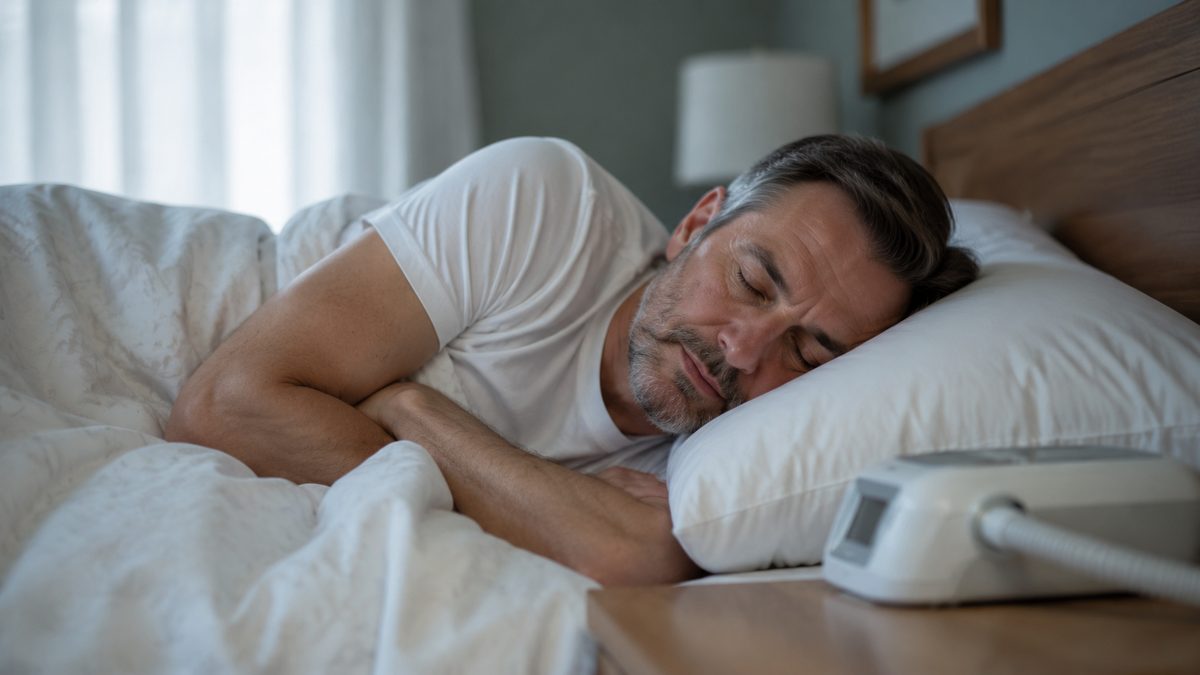
Sleep apnea most often starts in your 40s to 60s. That's when weight gain, muscle loss, and hormonal changes combine to collapse the airway during sleep. Most adults get diagnosed somewhere between 40 and 60.
But sleep apnea isn't just a middle-age problem. Kids get it between ages 2 and 8, usually from enlarged tonsils. Teenagers can get it too, especially if they're carrying extra weight. And yes, a healthy 20-year-old can have it. Earlier diagnosis means earlier treatment
If you snore, wake up tired no matter how long you slept, or have high blood pressure, get screened. Don't wait until your 50s to find out.
Why Does Risk Jump After 40?
Your airway is held open by muscles in your throat. After 40, those muscles gradually weaken. Fat deposits build up around the neck and upper airway. In women, the hormonal protection that estrogen provides drops away after menopause. The result is an airway more likely to collapse when you relax into deep sleep.
A large study of 2,176 adults aged 18 to 102 found that sleep apnea combined with insomnia rose from 51.9% in people under 50 to 78.1% in those aged 70 and over, with roughly a 3% increase in odds for every year of age. That's a steep climb.
Obesity drives much of this. Extra weight around the neck compresses the airway from outside. Obesity also reduces the lung volume that normally keeps the airway open. When I work with clients carrying weight around their midsection and neck, sleep apnea is always on my radar, even before they mention snoring.
Can a Healthy 20-Year-Old Have Sleep Apnea?
Yes. Being young and fit doesn't rule it out. Jaw structure, nasal anatomy, and tongue position can all narrow the airway in someone with no other risk factors. One of my clients was 24, athletic, and assumed his fatigue was from training hard. A sleep study showed moderate obstructive sleep apnea. He had a naturally narrow jaw and a thick tongue base. No obesity. No high blood pressure. Just anatomy.
Obstructive sleep apnea in younger adults is less common but far from rare. Research confirms the condition can begin years before symptoms become obvious. The problem is that younger people rarely get screened because everyone pictures an overweight middle-aged man.
What Are the First Signs of Sleep Apnea?
The first signs are easy to miss or explain away. That's part of why it takes most people years to get diagnosed.
- Loud, irregular snoring. Not just snoring, but snoring with pauses, gasps, or choking sounds.
- Waking up with a dry mouth or headache. Both come from reduced oxygen and open-mouth breathing overnight.
- Feeling unrefreshed after a full night of sleep. You slept eight hours and still feel like you only slept four.
- Daytime sleepiness that gets in the way of focus. Falling asleep reading, watching TV, or in quiet meetings.
- Waking frequently to urinate. This one surprises people. Sleep apnea disrupts hormones that control fluid retention.
- Mood changes, irritability, or low motivation. Broken sleep affects the prefrontal cortex the same way total sleep deprivation does.
Most clients first notice the daytime fatigue and blame it on stress or a busy schedule. A partner usually points out the snoring. Without someone in the room to notice the pauses in breathing, self-diagnosis is almost impossible.
What Is the First Stage of Sleep Apnea?
Sleep apnea is classified by the Apnea-Hypopnea Index, or AHI. This measures how many times per hour your breathing stops or drops significantly during sleep.
- Mild: 5 to 14 events per hour
- Moderate: 15 to 29 events per hour
- Severe: 30 or more events per hour
The first stage is mild sleep apnea with an AHI of 5 to 14. At this level, symptoms are often subtle. Some people have no symptoms at all and get discovered only during a sleep study done for another reason.
Others already feel the fatigue and brain fog at this stage. Mild doesn't mean harmless. Even at low AHI scores, blood oxygen drops repeatedly through the night, and your heart works harder.
What Is the 4% Rule for Sleep Apnea?
The 4% rule refers to how sleep apnea events are counted during a polysomnography, or sleep study. An apnea event is recorded when blood oxygen drops by 4% or more from baseline, combined with a reduction in airflow. This is the standard threshold used in most diagnostic criteria.
Some older scoring systems used a 3% threshold, which caught more events and produced higher AHI scores. The 4% rule is now standard, so scores measured under older protocols aren't directly comparable.
This matters clinically because the threshold used affects the diagnosis. Someone who scored as moderate apnea under 3% criteria might score as mild under the 4% rule. If you're comparing results across different sleep labs or different years, it's worth asking which scoring rule was used.
Sleep Apnea in Children: Ages 2 to 8
In children, the mechanism is different. The most common cause is enlarged tonsils and adenoids that physically obstruct the airway. This is why the peak age in children is between 2 and 8, when tonsil and adenoid tissue grows large relative to the airway, then typically shrinks again.
Signs in children look different from adults. Instead of daytime sleepiness, you often see hyperactivity and behavior problems. A child who can't consolidate sleep is dysregulated. Teachers sometimes flag attention issues before anyone thinks to check sleep.
Children with Down syndrome face significantly higher risk. Research found that 34% have severe sleep apnea with an AHI of 10 or more, compared to 18% in typically developing children. Children with craniofacial differences, obesity, or low muscle tone are also at higher risk from early in life.
One of my clients brought in her seven-year-old who'd been labeled a behavior problem at school. He was waking multiple times per night, snoring loudly, and sleeping with his mouth open. His pediatrician hadn't connected the dots. Once his adenoids and tonsils were assessed and treated, his sleep improved markedly and so did his classroom behavior.
The Adolescent Window: Sleep Apnea in Teenagers
Adolescence brings a second risk window. Body weight increases, jaw and airway geometry shifts, and in some teenagers, obesity-related changes start accumulating early. Research exploring sleep apnea and youth-onset type 2 diabetes is finding meaningful overlap in teenagers with metabolic risk factors, suggesting that sleep-disordered breathing in adolescence is often missed because it gets blamed on normal teenage fatigue or poor sleep habits.
Early-onset sleep apnea in younger people carries specific long-term consequences. People diagnosed before age 52 showed the highest subsequent risk of dementia. This doesn't mean apnea causes dementia with certainty, but the association is strong enough that getting diagnosed and treated early matters beyond just feeling less tired.
What Most Articles Get Wrong About Sleep Apnea and Age
First: age is a risk factor, not a requirement. Because most diagnosis happens in middle age, people assume sleep apnea starts there. It doesn't. It starts when the anatomy and physiology allow it. Age just increases the odds.
Second: women are massively under-diagnosed before menopause. The research skews male because men get screened more often. Women with sleep apnea frequently present with insomnia, depression, and fatigue rather than the textbook snoring-and-gasping picture. Their symptoms get labeled as anxiety or perimenopause and sleep apnea is never checked. When I work with women in their 40s presenting with poor sleep and mood changes, I ask about apnea specifically because of how often it's missed in this group.
Third: childhood sleep apnea can have lasting cardiovascular effects. It's not something kids simply grow out of cleanly. Early-onset high blood pressure in children with obstructive sleep apnea is a documented concern. The cardiovascular system is under strain during developmental years when treatment is delayed.
How Does Sleep Architecture Change With Age and Apnea?
Deep sleep, specifically slow-wave sleep and REM sleep, decreases naturally as you age. Sleep apnea compounds this. Every apnea event pulls you out of deep sleep toward lighter stages. Someone with untreated sleep apnea in their 50s may spend almost no time in restorative deep sleep at all, even if they're in bed for eight or nine hours.
Research examining age and sex differences in sleep architecture confirms that obstructive events increase and deep sleep decreases together across age groups. This is why the fatigue from sleep apnea feels so different from ordinary tiredness. It's not just how much sleep you get but the quality of that sleep.
Frequently Asked Questions
Can you develop sleep apnea suddenly?
It feels sudden when it's diagnosed, but the airway narrows gradually over years. Weight gain, muscle changes, or a trigger like pregnancy or surgery can speed it up. The condition builds quietly before symptoms cross the threshold where they become undeniable.
Does sleep apnea get worse with age?
In most people, yes. AHI tends to increase over time as muscle tone declines and weight increases. Without intervention, mild apnea in your 40s can progress to moderate or severe by your 60s.
Is snoring alone enough to get screened?
Loud snoring with pauses or gasping is enough. You don't need to tick every box. A home sleep test is inexpensive and non-invasive. If you snore regularly and feel tired during the day, that combination alone warrants a sleep study.
Can sleep apnea go away on its own?
In children, it sometimes resolves after tonsil and adenoid removal or as anatomy matures. In adults, weight loss can reduce severity significantly. But spontaneous resolution without intervention is uncommon in adults. It requires addressing the underlying physical cause.
What is the connection between sleep apnea and heart health?
Each apnea event creates a spike in blood pressure as your body fights to resume breathing. Over years, this repeated pressure surge contributes to high blood pressure, irregular heartbeat, and increased cardiovascular risk. Sleep apnea is found at much higher rates in people with heart failure than in the general population.
What to Do Right Now
If you're over 40 and snore, wake up unrefreshed, or have been told you stop breathing in your sleep, book a sleep study. Don't wait for it to get worse. If you have a child between 2 and 8 who snores, breathes through their mouth at night, or has unexplained behavior or attention problems, ask your doctor specifically about sleep-disordered breathing. sleep specialist
Your one action point: track your sleep for one week. Note whether you snore, how often you wake, how you feel in the morning, and your energy by mid-afternoon. Bring those notes to a GP or sleep specialist. That record gives them exactly what they need to decide whether a sleep study is warranted.
Earlier diagnosis means earlier treatment. And for a condition linked to dementia risk, cardiovascular disease, and childhood developmental problems, earlier is always better.
Sources
Continue with the Sleep article archive collection.

What Are 10 Signs That My Body Is Healthy?
Read article →
How to Tell if Your Body Is Unhealthy?
Read article →
What Are Signs of Poor Function Health?
Read article →
What Are Some Weird Signs That My Body Is Healthy?
Read article →
What Are Five Signs That I Might Not Be Healthy?
Read article →