What Are 5 Symptoms of Sleep Apnea? Signs You Shouldn't Ignore
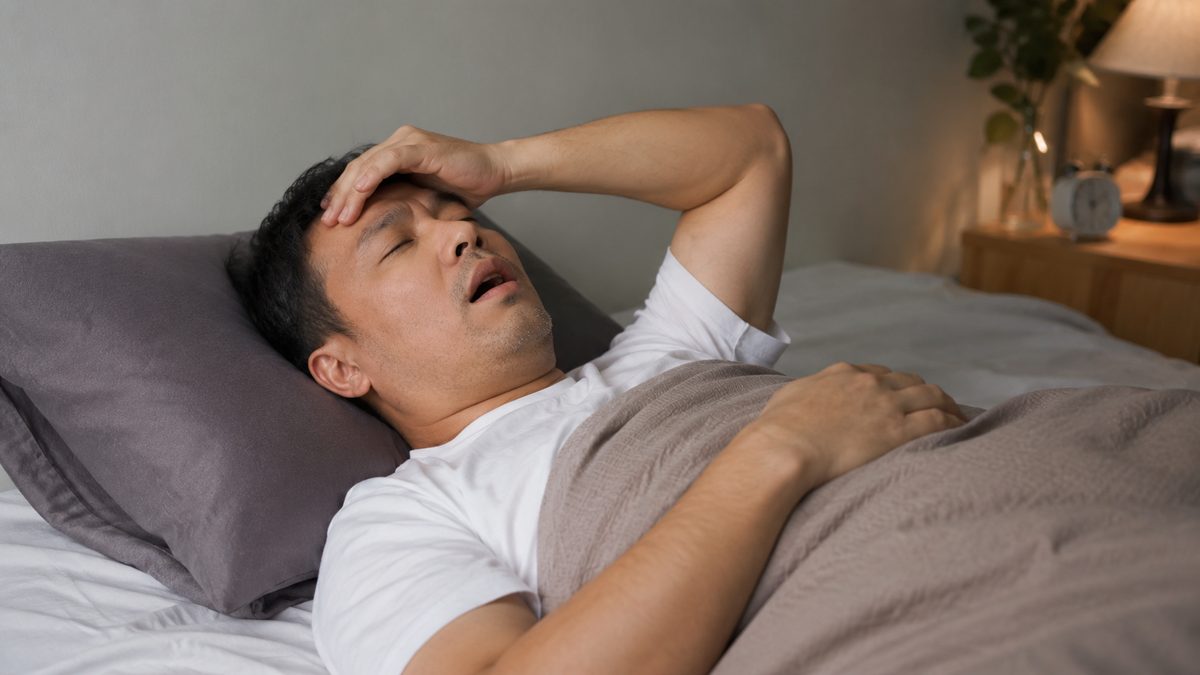
The five core symptoms of sleep apnea are: loud habitual snoring, witnessed breathing pauses or gasping during sleep, excessive daytime sleepiness, waking with morning headaches, and frequent nighttime awakenings. You don't need all five.
If a bed partner has ever told you that you stop breathing at night, that's reason enough to get tested. Sleep apnea is when your airway collapses repeatedly during sleep, cutting off oxygen. Most people have no idea it's happening because it occurs while they're unconscious.
What Is the Most Telling Symptom of Sleep Apnea?
Witnessed apneas are the clearest direct sign. Someone watching you stop breathing beats any other indicator.
Snoring is common. Lots of people snore without having sleep apnea. But if the snoring is interrupted by silence and then a gasp or snort, that pattern is the airway collapsing and reopening. That's obstructive sleep apnea in action.
One of my clients came in convinced she just had insomnia. Her husband had mentioned the gasping a few times, but she'd dismissed it. What I found was that almost everything she was struggling with, the brain fog, the afternoon crashes, the headaches every morning, traced back to the same root: her airway was closing dozens of times per hour while she slept. Once we took that history seriously, the picture became clear very quickly.
Bed partner reports matter enormously in diagnosis. If no one shares your bed, a recording app on your phone placed nearby while you sleep can catch the same patterns.
The 5 Symptoms Explained
1. Loud, Habitual Snoring
Not occasional snoring after a big meal or a few drinks. Habitual snoring, almost every night, audible through walls, signals that your airway is narrowed and vibrating under the effort of each breath. The snoring itself isn't dangerous. What it indicates might be.
When I worked with one client who had been a loud snorer for over a decade, he genuinely thought it was just a personality quirk. His family had normalised it. But snoring that wakes other people in the house is your airway telling you something is structurally wrong with how air moves through it during sleep.
2. Witnessed Breathing Pauses or Gasping
This is the most direct sign. During an apnea event, airflow stops completely. The brain eventually registers the drop in oxygen, triggers a partial arousal, and forces the airway open, which produces the gasp or snort. The person usually doesn't wake up fully. They have no memory of it.
But it can happen 30, 60, even 90 times per hour in severe cases. Each event causes a spike in heart rate and blood pressure. Night after night, that cardiovascular stress accumulates into real damage.
3. Excessive Daytime Sleepiness
Because the brain is partially aroused dozens of times per hour, deep restorative sleep never happens properly. No matter how many hours you spend in bed, you wake up unrefreshed.
You fall asleep reading. You struggle to stay awake in meetings. You feel like you could nap any time, anywhere.
This is the symptom that most often brings people in for help. And it's also the one most often misattributed to stress, depression, or just being busy. When I tried to explain to one client that her tiredness wasn't a mental health issue but a breathing one, she looked genuinely shocked. She'd been on antidepressants for two years. Turned out sleep apnea was driving the low mood too.
Worth noting: women with sleep apnea often report generalised fatigue rather than the textbook falling-asleep-at-the-wheel sleepiness. This means women are frequently underdiagnosed because their symptoms don't fit the classic male presentation.
4. Morning Headaches
When oxygen drops repeatedly through the night and carbon dioxide builds up, blood vessels in the brain dilate. That's what causes the dull, pressure-like headache that's there the moment you wake up and usually fades within an hour or two.
If you're getting these more than twice a week and can't explain why, sleep apnea is a serious candidate. Most people blame dehydration or tension. In my experience, the pattern of waking with a headache that resolves on its own by mid-morning is very specific, and it's one of the first things I ask about when someone describes poor sleep.
5. Frequent Nighttime Awakenings and Nocturia
Waking to urinate once or twice a night is often blamed on the bladder. But frequent nighttime urination can actually be driven by sleep apnea.
The repeated arousals raise pressure in the chest and signal the heart to release a hormone that tells the kidneys to produce more urine. Treat the apnea, and the nocturia often improves dramatically. Restless sleep, tossing and turning, and waking with a racing heart are part of this same cluster. The body is working hard all night fighting to keep the airway open.
What Could Be Mistaken for Sleep Apnea?
Several conditions share symptoms with sleep apnea and are worth ruling out.
- Insomnia causes fragmented sleep and daytime fatigue, but the mechanism is different. Insomnia is about difficulty starting or maintaining sleep. Sleep apnea is about breathing failure during sleep. They can co-exist.
- Hypothyroidism causes fatigue, weight gain, and even some airway swelling. A thyroid panel should be part of any workup for unexplained fatigue.
- Restless legs syndrome and periodic limb movement disorder both fragment sleep through movement rather than breathing obstruction, but they produce the same morning exhaustion.
- Depression causes fatigue, poor concentration, and disrupted sleep. Sleep apnea can cause or worsen depression. When one of my clients was treated for sleep apnea, her mood lifted significantly without any change to her antidepressant dose.
- Upper airway resistance syndrome (UARS) sits just below full obstructive sleep apnea on the spectrum. The airway narrows and creates increased breathing effort without completely stopping. Standard sleep studies can miss it. Symptoms are nearly identical to sleep apnea, particularly in women.
The point is: if you have the symptoms, get a sleep study. Don't let a different diagnosis close the door on sleep apnea until it's been properly excluded.
What Is the First Stage of Sleep Apnea?
Sleep-disordered breathing runs on a spectrum. At the mild end is primary snoring: habitual snoring with no significant oxygen drops and no daytime sleepiness. Move along the spectrum and you reach upper airway resistance syndrome, where the airway narrows significantly and disturbs sleep even without full airway collapse.
Further along is obstructive sleep apnea itself, where the airway closes completely and repeatedly.
Mouth breathing during sleep often appears early in this progression. When the nose is chronically blocked from allergies, a deviated septum, or swollen turbinates, the body defaults to mouth breathing. This changes the airway geometry and increases the risk of collapse. It's a warning sign that the system is under stress before full apnea develops.
Catching sleep-disordered breathing in its earlier stages matters. The cardiovascular and metabolic damage from untreated OSA is cumulative. Each year without treatment is another year of stress on the heart and blood vessels.
Who Is Most at Risk?
Certain physical traits strongly increase risk:
- Obesity, particularly with a large neck circumference
- A recessed jaw (retrognathia) or small lower jaw
- Enlarged tonsils or adenoids
- A high, narrow palate
- Chronic nasal obstruction
- Male sex, though this gap narrows after menopause in women
Craniofacial structure plays a bigger role than most people realise. Thin people with a recessed jaw can have severe sleep apnea. Weight is not the only driver, and assuming otherwise leads to missed diagnoses.
In children, the symptoms look completely different. Instead of sleepiness, children with sleep apnea often present with behavioral problems, hyperactivity, or difficulty concentrating in school. This gets misread as ADHD. Enlarged tonsils are the most common structural cause in kids, and tonsillectomy often resolves the problem entirely.
What Is the Pillow Trick for Sleep Apnea?
The pillow trick refers to positioning strategies: sleeping on your side rather than your back. When you sleep on your back, gravity pulls the tongue and soft tissues of the throat backwards, narrowing the airway and worsening apneas. Side sleeping reduces this collapse effect and can meaningfully lower the number of apnea events per hour in people with mild to moderate OSA.
A simple version: sew a tennis ball into the back of a shirt you wear to bed. It makes rolling onto your back uncomfortable enough that you stay on your side. Some people use a body pillow for the same effect. Wedge pillows that elevate the head and torso also help by reducing the gravitational pull on throat tissues.
This is a useful add-on, but it's not a treatment for moderate to severe sleep apnea. It reduces symptom severity. It doesn't fix the underlying structural issue.
What Happens If Sleep Apnea Goes Untreated?
Each apnea event triggers a surge of adrenaline, a spike in blood pressure, and a drop in blood oxygen. When this happens dozens of times every night for years, the damage stacks up. Untreated sleep apnea is a major risk factor for:
- High blood pressure; the repeated overnight BP spikes eventually become permanent
- Heart disease and cardiac arrhythmias
- Stroke
- Type 2 diabetes, through chronic sleep disruption affecting insulin sensitivity
- Motor vehicle accidents, from impaired alertness and reaction time
The underdiagnosis problem is real. Estimates suggest the majority of people with sleep apnea have never been tested. The symptoms are easy to normalise: snoring is common, tiredness is common, headaches are common.
But the combination, especially with witnessed apneas, is a clear signal that shouldn't be dismissed.
FAQ
Can you have sleep apnea without snoring?
Yes. Central sleep apnea, where the brain fails to send the signal to breathe, can occur without snoring. Some people with obstructive sleep apnea also don't snore loudly. Daytime sleepiness, morning headaches, and nocturia alone are enough to warrant a sleep study.
How is sleep apnea diagnosed?
A polysomnography (overnight sleep study) is the gold standard. Home sleep testing devices are also widely available and accurate enough for most straightforward OSA diagnoses. Your GP can refer you for either.
What are the treatment options?
CPAP (continuous positive airway pressure) is the most effective treatment for moderate to severe OSA. Oral appliances that reposition the jaw work well for mild to moderate cases. Surgery is an option for specific anatomical problems like enlarged tonsils. Weight loss, positional therapy, and nasal treatment address contributing factors.
Can natural or complementary approaches help?
Supportive approaches, addressing nasal congestion, improving sleep position, weight management, can reduce severity. Some people explore complementary care as part of a broader plan. Any approach worth taking works alongside proper diagnosis, not instead of it.
Can children have sleep apnea?
Yes. And it often looks like behavioral or attention problems rather than sleepiness. If your child snores loudly, breathes through their mouth at night, or has been assessed for ADHD without improvement, ask about a sleep study.
The One Thing to Do Now
Ask the person who sleeps nearest to you whether you stop breathing at night. If the answer is yes, or even "I think so", book an appointment with your GP and ask for a referral for a sleep study.
You don't need to wait until the symptoms become unbearable. The earlier sleep apnea is caught and treated, the less cardiovascular and metabolic damage accumulates. One conversation, one referral, one test. That's the whole next step.
Sources
Continue with the Sleep article archive collection.

What Are 10 Signs That My Body Is Healthy?
Read article →
How to Tell if Your Body Is Unhealthy?
Read article →
What Are Signs of Poor Function Health?
Read article →
What Are Some Weird Signs That My Body Is Healthy?
Read article →
What Are Five Signs That I Might Not Be Healthy?
Read article →