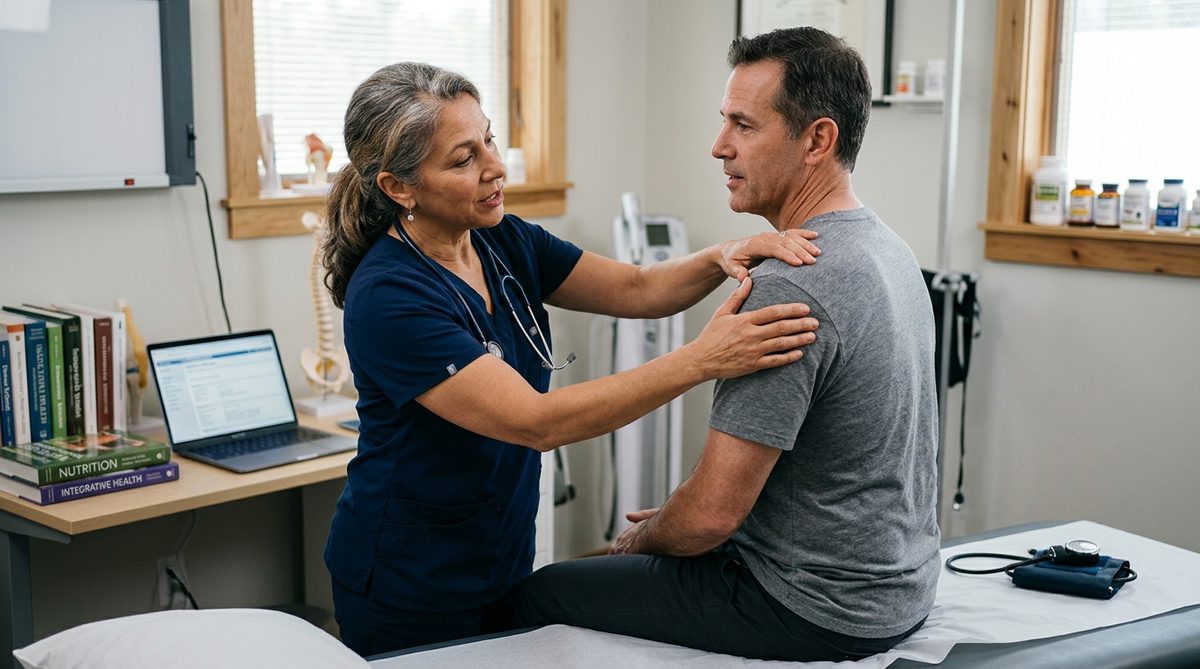
What are some examples of holistic health?

Examples of holistic health include improving sleep while treating pain, changing meals to support steady energy, using stress care alongside medical treatment, and building social support into a recovery plan. Each example links several parts of daily life to one clear health goal. Care still tackles symptoms, but it also looks at habits, feelings, surroundings and personal needs.
The main idea is simple. A holistic plan joins the parts of life that affect each other. It doesn't mean trying every natural remedy or turning down standard medical care.
Instead, it means asking what may be keeping the problem going, then choosing safe steps that work together.
How can one health goal connect several parts of life?
Think of someone who wakes up tired, gets headaches each afternoon and can't focus well. Pain relief may ease the headache. But a wider plan would also check sleep timing, water intake, skipped meals, screen use, work stress and eyesight.
Each factor may add a small burden.
A useful plan might include a regular bedtime, a protein-rich breakfast, a water bottle at the desk, short screen breaks and an eye test. If the headaches are new, severe or getting worse, medical assessment comes first. This is holistic because every action links to the same goal.
It isn't a random list of wellness tips.
In my experience, people often try to change far too much at once. They buy supplements, begin a strict diet and set a tough exercise target, all in the same week. By day ten, the plan has become another source of stress.
What I've found is that one small action tied to the main problem gives much clearer feedback. A fixed wake time, for example, can show whether an uneven sleep pattern was driving low energy.
What might whole-person care look like for ongoing pain?
Ongoing back pain offers a clear example of connected care. The physical problem needs a proper check. Treatment may include advice from a doctor, physiotherapist or another qualified clinician.
Yet pain can also change sleep, mood, movement and confidence. Those effects can then make the pain tougher to manage.
A holistic pain plan may include:
- A clinical check for injury, nerve signs or another medical cause
- Gentle movement chosen for the person's current ability
- A better chair or changes to repeated work tasks
- Sleep support that reduces long periods awake at night
- Breathing or relaxation practice during pain flares
- Help with fear about movement when that fear limits daily life
I remember a common pattern among clients: someone stops walking because they fear doing more damage. Their fitness drops, sleep gets lighter and normal tasks start to feel harder. A gradual walking plan may begin with just five minutes on flat ground.
The goal isn't to ignore pain. It's to build safe movement again while tracking symptoms and following clinical advice.
This example also shows why holistic care isn't the same as natural care. The plan can include scans, medicine or rehabilitation when they are a good fit. The holistic part is how the care fits the person's whole situation.
How can daily routines support low energy?
Low energy can have many causes, such as anaemia, thyroid problems, infection, medicine side effects or poor sleep. A health professional should assess energy loss that lasts, has no clear cause or comes with other symptoms.
Once urgent and medical causes have been considered, daily patterns can offer useful clues. Someone may drink coffee instead of eating breakfast, sit indoors through lunch and work late under bright light. Then they're wide awake at bedtime and tired again the next morning.
A connected plan could set a steady wake time, add morning daylight, include regular meals and shift caffeine to earlier in the day. It may also include blood tests or a medicine review.
This is often where Lifestyle medicine fits. It uses changes in sleep, food, movement and other habits to help prevent or manage illness. It works best when the advice is realistic enough to follow.
For a shift worker, the plan would need to look different. Telling that person to sleep from 10 pm to 6 am is useless. A better plan may protect a set sleep block after work, reduce light during the trip home and prepare easy meals before the shift.
Whole-person care has to fit real life.
How can emotional strain affect a physical health plan?
Emotional strain can change appetite, muscle tension, sleep and a person's ability to follow treatment. That doesn't mean a physical symptom is imaginary. It means the body reacts to pressure.
Take someone with an unsettled stomach during a hard month at work. They may need medical care to check for infection, inflammation or another cause. Their plan may also track when symptoms happen, slow down rushed meals and cut back on foods that clearly trigger trouble.
A short wind-down period after work may help too. Counselling may be useful if worry stays high.
One of my clients might describe the turning point like this: “I thought I needed a perfect diet. What helped first was eating lunch away from my screen and stopping work before bed.” That lived result doesn't prove the same step will help everyone.
But it shows how a person's situation can reveal a practical place to start.
holistic health matters here too. It covers how a person feels and gets through daily life, not just the absence of a diagnosis. A plan that eases a symptom but leaves the person unable to work, rest or connect with others still needs another look.
Where do relationships fit into a health plan?
Relationships can support health in very direct ways. A family member may prepare meals after surgery. A friend might join a regular walk, while a support group may ease the feeling that someone must hide a long-term condition.
Picture a new parent who is worn out and no longer eats regular meals. General advice to rest more misses the real barrier. Their partner could take one night feed when possible, while a relative brings prepared food.
The parent could also talk with a doctor about low mood or severe fatigue. These social changes make the health advice possible.
Support should never take away personal choice. Some people need firmer limits with relatives, fewer draining duties or help to leave an unsafe setting. Holistic care asks whether relationships aid recovery or add more strain.
Then it turns that answer into a clear step.
How does prevention become part of everyday care?
Preventive healthcare aims to lower risk before a serious problem starts, or to find illness early. It includes recommended screening, vaccination, dental care and checks based on age or personal risk. It can also cover safer work habits, sun protection and help to stop smoking.
A holistic prevention plan links these actions to the person's daily life. Someone at risk of type 2 diabetes may need more than a handout about food. They may need meals that fit their budget, movement that doesn't worsen knee pain and a review date for blood results.
If stress leads to late-night eating, stress care belongs in the plan too.
People sometimes treat prevention as a search for supplements. That skips the proven basics. No powder can replace screening, sleep, suitable movement or care for high blood pressure.
Supplements may help when a clinician finds a need, but taking more doesn't make a plan more holistic.
Can complementary approaches sit beside standard treatment?
Yes, when they're safe, openly discussed and used for a clear reason. Someone receiving medical care may also use massage for muscle comfort, meditation for stress or a gentle yoga class that suits their ability. These choices are complementary because they sit beside standard care.
Alternative medicine usually means a practice used in place of standard medical treatment. That choice brings more risk when a proven treatment is available. Delaying antibiotics for a serious infection or replacing cancer treatment with an unproven remedy can cause harm.
Calling a therapy holistic doesn't make it effective.
Homeopathy is one option people sometimes ask about. Evidence hasn't shown that homeopathic products treat health conditions beyond placebo effects. Anyone thinking about homeopathy should tell their doctor or pharmacist, keep prescribed treatment in place and seek medical care for ongoing or serious symptoms.
Some products sold as homeopathic may contain active ingredients or alcohol, so the label still needs to be checked.
Three safety questions help with any complementary product or service:
- What exact problem am I trying to address?
- What good evidence supports this choice?
- Could it interact with medicine or delay needed care?
- What result and review date will tell me whether to continue?
This is an angle many articles miss. Holistic care should sharpen clear thinking, not lower the standard of proof. Respect for personal choice and evidence-based safety can belong in the same plan.
What makes a collection of healthy habits into a useful plan?
The habits need to link to a clear need. Drinking more water, meditating and taking vitamins aren't automatically holistic. They become part of a useful plan when each action has a reason and there's a way to check the result.
A strong plan has four parts:
- Name the main goal. Make it specific, such as waking with more energy or walking to the local shop with less pain.
- Find the biggest barriers. These may include symptoms, work hours, cost, fear, poor sleep or lack of support.
- Choose one or two linked actions. Keep them small enough to repeat during a hard week.
- Review the result. Track a useful measure and change the plan if it is not helping.
For sleep, someone might track bedtime, wake time and how rested they feel for two weeks. For pain, they may record how long they can walk and how symptoms settle afterward. The goal isn't perfect data.
It's simply enough information to stop guessing.
Which warning signs should change the plan?
Whole-person care still needs firm limits. Sudden chest pain, trouble breathing, signs of stroke, severe allergic reaction, major bleeding or thoughts of self-harm need urgent help. New or worsening symptoms also need medical review, especially when they affect sleep, weight, movement or normal daily tasks.
Be wary when a practitioner says one treatment can cure many unrelated conditions, asks you to stop prescribed medicine or sells a large package before assessing you. The same warning applies when testing has no clear purpose or every result leads to products sold by the tester.
A good practitioner explains what they can and can't treat. They welcome questions, keep notes and refer you when a problem falls outside their training. They also respect cost, culture, access needs and the person's right to decline care.
What should you do first?
Choose one health goal and write down the parts of daily life that affect it. Pick one change you can repeat this week, decide how you'll measure it and book qualified care if the symptom is new, severe or persistent.
Common questions
What is an example of holistic health?
An example is improving sleep, eating healthy food, exercising, and finding ways to lower stress. These habits support the body, mind, and emotions together.
What are the 8 pillars of holistic health?
The eight pillars are physical, emotional, mental, social, spiritual, environmental, financial, and work-related health. Each pillar can affect your overall well-being.
What are the 5 aspects of holistic health?
The five main aspects are physical, emotional, social, spiritual, and mental health. Caring for all five can help you live a healthier, more balanced life.
What is holistic health?
Holistic health means caring for the whole person, not just treating an illness or symptom. It looks at how your body, mind, feelings, relationships, and surroundings affect your health.

What Are 10 Signs That My Body Is Healthy?
Read article →
How to Tell if Your Body Is Unhealthy?
Read article →
What Are Signs of Poor Function Health?
Read article →
What Are Some Weird Signs That My Body Is Healthy?
Read article →
What Are Five Signs That I Might Not Be Healthy?
Read article →