What Are the First Signs of Mild Sleep Apnea? Early Symptoms to Know
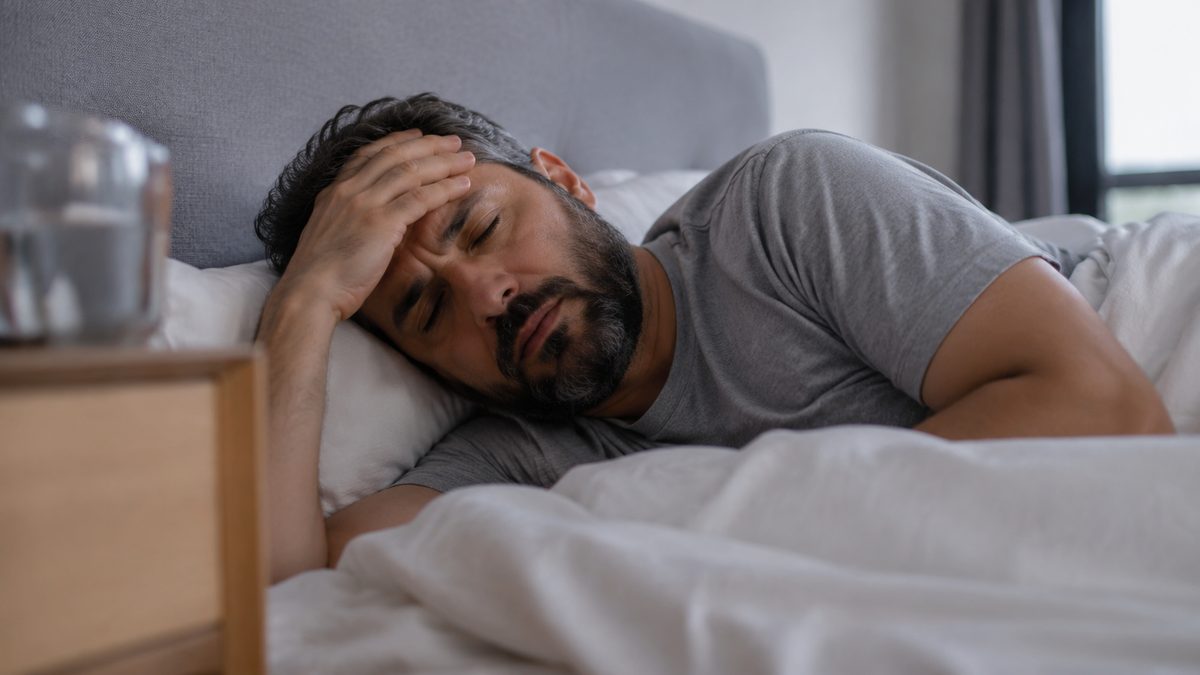
Habitual snoring. Waking up unrefreshed. Persistent daytime fatigue that doesn't match how much you slept. These are the hallmarks of mild sleep apnea in its early stages, along with frequent nighttime waking, morning headaches, and trouble concentrating.
You won't usually fall asleep mid-conversation at this stage. The fatigue is subtler. But it's persistent, and it doesn't go away no matter how early you go to bed.
Mild sleep apnea is defined as an apnea-hypopnea index (AHI) of 5 to 14 breathing events per hour. Most people who have it don't know. Research estimates that roughly 14% of men and 5% of women aged 30 to 70 have at least mild obstructive sleep apnea with daytime symptoms, and those numbers don't include people who haven't been diagnosed yet.
What Does Mild Sleep Apnea Actually Feel Like Day to Day?
Most articles get this wrong. They list loud snoring and gasping as the main signs. Those are real, but they show up more in moderate to severe cases. Mild sleep apnea is quieter and easier to explain away.
When I talk to people who later get diagnosed, they almost always say the same thing: "I just thought I was tired from work." That explanation holds for months or years before someone connects the dots.
The symptoms to actually watch for:
- Snoring that happens most nights, even if it isn't loud enough to wake your partner
- Waking up feeling like you didn't sleep, even after a full eight hours
- Mild fatigue through the day that doesn't match how much you slept
- Waking up multiple times at night without a clear reason
- Morning headaches, especially across the front of the head
- Irritability or low mood that feels out of proportion to life circumstances
- Trouble focusing or remembering things at work or school
- Dry mouth or sore throat in the morning
- A bed partner who has noticed pauses in your breathing
That last one is significant. A witnessed pause in breathing is one of the clearest early indicators, and it often gets dismissed as a one-off. It isn't.
What Is the Most Telling Symptom of Sleep Apnea?
Witnessed breathing pauses combined with habitual snoring and unrefreshing sleep, that's the combination that should prompt immediate investigation. Any one of these alone is worth noting. All three together means you need a sleep study.
Snoring by itself is common. Snoring plus daytime fatigue plus waking frequently is a different picture entirely. The overlap of multiple vague symptoms is the actual signal.
One of my clients came to me exhausted. She was sleeping nine hours a night and still dragging herself through every afternoon. Her doctor had ruled out thyroid issues and anemia. Nobody had asked about snoring. Her husband mentioned the breathing pauses almost as an afterthought at one of our appointments. She had a sleep study within a month and came back with a mild OSA diagnosis. The tiredness had a cause the whole time.
How Do I Know If My Sleep Apnea Is Mild, Moderate, or Severe?
You need a sleep study to know for certain. Here are the AHI thresholds:
- Mild: 5 to 14 breathing events per hour
- Moderate: 15 to 29 events per hour
- Severe: 30 or more events per hour
Symptom severity doesn't always track neatly with AHI. Some people with an AHI of 12 feel terrible. Others with an AHI of 20 report minimal daytime symptoms. The number matters for treatment decisions, but how you feel matters too.
At the mild end, you're unlikely to be falling asleep involuntarily during the day. That's more characteristic of moderate to severe disease. Mild sleep apnea tends to show up as persistent low-grade fatigue, mood changes, and brain fog rather than the dramatic nodding-off-at-the-wheel picture most people associate with sleep apnea.
Why Mild Sleep Apnea Gets Missed for So Long
The screening tools used in clinical settings have real limits at the mild end of the spectrum. The STOP-BANG questionnaire has the highest sensitivity for detecting mild OSA, ranging from 81% to 98% in research populations, but its specificity isn't consistently strong. The Berlin Questionnaire and Epworth Sleepiness Scale both perform worse for mild cases compared to moderate or severe disease.
In practice, these tools are better at catching the obvious cases. The mild ones slip through more often.
The US Preventive Services Task Force reviewed this problem directly and concluded the evidence is insufficient to recommend universal screening in adults without symptoms. That's reasonable given the data, but it also means mild sleep apnea in people with subtle symptoms often goes undetected until it progresses.
Women are particularly underdiagnosed. Research shows that female patients with sleep apnea frequently report insomnia, morning headaches, and mood disturbance rather than loud snoring or obvious apnea episodes. These symptoms get attributed to anxiety, depression, or hormonal changes, and the underlying sleep disorder doesn't get investigated. I've seen this pattern repeat itself more times than I can count.
What Age Does Sleep Apnea Usually Start?
Sleep apnea can start at any age, including in children, but it becomes significantly more common from your 30s onward. The USPSTF prevalence data focuses on adults aged 30 to 70, which reflects where most diagnosis happens. Weight gain, anatomical factors, and hormonal changes can bring it on earlier.
Menopause is a known turning point for women. Before menopause, women have lower rates of OSA than men. After menopause, that gap narrows considerably. This is one reason a 52-year-old woman who has always slept fine might suddenly develop sleep apnea symptoms without any obvious trigger.
In my experience, many people have had mild sleep apnea for years before seeking help. The condition creeps in slowly. You adapt to feeling tired. You drink more coffee. You write off the morning headaches. By the time someone asks the right questions, it's been going on for a decade.
Risk Factors That Put You in a Higher Likelihood Category
Knowing your risk factors is useful even before you get to a sleep study. The physical ones include:
- Neck circumference over 40 cm in men or 37 cm in women
- BMI above 30
- A recessed chin or small lower jaw
- Large tonsils or adenoids
- Nasal congestion that doesn't resolve
The lifestyle and medical factors include:
- Sleeping on your back
- Alcohol use, especially in the evening
- Sedative or muscle relaxant use
- High blood pressure
- Type 2 diabetes
- A family history of sleep apnea
If you have several of these alongside the symptoms described above, that combination warrants investigation rather than watchful waiting.
Do I Need a CPAP If I Only Have Mild Sleep Apnea?
Not necessarily. CPAP is the gold standard for moderate to severe sleep apnea, but for mild cases, several alternatives are used first and often work well.
positional therapy is worth trying if your AHI gets significantly worse when sleeping on your back, which is common. Simply training yourself to sleep on your side reduces breathing events for many people with mild disease.
Oral appliances that reposition the lower jaw are effective for mild to moderate OSA and are considerably more comfortable for most people than CPAP. They work by holding the airway open mechanically rather than using air pressure.
Weight loss, where relevant, can reduce AHI enough to move someone out of the clinical range entirely. The airway is surrounded by soft tissue, and reducing that tissue load directly improves airflow during sleep.
CPAP may still be recommended even for mild sleep apnea if you have cardiovascular risk factors, if symptoms significantly affect quality of life, or if conservative measures don't produce improvement. The decision is individual, not automatic. Understanding your treatment options and getting professional guidance on sleep apnea management is essential.
What I've found is that people with mild sleep apnea who choose to address it early, even without CPAP, tend to do much better long-term than those who wait until it progresses. Mild doesn't mean harmless. Untreated sleep apnea, even at lower AHI levels, is associated with increased cardiovascular and metabolic risk over time.
The One Angle Most Articles Completely Miss
Most sleep apnea content focuses on the airway and the night. The daytime cognitive symptoms get far less attention than they deserve.
Fragmented sleep, even at mild levels, impairs memory consolidation, emotional regulation, and decision-making. The person with mild sleep apnea isn't just tired. They may be making worse decisions at work, reacting more sharply in relationships, and struggling with tasks that used to feel easy. These changes happen gradually, so they get attributed to stress, aging, or personality rather than a correctable physiological cause.
I remember one client who had been told he was burning out professionally. He'd had two performance reviews flagging his concentration. He was sleeping in a separate room from his wife because of snoring. He had a morning headache nearly every day. He had mild sleep apnea. Six months after starting treatment, his concentration was back and the headaches were gone. He told me he felt like himself again for the first time in years.
That story isn't unusual. It happens because the connection between mild sleep disruption and cognitive function is real and measurable, but nobody made the link until someone asked the right questions.
How to Use the STOP-BANG as a Self-Check
The STOP-BANG questionnaire is the most sensitive screening tool currently available for mild OSA. A score of 3 or more warrants formal sleep testing. The questions are:
- Snoring: Do you snore loudly?
- Tired: Are you often tired, fatigued, or sleepy during the day?
- Observed: Has anyone observed you stop breathing during sleep?
- Pressure: Do you have or are you being treated for high blood pressure?
- BMI: Is your BMI over 35?
- Age: Are you over 50?
- Neck: Is your neck circumference over 40 cm?
- Gender: Are you male?
This is a starting point, not a diagnosis. Its sensitivity is high but specificity is variable, meaning it casts a wide net. A positive screen tells you to get tested, not that you definitely have sleep apnea. A negative screen with ongoing symptoms still warrants a conversation with your doctor.
FAQ
Can you have mild sleep apnea without snoring?
Yes. Snoring is common in sleep apnea but not universal. Some people, particularly women, present with insomnia, morning headaches, and fatigue as the primary symptoms without notable snoring.
Is a home sleep test accurate enough for mild sleep apnea?
Home sleep testing, also called cardiorespiratory polygraphy, is used increasingly for diagnosis, but its accuracy at the mild end of the spectrum is less established than for moderate to severe disease. Some clinicians prefer in-lab polysomnography when mild disease is suspected to avoid missed diagnoses.
Can mild sleep apnea go away on its own?
It can improve with weight loss, positional changes, or reduced alcohol use. It rarely resolves completely without addressing the underlying factors. Waiting to see if it improves is reasonable only if symptoms are minimal and you're actively working on the modifiable risk factors.
Can children get mild sleep apnea?
Yes. Pediatric sleep apnea has its own distinct features and predictors, and mild cases in children sometimes persist and sometimes resolve depending on factors like tonsil size and growth patterns. Children with persistent snoring, mouth breathing, or behavioral changes should be assessed.
Is mild sleep apnea dangerous?
Mild doesn't mean risk-free. Even at lower AHI levels, untreated sleep apnea places additional strain on the cardiovascular system and is associated with metabolic disruption over time. Getting it diagnosed and managed early is genuinely worthwhile.
What to Do Now
If you snore regularly, wake up unrefreshed, feel persistently fatigued despite enough sleep, or have a bed partner who has noticed pauses in your breathing, take the STOP-BANG questionnaire and bring the result to your doctor. Ask specifically about a sleep study. Don't wait for symptoms to get loud enough to be unmistakable. Mild sleep apnea is far easier to manage before it progresses, and the quality-of-life difference between treated and untreated is significant, even at this stage.
Sources
Continue with the Sleep article archive collection.

What Are 10 Signs That My Body Is Healthy?
Read article →
How to Tell if Your Body Is Unhealthy?
Read article →
What Are Signs of Poor Function Health?
Read article →
What Are Some Weird Signs That My Body Is Healthy?
Read article →
What Are Five Signs That I Might Not Be Healthy?
Read article →