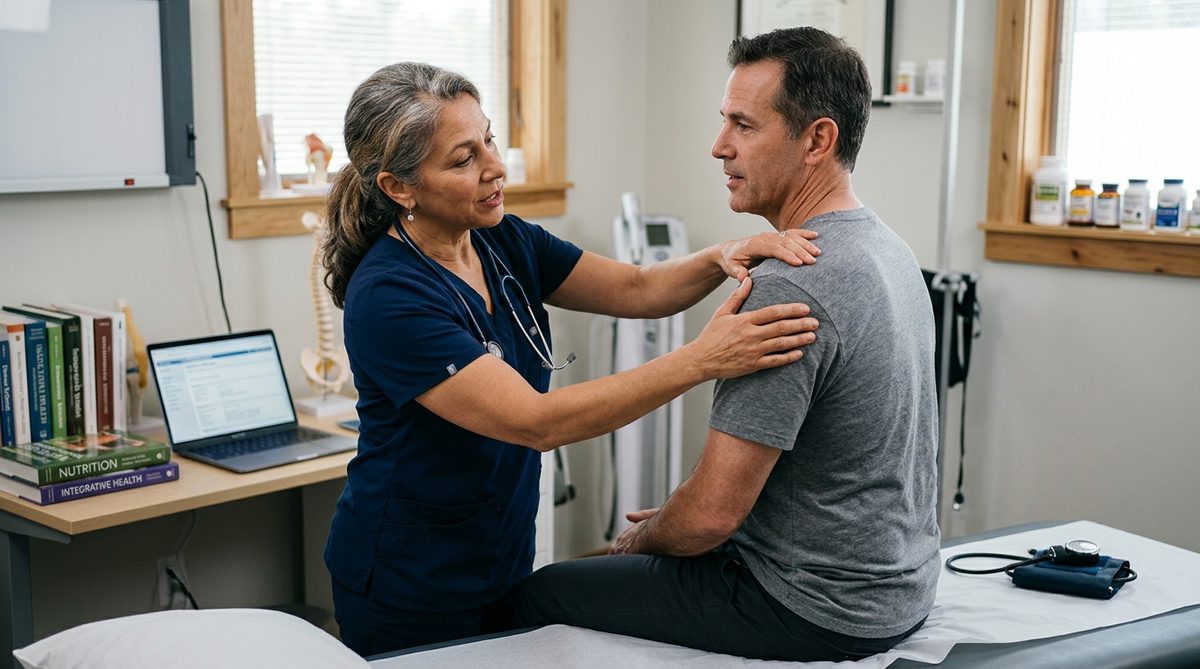
What are the risks of integrative medicine?

The main risks of integrative medicine are delayed diagnosis, replacement of proven care, side effects, medicine interactions, poor product quality, and treatment from an unqualified practitioner. The risk is greatest when someone uses a complementary treatment instead of medical care that works. Safer use means picking a well-studied Therapy for a clear goal, checking products and interactions, keeping needed standard care in place, and telling every provider what you use.
The word integrative does not prove a treatment is safe or helpful. It only describes how different types of care are combined. Each treatment still needs to be judged by its evidence, dose, quality, practitioner skill, and effect on the wider care plan. how different types of care are combined
Which hazard can cause the most harm?
Replacing proven care is the greatest hazard. A treatment can do harm even if it has no direct side effects. The danger comes when it delays a diagnosis, lets a Disease get worse, or leads someone to stop medicine that controls a serious condition. qualified health professional
Some people use integrative medicine and Alternative medicine to mean the same thing. They aren't always the same. integrative care keeps useful standard treatment in place while adding selected complementary options for a clear purpose.
Alternative medicine replaces standard care. That switch can turn a low-risk practice into a dangerous care plan.
Consider a person with ongoing fatigue. They might attend gentle relaxation sessions while a doctor checks for anaemia, thyroid disease, infection, or another cause. That's coordinated care.
But if the person cancels testing because a practitioner blames the fatigue on an unproven imbalance, the relaxation method is no longer the main concern. The missed diagnosis is.
A review of integrative oncology found that selected lifestyle and mind-body methods may help with symptom control or quality of life when used safely alongside cancer treatment. It also warned that poor teamwork between complementary providers and medical teams can disrupt evidence-based treatment. The same rule applies beyond cancer care: supportive care should back up the treatment plan, not quietly replace it.
Why can natural products cause side effects?
Natural products can change the body because they contain active substances. The same quality that may create a helpful effect can also cause nausea, allergic reactions, liver injury, blood pressure changes, sedation, or other unwanted effects. Coming from nature does not remove biological risk.
Herbal products may also vary between brands or batches. Their ingredients, strength, purity, and preparation can differ. That makes the dose harder to predict and the cause of a reaction harder to trace.
Reviews of herbal medicine have recorded adverse drug reactions and problems caused by uneven product quality.
Labels don't always answer every safety question. A blend may contain several herbs, use one common name for different plants, or say little about testing. Contamination and swapped ingredients are extra concerns when quality checks are weak.
And the more ingredients a product has, the harder it is to spot which one caused a problem.
Supplements need the same care. Taking more than the label says can raise the risk of harm. Using several products with similar effects may lead to an accidental high dose.
For example, someone might take separate sleep, stress, and calming products without noticing that all three contain sedating ingredients.
How do complementary products change prescription medicine effects?
Herbs and supplements can strengthen, weaken, or change the effects of prescription medicines. They may alter how a medicine is absorbed, broken down, or cleared from the body. Some also copy a drug's effect, making the combined result far too strong.
Reviews in oncology and medicinal-herb research show that these interactions are a real clinical concern.
The stakes are higher when a medicine has a narrow safety margin. Even a small shift in the drug level may cause treatment failure or poisoning. Complex care plans add more risk because there are more possible interactions to check.
Picture someone who starts an herbal product while taking prescription treatment. They become dizzy, then stop the prescription drug because they think it caused the problem. Yet the real cause could be the new product, an interaction, the medicine, or the illness itself.
Changing several parts of the plan at once muddies the picture. It may also leave the original condition untreated.
Taking a product hours apart from a medicine does not make it safe by default. Timing can help with a few absorption issues, but it won't stop interactions involving metabolism, bleeding, blood pressure, sedation, or immune activity. The product and medicine still need a proper interaction check.
Does every non-drug treatment carry the same level of risk?
No. Risk varies a lot by treatment. A calm breathing exercise does not carry the same dangers as a swallowed herb, invasive procedure, forceful manipulation, or injected substance.
A 2009 review of psychotherapy, lower-energy bodywork, mind-body care, and related non-drug practices found that major adverse effects were reported very rarely. Its estimated number needed to harm was above 18,000. The only severe effect it found was rare, brief reactive psychosis, with a reported number needed to harm above 65,000.
Read those figures with care. The review covered a broad mix of methods and depended on reported events. Some harm may have been missed through under-reporting.
Its findings also do not apply to herbs, forceful physical methods, invasive care, or poorly trained providers.
Many discussions miss this point: the label matters less than the exact action. Ask what enters the body, how much physical force is used, what training the provider has, and what might happen if the treatment fails. Those details tell you more than broad words such as natural, holistic, or integrative.
When does weak evidence become a safety problem?
Weak evidence becomes a safety issue when bold claims lead people to risk direct harm, waste limited time on care that doesn't work, or reject treatment with a credible benefit. A lack of proof is more troubling when the promised cure is sweeping and the possible harm is severe.
A review of hydrogen peroxide, ozone, and other claimed oxygen therapies found no scientific evidence that they cured cancer, AIDS, or degenerative disease. It also reported serious adverse events and several deaths. This shows how an unproven treatment can cause two kinds of harm at once.
It may be toxic. And it may push aside care that works.
Evidence-based medicine does not mean every useful choice has perfect research behind it. It means the strength of the claim should fit the strength of the evidence. A low-risk comfort practice with a modest goal needs a different level of proof from a product sold as a cure for serious disease.
Uncertainty should shape the choice too. When evidence is thin, use the treatment only for a small, realistic aim, pick the lowest-risk option, and track whether it helps. Confident sales talk, testimonials, and technical-sounding tests can't turn uncertain evidence into certainty.
Why does practitioner skill affect safety?
A method can become unsafe when the person providing it cannot screen patients, spot danger, use the right technique, or refer someone for medical care. Training standards vary across complementary fields, so a title alone may say little about a provider's education or legal scope.
Safe practitioners explain what they can and can't treat. They ask about diagnoses, medicines, pregnancy, allergies, surgery, and other care. They keep records and give clear advice on how to report unwanted effects.
They also refer patients when symptoms sit outside their scope.
Take care when a provider promises a cure, tells you to stop prescribed treatment, puts you off medical tests, or says worsening symptoms always prove the treatment is working. Other warning signs include secret product blends, pressure to buy a long package, and refusal to speak with your doctor.
Children need extra care because their bodies, doses, and ability to describe symptoms differ from those of adults. A 2025 review of pediatric chiropractic care found limited data, mixed findings, and often no clear answer about benefit. It also found ongoing safety concerns and different views among professionals.
The review advised pediatric clinicians to talk with families about complementary care so safety can guide decisions.
Which symptoms mean the plan needs urgent review?
New symptoms after starting a product or Therapy need quick attention. Don't assume every reaction is a normal adjustment. Breathing trouble, swelling of the face or throat, fainting, severe chest pain, sudden weakness, confusion, uncontrolled bleeding, or a seizure needs urgent medical help.
Other changes may need a same-day call to a doctor or pharmacist. These include a new rash, repeated vomiting, dark urine, yellow skin or eyes, severe dizziness, unusual bruising, a major mood change, or symptoms that get worse fast. Keep the container, ingredient list, dose, and time taken.
Those details can help clinicians work out the cause.
No progress can also be a warning sign. Set a review date before treatment starts. If the agreed symptom doesn't improve, or the underlying condition worsens, review the plan.
Don't keep extending treatment just because you've already spent money on it.
What should you check before starting a treatment?
Start with the goal. A clear target, such as easing treatment-related nausea, is easier to judge than a broad promise to restore the whole body. Then ask what evidence backs that exact use, what harms have been reported, and how success will be measured.
Use this check before paying for or starting care:
- Name the treatment. Write down the exact product, ingredients, dose, method, and planned length of use.
- Check the purpose. Make sure the treatment aims at one clear symptom or result instead of claiming to cure unrelated conditions.
- Review the evidence. Look for research on that exact treatment and goal, not proof borrowed from a different product or disease.
- Ask about harm. Get clear details about side effects, interactions, who should avoid it, and which symptoms mean you should stop.
- Verify the provider. Check their training, registration where it exists, insurance, and experience with your condition.
- Tell every clinician. Give your doctor and pharmacist a full list of medicines, herbs, supplements, and complementary treatments.
- Protect the main care plan. Don't stop prescribed medicine, cancel tests, or delay medical review without speaking to the clinician in charge of that care.
- Set a review point. Choose when you'll check the benefits, side effects, cost, and whether treatment should continue.
One often missed risk is scattered information. A doctor can't check a product they don't know about, while a complementary practitioner may miss a danger if the patient leaves out a diagnosis or prescription. Written lists beat memory.
Bring the same up-to-date list to every appointment.
Another missed issue is opportunity cost. Even a low-risk treatment can eat up money, energy, and appointment time. Weigh that cost against the likely size of the benefit.
A small comfort gain may be worth it, but it shouldn't block testing, rehabilitation, medication, or other care backed by stronger evidence.
Take one action now: write down every medicine, supplement, herb, and complementary Therapy you use, then ask your doctor or pharmacist to review the full list before you add or stop anything.
Common questions
What are the potential risks of integrative medicine?
Some therapies may cause side effects, allergic reactions, or harm if used the wrong way. Another risk is delaying medical care that has been shown to work.
Can integrative medicine interact with conventional treatments?
Yes, herbs, supplements, and other therapies can change how medicines or treatments work. Tell your doctor about everything you use so they can check for harmful interactions.
Are integrative medicine therapies scientifically proven to be safe?
Some therapies have good safety evidence, but many have not been studied enough. Natural does not always mean safe, and product quality can vary.
How can I reduce the risks of using integrative medicine?
Talk with a qualified health professional before starting any therapy, especially if you take medicine. Choose trusted providers and products, and do not replace proven care without medical advice.Sources

What Are 10 Signs That My Body Is Healthy?
Read article →
How to Tell if Your Body Is Unhealthy?
Read article →
What Are Signs of Poor Function Health?
Read article →
What Are Some Weird Signs That My Body Is Healthy?
Read article →
What Are Five Signs That I Might Not Be Healthy?
Read article →