What Are the Typical Components of a Functional Health Assessment?

A functional health assessment usually combines your health goals, medical history, current signs and symptoms, lifestyle, physical function, clinical examination, selected tests, and a personal care plan. The aim is to understand how different parts of your health may affect each other. A good assessment looks for patterns while still checking for recognised diseases that need standard medical care.
The exact process varies with your age, health needs, and the practitioner’s scope of practice. It should never become a hunt for every possible test. Each question, examination, or test needs a clear reason. selected tests
What happens before any tests are ordered?
The assessment should begin with the reason you booked the visit. The practitioner needs to know what has changed, how it affects your life, and what you want help with. A person seeking support for ongoing tiredness needs a different assessment from someone concerned about gut pain or poor exercise recovery.
You may be asked to name your main concern and describe what a useful result would look like. A goal such as “feel healthier” is hard to measure. “Walk for 30 minutes without needing a rest” or “wake feeling refreshed on most mornings” gives the assessment a practical target.
The practitioner should also explain the limits of the service. A functional assessment can organise health information and guide further care. It cannot safely replace urgent assessment, diagnosis, or treatment when warning signs are present. Severe chest pain, sudden weakness, heavy bleeding, trouble breathing, or rapidly worsening symptoms need prompt medical care.
How does the practitioner build your health story?
A detailed medical history is the core of the assessment. It records past diagnoses, operations, injuries, hospital stays, allergies, medicines, supplements, and previous treatment. It should include health conditions that run in your family because these can change screening needs and the level of concern around a symptom.
The next step is a clear symptom timeline. The practitioner may ask when each problem began, what was happening at the time, and whether it has stayed steady or changed. They may ask what makes it better, what makes it worse, and what you have already tried.
Timing often reveals more than a long symptom list. For example, tiredness that began after a medication change may need a medicine review. Tiredness with heavy menstrual bleeding may lead to checks for iron deficiency. Tiredness with loud snoring and morning headaches may point toward a sleep assessment. The same complaint can follow several paths.
Signs and symptoms are not the same thing. Symptoms are experiences reported by the person, such as pain, nausea, or brain fog. Signs are findings that another person can observe or measure, such as fever, swelling, or a raised heart rate. Both matter, but neither proves a diagnosis on its own.
A good history also records care already received. This reduces repeated testing and helps the practitioner see whether an old result needs follow-up. Bring current medicine labels, recent reports, and a short symptom timeline if you have them.
What does the lifestyle review cover?
The lifestyle review looks at daily habits that can affect symptoms, recovery, and disease risk. It should fit the person’s real life rather than assume there is one perfect routine.
Food and fluid intake
The Nutrition review may cover usual meals, appetite, food access, fluid intake, alcohol, caffeine, supplements, and reactions linked to eating. The goal is to find gaps or patterns worth exploring. It is not a reason to ban many foods without evidence.
A food record can help when it captures timing, portion estimates, symptoms, and the setting in which eating occurred. A single “good” day gives little useful information. Several ordinary days often show missed meals, low fibre intake, or a symptom that appears before food rather than after it.
Movement and physical demands
Physical activity includes planned exercise, walking, active work, housework, and long periods spent sitting. The practitioner may ask about activity type, effort, recovery, pain, breathlessness, and any recent drop in capacity.
This review should compare what a person can do now with their usual level. Someone may meet a general exercise target yet struggle with the lifting required at work. Another person may avoid movement because pain flares the next day. These details shape a safer plan.
Sleep, stress, and daily setting
Sleep questions may cover bedtime, waking, snoring, shift work, screen use, and daytime sleepiness. Stress review may include work pressure, caring duties, safety, relationships, and access to support. The practitioner may also ask about smoking, substance use, housing conditions, and exposure to dust, mould, chemicals, heat, or noise.
These questions are personal, so there should be a clear health reason for asking them. The person should know how the information will be recorded and used.
Why is a physical examination included?
A physical examination checks whether the reported story matches observable findings. The content depends on the concern and the practitioner’s training. It may include blood pressure, pulse, temperature, breathing rate, weight changes, or a focused examination of the body system linked to the complaint.
For fatigue, a qualified clinician might look for pallor, swelling, changes in heart rhythm, breathing problems, or neck findings related to the thyroid. For joint pain, the examination may assess swelling, warmth, range of motion, strength, and walking pattern. These findings help decide whether tests, treatment, or referral should come next.
Functional checks can add useful detail. Grip strength, balance, walking speed, the ability to rise from a chair, or tolerance for a simple task can show how health problems affect daily life. Such checks need to suit the person’s condition and remain within safe limits.
Consent applies throughout the examination. The practitioner should explain what they want to check and why. You can ask questions, request a support person where available, or decline part of the examination.
Which lab tests may be useful?
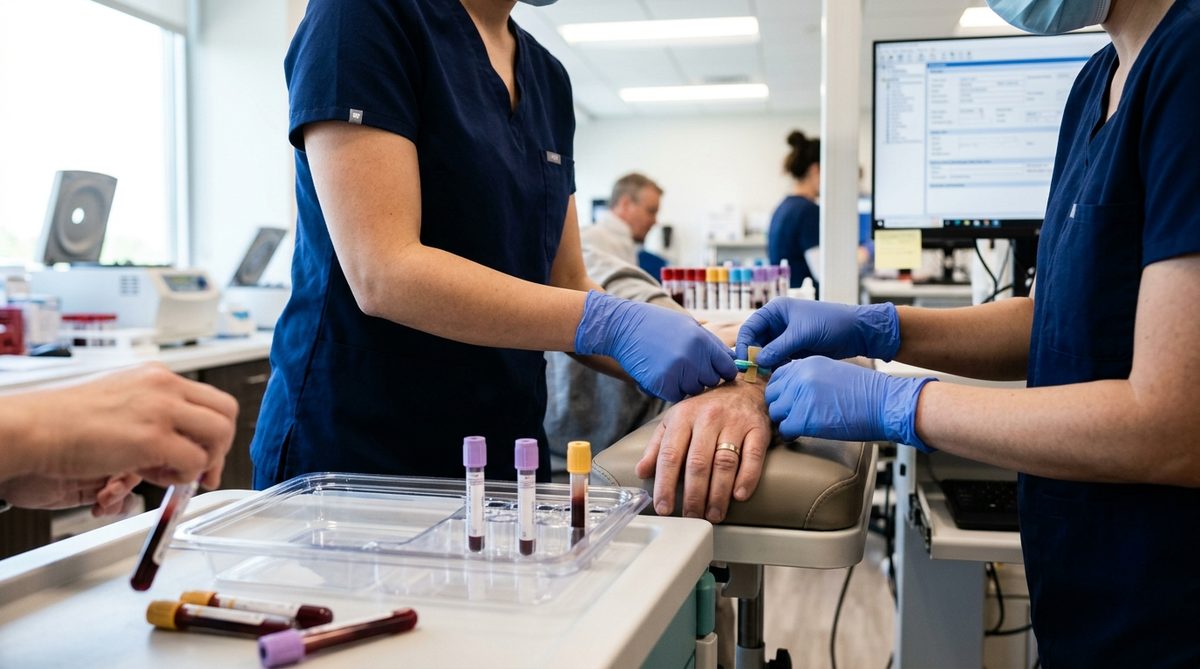
Testing should answer a question raised by the history or examination. A blood test is useful when the result could confirm a concern, rule out a likely cause, guide treatment, or show whether follow-up is needed. Ordering a large panel without a clear purpose can produce chance findings that lead to worry and more tests.
A complete blood count may be considered when symptoms or history suggest anaemia, infection, or a blood cell problem. Other common tests may assess iron stores, blood glucose, kidney function, liver function, or nutrient levels. The chosen tests should match the person’s symptoms and recognised clinical guidance.
Thyroid testing may be relevant when there are compatible features such as a marked change in energy, temperature tolerance, heart rate, bowel habits, menstrual pattern, or weight. These features can also have other causes. Symptoms alone cannot show whether the thyroid is underactive or overactive.
Some people expect a functional assessment to include broad testing of the immune system, hormones, food reactions, gut organisms, or toxins. More data does not guarantee a clearer answer. The practitioner should be able to explain what a proposed test measures, how reliable it is, and how either result would change care.
Results also need context. A value outside a laboratory range is not always a disease, while a value inside the range does not erase severe symptoms. Reference ranges, recent illness, medicines, preparation, and normal biological change can affect interpretation. Results should be reviewed by a professional qualified to interpret them.
How are daily function and risk measured?
Health is measured partly by what a person can do. The assessment may explore personal care, household tasks, work duties, mobility, concentration, social activity, and recovery after effort. It should record both limits and abilities.
A rating scale or short questionnaire may help track change over time. It works best when paired with concrete examples. “Moderate difficulty with stairs” becomes more useful when the record states that the person stops after one flight because of knee pain.
The practitioner also looks for each risk factor that could change care. Examples include falls, medicine interactions, smoking, high blood pressure, family history, poor food access, unsafe exercise, or symptoms that suggest urgent disease. One factor rarely tells the whole story. Several related findings may justify faster review or closer monitoring.
Protective factors belong in the assessment too. Stable housing, useful health knowledge, supportive relationships, enjoyable movement, and reliable access to care can make a plan easier to follow. Recording them helps build on what already works.
How are the findings turned into a useful plan?
The final stage brings the information together. The practitioner should separate confirmed findings from possible explanations. They should state which concerns need medical investigation, which habits may be contributing, and which parts remain unclear.
A useful plan ranks actions by safety and likely value. It may include referral to a doctor, review of medicine, targeted testing, support from another health professional, or a change to one daily habit. The plan should state who is responsible for each action and when progress will be reviewed.
Consider a person with low energy who sleeps five hours, eats irregularly, and has recently developed heavy bleeding. A weak plan may focus only on supplements. A stronger plan flags the bleeding for medical review, considers appropriate testing for anaemia, and sets a realistic sleep or meal action while those results are pending. It deals with the highest-risk issue first.
Goals should be specific enough to review. “Improve fitness” gives no clear endpoint. “Walk for 15 minutes after lunch on four days each week without a symptom flare” can be tracked and adjusted. The plan should also say what to do if symptoms worsen.
What should you receive at the end?
You should leave with a plain-language summary of the main findings, unanswered questions, recommended actions, and warning signs that need prompt care. You should know which suggestions are supported by strong evidence and which are working theories.
You should also understand the cost and purpose of any proposed test or service. Ask how the result would change the plan. If the answer is unclear, the test may not be useful yet.
A thorough assessment does not need to be complicated. Its value comes from linking your story, measurable findings, daily function, and appropriate clinical care into one clear record.
Before your appointment, write a one-page timeline of your symptoms, current medicines, recent results, daily limits, and main goal, then use it to keep the assessment focused.

What Are 10 Signs That My Body Is Healthy?
Read article →
How to Tell if Your Body Is Unhealthy?
Read article →
What Are Signs of Poor Function Health?
Read article →
What Are Some Weird Signs That My Body Is Healthy?
Read article →
What Are Five Signs That I Might Not Be Healthy?
Read article →