What Country Uses Homeopathy the Most? A Global Look at Who Still Believes
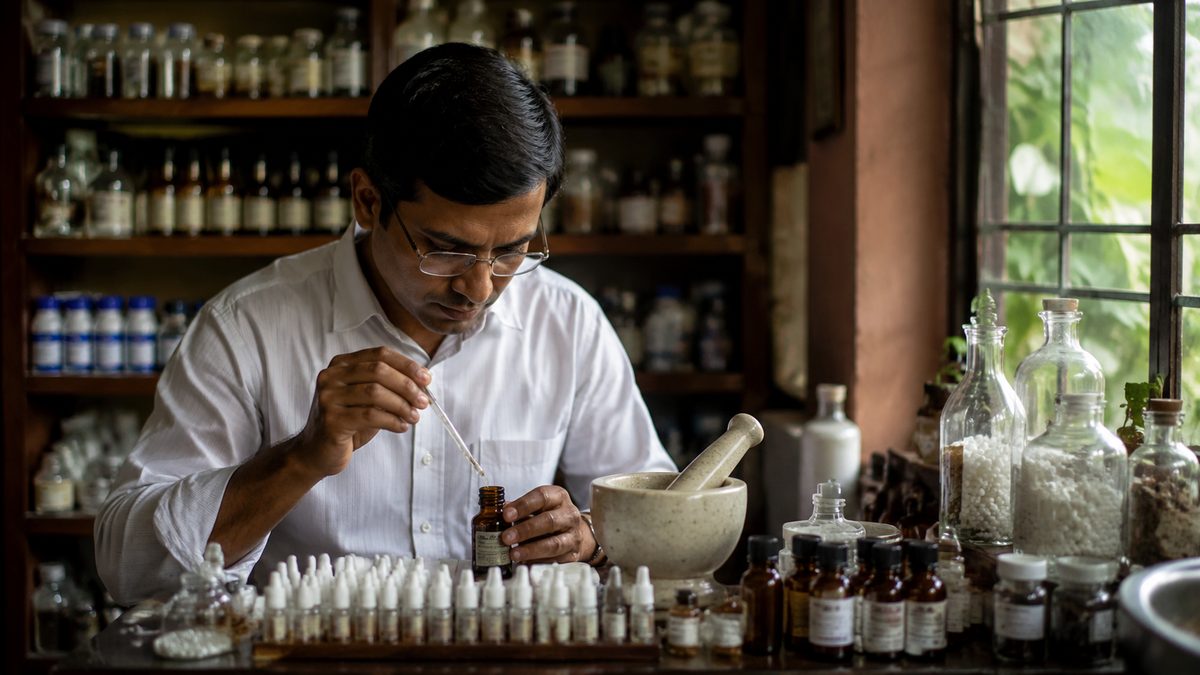
India uses homeopathy more than any other country on earth. Over 100 million people rely on it as their primary healthcare. The Indian government funds it, licenses practitioners, and runs dedicated homeopathic hospitals across the country.
But there's more to the story. Homeopathy is woven into healthcare systems across five continents, used by an estimated 600 million people worldwide. That surprises most people.
It's not a fringe interest. And it's not fading.
Why Does India Lead the World in Homeopathy Use?
India has over 200,000 registered homeopathic practitioners and more than 180 homeopathic medical colleges. The Central Council of Homeopathy, established by an Act of Parliament in 1973, regulates education and practice nationwide.
When I talk to clients with family in rural India, one thing comes up repeatedly: in many areas, a homeopathic doctor is simply the doctor available. Access to conventional medicine is limited, expensive, or both. Homeopathy filled that gap over a century ago.
One client told me her grandmother in Rajasthan had never seen a conventional GP. The local homeopath was the first and often only call. That's not unusual. For hundreds of millions in India, homeopathy isn't an alternative. It's the baseline.
The Indian government classifies homeopathy under AYUSH, a ministry that also covers Ayurveda, Yoga, Unani, Siddha, and Naturopathy. This gives homeopathy institutional standing that it simply doesn't have in most Western countries. Practitioners are trained, examined, and licensed.
Which Other Countries Use Homeopathy the Most?
After India, the countries with the highest homeopathy use are Germany, France, Brazil, the United Kingdom, and Switzerland.
Germany is homeopathy's birthplace. Samuel Hahnemann developed the system in the late 1700s, and Germany never abandoned it. Around 6,000 medical doctors practice homeopathy alongside conventional medicine. German pharmacies stock homeopathic remedies as standard. Statutory health insurance covered homeopathic treatment for years, though that's shifted recently under cost pressure.
France had some of Europe's highest homeopathy use for decades. At its peak, around 40 percent of French people used homeopathic remedies, and roughly 70 percent of French pharmacies stocked them. In 2021, the French government removed homeopathy from its reimbursement list, which reduced access but didn't eliminate use. Millions of French people still buy remedies out of pocket.
Brazil recognized homeopathy as a medical specialty in 1980. Brazilian doctors can train and certify in homeopathy through the Federal Council of Medicine. The public health system, the SUS, includes homeopathy as an offered treatment in many states.
Switzerland went further than almost any Western nation. In 2017, Swiss voters approved a constitutional amendment making homeopathy a covered benefit under mandatory health insurance. This followed a decade of provisional inclusion and a national study examining homeopathy alongside other complementary methods. Switzerland matters because the inclusion was driven by public demand and by health economists looking at total care costs.
The United Kingdom has a long history with homeopathy. The Royal Family has used homeopathic physicians for generations. The NHS funded homeopathic hospitals for decades, though those services have been progressively cut since 2017. Private homeopathic practice remains active.
Is Homeopathy Still Used in Germany?
Yes. Homeopathy in Germany is still widely used, though it's faced more institutional resistance in the last ten years than at any point in the last century.
The German Medical Association's position has hardened against homeopathy as a reimbursable service, and several major insurers dropped coverage. This caused genuine disruption for practitioners and patients. But consumer demand stayed strong. Germans spent hundreds of millions of euros on homeopathic products annually even after reimbursement ended.
What Germany shows is a pattern common across Europe. Institutional support is shrinking under pressure from evidence-based medicine advocates and health economists. Personal use continues regardless. People don't stop using something they find helpful because a policy changed.
In my work with people across different healthcare backgrounds, this disconnect between policy and personal behaviour is consistent. One client used homeopathy for her children's ear infections for years. When I asked whether recent European policy debates changed anything for her, she looked puzzled. The policy changes weren't on her radar. What mattered was that her kids recovered well and she felt in control of her family's health.
How Many People Worldwide Use Homeopathy?
The World Health Organisation estimated in 2009 that homeopathy was used by approximately 500 million people globally. More recent estimates put that figure at 600 million or higher, making it the second most widely used medical system in the world after conventional medicine [1].
The global homeopathy market was valued at around USD 1.5 billion in 2022 and is projected to grow. That growth is concentrated in Asia and Latin America, where practitioner numbers and institutional support are expanding.
These figures include people who use homeopathy as their primary healthcare and people who use it alongside conventional medicine. Both groups are large.
What Most Articles Get Wrong About Global Homeopathy Use
Most coverage makes three mistakes worth correcting.
First, most articles frame global homeopathy use as a developing-world phenomenon driven by lack of access to real medicine. That's wrong. Switzerland has universal healthcare and one of the world's most sophisticated medical systems. Its citizens voted to keep homeopathy in their insurance scheme. France's homeopathy use was highest among educated, urban professionals. Germany's homeopathic patient base skews toward people who can afford to pay out of pocket after reimbursement ended. Homeopathy use correlates with personal values around health autonomy, not poverty.
Second, most articles treat European policy changes as evidence that homeopathy is dying out. France removing reimbursement, the NHS cutting homeopathic hospitals, German insurers dropping coverage: these are often presented as a tide turning. What they actually represent is institutional healthcare systems under budget pressure cutting services that lack the kind of randomised controlled trial evidence that justifies insurance funding. Personal use hasn't collapsed in any of these countries. The patients didn't change their minds. The funders did.
Third, most articles ignore the regulatory and professional infrastructure around homeopathy in major-use countries. India's system of training and licensing is not small or informal. Brazil's recognition of homeopathy as a medical specialty isn't a footnote. These are deliberate structural choices made by governments with functioning medical systems.
Why Do So Many People Use Homeopathy?
This is the question that matters most if you're trying to understand the global picture rather than just rank countries.
People choose homeopathy for several distinct reasons, and the reasons vary by context.
In India and parts of Latin America, accessibility and cost are primary. A homeopathic consultation and remedy is cheaper than a conventional doctor visit in many areas. This matters at scale.
In Europe and Australia, the driver is different. People who use homeopathy in high-income countries with functioning public health systems are making an active choice. They're not using it because they have no other option. They're using it because they want a healthcare interaction that treats them as a whole person, takes their history seriously, and doesn't default to a prescription after a seven-minute appointment.
I know this because clients tell me, repeatedly, that they came to homeopathy after feeling dismissed by conventional medicine. Not because conventional medicine failed to diagnose them. Often it did. But the management felt like symptom suppression rather than real resolution, and the interaction felt transactional.
One client described a decade of recurrent sinus infections managed with repeated antibiotic courses. She said, and I remember this clearly, "They kept treating the infection. Nobody ever asked why I kept getting infections." That question, and the sustained attention it requires to answer, is where homeopathy often fills a gap that conventional medicine leaves open.
What Is Homeopathy, Briefly?
Homeopathy is a system of medicine developed by Samuel Hahnemann in Germany in the 1790s. It works on the principle that a substance that causes symptoms in a healthy person can, in highly diluted form, stimulate healing in a person experiencing those same symptoms.
Remedies are prepared through serial dilution and succussion (vigorous shaking). Practitioners select remedies based on a detailed picture of the individual's symptoms, including physical, emotional, and constitutional factors. The same diagnosis in two people might result in different remedies if their symptom pictures differ.
This individualised approach is one reason homeopathy is difficult to study with standard randomised controlled trial methodology, which requires uniform treatment across subjects.
Where Is Homeopathy Most Used Today?
India is the global centre of homeopathy by every measure: volume of practitioners, government funding, number of dedicated hospitals, and proportion of the population who use it as primary care.
After India, Brazil and Switzerland represent the most institutionally supported systems in their regions. Germany and France remain culturally significant despite reduced insurance coverage. Australia has an active practitioner community and strong consumer demand, with homeopathy available through private practice and integrated health clinics.
In Australia specifically, homeopathy sits within a broader movement toward integrative health, where people combine the best of conventional diagnosis and monitoring with complementary approaches for treatment and prevention. That model is growing.
FAQ
Which country uses the most homeopathy?
India, by a large margin. Over 100 million people use homeopathy as their primary healthcare, supported by government-funded hospitals, licensed practitioners, and dedicated medical colleges.
How many people use homeopathy worldwide?
Estimates range from 500 to 600 million people globally, making it the second most widely practised medical system in the world.
Is homeopathy still used in Germany?
Yes. Institutional reimbursement has been cut, but consumer use remains strong. Germany has thousands of medically trained homeopathic practitioners and significant ongoing demand for remedies.
Is homeopathy growing or declining globally?
Growing, particularly in Asia and Latin America. In Europe, institutional support has declined but personal use has held. The global market is expanding.
Can homeopathy be used alongside conventional medicine?
Yes, and this is how most people in Western countries use it. Homeopathy is frequently used to complement conventional diagnosis and treatment, not replace it.
Is homeopathy regulated?
In India, Brazil, Switzerland, and several other countries, yes. Practitioners require formal training and licensure. In countries like Australia, regulation varies by state, and professional associations set standards for qualified practitioners.
What You Should Do Next
If you're curious about homeopathy, start with a proper consultation. Not a remedy off a shelf based on a symptom. A full case-taking with a qualified practitioner who asks about your whole picture, not just your presenting complaint.
The countries that get the most from homeopathy, from India's rural clinics to Switzerland's insured system, do so because they treat it as a serious discipline practised by trained people. That's the version worth engaging with.

What Are 10 Signs That My Body Is Healthy?
Read article →
How to Tell if Your Body Is Unhealthy?
Read article →
What Are Signs of Poor Function Health?
Read article →
What Are Some Weird Signs That My Body Is Healthy?
Read article →
What Are Five Signs That I Might Not Be Healthy?
Read article →