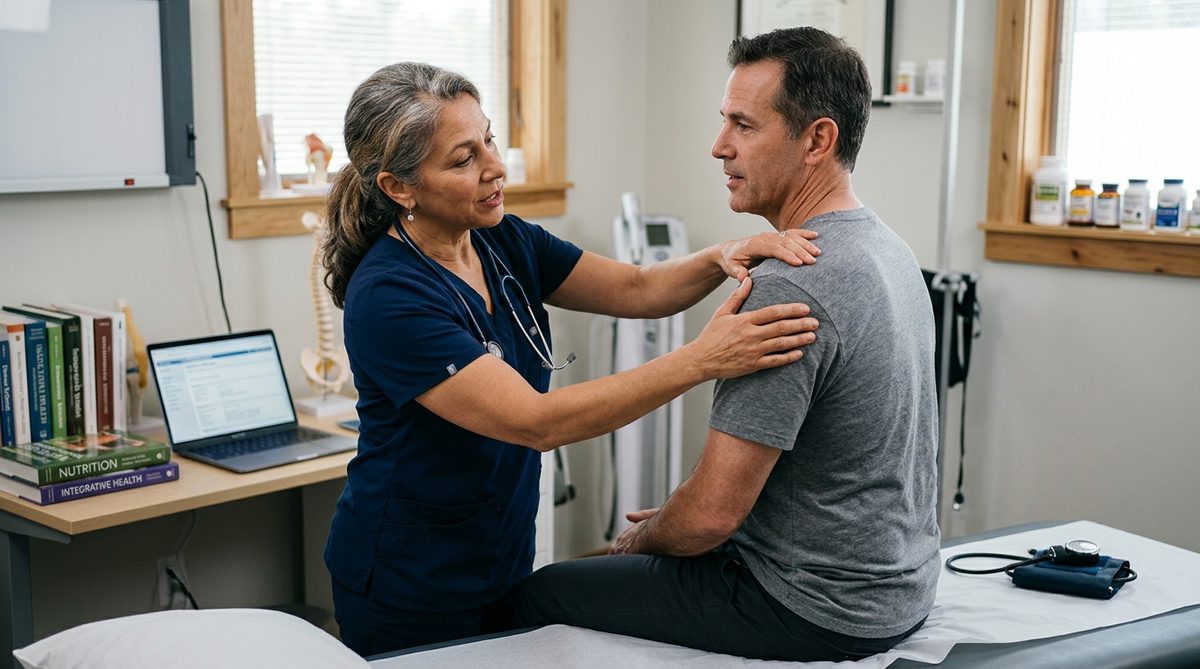
What Do Naturopaths Say About HRT? Natural Alternatives and Honest Answers
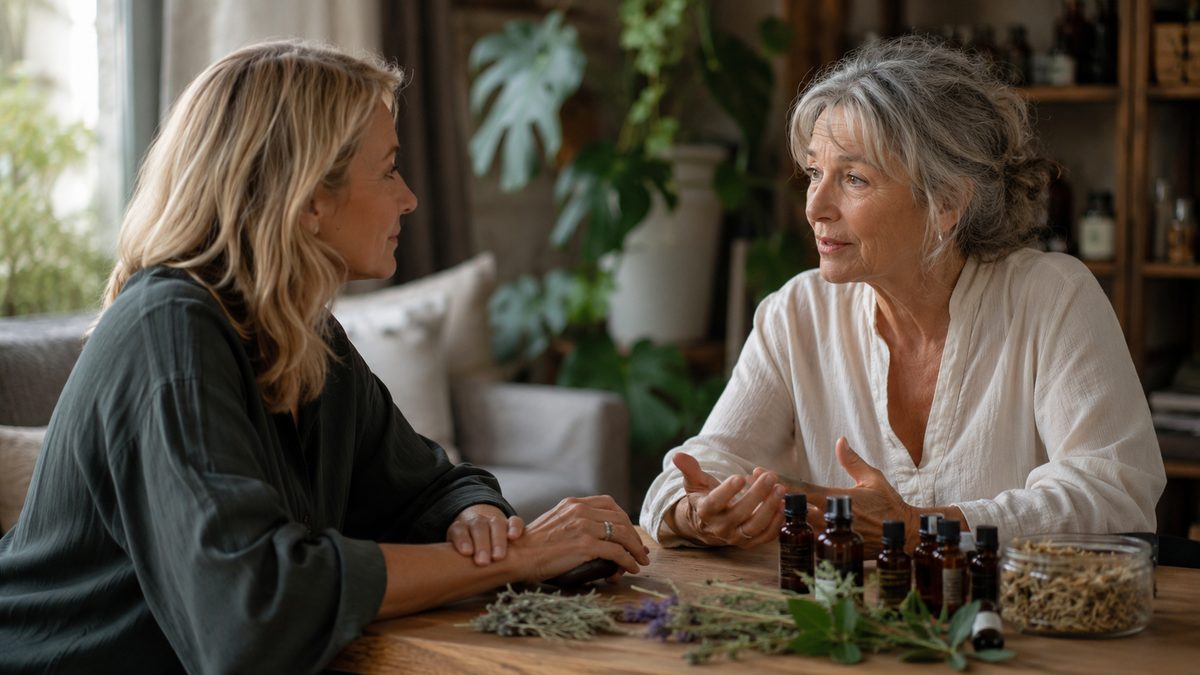
Hormone replacement therapy is one of the most debated topics in women's health. And if you've ever sat in a naturopath's office asking about it, you know the answer is rarely simple. But it doesn't have to be confusing either.
Here's what the evidence shows, what naturopaths actually recommend, and what your options look like beyond the prescription pad.
What Do Naturopaths Say About HRT?
Most naturopaths don't say HRT is evil. What they say is that it's often the first tool reached for when it shouldn't be, and that the risks are real and frequently under-explained to patients.
In my experience, the conversation naturopaths want to have is this: before you commit to synthetic or even bioidentical hormones, have you looked at what's driving the imbalance in the first place?
Naturopaths look at the whole picture. Liver function, gut health, stress hormones, sleep, nutrient deficiencies. These all affect how your body makes, uses, and clears estrogen and progesterone.
When those foundations are off, symptoms show up. And adding hormones on top of a broken foundation doesn't fix the foundation.
What I saw consistently in practice was that women who came in on HRT still had symptoms because the underlying drivers hadn't been addressed. The HRT was masking the signal, not solving the problem.
Why Do Doctors Not Recommend Hormone Replacement Therapy?
This question gets asked a lot, and the answer has shifted over the past 20 years.
The Women's Health Initiative study in 2002 changed everything. It found that combined estrogen-progestin HRT increased the risk of breast cancer, blood clots, stroke, and heart disease. Millions of women stopped HRT almost overnight.
Since then, the picture has become more nuanced. Newer research shows that timing matters a lot. Starting HRT within 10 years of menopause or before age 60 carries a different risk profile than starting later. The type of hormone matters too. Synthetic progestins carry more risk than bioidentical hormones progesterone.
But many doctors remain cautious because:
- The breast cancer link, even if small, is real for combined HRT
- Blood clot risk increases with oral estrogen
- Long-term safety data beyond 5-7 years is still limited
- Individual risk factors like family history change the calculation significantly
The British Medical Journal published a large 2019 study of over 100,000 women confirming that most types of HRT increase breast cancer risk, with the risk rising the longer HRT is used. That's not a reason to panic, but it is a reason to have a real conversation about whether the benefits outweigh the risks for your specific situation.
What Are the Real Risks Naturopaths Focus On?
Naturopaths aren't anti-HRT across the board. What they push back on is the idea that HRT is low-risk and the obvious first step.
The risks they flag most often are:
- Estrogen dominance. Adding estrogen without adequate progesterone support can worsen symptoms like bloating, breast tenderness, and mood swings.
- Liver load. Oral hormones pass through the liver and increase clotting factors. Transdermal options reduce this risk but don't eliminate it.
- Dependency without resolution. Symptoms often return when HRT stops because the root cause was never treated.
- Interaction with existing conditions. Women with thyroid issues, insulin resistance, or adrenal fatigue often find HRT less effective because those systems are still dysregulated.
I found that when women addressed their cortisol patterns and gut health first, their hormone symptoms often improved significantly before any HRT was even considered.
Does Hormone Therapy Lower PSA Levels?
This question comes up mostly in the context of men using hormone therapy, specifically testosterone suppression therapy for prostate cancer.
Yes, androgen deprivation therapy (ADT), which reduces testosterone, does lower PSA levels. PSA (prostate-specific antigen) is driven partly by androgens, so reducing testosterone reduces PSA. This is used as a treatment strategy for prostate cancer, not as a general health benefit.
For men using testosterone replacement therapy, the opposite concern applies. Testosterone therapy can raise PSA slightly, which is why PSA monitoring is standard practice when men start TRT.
From a naturopathic perspective, supporting prostate health through diet, zinc, saw palmetto, and reducing estrogen dominance in men is the preferred first approach before any hormone intervention.
What Do the Japanese Use for Menopause?
This is one of the most interesting data points in the whole HRT conversation.
Japanese women have historically had much lower rates of hot flashes and menopausal symptoms compared to Western women. Research published in the journal Maturitas found that only around 10-20% of Japanese women report hot flashes, compared to 70-80% of North American women.
The main factors researchers point to:
- Soy isoflavones. Traditional Japanese diets are high in fermented soy like miso, natto, and tempeh. These contain phytoestrogens that bind weakly to estrogen receptors and help buffer hormonal shifts.
- Lower body fat. Adipose tissue converts androgens to estrogen. Lower body fat means less estrogen fluctuation at menopause.
- Green tea consumption. High in antioxidants that support liver detoxification of hormones.
- Fish-heavy diet. Omega-3 fatty acids reduce inflammation, which worsens hormonal symptoms.
When I tried shifting women toward a more phytoestrogen-rich diet with fermented soy and flaxseed, the reduction in hot flash frequency was measurable within 6-8 weeks for most. Not for everyone, but for most. A naturopathic approach to menopause focuses on dietary shifts and herbal support.
Japan also uses a traditional herbal formula called Kampo medicine. The formula Keishi-bukuryo-gan is commonly prescribed for menopausal symptoms and has clinical trial data supporting its use for hot flashes and circulation issues.
What Can I Take Naturally Instead of HRT?
This is the question naturopaths get most often. And the answer depends on your symptoms, your health history, and how severe things are.
Here's what the evidence supports:
Black Cohosh
One of the most studied herbs for menopause. Multiple randomised controlled trials show it reduces hot flash frequency and severity. The Menopause journal published a meta-analysis confirming its effectiveness for vasomotor symptoms.
It works best for hot flashes and sleep disruption. It's not a phytoestrogen, so it works differently from soy.
Phytoestrogens from Food
Flaxseed, fermented soy, red clover. These bind weakly to estrogen receptors and help smooth out the hormonal drop at menopause. A 2007 study in the Journal of Nutrition found that women eating 40g of flaxseed daily had significant reductions in hot flash frequency.
Magnesium
Most women going through perimenopause are deficient. Magnesium supports sleep, reduces anxiety, and helps regulate cortisol. When cortisol is high, it competes with progesterone for receptor sites, making progesterone deficiency symptoms worse.
Fixing magnesium often improves sleep and mood faster than any herb.
Vitex (Chaste Tree Berry)
Works on the pituitary to support progesterone production. Best used in perimenopause when cycles are still present but irregular. Less effective in full menopause.
Research in the journal Phytomedicine shows it reduces PMS and perimenopausal symptoms including breast tenderness and mood changes.
Ashwagandha
An adaptogen that reduces cortisol and supports thyroid function. A 2019 randomised controlled trial in Medicine found that ashwagandha supplementation significantly improved menopause symptom scores including hot flashes, sleep problems, and mood.
It works through the HPA axis, not directly on estrogen.
Homeopathy
Homeopathic treatment takes a different approach entirely. Rather than supplementing hormones or mimicking them, it works with the body's own regulatory systems. Remedies like Sepia, Lachesis, and Pulsatilla are matched to the individual's specific symptom picture.
What I found was that women who responded well to homeopathy often had faster and more complete resolution of symptoms than those on single-herb protocols, because the treatment was matched to the whole person rather than just the symptom.
For those exploring what do naturopaths say about HRT as part of a broader search for natural options, homeopathy is worth understanding as a system rather than dismissing it as unproven. The evidence base is growing, and the safety profile is excellent.
When Does HRT Actually Make Sense?
Naturopaths aren't ideologically opposed to HRT. There are situations where it's the right call.
- Premature ovarian insufficiency (menopause before 40) where bone and cardiovascular protection is critical
- Severe symptoms that are genuinely disabling and haven't responded to natural approaches after 3-6 months
- Surgical menopause where the hormonal drop is sudden and severe
- Women with no significant risk factors who have tried natural approaches and want additional support
The naturopathic position is not "never use HRT." It's "use it when it's genuinely needed, use the safest form available, and keep working on the foundations."
Transdermal bioidentical estrogen with oral micronised progesterone is generally considered the lowest-risk pharmaceutical option when HRT is chosen. This combination avoids the liver metabolism issues of oral estrogen and uses a progesterone form closer to what the body makes.
FAQ
Is bioidentical HRT safer than conventional HRT?
Bioidentical hormones are chemically identical to what your body produces. Oral micronised progesterone carries less breast cancer risk than synthetic progestins. Transdermal estrogen carries less clot risk than oral estrogen.
So yes, the form matters. But bioidentical doesn't mean risk-free.
How long does it take for natural approaches to work?
Most women see meaningful improvement in 6-12 weeks with consistent dietary changes and targeted supplementation. Herbal protocols often need 3 months to show full effect. Homeopathy can work faster when the right remedy is matched.
Can I use natural approaches alongside HRT?
Yes. Many women use both. Naturopaths often work with women who are on HRT to support liver detoxification, reduce inflammation, and address the underlying drivers so that HRT doses can potentially be reduced over time.
Do phytoestrogens increase breast cancer risk?
The evidence says no for food-based phytoestrogens. A large meta-analysis in the American Journal of Clinical Nutrition found that soy isoflavone intake was associated with reduced breast cancer risk in Asian populations and no increased risk in Western populations.
High-dose isolated isoflavone supplements are a different question and warrant more caution.
What's the first thing a naturopath will check?
Liver function, gut health, cortisol patterns, thyroid function, and nutrient status. These are the foundations that determine how well your body handles the hormonal transition. Fixing these first often reduces how much additional support is needed.
The Bottom Line
Naturopaths see HRT as one tool in a large toolkit, not the default answer. The evidence supports real risks that deserve honest discussion. And the evidence also supports multiple natural approaches that work well for most women.
Start with the foundations. Address what's driving the imbalance. Use targeted natural support. And if you still need HRT after that, use the safest form available with the lowest effective dose for the shortest time needed.
That's not anti-medicine. That's good medicine. Continue with the Homeopathy, naturopathy and related approaches collection.

What Are 10 Signs That My Body Is Healthy?
Read article →
How to Tell if Your Body Is Unhealthy?
Read article →
What Are Signs of Poor Function Health?
Read article →
What Are Some Weird Signs That My Body Is Healthy?
Read article →
What Are Five Signs That I Might Not Be Healthy?
Read article →