What Does a Sleep Score of 14 Mean? What It Tells You and What to Do
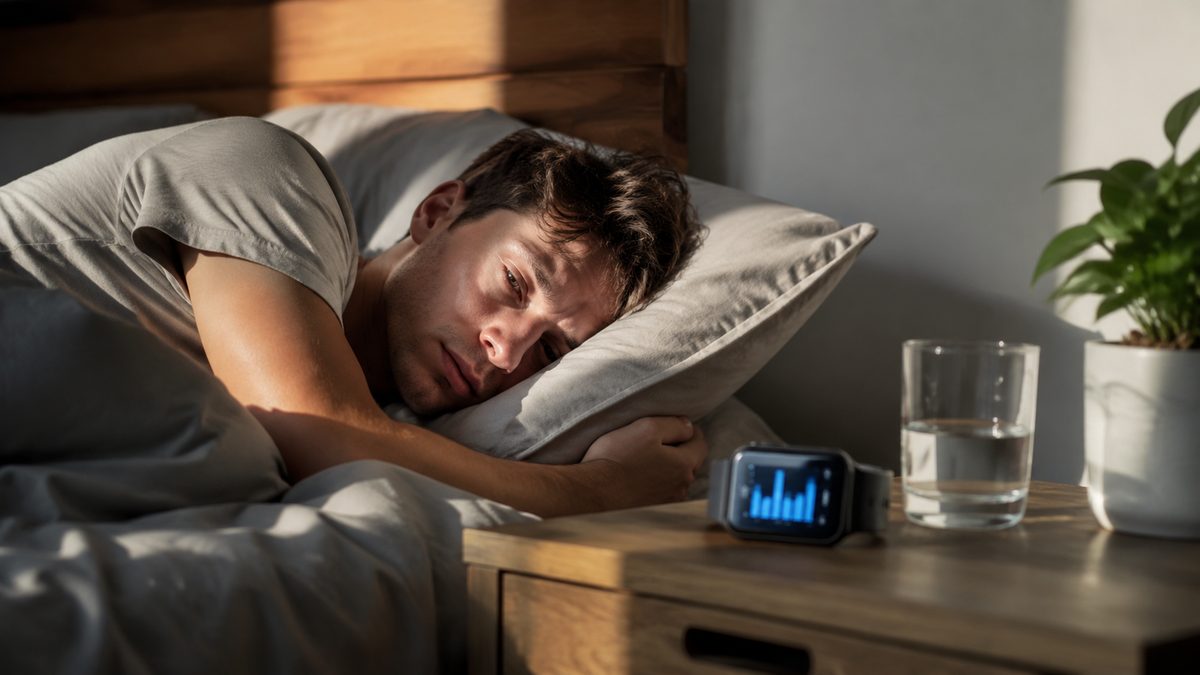
On most consumer sleep trackers that use a 0-100 scale, a score of 14 means your sleep was seriously disrupted. You likely got under four hours of actual sleep, woke up frequently through the night, or got almost no deep or REM sleep.
Healthy adults typically need 7-9 hours with around 20-25% deep sleep and 20-25% REM sleep. A score of 14 suggests you got very little of that. ask about CBT-I
Before you panic, check which scale your device uses. Not every tracker runs from 0 to 100. But if yours does, 14 is close to the floor. It warrants attention, especially if it keeps showing up night after night.
Why Doesn't Everyone Agree on What Sleep Scores Mean?
There's no universal sleep score. Every app and device company invents its own formula. Fitbit, Garmin, Oura, Samsung, and Apple all calculate sleep quality differently, weighting factors like total sleep time, restlessness, heart rate variability, and time in each sleep stage in their own way.
Clinical sleep medicine doesn't use a composite score at all. Researchers and doctors rely on validated tools like the Pittsburgh Sleep Quality Index (PSQI), which scores from 0 to 21 where higher means worse sleep, or the Insomnia Severity Index. These are questionnaires with decades of research behind them. Consumer scores are proprietary algorithms with far less validation.
What this means for you: a score of 14 on your Garmin watch is not the same as a score of 14 on a Withings device. Always check what scale your specific device uses before drawing conclusions.
That said, if your tracker runs from 0 to 100 and you scored 14, the data driving that score is worth looking at.
What Is Actually Happening During a Night That Produces Such a Low Score?
Sleep moves through cycles roughly every 90 minutes. Each cycle includes light sleep (N1 and N2), deep slow-wave sleep (N3), and REM sleep. Deep sleep is when your body repairs tissue and consolidates physical recovery. REM sleep is when your brain processes memory and emotion.
A score this low usually means one of a few things happened:
- You were awake for long stretches through the night
- Your total sleep time was well under five hours
- You cycled through very little deep or REM sleep
- Your heart rate or movement data showed persistent restlessness
One of my clients came to me frustrated after weeks of waking up exhausted. Her tracker kept showing scores between 12 and 18. When we looked at the breakdown, she was waking up three to five times a night and spending less than 40 minutes in deep sleep across the whole night.
The score was low because everything was low. The number was accurate, even if it felt brutal to see.
What Does an Epworth Score of 14 Mean?
The Epworth Sleepiness Scale is a completely different tool. It measures daytime sleepiness, not overnight sleep quality. You rate how likely you are to doze off in eight common situations, like sitting and reading or watching TV. Scores run from 0 to 24.
An Epworth score of 14 indicates excessive daytime sleepiness. Scores above 10 are considered abnormal. It suggests you're struggling to stay alert during the day in ways that go beyond normal tiredness.
This matters because daytime sleepiness at that level often signals an underlying sleep disorder. Sleep apnea is one of the most common causes. Narcolepsy is another. Both should be ruled out with a clinical sleep study if your Epworth score is consistently above 10.
What Is a Bad Score on a Sleep Apnea Test?
Sleep apnea is measured using the Apnea-Hypopnea Index, which counts how many times per hour your breathing stops or drops significantly during sleep. The scoring works like this:
- Under 5 events per hour: normal in adults
- 5-14 events per hour: mild sleep apnea
- 15-29 events per hour: moderate sleep apnea
- 30 or more events per hour: severe sleep apnea
So an AHI of 14 sits at the upper end of mild sleep apnea. Your breathing is being interrupted roughly 14 times every hour. That's enough to fragment sleep significantly and push your tracker score down.
Children are assessed differently. An AHI above 1 per hour is considered abnormal for children, which is much stricter than for adults.
What Level of Sleep Apnea Requires a CPAP?
CPAP therapy is typically recommended when your AHI reaches moderate or above, meaning 15 or more events per hour. Some doctors will recommend it at mild levels if you have significant symptoms like severe daytime sleepiness, high cardiovascular risk, or if the apnea is causing measurable drops in blood oxygen.
Mild sleep apnea (5 to 14 events per hour) is often managed first with positional changes, weight loss if applicable, and avoiding alcohol before bed. If symptoms persist despite those changes, CPAP becomes the next step regardless of where the AHI sits.
The decision isn't purely about the number. It's about how the apnea is affecting your health, your daytime function, and your cardiovascular risk. A sleep specialist makes this call based on the full picture from a polysomnography study.
What Is the Sleep Scale for Narcolepsy?
Narcolepsy doesn't have a single dedicated scoring scale the way apnea does. Diagnosis involves a combination of clinical assessment, the Epworth Sleepiness Scale, and two specific tests: the Polysomnography (PSG) followed by a Multiple Sleep Latency Test (MSLT).
The MSLT measures how fast you fall asleep during five scheduled nap opportunities across a day. Falling asleep in under eight minutes on average is considered abnormal. Falling asleep in under five minutes, combined with entering REM sleep quickly on two or more of those naps, strongly suggests narcolepsy.
On the Epworth scale, people with narcolepsy typically score above 16. An Epworth of 14 could suggest narcolepsy if other symptoms are present, like cataplexy (sudden muscle weakness triggered by emotion), sleep paralysis, or vivid hallucinations while falling asleep or waking up.
The One Thing Most Articles Get Wrong About Low Sleep Scores
Most articles treat a bad sleep score as a problem to fix by sleeping more. That misses the point. Sleep duration is only one variable. You can spend nine hours in bed and still score 14 if your sleep architecture is broken, meaning you're barely getting any slow-wave or REM sleep even though you're technically unconscious.
I've seen this happen with clients who were drinking two glasses of wine every night to fall asleep faster. Alcohol does help you drop off. But it suppresses REM sleep and fragments the second half of the night badly.
Their total sleep time looked fine. Their scores were still terrible. When they cut the wine, their scores jumped 20 to 30 points within two weeks without changing anything else.
The second thing most articles miss: consumer sleep trackers are reasonably accurate at detecting total sleep time but much less accurate at staging sleep. Research on automated scoring compared to clinical polysomnography shows meaningful discrepancies, especially in identifying N1, N2, and REM stages. Your score is a useful signal, not a precise clinical measurement.
The third thing: chronic low sleep scores often reflect anxiety more than sleep disorders. Hyperarousal, where your brain stays partially alert even when you're trying to sleep, fragments sleep without any structural problem with your airway or sleep architecture.
This is the mechanism behind primary insomnia, and it responds well to cognitive behavioral therapy rather than medication.
When Should a Consistently Low Sleep Score Make You See a Doctor?
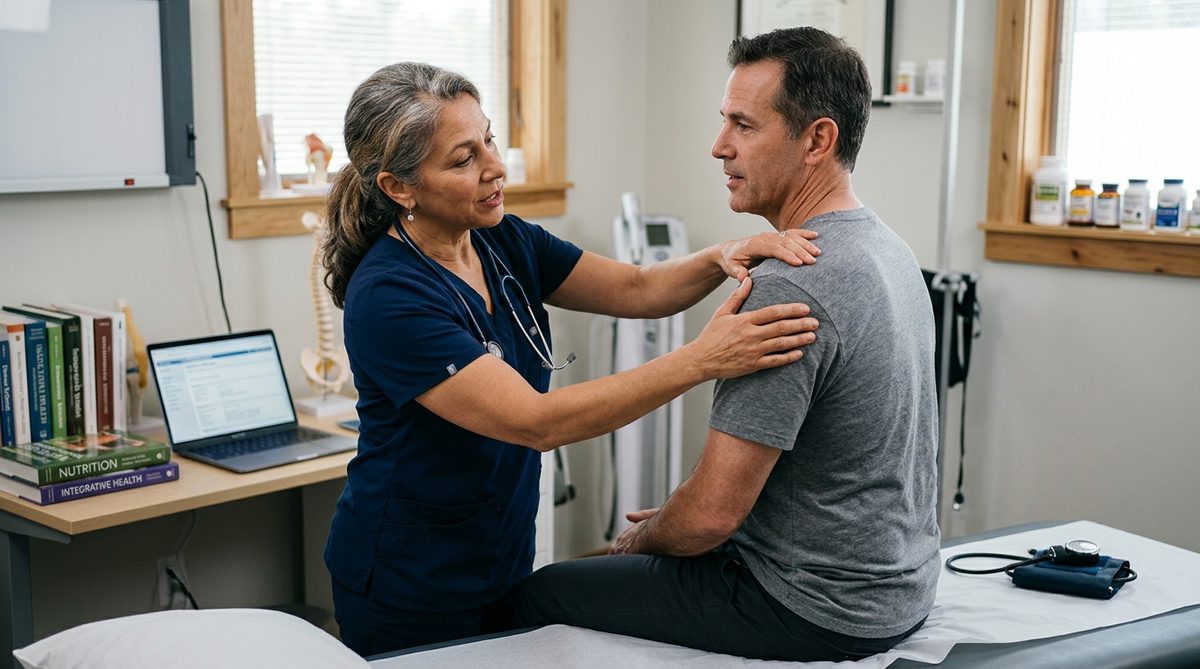
If your score stays below 20 for more than two weeks and you're experiencing any of the following, get a clinical assessment:
- Persistent tiredness during the day even after a full night in bed
- Waking up with headaches, especially morning headaches
- Your partner reports that you stop breathing or snore heavily
- Mood changes, difficulty concentrating, or memory problems
- Falling asleep in situations where you need to stay alert
These can indicate sleep apnea, insomnia disorder, or other conditions that need proper diagnosis rather than self-management.
What Actually Improves a Low Sleep Score?
The evidence points to a clear hierarchy of what works.
Sleep hygiene as the foundation. Same bedtime and wake time every day, even weekends. No screens for 45 to 60 minutes before bed. A dark, cool, and quiet room. No caffeine after early afternoon. These changes alone can raise scores by 10 to 20 points within 4 to 8 weeks.
They work because they strengthen your circadian rhythm and reduce the arousal that fragments sleep.
CBT-I as the most effective treatment for insomnia. Cognitive behavioral therapy for insomnia outperforms sleep medication in head-to-head trials and produces lasting results. It works by addressing the thought patterns and behaviors that keep the brain in a state of hyperarousal at night.
Digital CBT-I programs are available and have strong evidence behind them for people who can't access in-person therapy.
Exercise as a meaningful booster. Regular physical activity, particularly aerobic exercise, improves sleep quality in people with insomnia. A meta-analysis across multiple exercise types found consistent improvements in both subjective sleep quality and objective measures.
Strength training, yoga, and aerobic exercise all showed benefit. Aerobic exercise produced some of the strongest results for insomnia specifically.
Addressing the underlying cause. If apnea is driving the low scores, sleep hygiene alone won't fix it. CPAP therapy for moderate-to-severe apnea often produces dramatic improvements in scores and daytime function.
If anxiety or stress is the driver, targeted therapy for those conditions helps more than sleep-specific interventions alone.
FAQ
Is a sleep score of 14 dangerous?
One night of very poor sleep is not dangerous. Chronic scores this low, meaning week after week, are associated with impaired cognition, mood disruption, immune function, and increased cardiovascular risk. It warrants attention and investigation if it persists.
Can I improve my sleep score without medication?
Yes. Sleep hygiene changes and CBT-I produce measurable improvements in most people with insomnia and do so without the dependency risk that comes with sleep medications.
Does a low sleep score on a consumer tracker mean I have sleep apnea?
Not necessarily. Consumer trackers cannot diagnose sleep apnea. A low score can result from apnea, insomnia, anxiety, alcohol, medications, or lifestyle factors.
If you suspect apnea, a clinical sleep study or home sleep apnea test ordered by a doctor is the only way to find out.
How accurate are consumer sleep scores?
They're reasonably good at estimating total sleep time and detecting that sleep was disrupted. They're less reliable at distinguishing specific sleep stages like N1, N2, deep sleep, and REM. Treat the score as a trend indicator, not a precise measurement.
What score is considered good sleep?
On a 0-100 consumer tracker scale, most devices consider scores above 70 to be good sleep and above 85 to be excellent. Scores below 50 consistently suggest sleep quality that warrants change.
What to Do Now
If you're seeing a score of 14 regularly, start with the basics tonight: set a fixed wake time and hold it every day for two weeks, cut caffeine after noon, and make the room as dark as you can.
If scores don't improve after two weeks, talk to a doctor to rule out sleep apnea, and ask about CBT-I. Those two steps will identify and fix the large majority of cases driving scores that low.Sources
Continue with the Sleep article archive collection.

What Are 10 Signs That My Body Is Healthy?
Read article →
How to Tell if Your Body Is Unhealthy?
Read article →
What Are Signs of Poor Function Health?
Read article →
What Are Some Weird Signs That My Body Is Healthy?
Read article →
What Are Five Signs That I Might Not Be Healthy?
Read article →