What framework is based on 11 functional health patterns and collects data about dysfunctional and functional behavior?

Gordon's functional health patterns is the framework based on 11 functional health patterns that collects data about functional and dysfunctional behavior. Marjory Gordon created this structure to help nurses gather, sort, and understand health information. It gives Nursing professionals a steady way to explore how a person handles daily life, rather than looking at just one symptom or body system.
The framework supports a full Nursing assessment. A nurse asks focused questions, watches behavior, reviews physical findings, and checks how different parts of life affect one another. This data can support a Nursing diagnosis and shape a care plan.
The basic idea is simple: health shows up as a set of linked patterns. One answer rarely proves that a pattern works well or poorly. Nurses look for repeated behavior, recent changes, personal meaning, and the effect on daily function.
Why does the framework collect information as patterns?
A pattern shows how a person tends to function over time. One poor meal may mean very little. But eating too little for several weeks, losing weight, and feeling too weak to cook form a pattern that may need care.
This approach stops the assessment from becoming a random list of facts. Each detail belongs to a wider area of human function. The nurse can then spot links that a body-system checklist might miss.
Think about someone who reports headaches. A narrow review might note the pain level and location. Gordon's framework may also uncover short sleep, skipped meals, work stress, heavy caffeine use, and fear about job security. Those findings don't prove what caused the headaches. They show what needs a closer look.
This difference matters because functional behavior supports health or daily ability. Dysfunctional behavior gets in the way of health, comfort, safety, relationships, or normal tasks. These words describe what a pattern does. They don't judge the person's character.
What information does a nurse collect?
The nurse collects subjective and objective data. Subjective data comes from what the person says about symptoms, habits, beliefs, roles, and worries. Objective data comes from observation, examination, records, measurements, and checked reports from other sources.
A useful interview moves from broad questions to exact details. A nurse may begin by asking how the person has been sleeping. Follow-up questions can cover bedtime, waking, pain, breathing, shift work, medicines, daytime tiredness, and recent changes. The answers make more sense when compared with what is normal for that person.
Observation counts too. A person may say mobility is fine but need the chair arms to stand. Someone else may report poor sleep while staying alert and active all day. Neither observation should erase the person's account. The nurse records both, then explores the gap.
Reliable collection usually covers five features:
- Usual function: what the person normally does and experiences.
- Current function: what is happening now.
- Change: when the difference began and how it has developed.
- Effect: how the issue affects comfort, safety, work, care tasks, or relationships.
- Meaning: how the person understands the issue and what outcome matters to them.
Perception has a clear role here. Two people with similar findings may see their health in very different ways. One may feel sure and ready to act. The other may feel unsafe or unable to cope. That difference can change education needs, care priorities, and follow-up.
How are functional and dysfunctional findings separated?
Nurses don't sort findings by whether a behavior seems socially acceptable. They look at whether the pattern meets the person's needs and supports safe daily function.
A functional finding shows an effective response. Examples include taking medicine as prescribed, changing meals to meet a health need, using a safe walking aid, or asking for help when symptoms change. A dysfunctional finding points to a current or possible problem. Examples include repeated falls, severe sleep loss, poor symptom control, or a coping habit that causes harm.
Context can change everything. Waking twice each night may be normal for a parent caring for a baby, but the resulting fatigue can still pose a safety risk at work. Low activity may come from personal choice, severe pain, breathlessness, unsafe housing, or poor access to transport. The nurse needs to find the reason before deciding what it means.
Abnormality (behavior) also calls for care when interpreting it. A behavior that differs from a population norm isn't always dysfunctional. Cultural practice, age, disability, work demands, and personal preference may explain it. The practical test is whether the behavior causes harm, stops a need from being met, or points to an underlying health issue.
Many summaries miss this point. The framework isn't a pass-or-fail test. It's an organized clinical assessment method. It finds strengths that care can build on, along with concerns that call for action.
How does raw information become a clinical finding?
First, the nurse groups related cues. A cue is one useful piece of information, such as reduced appetite, a weight change, dry mouth, or trouble buying food. Several connected cues can uncover a meaningful pattern.
The nurse then checks whether the data is complete and matches up. If someone reports taking all medicines but the refill history shows long gaps, the next step is a respectful question. Cost, side effects, memory problems, unclear instructions, or trouble opening containers may explain the gap.
After checking the data, the nurse compares the pattern with the person's usual state, clinical knowledge, and relevant standards. A change becomes more urgent if it threatens breathing, circulation, safety, hydration, nutrition, mental state, or the ability to complete essential care.
The final reading may point to a strength, a risk, an existing problem, or a need for more data. It may then help form a Nursing diagnosis. The framework doesn't create a diagnosis by counting answers. Clinical reasoning links the collected cues to the right diagnostic statement.
Here's an example of the process. A patient admitted after a fall says, “I am fine at home.” The nurse learns that the patient has fallen twice in one month, avoids the shower, sleeps in a chair, and sometimes skips a fluid tablet before leaving home. The statement about being fine records the patient's Perception. The extra cues show concerns with mobility, sleep, self-care, and medicine use. The nurse checks each concern before deciding what care is needed.
Why are links between patterns clinically useful?
Health behaviors shape one another. Pain can cut down movement. Less movement can upset sleep and bowel function. Poor sleep can weaken coping and attention. Treating every fact as separate may produce a weak care plan. A holistic health assessment recognizes these interconnected factors.
The framework helps the nurse map these links without saying that one finding caused another. Timing, patient reports, examination findings, and clinical evidence are still needed.
For instance, a person with low food intake may also report mouth pain, grief, low income, and trouble getting to a shop. Each fact suggests a different response. A dental review may ease pain. Social support may improve access to food. Grief support may help with appetite and daily routines. Simply telling the person to eat more would miss the parts driving the problem.
Another easily missed point: a strength in one pattern can help fix a problem in another. A trusted family relationship may support medicine routines. Strong health knowledge may help someone watch symptoms. A valued spiritual practice may support coping. Good assessment records these resources instead of listing only deficits.
How does this differ from a head-to-toe assessment?
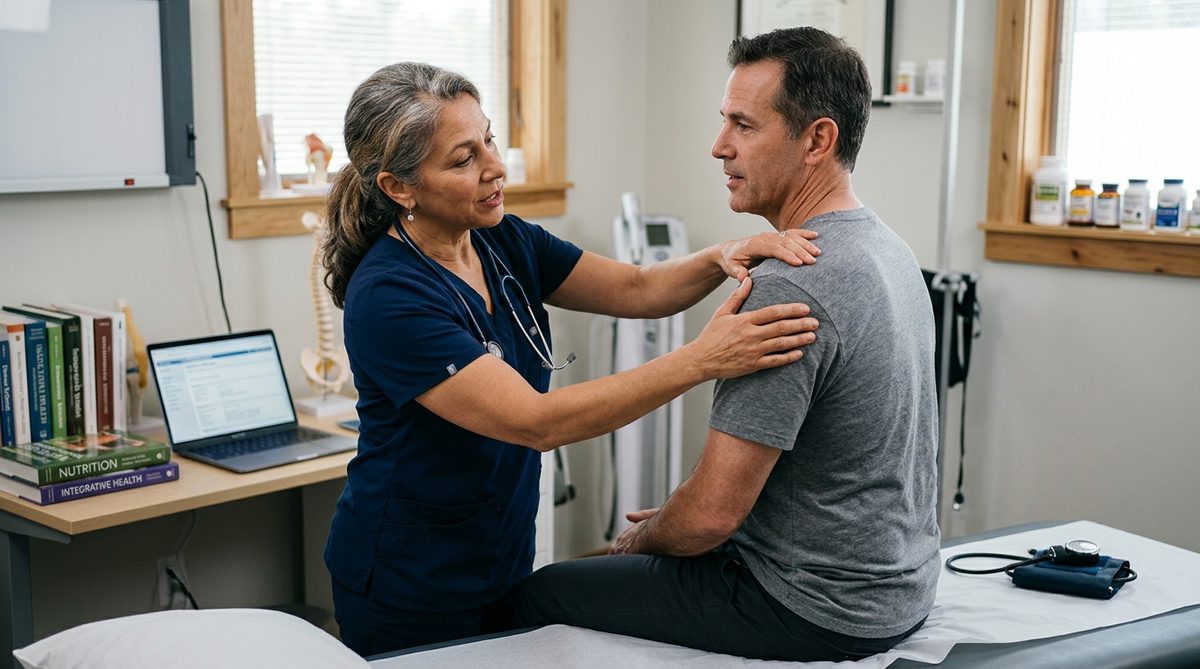
A head-to-toe assessment checks the body in a physical order. It may cover mental status, skin, breathing, circulation, the abdomen, movement, and other body systems. Gordon's functional health patterns sorts information around human responses and daily function.
The two methods can work side by side. A physical assessment may find ankle swelling and shortness of breath. The functional framework can show how those symptoms affect walking, sleep, medicine use, shopping, work, and confidence. The physical findings explain part of the condition. The functional data shows how the person lives with it.
A medical history has a different job as well. It records diseases, operations, medicines, allergies, and other clinical facts. Gordon's model uses those facts but asks how they affect current function. An arthritis diagnosis matters, yet the nurse still needs to know whether the person can dress, prepare food, work, sleep, and move safely.
This wider view doesn't replace urgent assessment. Severe chest pain, sudden weakness, major bleeding, breathing trouble, or a sudden change in awareness needs immediate clinical action. A full pattern interview must never hold up emergency care.
What makes the collected data accurate?
Accurate data comes from clear questions, close listening, observation, checking, and exact records. Leading questions weaken the result. “You take your medicine every day, don't you?” pushes the person to agree. “Walk me through how you took your medicine this week” opens the door to a more useful answer.
Privacy also affects what people share. Questions about relationships, sexual health, substance use, coping, and personal beliefs need the right setting. The nurse should explain why the information matters and who can see it.
Language access is part of getting accurate data. A trained interpreter is safer than depending on a child or guessing from short answers. Communication aids may be needed for hearing, speech, memory, or learning needs.
Timing matters too. Data collected at admission may change after pain relief, sleep, treatment, or a private talk. Functional assessment carries on throughout care. It isn't a form filled in once and forgotten.
Good documentation keeps reported facts apart from observed facts. It records clear behavior and avoids labels. “Patient walked ten metres, stopped twice, and held the wall” tells more than “poor mobility.” Exact records help another clinician understand the concern and measure change.
What common errors weaken the framework?
The first error is treating each area like a separate checkbox. The value lies in finding links within the data. A completed form can still lead to a poor assessment if the answers aren't grouped or understood.
The second error is thinking that any difference means disease. Gordon designed the framework for organized reasoning, not to push everyone toward the same lifestyle. Nurses must consider culture, age, resources, ability, goals, and the person's usual routine.
The third error is leaping from one cue to a Nursing diagnosis. One poor night's sleep doesn't prove a lasting sleep problem. One missed dose doesn't show ineffective health management. The nurse needs enough related evidence to support that judgment.
The fourth error is recording problems but overlooking strengths. Strengths show what the person can draw on during recovery. They may also explain why a risk hasn't yet turned into an active problem.
The fifth error is collecting private details with no care purpose. Every question should help explain function, risk, symptoms, care choices, or support needs. A structured framework doesn't remove the duty to respect consent and dignity.
How should clinicians use the framework in practice?
Begin with the reason for care and deal with urgent needs. Then gather a broad picture of usual function and recent change. Follow key cues with focused questions. Watch relevant behavior and complete physical checks within scope.
Next, group related findings. Mark clear strengths, possible risks, current problems, and missing information. Check any mismatch between the person's report, observed behavior, measurements, and records.
Use the grouped evidence to set priorities. Immediate threats come first. Once safety is covered, focus on concerns that cause the most harm or slow recovery. Include the person's goals, because a sound plan can still fail if it ignores what the person is ready and able to do.
Marjory Gordon's contribution was a shared structure for this reasoning. Gordon gave nurses a way to sort large amounts of personal and clinical information while keeping the whole person in view. Its lasting value comes from turning scattered cues into a clear picture of function.
Use this action point: collect the person's usual pattern, identify what changed, check the linked cues, and document how the change affects daily function before assigning a Nursing diagnosis.
Common questions
What are the functional health patterns?
Gordon's Functional Health Patterns are a framework nurses use to collect information about healthy and unhealthy behavior. The 11 functional health patterns cover health, food, waste, activity, sleep, thinking, self-image, relationships, sexuality, stress, and values.
What is Gordon's approach?
Gordon's approach looks at 11 areas of a person's daily life and health. It helps nurses find behaviors that work well and those that may cause problems.
What type of functional health pattern describes values and goals?
The values-beliefs pattern describes a person's values, beliefs, and life goals. It also explores how these ideas guide health choices and give life meaning.
Can you provide some sample questions and answers for Gordon's 11 Functional Health Pattern test?
Sample questions include, "How is your health?" "What do you eat?" and "Do you sleep well?" Sample answers might be, "My health is good," "I eat three meals a day," and "I sleep about eight hours each night."

What Are 10 Signs That My Body Is Healthy?
Read article →
How to Tell if Your Body Is Unhealthy?
Read article →
What Are Signs of Poor Function Health?
Read article →
What Are Some Weird Signs That My Body Is Healthy?
Read article →
What Are Five Signs That I Might Not Be Healthy?
Read article →