What Habits Cause Sleep Apnea? The Real Risk Factors and What to Do About Them
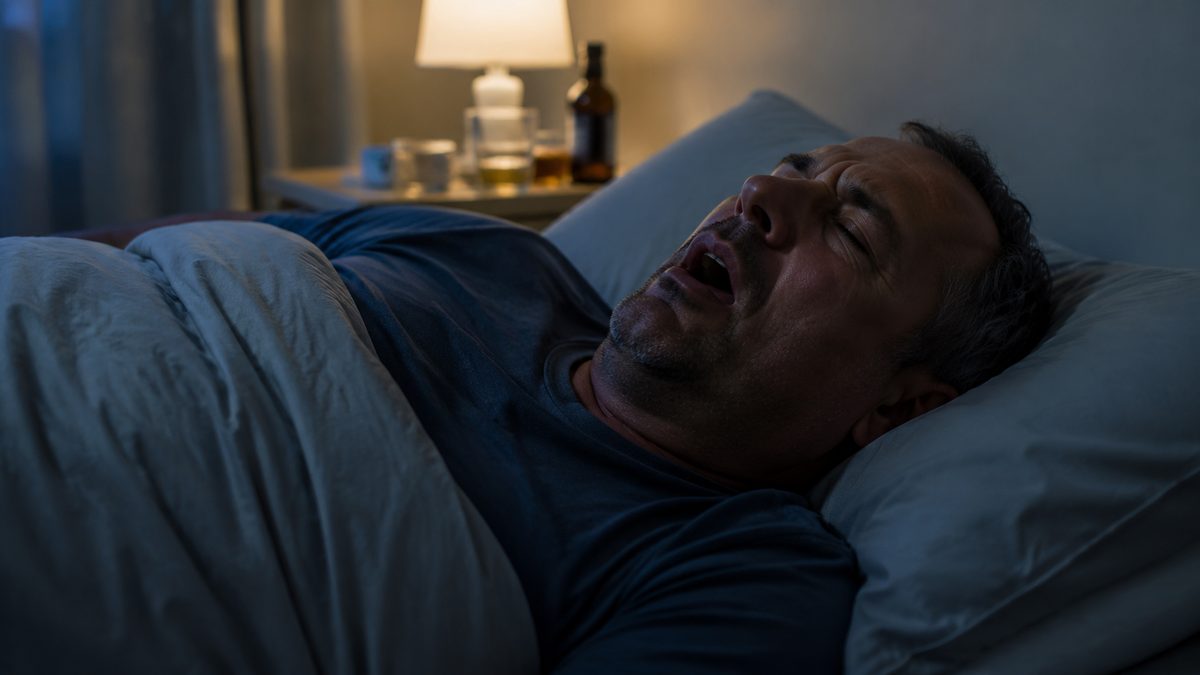
The habits most strongly linked to sleep apnea are carrying excess weight, drinking alcohol before bed, being physically inactive, and sleeping flat on your back. Obesity is the single biggest predictor.
In middle-aged adults, it accounts for more cases of obstructive sleep apnea (OSA) than any other factor. Alcohol and sedatives make it worse by relaxing the throat muscles that keep your airway open.
If you snore loudly, gasp awake at night, or feel exhausted after a full night of sleep, these habits are the first place to look.
What Is the Biggest Cause of Sleep Apnea?
Obesity is the dominant cause. Fat deposited around the neck, jaw, and upper airway physically narrows the space air has to pass through while you sleep. When your muscles relax at night, that narrowed airway collapses.
Breathing stops. Your brain jolts you awake just enough to restart it. This can happen dozens or even hundreds of times a night without you knowing.
Research tracking middle-aged adults found OSA prevalence at 24% in men and 9% in women, with excess weight as the strongest predictor across both groups. A 2025 cardiovascular review confirmed that as global obesity rates climb, sleep apnea cases rise in parallel.
The connection is direct. More weight around the throat means less room for air.
One of my clients came in exhausted. She was sleeping eight hours and waking up feeling like she hadn't slept at all. Her partner told her she snored and sometimes seemed to stop breathing. She was about 25 kilograms over her healthy weight.
After losing 12 kilograms through dietary changes, her snoring dropped significantly and she stopped waking her partner. She hadn't changed anything else.
What Common Habits Are Linked to Sleep Apnea?
Several everyday habits either create the conditions for sleep apnea or make existing apnea worse.
Drinking Alcohol or Taking Sedatives Before Bed
Alcohol relaxes the muscles in your throat and tongue. Even in people without sleep apnea, a few drinks before bed can produce apnea events by letting the airway collapse under its own weight.
In people who already have borderline OSA, alcohol can turn a mild case into a severe one for that night. Sedatives and sleeping pills work the same way. They sedate the muscles that are supposed to hold your airway open.
What I found was that many people who use alcohol to help them fall asleep are actually fragmenting their sleep and waking more through the night without realising it. The alcohol helps them drop off but costs them the quality sleep they were trying to get.
Physical Inactivity
A sedentary lifestyle contributes to sleep apnea through two pathways. First, inactivity promotes weight gain, especially around the trunk and neck.
Second, physical fitness directly affects pharyngeal muscle tone. Exercise strengthens the muscles around the upper airway, making them less likely to collapse under pressure. A 2025 review identified physical inactivity as a modifiable driver of OSA alongside obesity and metabolic dysfunction.
Sleeping on Your Back
Gravity works against you when you sleep flat on your back. The tongue and soft palate fall backward toward the throat, partially or fully blocking the airway.
Many people with mild to moderate OSA have most of their apnea events in this position. Changing sleep position to the side reduces the frequency and severity of events for a meaningful portion of patients.
Smoking
Smoking inflames and irritates the upper airway, causing swelling in the nasal passages and pharynx. This narrows the space available for airflow.
Smokers also experience more fluid retention in throat tissues. The combination of inflammation and swelling makes airway collapse more likely during sleep.
Poor Sleep Timing and Irregular Sleep Schedules
Chronic sleep deprivation and irregular schedules affect muscle tone and respiratory control. When you're sleep deprived, your body spends more time in the deeper stages of sleep where muscle tone is lowest.
This increases apnea risk. Shift workers and people with highly irregular schedules show higher rates of sleep-disordered breathing than people with consistent sleep timing.
What Is the Japanese Trick for Sleep Apnea?
The approach often called the "Japanese trick" refers to mouth taping or specific tongue and throat exercises sometimes described in Japanese wellness content. The actual evidence behind it points to myofunctional therapy: deliberate exercises targeting the tongue, soft palate, and throat muscles.
These exercises strengthen the upper airway musculature and reduce how much the airway collapses during sleep. Clinical trials on myofunctional therapy show meaningful reductions in apnea-hypopnea index scores in adults with mild to moderate OSA.
It works best when combined with positional changes and weight management. On its own, it's not a replacement for CPAP in moderate to severe cases. But for people with mild apnea or positional apnea, it's a legitimate tool.
The exercises involve pressing the tongue to the roof of the mouth, moving the jaw in specific patterns, and practising nasal breathing consciously during the day.
Structure Matters Too: It's Not All Habit
Habits are the modifiable part of the equation. But anatomy plays a real role and it's worth understanding why.
A 2024 meta-analysis of craniofacial measurements found nine structural features consistently linked to OSA risk. These include a recessed jaw (retrognathia), a steep angle of the lower jaw, a longer or thicker uvula, and a reduced space at the back of the throat.
People born with these features have a narrower airway to begin with. Their habits don't cause the apnea in isolation, but obesity or alcohol or sleeping on their back can push them over the edge when someone with a wider airway might not be affected the same way.
This is why some lean, fit people still develop sleep apnea. And it's why two people with the same body weight can have very different apnea severity. Jaw structure, tonsil size, adenoid size, and nasal congestion all affect how much the airway can narrow before breathing is disrupted.
I remember one of my clients, a 38-year-old man who was lean and active. He had a noticeably small jaw. His sleep study came back with moderate OSA. He hadn't changed anything in his lifestyle.
The structure was the primary issue. Managing his sleep position and doing myofunctional exercises made a real difference for him.
Central Sleep Apnea: A Different Mechanism
Most of what's covered above applies to obstructive sleep apnea, where the airway physically collapses. Central sleep apnea (CSA) is different.
In CSA, the airway stays open but the brain temporarily stops sending the signal to breathe. It's less common and driven by different causes: heart failure, opioid use, and high-altitude exposure are the main ones.
Opioid medications directly suppress brainstem respiratory drive. People on long-term opioids for pain management have significantly elevated CSA risk. This is a habit-adjacent cause in the sense that it's a modifiable exposure, even if stopping opioids isn't always straightforward.
Heart failure causes CSA through a different mechanism, related to fluid shifts and changes in blood gas chemistry during sleep. If someone has CSA, lifestyle changes targeting weight or alcohol are less relevant.
The treatment needs to target the underlying cause.
What Is the 4% Rule for Sleep Apnea?
The 4% rule refers to the oxygen desaturation threshold used in sleep studies to define a hypopnea. A hypopnea is a partial reduction in airflow during sleep.
For it to count toward your apnea-hypopnea index (AHI), your blood oxygen must drop by at least 4% from baseline. This is the criterion used by many labs and insurance systems to score sleep study results.
It matters clinically because the threshold affects your AHI score, which determines whether you're diagnosed with mild, moderate, or severe OSA. Some researchers argue the 4% threshold misses clinically meaningful events that only cause a 3% desaturation. Others say it sets a useful floor.
If you've had a sleep study and your result was borderline, understanding this threshold helps you ask better questions of your doctor.
Warning Signs You Shouldn't Ignore
Loud snoring that your partner notices is the most common sign. Gasping or choking during sleep, reported by someone else, is more specific to apnea.
Waking with a dry mouth or headache, feeling unrefreshed after a full night of sleep, falling asleep during the day without meaning to, and difficulty concentrating are the daytime symptoms that build up over months and years.
Sleep apnea is tied to real cardiovascular risk. Untreated OSA increases the likelihood of hypertension, heart failure, stroke, and metabolic disease.
The mechanism is repeated oxygen drops and surges of stress hormones through the night. Over time this damages blood vessel walls and drives inflammation.
If you're over 50, overweight, drink in the evenings, and snore, your risk is high enough that formal sleep testing is worth pursuing regardless of how tired you feel. Many people with significant OSA have normalised the fatigue and don't recognise how impaired they are.
What Most Articles Get Wrong About Sleep Apnea Habits
Most content focuses on the obvious: lose weight, stop drinking. That's correct but incomplete. Here are three angles that rarely get covered properly.
Evening eating affects airway swelling. Large meals close to bedtime increase gastric reflux, and acid reaching the pharynx causes tissue swelling that narrows the airway. People with sleep apnea and untreated reflux often see worse overnight readings.
Treating the reflux and cutting late-night meals produces measurable improvement in some patients. This is just based on what happened with one of my clients who had moderate OSA and severe reflux. Addressing the reflux first dropped his AHI before we touched anything else.
Nasal breathing during the day trains the airway for night. Chronic mouth breathers, including people with nasal congestion from allergies or a deviated septum, develop weaker oropharyngeal muscle tone over time. The tongue sits lower in the mouth, the palate narrows, and the airway becomes more collapsible.
Working on nasal breathing during waking hours, treating allergies, and addressing nasal congestion are underused interventions.
Disparities in who gets diagnosed are significant. Research shows that racially and ethnically minoritized populations and people from lower socioeconomic backgrounds carry higher rates of sleep-disordered breathing but face greater barriers to diagnosis and treatment.
If you've been told your symptoms aren't severe enough to test, or if cost has been a barrier, it's worth knowing that home sleep tests have made formal diagnosis far more accessible than it was a decade ago.
FAQ
Can sleep apnea go away if I lose weight?
For many people with obesity-driven OSA, yes. Weight loss reduces fat around the airway and can eliminate or significantly reduce apnea events. In some cases full remission is possible. How much improvement you get depends on how much of your apnea is weight-driven versus structural.
Does sleeping position really matter?
For positional OSA, which makes up a significant portion of cases, switching from back to side sleeping cuts apnea events substantially. A positional device or a body pillow that keeps you on your side is a low-cost, immediate change worth trying.
Is snoring always sleep apnea?
No. Snoring is vibration of throat tissue and can happen without apnea. But loud, regular snoring with pauses in breathing, gasping, or daytime fatigue is a strong signal to get tested. The snoring itself is less important than whether breathing actually stops.
Does alcohol really make sleep apnea worse?
Yes. Alcohol before bed measurably increases apnea frequency and severity, even in people without a prior diagnosis. The effect lasts for several hours after drinking. Cutting evening alcohol is one of the fastest-acting habit changes you can make.
What's the difference between obstructive and central sleep apnea?
In obstructive sleep apnea the airway physically collapses. In central sleep apnea the brain fails to send the breathing signal. OSA is far more common. CSA is usually linked to heart failure, opioid use, or altitude rather than lifestyle habits.
Can children get sleep apnea?
Yes. In children the most common cause is enlarged tonsils or adenoids blocking the airway. The symptoms look different from adults and often include behavioural problems, poor attention, and bedwetting rather than obvious daytime sleepiness.
What to Do Right Now
If you recognise your symptoms here, these are the steps that make the most immediate difference:
- Stop drinking alcohol within three hours of sleep. Do this first. It's the fastest change you can make tonight.
- Switch to side sleeping. A body pillow behind your back can stop you rolling over.
- Elevate the head of your bed 15 to 30 degrees. This reduces airway collapse and reflux simultaneously.
- Start a consistent exercise habit. Even 30 minutes of walking daily improves pharyngeal muscle tone and supports weight loss over time.
- If you're overweight, set a weight loss target. Even 10% body weight loss produces meaningful reductions in apnea severity.
- If symptoms persist after three months of these changes, arrange a sleep study. Home sleep testing is affordable and doesn't require a specialist referral in most cases.
The habits that cause sleep apnea are the same habits that drive most metabolic and cardiovascular disease. Fixing them has value far beyond your sleep. Start with alcohol and sleep position tonight. Build from there.
Sources
Continue with the Sleep article archive collection.

What Are 10 Signs That My Body Is Healthy?
Read article →
How to Tell if Your Body Is Unhealthy?
Read article →
What Are Signs of Poor Function Health?
Read article →
What Are Some Weird Signs That My Body Is Healthy?
Read article →
What Are Five Signs That I Might Not Be Healthy?
Read article →