What Happens If Sleep Apnea Is Left Untreated? The Real Risks
Untreated sleep apnea roughly doubles your risk of a heart attack or stroke over 10 years compared to people who treat it or don't have it. The damage doesn't announce itself.
Blood pressure climbs within months. Major cardiac events tend to hit after 5 to 10 years of unchecked moderate-to-severe disease. Some people feel fine during the day and still face serious heart danger, so feeling okay is not a reliable sign that everything is okay.
The good news is that treatment works. CPAP therapy used at least 4 hours a night cuts recurrent heart events by roughly 30%. But without it, the risk keeps building every single night.
What Is Actually Happening in Your Body Each Night?
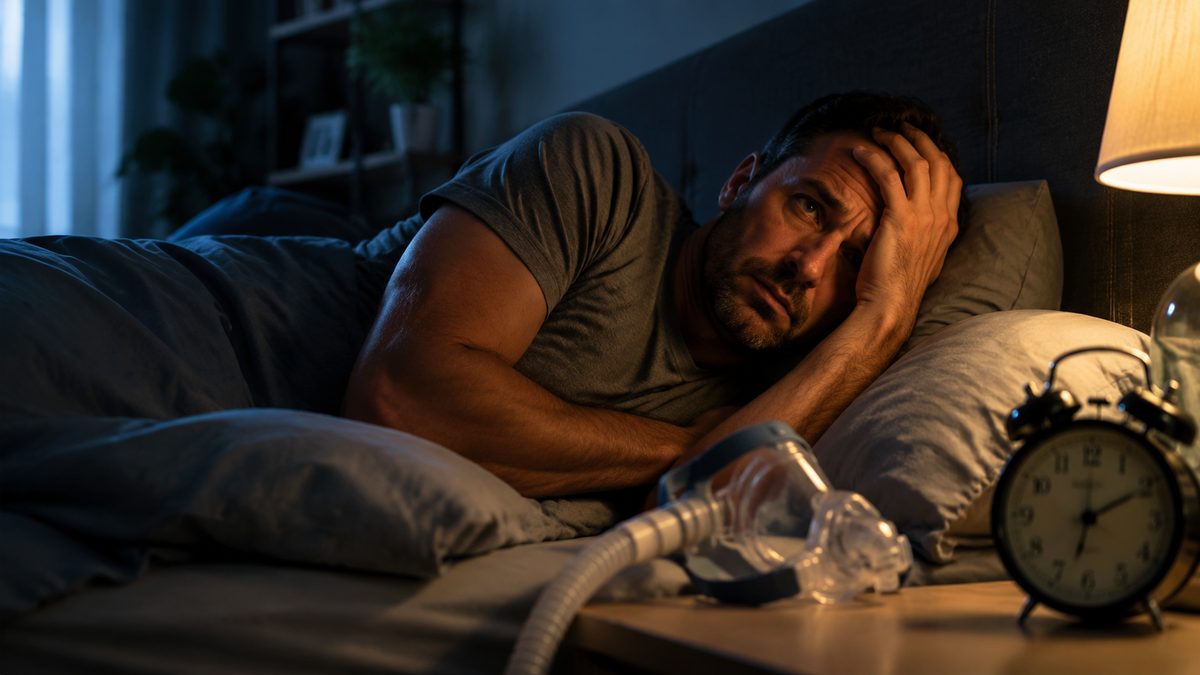
Every time your airway collapses during sleep, your breathing stops. Your oxygen drops. Your brain detects the crisis and fires your stress response, flooding your body with adrenaline to force you awake enough to breathe again.
This can happen 5 times an hour in mild cases, and over 30 times an hour in severe obstructive sleep apnea (OSA).
Each event leaves a mark. The repeated drops in oxygen, called intermittent hypoxia, damage the inner walls of your blood vessels. Your sympathetic nervous system stays chronically overactivated. Inflammation rises. Your metabolism shifts in ways that feed insulin resistance and weight gain.
Over time, this cluster of changes drives hypertension, atrial fibrillation, heart failure, coronary artery disease, and stroke.
What's striking is that it's not just how often your breathing stops. It's how deep your oxygen drops each time, and for how long. Researchers now measure something called hypoxic burden, which captures the total amount of oxygen deprivation across an entire night's worth of apnea events.
Studies including the Multi-Ethnic Study of Atherosclerosis found that hypoxic burden predicts cardiovascular disease more precisely than simply counting apnea events. You can have a relatively low apnea count and still carry a high hypoxic burden, and that burden is what your heart is actually reacting to.
What Organ Is Most Affected by Sleep Apnea?
The heart takes the worst of it. Every night of untreated apnea puts mechanical and chemical stress directly on your cardiovascular system. The repeated surges of stress hormones raise your resting blood pressure. The drops in oxygen force your heart to work harder during the moments it should be resting. The inflammation damages arterial walls.
The brain is also a serious target. Reduced oxygen flow during sleep contributes to cognitive decline, memory problems, and elevated stroke risk. One of my clients came in convinced her memory issues were just stress from work. She was waking up with headaches, forgetting names, losing her thread mid-conversation.
Once we addressed her sleep and she started treatment, the mental fog lifted faster than either of us expected. She hadn't connected it to her breathing at night at all.
The liver, kidneys, and metabolic system are also affected over time, but the heart and brain bear the sharpest and earliest damage.
What Are the Side Effects of Untreated Sleep Apnea?
The effects split into two categories: what you feel, and what's happening beneath the surface that you don't feel until it becomes a crisis.
What you tend to feel:
- Waking up exhausted even after a full night in bed
- Morning headaches from low overnight oxygen
- Brain fog, poor memory, difficulty concentrating
- Irritability, low mood, and in some cases depression
- Falling asleep during the day without wanting to
- Reduced libido
- Frequent night urination
What's building silently:
- Rising blood pressure, often resistant to medication
- Increased risk of atrial fibrillation and other arrhythmias
- Progressive endothelial damage to arterial walls
- Worsening insulin resistance and metabolic syndrome
- Heart failure risk, particularly right-sided
- Elevated stroke risk
The split between felt and unfelt effects is what makes untreated sleep apnea genuinely dangerous. People adapt to feeling tired. They stop noticing it.
I know this because one of my clients told me he thought his exhaustion was just what being 52 felt like. He had severe OSA. He had no idea.
What Is the Most Common Cause of Death in Sleep Apnea?
Cardiovascular events are the leading cause of death in people with untreated OSA. Heart attack and stroke top the list.
In a 10-year observational study, men with untreated severe OSA had significantly higher rates of both fatal and non-fatal cardiovascular events compared to healthy controls and simple snorers. Men who used CPAP consistently brought their risk back toward the baseline of healthy people.
Sudden cardiac death at night is also a documented risk. The combination of low oxygen, sympathetic activation, and arrhythmia risk creates conditions where ventricular fibrillation or cardiac arrest can occur during sleep. This is rare in absolute terms, but the mechanism is well-established and the risk is dose-dependent with apnea severity.
What most articles miss: the risk isn't limited to people who feel sick or exhausted. Research from a large French cohort of over 7,000 newly diagnosed OSA patients found that even those classified as minimally symptomatic, meaning they didn't feel particularly unwell, still carried elevated cardiovascular risk from their hypoxic burden. Symptoms don't tell you whether your heart is under strain.
How Long Can You Go With Untreated Sleep Apnea?
There is no safe window. Mild OSA carries measurable cardiovascular risk from the start. Moderate OSA substantially raises it. Severe untreated OSA dramatically increases the probability of a life-threatening event over 5 to 10 years.
The reason this question is hard to answer with a clean number is that sleep apnea interacts with everything else going on in your body. If you also have obesity, diabetes, or chronic obstructive pulmonary disease, the risks compound faster.
The overlap of OSA with COPD, sometimes called overlap syndrome, or with obesity hypoventilation syndrome, amplifies mortality risk substantially.
What the evidence does say clearly: the longer it goes untreated, the more accumulated hypoxic burden your cardiovascular system absorbs, and the harder that damage is to reverse. Waiting is not a neutral choice.
The Thing Most People Get Wrong About Sleep Apnea Risk
Most articles frame sleep apnea risk around how tired you feel. That's the wrong frame.
Tiredness is a symptom. Heart damage is a process. They don't always run together. Research now shows that the cardiovascular risk from sleep apnea is better predicted by how deeply your oxygen drops during apnea events than by whether you feel sleepy during the day.
Two people can have the same apnea count. One drops to 85% oxygen saturation repeatedly. The other stays above 92%. Their subjective experience might be similar. Their cardiovascular exposure is very different.
This matters because a lot of people self-assess their sleep apnea as not that bad because they function okay at work. That reasoning doesn't hold up against the physiology.
The second thing people get wrong: assuming CPAP fixes everything the moment you start using it. It helps significantly, especially for secondary prevention in people who've already had a cardiac event. But good adherence matters. Under 4 hours a night and the cardiovascular protection largely disappears.
The machine needs to be worn long enough each night to interrupt enough of the hypoxic burden to make a difference.
Does Sleep Apnea Affect Nearly a Billion People?
Yes. Current estimates put global prevalence at close to one billion people, with numbers rising alongside rates of obesity, physical inactivity, and type 2 diabetes. The majority remain undiagnosed.
OSA is heavily underdetected in women, where symptoms often present differently, and in people who don't fit the stereotypical profile of a heavy-set male snorer.
When I work with clients who are surprised by their diagnosis, they almost always say the same thing: they thought snoring was just snoring. It can be. But when breathing actually stops repeatedly throughout the night, that's a different category of problem entirely.
What Are the Treatment Options Beyond CPAP?
CPAP is the most studied and most effective treatment for moderate to severe OSA. For people who can't tolerate it, alternatives include mandibular advancement devices, positional therapy for people whose apnea worsens when sleeping on their back, and weight loss programs given the strong link between excess weight and airway collapse.
In some structural cases, surgical intervention is an option.
Some people explore supportive approaches alongside conventional treatment. Addressing underlying factors like inflammation, metabolic health, and stress regulation can support better overall outcomes, though these don't replace airway treatment for moderate to severe OSA.
The priority is getting the airway managed first. Everything else works better from that foundation.
Frequently Asked Questions
Can you die from untreated sleep apnea?
Yes. Untreated severe OSA raises the risk of fatal cardiovascular events including heart attack, stroke, and sudden cardiac death. The risk is dose-dependent and builds over years of exposure.
Can sleep apnea cause a stroke?
Yes. The combination of intermittent hypoxia, atrial fibrillation risk, and hypertension that comes with untreated OSA directly elevates stroke risk. Stroke is one of the major adverse cardiovascular events consistently linked to untreated sleep apnea in large cohort studies.
Is mild sleep apnea worth treating?
Yes. Mild OSA still carries measurable cardiovascular risk, particularly in people with other risk factors like hypertension or diabetes. Waiting for symptoms to worsen before treating it means absorbing more accumulated hypoxic burden in the meantime.
Does weight loss cure sleep apnea?
It can reduce severity significantly in people whose apnea is driven primarily by excess weight around the airway. For some, substantial weight loss brings apnea index into a normal range. For others, structural factors mean apnea persists even after weight loss.
A sleep study after weight loss is the only way to know for sure.
Can you have sleep apnea without snoring?
Yes. Snoring is common with OSA but not universal, and its absence doesn't rule out apnea. Women in particular often present without prominent snoring. If you wake unrefreshed, have morning headaches, or feel cognitively foggy, a sleep study is worth pursuing regardless of whether you snore.
How do I know if I have sleep apnea?
A formal sleep study, either in a clinic or via an at-home test, is the only way to confirm diagnosis and measure severity. Your GP can refer you, or you can access home testing directly through sleep medicine providers.
What You Should Do Now
If you suspect sleep apnea, don't wait for symptoms to get worse. The cardiovascular damage builds quietly and the absence of severe tiredness doesn't mean your oxygen levels are safe at night.
Three steps worth taking now:
- Talk to your GP about a sleep study referral. Home testing is accessible and accurate for most people.
- If you already have a diagnosis and aren't using CPAP consistently, prioritise getting to 4 or more hours of use per night. Below that threshold, the protective benefit largely disappears.
- Address the factors that worsen OSA: excess weight, alcohol before bed, sleeping on your back, and uncontrolled nasal congestion. These don't replace airway treatment but they reduce the severity of what your heart is dealing with each night.
Every night of untreated moderate to severe sleep apnea adds to the cumulative load on your cardiovascular system. The damage is real, it's measurable, and it's largely preventable. Getting assessed is the first move.
Sources
Continue with the Sleep article archive collection.

What Are 10 Signs That My Body Is Healthy?
Read article →
How to Tell if Your Body Is Unhealthy?
Read article →
What Are Signs of Poor Function Health?
Read article →
What Are Some Weird Signs That My Body Is Healthy?
Read article →
What Are Five Signs That I Might Not Be Healthy?
Read article →