What Is a Good Sleep Apnea Score? AHI Ranges, CPAP Goals, and What Your Number Really Means
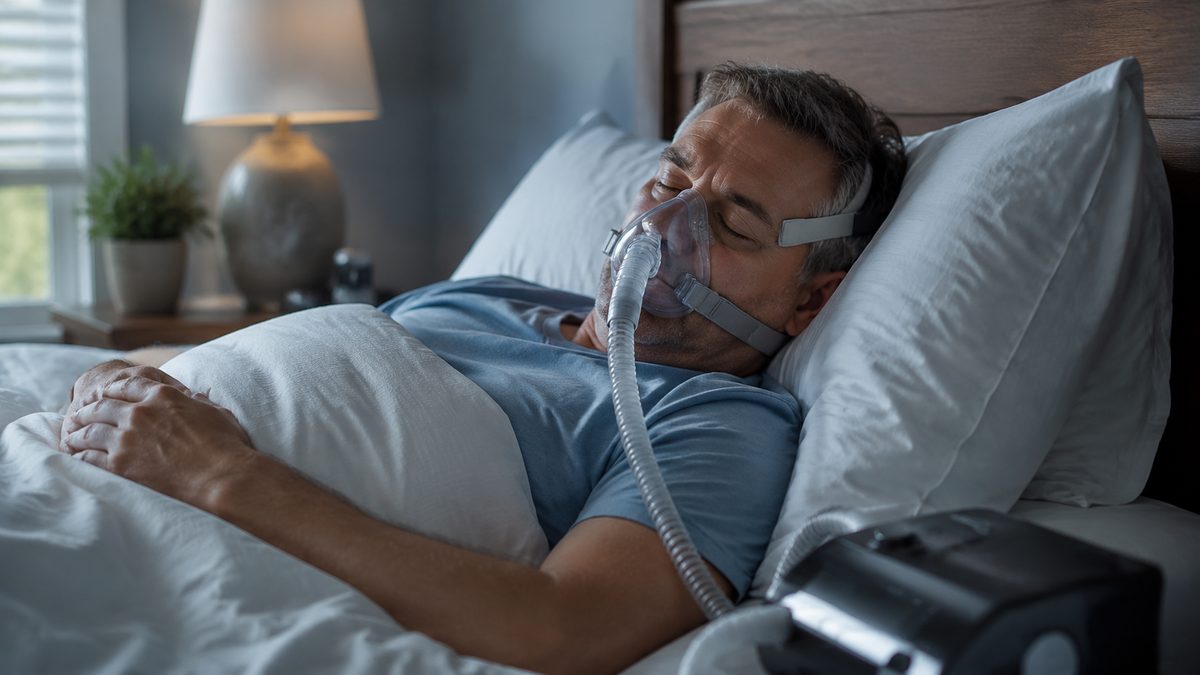
A good sleep apnea score is an AHI (apnea-hypopnea index) below 5. That means fewer than 5 breathing pauses per hour of sleep.
Mild sleep apnea runs from 5 to 14. Moderate is 15 to 29. Severe is 30 or more. Most doctors recommend treatment at AHI 15 and above, or at 5 to 14 if you have symptoms like daytime exhaustion, witnessed apneas, or conditions like high blood pressure.
At 30 or more, treatment is almost always recommended. The heart and mortality risk becomes significant.
Here's the catch though. Your score can swing 5 to 10 points between nights. Around one-third of people shift into a different severity category depending on which night they were tested. So the number matters, but it's only part of the picture.
What Do the AHI Score Ranges Actually Mean?
The AHI counts how many times per hour your breathing stops or drops significantly during sleep. Each event is called an apnea (full stop) or a hypopnea (partial drop with reduced oxygen). That count becomes your score.
- AHI below 5: Normal. This is the target for adults.
- AHI 5 to 14: Mild sleep apnea. Treatment depends on your symptoms and health history.
- AHI 15 to 29: Moderate sleep apnea. Treatment is usually recommended.
- AHI 30 or above: Severe sleep apnea. Treatment is strongly recommended.
Children have a stricter threshold. An AHI above 1 is considered abnormal in kids.
What most people aren't told is that these cutoffs weren't established from large outcome studies showing that an AHI of 15 predicts heart disease better than an AHI of 14. They're working thresholds built from clinical consensus and research over time. Useful, but not precise.
Why Your Score Can Look Different on Different Nights
This is the part most sleep articles skip entirely. And it changes how you should interpret your result.
In a study of over 47,000 adults, the average night-to-night swing in AHI was 5.5 events per hour. More than one-third of those patients crossed a diagnostic severity threshold when tested on a second night.
A separate study found that 93% of people with a normal first-night study and 87% of those with mild apnea were reclassified when additional nights were included.
I know this because one of my clients went through exactly this. Her first home sleep test came back with an AHI of 4.8, just inside the normal range. She was still waking exhausted every morning and her partner had witnessed her stopping breathing.
A second test three weeks later scored her at 11. She was retested again and landed at 8. She had mild sleep apnea all along, but the first test had missed it.
The negative predictive value of a single-night test is only 47% for detecting an AHI of 5 or above. That means if your single-night test says you're fine, there's roughly a coin-flip chance it's actually correct at lower severity levels.
For AHI 15 and above, that predictive value improves to 74%. For AHI 30 and above it reaches 89%.
If your test came back normal but you're still exhausted, still snoring loudly, or have a bed partner who's seen you stop breathing, a second test is worth having.
What Is a Normal CPAP Score?
Once you're on CPAP therapy, your machine tracks its own version of AHI every night. A good CPAP score is below 5. Most sleep doctors aim for below 2, and many CPAP users achieve scores of 1 or less on well-fitted therapy. Consult with a sleep medicine specialist to optimize your therapy.
Your CPAP machine also reports something called the AHI residual, which is the breathing events it detected and treated. If your residual AHI is consistently above 5 on CPAP, the therapy isn't controlling your apnea well enough.
That warrants a conversation with your doctor about pressure adjustments, mask fit, or whether central apneas are being introduced by the therapy itself.
People often panic when they see a single bad night on their CPAP app. One night of AHI 8 doesn't mean the therapy is failing. Look at your 30-day or 90-day average. That trend matters far more than any single night.
What Level of Sleep Apnea Requires a CPAP?
Moderate to severe sleep apnea, meaning AHI 15 and above, almost always warrants CPAP. The evidence for CPAP reducing cardiovascular risk, improving blood pressure, and reducing daytime sleepiness is strongest at this range.
For mild sleep apnea (AHI 5 to 14), the decision is more individual. CPAP is recommended when:
- You have significant daytime sleepiness that affects your work or safety
- You have high blood pressure, a history of stroke, or heart disease
- A partner has witnessed apneas or you wake gasping
- Your oxygen levels are dropping significantly even if the event count is low
For mild apnea without these factors, alternatives like positional therapy, weight changes, or oral appliances may be tried first. The key question isn't just what your AHI is, but how your body is responding to the events happening.
The 4% Rule for Sleep Apnea: What It Is and Why It Matters
The 4% rule refers to how hypopneas are defined and scored. A hypopnea is a partial reduction in airflow, not a complete stop. To count as an event, the AASM (American Academy of Sleep Medicine) scoring criteria require that airflow drops by at least 30% and oxygen saturation drops by at least 4% (or that an arousal occurs).
This matters because different labs and different countries have used different desaturation thresholds. Some use 3%, some use 4%. Using a 4% threshold makes the criteria stricter, which means fewer hypopneas get counted, which lowers the AHI score.
A person with an AHI of 12 under 3% criteria might score 7 under 4% criteria.
When comparing your score to someone else's, or comparing tests done at different labs or in different years, this threshold difference can explain apparent inconsistencies. It also means that what counts as mild at one clinic might technically be normal at another, using the same raw data.
Your AHI Score Misses More Than Most People Realize
Here's an angle most sleep articles don't take seriously enough. The AHI was designed to count events. It wasn't designed to measure how much damage those events are doing to your body.
Two people can have an AHI of 20 and have very different experiences. One person might have events that drop their oxygen to 85% repeatedly. Another might have events that barely dip below 90%.
The first person faces a much higher burden of oxidative stress and cardiovascular strain, even though both carry the same diagnostic label of moderate sleep apnea.
Research now shows that desaturation severity reflects daytime sleepiness more accurately than AHI alone. Another study found that the respiratory arousal index (how often your brain wakes itself to restart breathing) correlates with hypertension more strongly than AHI does.
Sleep fragmentation and hypoxic burden are being studied as better predictors of long-term cardiovascular outcome than event counts.
What this means practically: if you have a moderate AHI but your oxygen is dropping hard and often, or your sleep is severely fragmented, your clinical risk may be closer to the severe category.
If your AHI is 18 but your oxygen stays mostly above 92% and you sleep through most events without arousal, your risk profile may be more moderate.
In my experience, a conversation with your doctor about oxygen nadir (the lowest point your oxygen reached) and arousal index becomes more valuable than fixating on the AHI number alone.
How Do I Improve My CPAP Score?
If your residual AHI on CPAP is staying above 5, here are the most effective things to address:
- Mask seal. Leaks are the most common culprit. Even small leaks reduce pressure delivery and allow events to occur. Your machine's leak rate is reported in the app. Aim for unintentional leak below 24 litres per minute.
- Pressure settings. If your pressure is too low, it won't splint the airway open adequately. Most modern CPAP machines use auto-titrating (APAP) mode, but the pressure range may need adjustment. Ask your sleep clinician to review your pressure data.
- Sleep position. Apnea is almost always worse on your back. If your CPAP score is higher when you sleep supine, a positional pillow or body pillow can make a meaningful difference.
- Alcohol and sedatives before bed. Both relax the upper airway muscles and increase event frequency. Even one or two drinks can push an AHI from controlled to uncontrolled on an otherwise well-titrated machine.
- Weight changes. Even modest weight gain around the neck and upper airway can shift your AHI several points. This works in reverse too. Losing 5 to 10% of body weight has been shown to reduce AHI meaningfully in overweight individuals.
When I tried adjusting my client's pressure range upward by just 2 cm H2O after she reported ongoing fatigue despite compliance, her 30-day average AHI dropped from 6.2 to 1.8. She described it as her first genuinely restful sleep in years. Small adjustments matter.
What a Good Score Does Not Guarantee
Reaching AHI below 5 on CPAP doesn't automatically mean you'll feel well. This surprises a lot of people.
Some people achieve excellent AHI scores on CPAP but still report poor sleep quality, fragmented rest, or persistent fatigue. There are a few reasons this happens:
- The therapy itself can cause arousals, especially during mask leak events or pressure transitions
- Upper airway resistance syndrome can cause sleep fragmentation without meeting AHI thresholds
- Comorbid conditions like restless legs syndrome, insomnia, or circadian rhythm disorders run alongside sleep apnea in many people
- Chronic sleep debt from years of untreated apnea takes time to recover from
Feeling better is the goal. The AHI score is a tool to get you there, not the finish line itself.
Frequently Asked Questions
Is an AHI of 7 bad?
An AHI of 7 is mild sleep apnea. Whether it needs treatment depends on your symptoms, oxygen levels, and health history. With no symptoms and no cardiovascular risk factors, some clinicians monitor rather than treat immediately.
With daytime sleepiness or high blood pressure, treatment is usually recommended.
What is a good AHI score on CPAP?
Below 5 is acceptable. Below 2 is the goal most sleep doctors aim for on CPAP therapy. Consistently above 5 on CPAP suggests the therapy needs adjustment.
Can sleep apnea go away on its own?
It can improve significantly with weight loss, changes in sleep position, reduced alcohol intake, and nasal obstruction treatment. Severe apnea rarely resolves without intervention.
Mild and moderate apnea can improve enough to drop below the treatment threshold with lifestyle changes.
How reliable is a home sleep test?
Reasonably reliable for moderate to severe apnea. Less reliable at lower severity levels. A single normal home sleep test doesn't rule out mild apnea, particularly given the night-to-night variability research.
If symptoms persist after a normal test, a repeat test or in-lab study is worth considering.
Does a higher AHI always mean more health risk?
Not always. Oxygen desaturation severity, arousal frequency, and sleep fragmentation contribute to health risk independently of the AHI count. Someone with a lower AHI but severe oxygen drops may face more cardiovascular risk than someone with a higher AHI and mild desaturations.
Review the full sleep study report, not just the headline number.
What to Actually Do With Your Score
Get clear on three numbers from your sleep study: your AHI, your oxygen nadir (lowest oxygen reading), and your arousal index. These three together give a far more complete picture than AHI alone.
If your AHI is above 15, pursue treatment. If it's 5 to 14, factor in your symptoms and cardiovascular health before deciding. If it looks normal but you still feel unwell, request a second test before accepting the result as definitive.
If you're already on CPAP, check your 30-day average AHI in the app. If it sits above 5, book a pressure review. Don't wait for your next annual appointment.
The score is a starting point. What matters is how you sleep and how you feel. Use the number to guide action, then judge the result by your energy, your clarity, and your health over time.Sources
Continue with the Sleep article archive collection.

What Are 10 Signs That My Body Is Healthy?
Read article →
How to Tell if Your Body Is Unhealthy?
Read article →
What Are Signs of Poor Function Health?
Read article →
What Are Some Weird Signs That My Body Is Healthy?
Read article →
What Are Five Signs That I Might Not Be Healthy?
Read article →