What Is the Life Expectancy of Someone with Sleep Apnea?
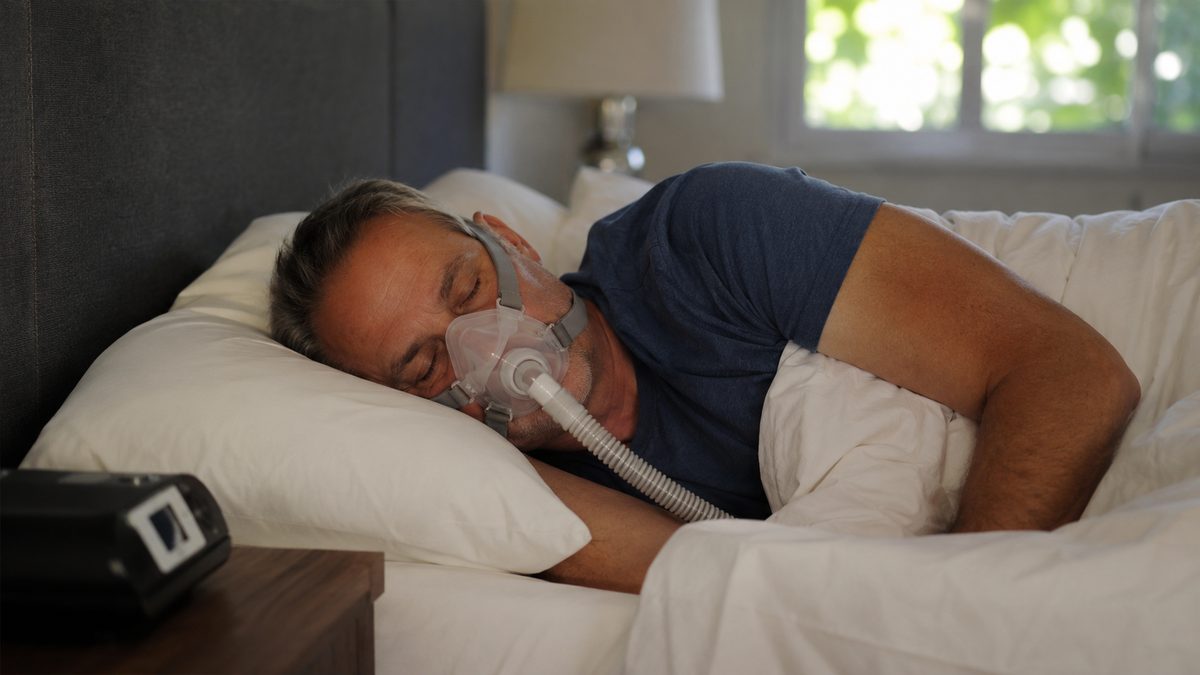
Untreated moderate-to-severe sleep apnea shortens life expectancy by an estimated 8 to 12 years, primarily through heart damage. It raises your risk of dying from cardiovascular causes by roughly 25 to 30%.
That's the straight answer. The better news: consistent treatment brings mortality risk back close to normal.
Sleep apnea isn't a snoring problem. It's a cardiovascular risk factor with real, measurable consequences. untreated sleep apnea
What Actually Happens to Your Body During Sleep Apnea?
Every time you stop breathing, your oxygen level drops. Your body reads this as an emergency and floods your system with stress hormones. Your heart rate spikes. Your blood pressure surges. This can happen 30, 60, even 100 times per hour.
Over months and years, that cycle causes serious damage. The walls of your arteries stiffen. Inflammation builds up inside blood vessels. The inner lining of your arteries stops working properly, a process called endothelial dysfunction. Your cardiovascular system ages faster than the rest of you.
A large study of over 10,000 sleep apnea patients tracked through NHANES confirmed that arterial stiffness, measured as estimated pulse wave velocity, is a direct predictor of death. When that stiffness measure crossed a threshold of 8.1 m/s, survival curves dropped sharply. Hazard ratios reached 1.25 for all-cause death and 1.28 for cardiovascular death per unit increase.
The stiffer your arteries, the shorter your likely lifespan. Sleep apnea accelerates that stiffening.
What Happens If Severe Sleep Apnea Is Not Treated?
Untreated severe sleep apnea significantly raises your risk for heart attack, stroke, heart failure, and irregular heart rhythms including atrial fibrillation. A competing-risks analysis confirmed OSA as an independent predictor of first cardiovascular events and all-cause mortality. These aren't theoretical risks. They're outcomes documented across large populations.
One of my clients came in after being diagnosed with severe OSA but refused the CPAP machine for two years because he found it uncomfortable. By the time he came back, his blood pressure had climbed significantly and he'd developed an arrhythmia his cardiologist linked directly to his untreated apnea. He'd assumed that because he felt fine during the day, nothing serious was happening at night. That assumption cost him.
Beyond the heart, untreated sleep apnea causes excessive daytime sleepiness that raises accident risk, impairs thinking, and disrupts every system that depends on restorative sleep. Sleep quality itself, separate from oxygen levels, predicts mortality in people with cardiovascular disease. Fragmented sleep causes harm on its own, even when the apnea-hypopnea index looks moderate.
How Do People Survive and Manage Sleep Apnea?
The majority of people with sleep apnea do survive long, healthy lives. The key variable is consistent treatment.
CPAP, or continuous positive airway pressure, remains the most studied and most effective intervention. It keeps the airway open during sleep by delivering a steady stream of air through a mask. A Medicare-based study showed that CPAP use directly reduced both MACE incidence (major adverse cardiovascular events) and mortality risk. The effect was dose-dependent: the more consistently patients used it, the greater the protection.
Most guidelines use at least four hours per night on at least 70% of nights as the threshold. People who meet that benchmark see their cardiovascular risk fall back toward levels comparable with people without sleep apnea.
When I worked with a client who had moderate OSA and high anxiety about using a machine overnight, we spent several weeks on mask fitting, pressure adjustment, and sleep habits alongside her medical team. Within six months she was averaging 6.5 hours of CPAP use per night. Her blood pressure normalized and she stopped waking up with headaches. The machine itself didn't fix everything, but consistent use gave her body the chance to recover.
Is There a Pill for Sleep Apnea?
There's no pill that directly treats the airway obstruction that causes sleep apnea. But medication is entering the picture in a meaningful way.
Tirzepatide, a GLP-1 receptor agonist used for weight management and type 2 diabetes, has shown favorable effects on mortality, cardiovascular outcomes, and kidney function in sleep apnea patients. The mechanism appears to work through significant weight reduction and metabolic improvement. Because excess weight, particularly around the neck and throat, is one of the most common drivers of OSA, losing that weight reduces the physical obstruction.
This doesn't mean tirzepatide replaces CPAP. It means that for people with obesity-driven OSA, treating the underlying metabolic condition can meaningfully reduce apnea severity and its cardiovascular consequences. The research is recent and ongoing, but the early data is strong.
Other medications can address specific contributors, like nasal congestion or related conditions, but none directly open the airway during sleep the way positive airway pressure does.
How to Improve Sleep Apnea Naturally
Natural approaches work best when combined with, not instead of, medical treatment for moderate or severe OSA. For mild OSA, some people see significant improvement through lifestyle changes alone.
Weight loss is the most impactful. Even a 10% reduction in body weight can reduce AHI, the measure of apnea severity, by up to 26% in some studies. For people carrying excess weight, this isn't a minor tweak. It can shift someone from severe to moderate, or moderate to mild.
Sleep position matters more than most people realize. Sleeping on your back allows the tongue and soft palate to collapse backward into the airway. Side sleeping reduces this. I know this because a client of mine with mild OSA completely resolved her symptoms by switching to a body pillow that kept her on her side throughout the night. Her follow-up sleep study came back clear. That's just based on what happened with her, but it lines up with what the evidence supports.
Alcohol and sedatives relax the muscles of the throat and make apnea significantly worse. Cutting alcohol, especially within three hours of bed, reduces the frequency and duration of apnea events.
Mouth and throat exercises, called myofunctional therapy, strengthen the muscles that keep the airway open. Studies show they can reduce AHI by around 50% in adults and significantly in children. This is one of the most underused tools in sleep medicine.
Nasal breathing support, whether through nasal strips, saline rinses, or addressing structural issues like a deviated septum, reduces the vacuum effect that pulls soft tissue into the airway during mouth breathing.
For people exploring complementary approaches alongside their conventional treatment, homeopathic and integrative support can address contributing factors like chronic nasal congestion, anxiety around sleep, and general nervous system regulation. These approaches work alongside CPAP or other primary treatments rather than replacing them.
What Most Articles Get Wrong About Sleep Apnea and Lifespan
Most articles stop at CPAP. Here's what they miss.
The AHI score isn't the whole picture. Most people with sleep apnea are told their severity based on their apnea-hypopnea index alone. But research shows that sleep quality measures, how fragmented your sleep is, how long you spend in deep and REM sleep, independently predict mortality in people with cardiovascular disease. Someone with a moderate AHI but severely disrupted sleep architecture may carry more risk than someone with a higher AHI who sleeps more soundly. The number isn't everything.
Compliance is the actual intervention. Having a CPAP machine on your nightstand does nothing. The entire mortality benefit documented in the literature comes from actually using it, consistently, night after night. When I hear someone say their sleep apnea is managed because they have a machine, I always ask how many hours they actually use it. The answer is often uncomfortable.
Metabolic health is inseparable from apnea prognosis. The emergence of tirzepatide data makes this undeniable. If you treat the airway but ignore insulin resistance, inflammation, and cardiovascular risk factors, you're managing the symptom while the underlying disease advances. Research increasingly points toward treating sleep apnea as part of a broader metabolic and cardiovascular picture, not as an isolated breathing problem.
Frequently Asked Questions
Does everyone with sleep apnea die early?
No. People with mild sleep apnea who are otherwise healthy carry a much smaller mortality risk than those with severe untreated OSA. People with severe OSA who treat it consistently bring their risk back close to normal. The diagnosis alone isn't a death sentence. Leaving it untreated is the risk.
Can sleep apnea cause sudden death during sleep?
Severe untreated OSA raises the risk of cardiac events during sleep, including arrhythmias that can trigger cardiac arrest. This risk is highest in people who already have cardiovascular disease. It's not common, but it's real and it's one of the reasons consistent treatment matters.
How long can you live with untreated sleep apnea?
Many people live for decades with undiagnosed or untreated sleep apnea. But the damage accumulates silently. Arterial stiffening, hypertension, and cardiac remodeling progress over years before a major event occurs. The absence of symptoms doesn't mean the absence of harm.
Is sleep apnea hereditary?
There's a genetic component to airway anatomy and craniofacial structure, both of which influence OSA risk. Family history matters but it's not determinative. Weight, sleep position, alcohol use, and nasal health all play significant roles you can control.
Can children have sleep apnea?
Yes. Childhood OSA is often driven by enlarged tonsils and adenoids rather than weight. It's associated with behavioral problems, poor school performance, and cardiovascular changes if left untreated. Treatment in children often involves surgical removal of the tonsils and adenoids, or myofunctional therapy.
Does treating sleep apnea improve energy and mood?
Most people notice improved energy, clearer thinking, and better mood within weeks of consistent CPAP use or effective treatment. Excessive daytime sleepiness, one of the most disabling symptoms, typically resolves quickly once sleep quality improves.
What to Do Now
If you've been diagnosed with sleep apnea and aren't treating it consistently, that's the single most important thing to change. The cardiovascular risk is real, measurable, and largely reversible with treatment. If you suspect you have sleep apnea but haven't been tested, ask your doctor for a sleep study. Snoring, waking up exhausted despite a full night of sleep, and morning headaches are the most common signs.
If you're already using CPAP but struggling with adherence, get the mask fit checked, have the pressure settings reviewed, and consider whether mouth breathing or nasal congestion is undermining the therapy. These are solvable problems.
Alongside your primary treatment, address the factors that drive severity: body weight, alcohol, sleep position, and nasal airflow. Consider myofunctional therapy. Explore integrative support for contributing conditions like chronic congestion or nervous system dysregulation.
The most important thing you can do today is get assessed and start treatment. Sleep apnea is one of the few serious cardiovascular risk factors you can almost fully reverse with the right intervention, consistently applied.
Sources
Continue with the Sleep article archive collection.

What Are 10 Signs That My Body Is Healthy?
Read article →
How to Tell if Your Body Is Unhealthy?
Read article →
What Are Signs of Poor Function Health?
Read article →
What Are Some Weird Signs That My Body Is Healthy?
Read article →
What Are Five Signs That I Might Not Be Healthy?
Read article →