What Is Often Misdiagnosed as Sleep Apnea? UARS, Insomnia, and Narcolepsy Explained
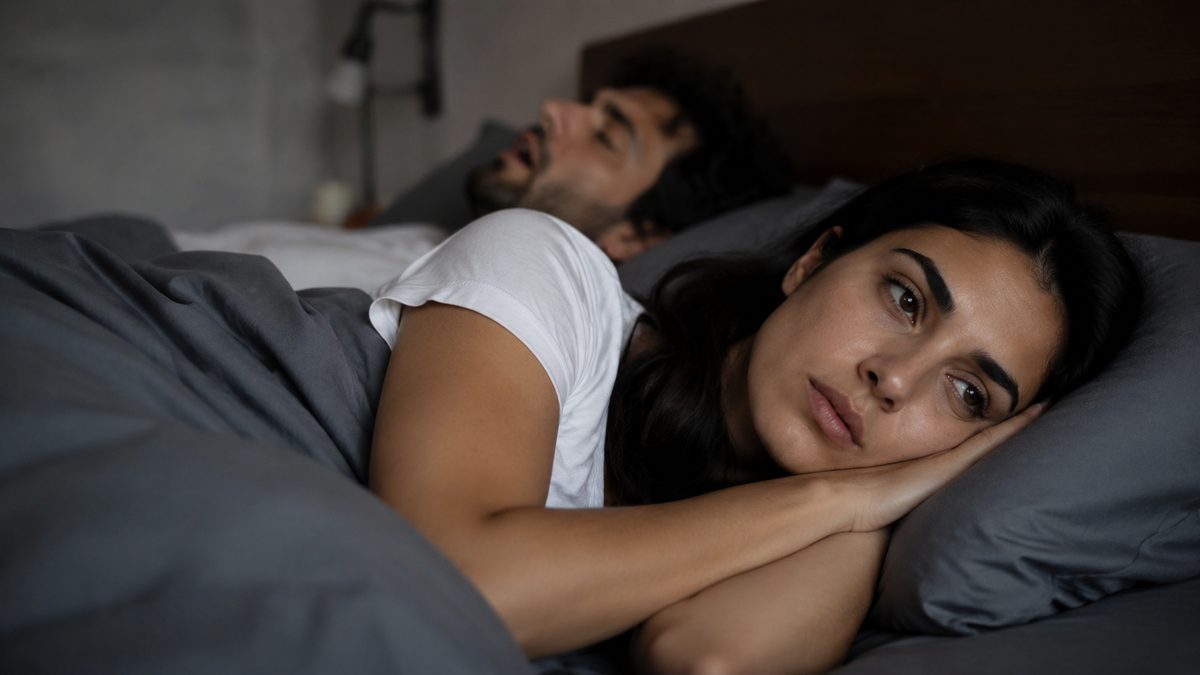
The three conditions most often misdiagnosed as sleep apnea are upper airway resistance syndrome (UARS), chronic insomnia, and narcolepsy. All three cause poor sleep and daytime exhaustion. But the reasons behind the symptoms are completely different, and treating them like sleep apnea often fails.
If CPAP hasn't helped you after six to eight weeks, or if your main problem is falling asleep rather than gasping awake, there's a real chance the original diagnosis was wrong.
Can You Be Wrongly Diagnosed with Sleep Apnea?
Yes. It happens more often than most people realize. Sleep apnea is diagnosed using an apnea-hypopnea index (AHI), which counts how many times you stop breathing or breathe too shallowly per hour. If that number looks normal, most standard sleep studies close the case.
The problem is that UARS, insomnia, and narcolepsy can all wreck your sleep without triggering a high AHI score.
One of my clients came in exhausted and foggy, already fitted with a CPAP machine she'd used for four months. She hated it, it hadn't helped, and her doctor told her to keep trying. When we looked more carefully at her sleep history, she was waking multiple times a night without ever snoring, without gasping, without any of the classic apnea signs.
Her problem was chronic insomnia driven by anxiety. The CPAP was solving nothing because she never had apnea to begin with.
What Is UARS and Why Does It Get Missed?
Upper airway resistance syndrome is the condition most commonly confused with obstructive sleep apnea. Researcher Guilleminault first described it in 1992 as a pattern where the airway narrows enough to cause arousals from sleep, but not enough to show up as apneas or hypopneas on a standard study.
In UARS, your airway partially collapses. Your body works harder to breathe. That effort wakes the brain briefly, over and over, all night. You never get deep, restorative sleep. But because you never fully stop breathing, the AHI score stays low or normal, and a standard test says nothing is wrong.
The specific marker for UARS is respiratory effort-related arousals, or RERAs. These only show up when the sleep study measures breathing effort directly, something many standard home sleep tests don't do. UARS at 15%. That's a lot of people walking around with a condition that standard diagnostics routinely miss.
Research comparing UARS patients with mild-to-moderate obstructive sleep apnea patients found they performed almost identically on daytime sleepiness tests. Same symptom. Different cause.
Here's what makes this worse. In 2014, the International Classification of Sleep Disorders folded UARS into the broader obstructive sleep apnea category. The intention was to simplify diagnosis, but in practice it meant patients who didn't hit standard OSA thresholds often got told they were fine, or were undertreated, because their condition no longer had a distinct diagnostic home.
How Chronic Insomnia Gets Mistaken for Sleep Apnea
Insomnia and sleep apnea share a confusingly similar surface presentation. Both leave you tired during the day. Both make it hard to concentrate. Both cause irritability and low energy.
The difference is what's actually happening at night.
Sleep apnea is a breathing problem. Insomnia is a sleep initiation or sleep maintenance problem, usually driven by hyperarousal, anxiety, or learned behaviors that keep the brain alert when it should be winding down.
A patient with chronic insomnia typically takes more than 30 minutes to fall asleep, wakes multiple times during the night for 30 minutes or more, and still wakes feeling unrefreshed. Sound familiar? That's also how someone with untreated sleep apnea describes their night.
The difference is that the insomnia patient isn't gasping, choking, or snoring loudly. Their partner doesn't notice anything alarming. They're simply lying awake, mind racing, unable to drop off.
I had a client who'd been told she likely had mild sleep apnea based on a home test and her reported symptoms. She started a CPAP trial and found it made sleep worse, not better, because she was now focused on the machine instead of relaxing. When we built a two-week sleep diary together, the pattern was obvious. She slept fine on low-stress nights. Her worst nights followed anxious days.
That's insomnia, not apnea.
Insomnia is diagnosed through clinical history, questionnaires, and sleep diaries. Polysomnography, the full in-lab sleep study, is generally reserved for ruling out organic sleep disorders like apnea when the diagnosis is genuinely unclear.
Narcolepsy: The Neurological Condition That Looks Like Exhaustion From Bad Sleep
Narcolepsy causes overwhelming, uncontrollable daytime sleepiness. It's a neurological condition, not a breathing condition. But because it makes people feel chronically underslept and exhausted, it regularly gets blamed on poor sleep quality, and sometimes on sleep apnea.
The key distinguishing features are sleep attacks, which are sudden episodes of sleep that happen regardless of the situation, and cataplexy, which is a sudden, brief loss of muscle control triggered by strong emotions like laughter or surprise. Neither of those happens with sleep apnea.
Narcolepsy is diagnosed with a multiple sleep latency test (MSLT), which measures how quickly you fall asleep during scheduled naps. People with narcolepsy fall asleep in under eight minutes on average and enter REM sleep unusually fast. A standard sleep study won't catch this.
If your sleepiness is severe enough that you fall asleep mid-sentence or mid-meal, narcolepsy testing is worth asking for specifically.
What Can Be Mistaken as Sleep Apnea Beyond These Three?
Restless legs syndrome causes an irresistible urge to move the legs at night, which disrupts sleep and leaves people exhausted during the day. It's a distinct condition that requires its own treatment approach.
Circadian rhythm disorders shift the body's natural sleep timing. Someone with delayed sleep phase syndrome can't fall asleep until 2am or 3am no matter how tired they are. Their sleep is normal in structure but timed completely wrong. They wake exhausted because they're being asked to be awake before their body has finished sleeping. This gets misread as poor sleep quality and sometimes flagged as apnea because the patient looks and feels identical to someone whose sleep is medically disrupted.
REM sleep behavior disorder is another one worth knowing about. In this condition, the normal paralysis that keeps you still during REM sleep breaks down, and people physically act out their dreams. It's more alarming to witness than apnea in some cases, but it has a completely different cause and treatment path. It can occur alongside apnea, which adds to the confusion.
Central sleep apnea is worth separating out from obstructive sleep apnea too. In obstructive apnea, the airway is physically blocked. In central sleep apnea, the brain simply doesn't send the right signals to the breathing muscles. CPAP helps obstructive apnea but can actually worsen central sleep apnea in some cases. Getting the subtype right matters practically, not just academically.
What Is the Most Accurate Test to Diagnose Sleep Apnea?
full in-lab polysomnography. It measures brain activity, eye movement, muscle activity, heart rate, breathing effort, airflow, and blood oxygen levels simultaneously, all night.
Home sleep tests are cheaper and easier but they only measure airflow and oxygen. They can't measure respiratory effort, so they'll miss UARS entirely. They can't measure brain arousals, so they miss the full picture of sleep fragmentation. They're a reasonable screening tool for moderate-to-severe obstructive apnea in people without other complicating conditions.
For anyone with a complex symptom picture, a negative home test doesn't mean there's nothing wrong.
For narcolepsy, the MSLT done the day after a full polysomnography is the diagnostic standard. For insomnia, a two-week sleep diary combined with a structured clinical interview is the first step before any lab testing.
How Often Are Sleep Apnea Tests Wrong?
Home sleep tests have a meaningful false negative rate, particularly for UARS and mild apnea. Because they only capture a subset of the data a full lab study captures, they can return normal results in people who genuinely have disordered sleep breathing. If a home test says you're fine but your symptoms are severe, a full polysomnography is worth requesting.
Beyond test accuracy, there's also the question of interpretation. Two sleep specialists looking at the same data can reach different conclusions about whether an AHI of 4 or 5 is clinically significant. The threshold for diagnosing apnea is somewhat arbitrary, and people near the borderline can fall in or out of diagnosis depending on who reads the study.
In practice, many people are told their sleep study is normal when what they really got was a normal home test that wasn't sensitive enough to find their specific problem. That's different from having no sleep disorder.
The Angle Most Articles Get Wrong About Sleep Misdiagnosis
Most articles frame this as a rare edge case. It's not. UARS alone has a reported prevalence of 15% in general population samples. Add in the people with insomnia or circadian disorders who get swept into a sleep apnea workup because they're tired and waking at night, and misdiagnosis becomes routine rather than unusual.
The second thing most articles miss is that CPAP failure is a signal, not a compliance problem. When someone doesn't improve on CPAP after six to eight weeks of actual use, the default assumption is that they're not wearing it correctly or long enough. But the more useful question is whether CPAP was the right treatment at all.
Failure to respond to CPAP should trigger a diagnostic review, not a stricter compliance conversation.
The third angle that gets missed is the integrative medicine perspective on sleep. Conditions like chronic insomnia and stress-driven sleep disruption sit at the intersection of physical and psychological function. Approaches that address the whole person, including their anxiety patterns, their energy regulation, and their nervous system response, can reach parts of the problem that device-based treatment never touches. This is an area where practices like Homeopathy Plus work with patients whose sleep difficulties haven't resolved through conventional routes.
FAQ
What is the most common condition misdiagnosed as sleep apnea?
Upper airway resistance syndrome is the most common. It causes the same daytime sleepiness and fragmented sleep as obstructive sleep apnea but has a normal or near-normal AHI score, so standard tests miss it.
Can insomnia cause the same symptoms as sleep apnea?
Yes. Both cause poor sleep, daytime tiredness, difficulty concentrating, and irritability. The difference is that insomnia is a problem with falling or staying asleep, not with breathing. A sleep diary and clinical history usually clarify which one is driving the symptoms.
Should I get a home sleep test or a lab sleep study?
If your symptom picture is complex, or if a home test has already come back normal and you still feel bad, ask for a full in-lab polysomnography. Home tests miss UARS and can't diagnose narcolepsy or most other sleep disorders beyond moderate-to-severe obstructive apnea.
What happens if CPAP does not help?
Ask for a diagnostic review before assuming the problem is compliance. CPAP non-response after six to eight weeks of genuine use suggests the original diagnosis may need revisiting. A full polysomnography checking specifically for RERAs and UARS is a reasonable next step.
Can narcolepsy look like sleep apnea?
On the surface, yes. Both cause severe daytime sleepiness. Narcolepsy also causes sudden sleep attacks and sometimes cataplexy, which aren't features of sleep apnea. An MSLT, done after an overnight polysomnography, is the test that distinguishes them.
What to Do Next
If you're still exhausted despite a sleep apnea diagnosis, or if CPAP hasn't helped, here's where to start. Keep a sleep diary for two weeks and note when you fall asleep, when you wake, how you feel in the morning, and your stress levels that day.
Take that diary to your doctor and ask specifically whether UARS, insomnia, or a circadian rhythm disorder has been considered. If your test was a home study, ask whether a full in-lab polysomnography is warranted.
And if your main complaint is falling asleep or racing thoughts at night rather than breathing problems, push for an insomnia-focused assessment before continuing with any breathing-focused treatment.Sources
Continue with the Sleep article archive collection.

What Are 10 Signs That My Body Is Healthy?
Read article →
How to Tell if Your Body Is Unhealthy?
Read article →
What Are Signs of Poor Function Health?
Read article →
What Are Some Weird Signs That My Body Is Healthy?
Read article →
What Are Five Signs That I Might Not Be Healthy?
Read article →