What Is the Biggest Cause of Sleep Apnea? The Answer Most People Miss
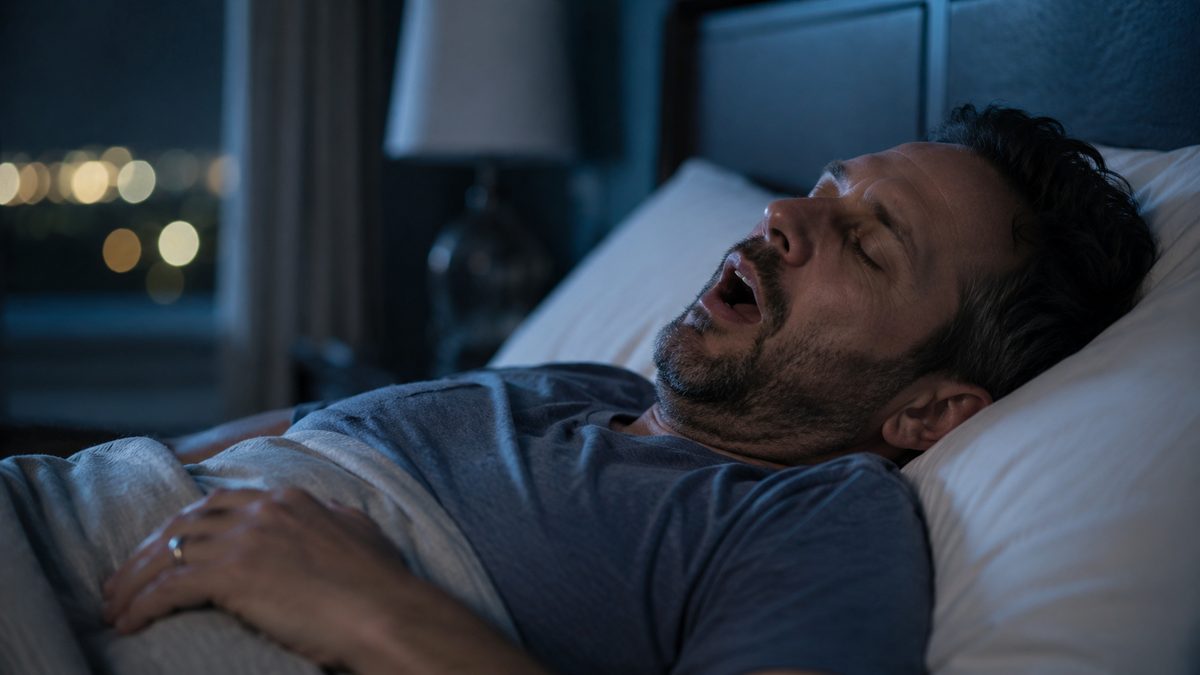
Obesity is the biggest cause of sleep apnea in most adults. Extra fat tissue around the throat narrows your airway, and excess weight on your chest reduces lung volume while you sleep. Both effects make your airway more likely to collapse at night.
But obesity doesn't tell the whole story. Age, jaw structure, and a few common habits all push people toward the same problem: an airway that cannot stay open during sleep.
If you snore loudly, wake up tired no matter how long you sleep, or someone has watched you stop breathing at night, these are warning signs worth taking seriously. Untreated sleep apnea raises your risk of heart disease, high blood pressure, and cognitive decline.
The good news is the causes are well understood, and most are fixable.
Why Does the Airway Collapse in the First Place?
Sleep apnea happens when the soft tissues at the back of your throat relax too much during sleep and block the airway. This is called obstructive sleep apnea, and it is by far the most common type.
Your airway is held open by muscles in the pharynx. During the day, those muscles stay fairly active. During sleep, muscle tone drops. For most people, the airway stays open anyway.
For people with sleep apnea, it doesn't.
Research shows that people with obstructive sleep apnea have impaired responses to narrow airways. When the airway starts to tighten and pressure becomes negative, the muscles that should pull it back open fail to activate properly. That failure happens more often when the airway is already anatomically narrow to begin with.
So you've got two things at once: a structurally narrow airway plus muscles that can't compensate when pressure drops. Obesity is the most common reason the airway becomes narrow. But it's not the only one.
What Is the Number One Cause of Sleep Apnea?
Obesity. Consistently and clearly, across large epidemiological studies, excess body weight is the dominant modifiable risk factor for obstructive sleep apnea.
Fat deposits in the tongue, soft palate, and the walls of the pharynx physically shrink the airway. At the same time, weight around the torso compresses the chest wall and reduces how much air the lungs can hold. Lower lung volume means less stabilising force pulling the airway open from below.
One of my clients came in reporting she'd always been a decent sleeper until she gained about 20 kilograms over three years. Her husband started noticing she would gasp and stop breathing. She was exhausted by 2pm every day.
When she finally got a sleep study done, her apnea was severe. After losing 15 kilograms, her apnea index dropped significantly. She still needed some support, but the improvement was dramatic.
I share that not to promise weight loss fixes everything, but because it shows just how directly body weight affects airway mechanics.
Globally, roughly one billion adults have obstructive sleep apnea, and the rise in obesity over the past four decades has driven OSA rates up in parallel. The World Health Organisation estimates close to two billion adults are affected by obesity. The numbers track each other closely.
Is Obesity the Only Cause?
No. And this is where most articles miss something important.
A meaningful subset of people with sleep apnea have a completely normal body weight. Their OSA comes from how their face and skull are shaped: a small jaw, a recessed chin, a high arched palate, or a naturally narrow pharynx. These structural features compress the airway regardless of fat distribution. Some of these patterns run in families, which partly explains why sleep apnea clusters in certain households even when obesity isn't present.
Age is the second major risk factor after obesity. As we age, muscle tone in the pharynx decreases and the soft tissues lose some of their structural integrity. The airway becomes more collapsible. This is why OSA prevalence rises steadily with age across populations.
Male sex also matters. Men are diagnosed with sleep apnea at roughly twice the rate of pre-menopausal women. After menopause, the gap narrows significantly, which suggests hormones play a role in airway muscle tone and fat distribution around the throat.
What Common Habit Is Linked to Sleep Apnea?
Alcohol before bed is one of the most overlooked contributors to sleep apnea, and one that almost nobody talks about seriously enough.
Alcohol is a muscle relaxant. Drinking in the two to three hours before sleep reduces the tone of the pharyngeal muscles more than normal sleep already does. In people who are borderline for OSA, alcohol can push them into full symptomatic apnea for that night. In people who already have OSA, it makes it worse.
When I asked one of my clients to track his symptoms against his drinking, he was genuinely surprised. The nights he had two or three glasses of wine with dinner, his partner reported far more gasping. The nights he skipped alcohol, the snoring was lighter and he woke up feeling better.
Smoking is another significant habit. Cigarette smoking causes inflammation and fluid retention in the upper airway, which narrows the passages and increases the likelihood of collapse. Smokers have a substantially higher risk of OSA than non-smokers.
Sleeping on your back also worsens OSA significantly. Gravity pulls the tongue and soft palate backward when you're supine, directly narrowing the airway. Some people have what's called positional OSA, where their sleep study results are dramatically different depending on sleep position.
What Is the 4% Rule for Sleep Apnea?
The 4% rule refers to how sleep apnea severity is measured. Specifically, an apnea event is counted during a sleep study when oxygen saturation in the blood drops by at least 4% from baseline. This oxygen desaturation threshold is used to define which breathing pauses count as clinically significant events.
The number of these events per hour of sleep gives you the Apnea-Hypopnea Index, or AHI. Mild OSA is 5 to 14 events per hour. Moderate is 15 to 29. Severe is 30 or more. The 4% desaturation criterion is one standardised way sleep labs define what counts, though some labs use a 3% threshold, which changes results slightly.
This matters practically because the threshold affects whether you get diagnosed and how severe your diagnosis is. If you have borderline results, ask your sleep specialist exactly which criteria were applied.
Which Celebrity Died of Sleep Apnea?
Carrie Fisher, actress and writer best known for her role as Princess Leia, had obstructive sleep apnea as a contributing factor in her death in December 2016. The medical examiner listed sleep apnea among several contributing causes. She was 60 years old.
Her case drew public attention to how serious untreated or undertreated sleep apnea can be. It doesn't just cause tiredness. Repeated oxygen desaturation events through the night stress the cardiovascular system, increase blood pressure, and raise the risk of arrhythmias. Over years, that adds up.
Warning Signs You Should Not Ignore
Loud snoring is the most common signal. But snoring alone doesn't confirm sleep apnea. The more specific warning signs are:
- Witnessed breathing pauses during sleep
- Waking up gasping or choking
- Waking with a dry mouth or headache
- Excessive daytime sleepiness despite a full night of sleep
- Difficulty concentrating or memory problems
- Mood changes, irritability, or depression
Many people normalise daytime exhaustion for years. They assume it's stress or getting older. One of my clients described it as feeling like she was always running on a flat battery. She'd been like that for a decade before anyone connected it to her breathing at night.
Three Things Most Articles Get Wrong About Sleep Apnea Causes
First: thin people get sleep apnea too, and it often goes undiagnosed longer. There's a clinical assumption that sleep apnea is a condition for overweight, middle-aged men. So when a lean person, a woman, or a young adult presents with symptoms, it gets dismissed. Anatomical causes like a narrow jaw or enlarged tonsils don't care about body weight. If you have the symptoms and a normal BMI, push for a sleep study anyway.
Second: nasal obstruction is more important than most people realise. A deviated nasal septum, chronic nasal congestion, or enlarged nasal turbinates force mouth breathing during sleep. Mouth breathing changes the position of the tongue and jaw in a way that narrows the pharynx. Fixing nasal obstruction, whether through medication, nasal strips, or surgery, can meaningfully reduce OSA severity in people where nasal blockage is a driver.
Third: sleep apnea and central sleep apnea are different problems. Most of what this article covers is obstructive sleep apnea, where the airway physically collapses. Central sleep apnea is different. The airway stays open, but the brain simply fails to send the signal to breathe. Central sleep apnea has different causes, including heart failure and opioid use, and responds differently to treatment. CPAP, which works well for obstructive OSA, can actually worsen central apnea in some cases. Getting the type right matters.
What Actually Helps
Continuous positive airway pressure, or CPAP, is the most well-established treatment. It delivers a steady stream of air through a mask that keeps the airway open mechanically. For moderate to severe OSA, it works well when people use it consistently. The challenge is compliance, because a lot of people find the mask uncomfortable.
Weight loss, for people who are overweight, is the most powerful long-term intervention. Even a 10% reduction in body weight can reduce AHI by a meaningful amount. In some cases, significant weight loss resolves OSA entirely.
Mandibular advancement devices are custom-made mouthguards that hold the jaw forward during sleep, which pulls the tongue away from the back of the throat. They work best for mild to moderate OSA and for people with positional or anatomical causes.
For people with significant anatomical contributors, surgery options include correction of a deviated septum, removal of enlarged tonsils or adenoids, or more involved procedures targeting the soft palate and tongue base. These are more effective when anatomy is a primary driver rather than an adjunct to obesity.
In my experience, the people who do best are those who address multiple factors at once. Not just using CPAP, but also losing weight, cutting alcohol before bed, fixing nasal breathing, and changing sleep position. Stacking those changes produces results that any single intervention alone usually doesn't.
A whole-person approach focuses on the individual constitution and the underlying patterns that make someone susceptible. Where sleep apnea connects to chronic inflammation, sluggish metabolism, or long-standing patterns of exhaustion, there's room for this kind of approach alongside conventional management.
FAQ
Can sleep apnea go away on its own?
Rarely, without intervention. If the cause was a temporary one like significant weight gain or severe nasal congestion, resolving it can resolve the apnea. But structural causes and age-related changes don't reverse spontaneously.
Is sleep apnea genetic?
Partly. How your face and skull are shaped runs in families, and some neuromuscular control patterns may be inherited. Family history raises your risk, but it doesn't make sleep apnea inevitable.
Does everyone who snores have sleep apnea?
No. Snoring is caused by airway turbulence and doesn't confirm apnea. But loud, disruptive snoring, especially with witnessed pauses or gasping, is a strong reason to get tested.
How is sleep apnea diagnosed?
Through a sleep study, either in a sleep lab (polysomnography) or at home with a home sleep testing device. Both measure breathing patterns, oxygen levels, and apnea events across the night.
Can children get sleep apnea?
Yes. In children, enlarged tonsils and adenoids are the most common cause. It presents differently than in adults, often with behavioural problems, hyperactivity, and poor school performance rather than obvious daytime sleepiness.
Does sleeping position really make a difference?
For positional OSA, yes, significantly. Side sleeping can cut apnea events by half or more compared to back sleeping in people with position-dependent OSA.
What to Do Now
If you recognise your symptoms in this article, the most useful next step is a sleep study. Not changing your pillow or buying a mouth spray, a proper diagnostic test. If the study confirms OSA, work with a clinician to identify which factors are driving it for you specifically, because the most effective treatment plan matches the cause.
While you work through that process, three things make an immediate difference for most people: cut alcohol in the three hours before bed, sleep on your side, and address any nasal congestion that forces mouth breathing. Those changes cost nothing and reduce airway collapse tonight.
Sources

What Are 10 Signs That My Body Is Healthy?
Read article →
How to Tell if Your Body Is Unhealthy?
Read article →
What Are Signs of Poor Function Health?
Read article →
What Are Some Weird Signs That My Body Is Healthy?
Read article →
What Are Five Signs That I Might Not Be Healthy?
Read article →