What Is the Most Telling Symptom of Sleep Apnea? The Sign You Cannot Ignore
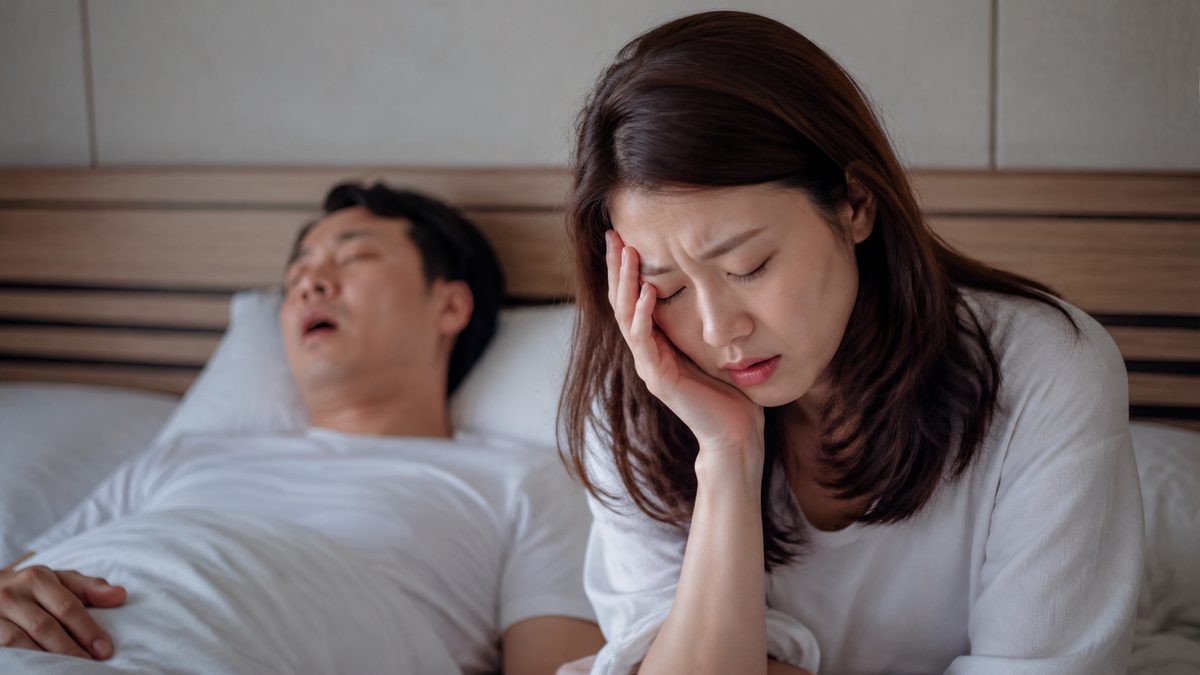
The most telling symptom of sleep apnea is a witnessed apnea. Your bed partner watches you stop breathing completely, then hears you gasp or choke yourself awake. Nothing else comes close.
Daytime sleepiness is common. Loud snoring is a red flag. But a witnessed apnea is direct evidence of airway obstruction happening in real time. If someone has seen you stop breathing during sleep, get a sleep test. Do not wait.
Every other symptom points toward sleep apnea. A witnessed apnea confirms it.
What Is the Number One Symptom of Sleep Apnea Most People Actually Notice?
Most people walk into a doctor's office talking about tiredness, not breathing. Excessive daytime sleepiness is the symptom that finally pushes people to seek help. You sleep what feels like a full night and still wake up exhausted.
You fall asleep in a chair at 2pm. You doze off watching television, sitting in a meeting, or waiting at a red light.
That kind of sleepiness isn't normal tiredness. It's fragmented sleep. Every time your airway collapses and you stop breathing, your brain pulls you out of deep sleep to restart breathing. This can happen dozens of times an hour. You technically stayed in bed for eight hours, but you never got the restorative sleep your body needed.
One of my clients described it this way: she'd been exhausted for three years and assumed it was stress, two kids, and a demanding job. She had no idea her husband had been watching her stop breathing every night for months. He thought she just snored. It was only when she fell asleep at a school concert mid-afternoon that they both took it seriously. Her apnea-hypopnea index came back at 34 events per hour. Severe.
So yes, daytime sleepiness is the number one symptom people notice. But it's not the most telling symptom, because it has many other causes. A witnessed apnea removes all the guesswork.
What Are the Silent Symptoms of Sleep Apnea That Most People Miss?
Sleep apnea doesn't always announce itself with loud snoring and obvious gasping. Some people have what clinicians call silent or subtle presentations, and these are the cases that go undiagnosed for years.
The silent symptoms include:
- Morning headaches that clear within an hour of waking. These happen because low oxygen and high carbon dioxide during apnea events cause blood vessels in the brain to dilate overnight.
- Waking with a dry mouth or sore throat, which signals you've been breathing through your mouth because your airway kept partially collapsing.
- Frequent nighttime urination. Most people don't connect this to sleep apnea, but the pressure changes in your chest during apnea events trigger hormones that tell your kidneys to produce more urine.
- Poor concentration and memory problems during the day. When we see clients struggling to focus at work and they've already ruled out anxiety or burnout, sleep apnea is often on the list.
- Mood changes, irritability, and low motivation. Chronically broken sleep affects the same brain systems involved in mood regulation.
- Reduced libido. Low oxygen night after night suppresses testosterone and affects sexual function in both men and women.
What most articles miss is that some people with significant sleep apnea never feel sleepy at all. They adapt to running on fragmented sleep over years and stop recognizing it as abnormal. For these people, the silent symptoms above are the only clues.
A morning headache every single day isn't something to brush off as dehydration.
What Could Be Mistaken for Sleep Apnea?
This is where diagnosis gets genuinely tricky. Several conditions produce an almost identical set of symptoms, and misidentifying them wastes months of a person's life.
Hypothyroidism causes fatigue, weight gain, brain fog, and in some cases worsens airway muscle tone, which can trigger or worsen obstructive sleep apnea. I know this because one of my clients came in convinced she had sleep apnea. She had every symptom. Her sleep study came back borderline. A thyroid panel revealed her TSH was significantly elevated. Treating the thyroid resolved most of her fatigue without CPAP.
Upper airway resistance syndrome causes the same daytime sleepiness and snoring as obstructive sleep apnea, but the airway never fully collapses. Standard scoring on a sleep study can miss it unless the lab is looking for it specifically.
Depression and anxiety both fragment sleep and cause exhaustion that looks identical to sleep apnea sleepiness. The distinction matters because treating one without addressing the other rarely works well.
Iron deficiency and anemia are extremely common causes of fatigue, especially in women, and are frequently dismissed or overlooked when someone also snores.
Insomnia and sleep apnea overlap more than most people realize. Research now shows that a significant number of people presenting with insomnia symptoms actually meet diagnostic criteria for obstructive sleep apnea on polysomnography. The two conditions can coexist, and treating only the insomnia while missing the apnea leads to years of partial improvement.
If you've been treated for fatigue, depression, or insomnia and are still not well, ask about a sleep study. The overlap is real and common.
What Is the 4% Rule for Sleep Apnea?
The 4% rule refers to how oxygen desaturation is measured to diagnose sleep apnea. During a sleep study, technicians track how many times your blood oxygen level drops by 4% or more from your baseline. Each drop is called a desaturation event.
This matters because it's one of the key numbers that determines your apnea-hypopnea index, or AHI. The AHI counts how many apnea and hypopnea events occur per hour of sleep. An event only counts if there's a measurable drop in airflow AND a corresponding drop in oxygen or a brief arousal from sleep.
Some labs use a 3% threshold and some use 4%. The choice of threshold changes how many events get counted, which can push someone from a borderline result to a mild or moderate diagnosis. This isn't a trivial difference. A person with an AHI of 4 using a 3% threshold might have an AHI of 2 using a 4% threshold, which could change whether they receive a diagnosis at all.
Home sleep apnea tests now measure oxygen desaturation reliably and are validated for diagnosing obstructive sleep apnea in people with a high pre-test probability. They're less accurate for people with complex presentations, heart failure, or suspected central sleep apnea. In those cases, a full in-lab polysomnography gives a more complete picture.
Why Snoring Alone Is Not Enough to Diagnose Sleep Apnea
Loud snoring is a risk factor, not a diagnosis. Around half of adults snore, and many of them have no clinically significant apnea. Snoring happens when the airway partially narrows and tissue vibrates. Sleep apnea happens when the airway closes completely.
The combination that should prompt action is loud snoring plus witnessed apneas, or loud snoring plus unexplained daytime sleepiness, especially if you carry weight around the neck and jaw. A neck circumference over 40cm in women or 43cm in men increases risk significantly.
When I see clients who snore but feel fine and whose partners have never witnessed them stop breathing, we still assess carefully. But the urgency is different. Add in gasping awake, morning headaches, or concentration problems and the picture changes fast.
Why Sleep Apnea Matters Beyond Tiredness
The exhaustion is the part people feel. The cardiovascular damage is the part that can kill them.
Untreated sleep apnea significantly raises the risk of high blood pressure, dangerous heart rhythms including atrial fibrillation, and stroke. The mechanism is direct. Every apnea event creates a surge in adrenaline and a spike in blood pressure as your body fights to restart breathing. Do this 30 times an hour for years and the cardiovascular system pays the price.
There's also a road safety dimension. People with untreated severe sleep apnea have crash rates comparable to drivers with a blood alcohol level above the legal limit. This isn't metaphor. It's measured reaction time and lane deviation data.
One of my clients, a long-distance truck driver, came in after a near-miss on the highway. He'd fallen asleep for a second at 100km/h. He'd been snoring for twenty years. His AHI was 52 events per hour. Starting CPAP therapy changed his life in ways he didn't expect. Within three weeks he said he felt like a different person. He'd forgotten what rested felt like.
How Sleep Apnea Gets Confirmed
A sleep test is the only way to confirm sleep apnea. There are two main options.
A full polysomnography records brain waves, eye movements, muscle activity, heart rhythm, breathing effort, airflow, and oxygen levels throughout the night. It gives the most complete picture and is required when the diagnosis is uncertain or when central sleep apnea, parasomnias, or other sleep disorders are suspected.
A home sleep apnea test is simpler. You wear a small device overnight that measures airflow, breathing effort, and oxygen saturation. It's validated for diagnosing obstructive sleep apnea in adults with a high clinical suspicion and no significant comorbidities. It's easier to access, less expensive, and accurate enough for most straightforward cases.
Your doctor uses your AHI result alongside your symptoms to determine whether treatment is needed. Mild apnea is an AHI of 5 to 14 events per hour, moderate is 15 to 29, and severe is 30 or more.
Frequently Asked Questions
Can you have sleep apnea without snoring?
Yes. Snoring is common with obstructive sleep apnea but not universal. Some people with significant apnea are quiet sleepers. Silent symptoms like morning headaches, fatigue, and concentration problems can be present without any audible snoring.
Can women have sleep apnea?
Absolutely. Sleep apnea is underdiagnosed in women partly because their symptoms often present differently. Women are more likely to report insomnia, fatigue, and mood changes than the classic loud snoring and gasping picture. This leads to misdiagnosis as depression or thyroid problems for years.
Does sleep apnea go away on its own?
In most adults, no. Weight loss can reduce severity significantly, and some children with enlarged tonsils improve after surgical removal. For most adults with established obstructive sleep apnea, treatment is needed. It doesn't resolve without intervention.
Is a home sleep test accurate enough?
For most adults with suspected obstructive sleep apnea and no major comorbidities, yes. Home testing is validated and widely used. It tends to slightly underestimate AHI compared to in-lab studies, so a borderline result should be interpreted carefully.
What is the most effective treatment for sleep apnea?
CPAP, continuous positive airway pressure, is the most studied and most effective treatment for moderate to severe obstructive sleep apnea. Mandibular advancement devices work well for mild to moderate cases. Positional therapy helps people whose apnea occurs mainly when sleeping on their back. Weight loss, where relevant, reduces AHI meaningfully.
Can natural or holistic approaches help with sleep apnea?
Supportive care including weight management, reducing alcohol, improving sleep positioning, and addressing nasal congestion can reduce severity. Some people explore complementary approaches alongside medical treatment. For moderate to severe sleep apnea, these approaches work best as additions to evidence-based treatment, not replacements.
If you're looking at integrative options, speaking with a practitioner who understands both the medical and holistic dimensions helps you make a more informed choice. The team at Homeopathy Plus takes a whole-person approach to health concerns including sleep and fatigue.
What to Do Right Now
If someone has witnessed you stop breathing during sleep, book a sleep test this week. That single observation changes everything.
If you snore loudly and wake up exhausted despite adequate sleep time, talk to your doctor about a home sleep apnea test. You don't need to wait for a witnessed apnea to justify testing.
If you've been treated for depression, insomnia, or fatigue for more than six months without full resolution, ask specifically about sleep apnea. The overlap is common and frequently missed.
Track your symptoms for two weeks before your appointment. Note morning headaches, how tired you feel at specific times of day, whether you wake gasping, and how often you urinate at night. That pattern gives your doctor more to work with than a general complaint of tiredness.
Early diagnosis stops years of preventable cardiovascular strain and gives you back the energy to function the way you should.
Sources
Continue with the Sleep article archive collection.

What Are 10 Signs That My Body Is Healthy?
Read article →
How to Tell if Your Body Is Unhealthy?
Read article →
What Are Signs of Poor Function Health?
Read article →
What Are Some Weird Signs That My Body Is Healthy?
Read article →
What Are Five Signs That I Might Not Be Healthy?
Read article →