What Is the New Device for Sleep Apnea? Your 2026 Guide to Modern Alternatives
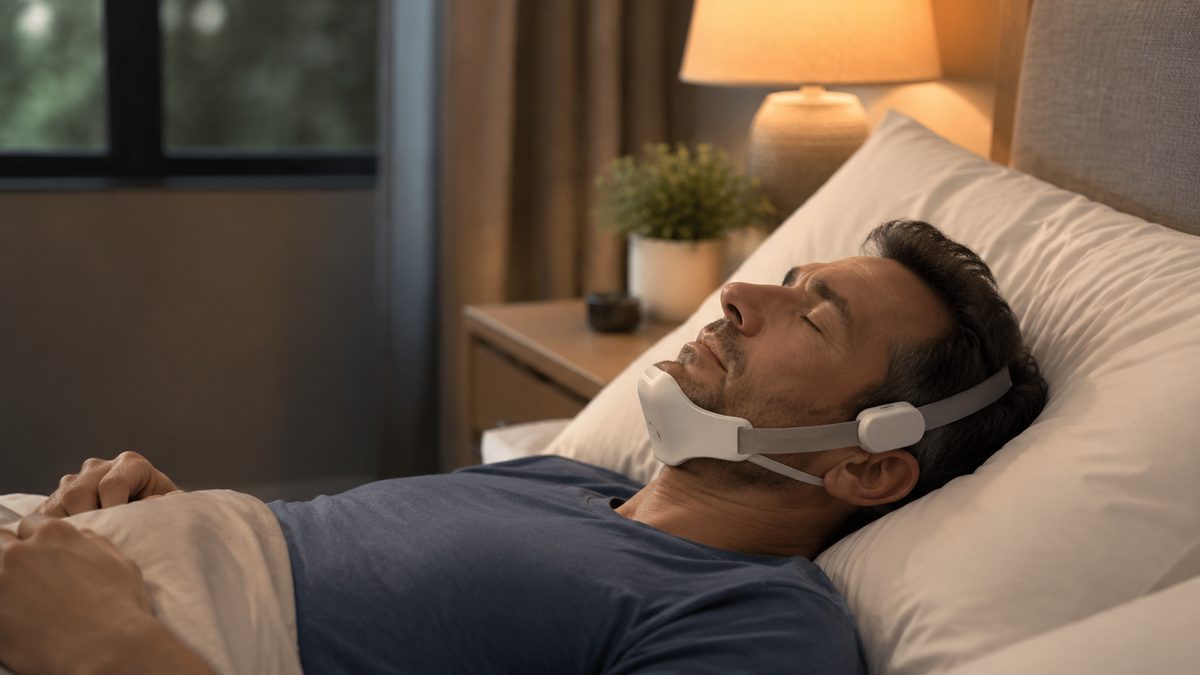
The most advanced new device for sleep apnea is the Inspire hypoglossal nerve stimulator, a small implant that keeps your airway open by stimulating the nerve controlling your tongue. It's FDA-approved, surgically implanted, and designed for people with moderate-to-severe obstructive sleep apnea (OSA) who can't tolerate CPAP.
Beyond Inspire, expiratory positive airway pressure (EPAP) devices offer a mask-free option for mild-to-moderate cases, and a new generation of mandibular advancement devices (MADs) are more precise than ever. All three work. The right one depends on how severe your apnea is and what you can realistically use every night.
Why Are People Looking for CPAP Alternatives?
CPAP remains the most studied treatment for OSA. But adherence rates are poor. Studies consistently show that around half of CPAP users abandon the machine within a year.
The mask feels claustrophobic. The noise disturbs partners. Travelling with it is a hassle. Skin irritation, dry mouth, and pressure intolerance push people off therapy, and untreated sleep apnea raises the risk of high blood pressure, stroke, and metabolic disease.
One of my clients described sleeping with CPAP as "putting a vacuum cleaner on my face every night." She tried four different masks over two years. Each one left marks on her face and woke her up at 3am. When she came to me, she had stopped using it entirely and was exhausted every morning. That story is not unusual.
The demand for alternatives is real, and the research community has responded.
What Is the Inspire Device and How Does It Work?
Inspire is an implantable upper airway stimulation system. A surgeon places a small pulse generator under the skin of the chest, with a sensing lead near the ribs and a stimulation lead running to the hypoglossal nerve, the nerve that controls tongue movement.
Each night, you turn it on with a small remote. As you breathe in, the device detects the respiratory effort and sends a gentle electrical pulse to the hypoglossal nerve, which moves the tongue slightly forward and keeps it from collapsing into the airway.
It doesn't require a mask, a hose, or a machine on your bedside table. You sleep normally, on your back if you want, with nothing on your face.
A 2024 case report documented successful OSA treatment using Inspire in a patient who had undergone an orthotopic heart transplant, a complex scenario where the transplanted heart has no direct nerve connection to the rest of the body. The fact that the device worked in that setting confirmed that Inspire's mechanism is local to the upper airway; it does not rely on systemic autonomic function to do its job.
A 2016 feasibility study also established early clinical safety data for implantable OSA devices, setting the groundwork for broader adoption.
Who qualifies for Inspire? In most sleep medicine programs, you need a confirmed diagnosis of moderate-to-severe OSA, documented CPAP intolerance, and a specific airway anatomy (no complete concentric collapse at the palate, confirmed by a drug-induced sleep endoscopy). Body mass index thresholds also apply in most protocols.
What Are EPAP Devices and Who Are They For?
Expiratory positive airway pressure devices are small, mask-free adhesive valves that sit over each nostril. When you breathe in, air flows freely. When you breathe out, the valve partially restricts airflow, creating a back-pressure that keeps the airway open on the next inhale.
No machine. No hose. No noise.
A 2019 study evaluated a novel EPAP device for mild-to-moderate OSA. The concept is well-supported mechanically: the back-pressure delays airway collapse during the transition between expiration and inspiration, which is exactly when most apnea events occur in mild cases.
In my experience, EPAP devices work best for people whose apnea is positional or mild. I remember one client who had a borderline AHI of 11 events per hour, mostly on his back, and hated the idea of any machine. He used an EPAP device for three months and came back with a home sleep test showing an AHI of 4.
That's not a guaranteed result, but it shows what's possible when the fit between patient and device is right.
For severe apnea, EPAP alone is unlikely to be sufficient. Use it with guidance from a sleep specialist, not as a self-prescribed fix.
What Are the Newest Mandibular Advancement Devices?
Mandibular advancement devices are custom-fitted oral appliances that hold your lower jaw slightly forward during sleep, which tightens the soft tissue at the back of the throat and reduces collapse. They've been first-line for mild-to-moderate OSA for decades.
What's new is the precision.
Older MADs were often one-size-fits-all or had crude titration systems. Newer designs allow millimetre-by-millimetre adjustment, better material for long-term comfort, and built-in sensors that track compliance.
A 2017 study examined how posture and mandibular advancement interact with nasal resistance using a novel oral appliance, pointing toward personalized titration as a real clinical strategy rather than a guesswork approach. A 2024 review of a uniquely designed oral appliance therapy device reported on clinical effectiveness outcomes, adding to the evidence base that design matters, not just jaw position.
Earlier work on the BestMAD device demonstrated that newer MAD designs could produce measurable imaging changes in the airway, even if the full outcome data from those studies was limited in scope.
The practical takeaway: if you tried a MAD five or more years ago and found it uncomfortable, the current generation of devices is genuinely different. A trained dental sleep medicine practitioner can fit one properly and titrate it over several weeks based on your symptom response.
What Do Japanese Use to Reduce Sleep Apnea?
Japan has a high rate of MAD use relative to CPAP compared to Western countries, partly because of cultural preference for smaller, less obtrusive devices and partly because Japanese sleep medicine guidelines have historically given oral appliances a strong position in treatment pathways.
Positional therapy devices, wearables or alarms that prevent back-sleeping, are also used more widely there for positional OSA. The underlying physiology is the same; the treatment philosophy leans toward the least-invasive option that gets the job done.
What Is the Newest Treatment for Sleep Apnea in Australia in 2026?
In Australia, Inspire is available through selected hospital centres, though it's not yet universally covered under Medicare or private health insurance in the way CPAP is. Access depends on your insurer and which hospital you attend.
EPAP devices and advanced MADs are more accessible. A sleep dentist or sleep physician can prescribe both without a surgical referral.
The newer pharmacological approach using GLP-1 receptor agonists (originally developed for type 2 diabetes and obesity) has attracted attention in Australian sleep medicine circles following international trial data showing AHI reductions linked to weight loss. This isn't a dedicated sleep apnea device, but it's part of the 2026 treatment conversation for patients where excess weight is a primary driver of airway collapse.
The most important development in Australia right now isn't a single device. It's the shift toward phenotyping, identifying why your airway collapses (anatomy, muscle tone, arousal threshold, or loop gain) and matching treatment to mechanism rather than defaulting straight to CPAP for every patient.
How Do You Know Which New Device Is Right for You?
Severity matters most. Here's a direct guide:
- Mild OSA (AHI 5 to 14): MAD or EPAP device, fitted and monitored by a specialist. Positional therapy if apnea is predominantly positional.
- Moderate OSA (AHI 15 to 29): MAD is first-line if CPAP is refused or failed. EPAP may help in selected cases. Inspire is not typically indicated at this severity unless anatomy and CPAP failure criteria are met.
- Severe OSA (AHI 30 or above): CPAP remains most reliably effective. Inspire is the strongest surgical alternative. MADs can work but require rigorous follow-up.
Whatever you choose, do a follow-up sleep study at three months. A device that feels comfortable isn't the same as a device that's working. AHI needs to be confirmed below 5, or at minimum below 10, before you call the treatment successful.
What Most Articles Miss About New Sleep Apnea Devices
The device is only half the solution. I've seen clients use Inspire correctly and still wake tired because their sleep architecture was fragmented for other reasons: anxiety, periodic limb movements, or chronic pain. Treating the apnea is essential, but it doesn't automatically restore sleep quality if there are co-existing disorders.
Always do a comprehensive sleep study, not just an AHI-focused home test.
Compliance data is almost never discussed honestly. Clinical trials for new devices tend to report outcomes in patients who used the device correctly. Real-world adherence is lower. What I found was that the patients who did best with novel devices were the ones who had the strongest motivation to avoid CPAP, not the ones who were least sick.
Motivation matters as much as mechanism.
The "new" label is often years old. Inspire received FDA approval in 2014. EPAP devices have been around since the early 2010s. The reason they feel new is that awareness has lagged behind availability.
If your GP or even your respiratory specialist hasn't mentioned these options, it doesn't mean they don't exist. It means you may need to ask specifically, or seek a sleep specialist with a broader treatment toolkit.
Frequently Asked Questions
Is Inspire available in Australia?
Yes, through selected surgical centres. It's not yet standard on Medicare, so out-of-pocket costs vary. Ask your sleep physician for a referral to a centre that implants it.
Are new sleep apnea devices covered by private health insurance?
MADs are often partially covered under dental extras. Inspire may be covered under some hospital policies. EPAP devices are generally not covered. Check your policy specifically before assuming coverage.
Can I use a new device without a sleep study?
No. Every device category requires a confirmed diagnosis and ideally a severity classification. Using a MAD or EPAP without knowing your AHI means you have no baseline to measure against and no way to know if treatment is working.
What is the newest technology for sleep apnea overall?
Upper airway stimulation (Inspire) is the most advanced implantable technology in active clinical use. Research is also ongoing into closed-loop stimulation systems that adapt in real time to airway events, and into pharmacological agents that increase upper airway muscle tone during sleep.
Neither of the latter is widely available yet.
Are there natural or non-device options worth trying first?
For mild OSA, weight loss, positional therapy, and reducing alcohol before bed can each reduce AHI meaningfully. These aren't replacements for treatment in moderate-to-severe cases, but they're worth doing alongside whatever device you use.
In my experience, clients who combined a MAD with positional change got better results than those who used the MAD alone.
How long do these new devices last?
Inspire's battery lasts roughly 11 years before replacement surgery is needed. MADs typically last three to five years with proper care. EPAP valve devices are single-use per night.
What to Do Next
Book a sleep study if you haven't had one. Get your AHI confirmed. Then ask your sleep physician directly: "Am I a candidate for a non-CPAP device?"
Take your results to a sleep dentist if a MAD is appropriate for your severity. If you've already failed CPAP and your OSA is moderate-to-severe, ask for a referral to a centre that offers Inspire assessment.
Then do a follow-up sleep test at three months, no matter which device you choose, to confirm it's actually reducing your apnea events. That one step, the follow-up test, is what most people skip, and it's the only way to know you're protected.
Sources

What Are 10 Signs That My Body Is Healthy?
Read article →
How to Tell if Your Body Is Unhealthy?
Read article →
What Are Signs of Poor Function Health?
Read article →
What Are Some Weird Signs That My Body Is Healthy?
Read article →
What Are Five Signs That I Might Not Be Healthy?
Read article →