What Is the #1 Cause of Sleep Apnea? The Answer Most People Miss
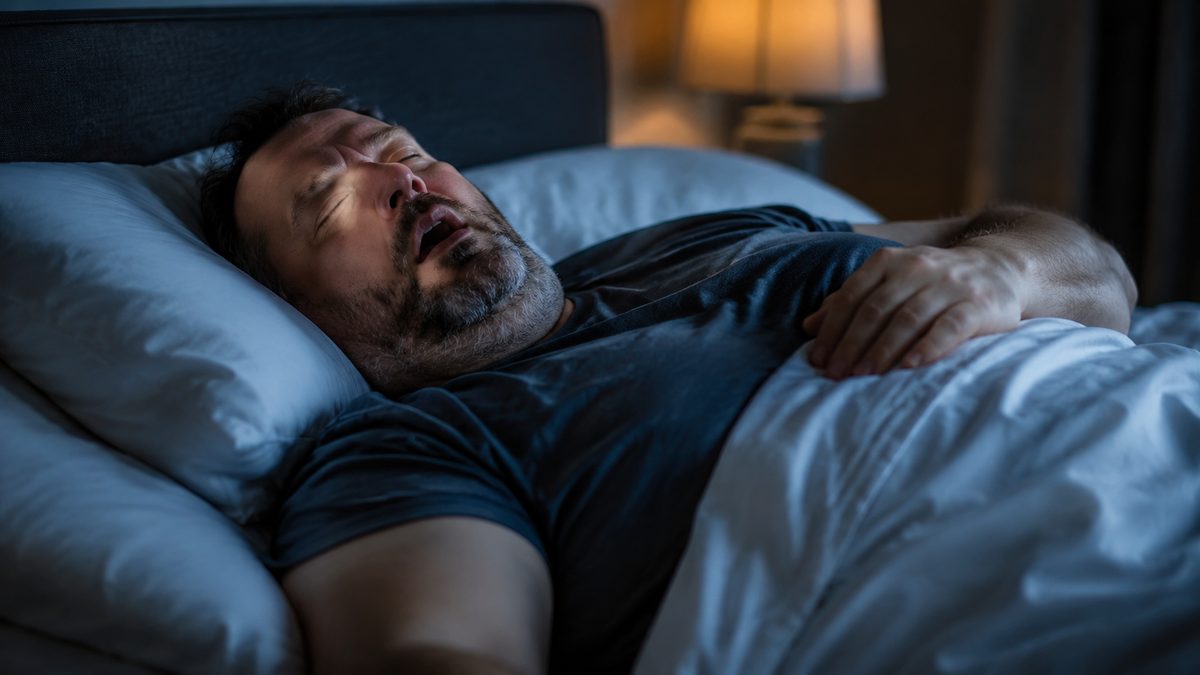
Obesity is the number one cause of sleep apnea. Fat deposits around the neck and throat narrow your airway while you sleep. When your muscles relax at night, that narrowed airway collapses, and breathing stops.
This is not a minor issue. Over 50% of people diagnosed with obstructive sleep apnea have a body mass index above 30, and population studies consistently identify obesity as the primary predictor of sleep-disordered breathing.
The good news: obesity is modifiable. Losing even 10 to 15% of your body weight cuts apnea severity for most people. That means fewer breathing interruptions per night, better sleep, and for many, no more CPAP machine.
How Does Obesity Actually Block Your Airway?
Your upper airway, the throat, soft palate, and tissue around your tongue, is held open by muscle tone during the day. At night, those muscles relax. If excess fat is packed around the outside of that airway, the walls close in.
Breathing stops. Your brain jolts you awake just enough to reopen it. You don't remember this. It can happen dozens of times per hour.
Two pathways are at work. The first is mechanical: fat tissue physically compresses the pharynx from the outside. The second is metabolic: adipose tissue produces inflammatory cytokines linked to systemic inflammation seen in metabolic syndrome, high blood pressure, insulin resistance, and elevated blood sugar. That inflammation weakens the neuromuscular responses that normally keep your airway open.
So obesity attacks the airway from two directions at once.
One of my clients described it as feeling like she was breathing through a wet paper towel every night. She had no idea why she woke up exhausted every morning. She had been carrying about 30 extra kilograms for a decade. When her sleep study came back showing 42 apnea events per hour, the connection clicked.
What Are 5 Symptoms of Sleep Apnea?
Most people with sleep apnea don't know they have it. The events happen while you're unconscious. Here's what shows up during the day, and at night for anyone sleeping near you.
- Loud, disruptive snoring, often described as snoring that stops suddenly, then resumes with a gasp or snort
- Waking up with a headache, caused by low oxygen levels during the night
- Excessive daytime tiredness, no matter how many hours you spent in bed
- Difficulty concentrating or remembering things, fragmented sleep disrupts the memory consolidation that happens in deep sleep stages
- Waking with a dry mouth or sore throat, a sign your airway was open and drying out, or that you were breathing through your mouth to compensate
A partner noticing that you stop breathing is one of the strongest early warning signs. If someone has pointed this out to you, that warrants a sleep study. Not later. Now.
What Age Does Sleep Apnea Usually Start?
Sleep apnea can start at any age, including childhood (enlarged tonsils are a common cause in kids). But the sharpest rise happens between 30 and 60. The Wisconsin Sleep Cohort Study found that 24% of middle-aged men and 9% of middle-aged women had clinically significant sleep-disordered breathing.
After 60, prevalence climbs again because muscle tone naturally decreases with age, making the airway more prone to collapse. An aging global population is one reason estimates now put the worldwide count at approximately one billion adults with obstructive sleep apnea.
Age is a secondary risk factor. You can't change it. But obesity, which you can change, remains the dominant driver across all age groups.
What most articles miss: sleep apnea in women is chronically underdiagnosed because symptoms present differently. Women are more likely to report insomnia, fatigue, and mood disturbances rather than loud snoring. Many are dismissed or misdiagnosed for years. I've seen this happen to clients in their 40s who had been told they were anxious or depressed, when the underlying issue was fragmented sleep from undiagnosed apnea.
What Common Habit Is Linked to Sleep Apnea?
Alcohol. Drinking alcohol in the evening relaxes the throat muscles more than normal sleep does. That extra relaxation makes airway collapse more likely and more severe, even in people who don't otherwise have sleep apnea. One drink before bed can measurably worsen overnight oxygen levels.
Smoking is the second major habit. Smoking causes inflammation and fluid retention in the upper airway, which narrows it. Smokers have a significantly higher rate of sleep-disordered breathing than non-smokers.
Sleeping on your back makes things worse too. Gravity pulls throat tissue backward when you're supine. Many people with mild apnea find their symptoms nearly disappear when they sleep on their side. This isn't a cure, it's a positional management strategy. But it's worth knowing.
Is Obesity Always the Cause? What Else Can Cause Sleep Apnea?
No. But it's the most common cause by a significant margin. Other contributing factors include:
- Anatomical structure, a naturally narrow airway, a recessed jaw, a large tongue, or enlarged tonsils. Some lean people have sleep apnea purely because of their anatomy.
- Nasal obstruction, a deviated septum or chronic nasal congestion forces mouth breathing, which destabilizes the airway.
- Neuromuscular conditions, anything that reduces the tone of throat muscles, including some medications and neurological disorders.
- Central sleep apnea, a different mechanism entirely, where the brain fails to send the correct signals to breathing muscles. This is less common and not driven by obesity.
Hormonal factors also play a role. Low thyroid function can reduce respiratory drive. Testosterone and estrogen both influence airway muscle tone, which partly explains why sleep apnea rates change around menopause and why men are diagnosed more often than women.
The reason obesity still tops the list is that it's both the most prevalent cause and the one where intervention produces the clearest measurable improvement.
What Is the 4% Rule for Sleep Apnea?
The 4% rule is a measurement standard used in sleep studies. When a sleep technician scores your apnea events, they look for drops in blood oxygen saturation. The 4% rule means an apnea event is counted when oxygen saturation drops by 4% or more from baseline. This is used to calculate your Apnea-Hypopnea Index (AHI), the number of breathing interruptions per hour that define how severe your apnea is.
Mild sleep apnea is 5 to 14 events per hour. Moderate is 15 to 29. Severe is 30 or more. A different standard, the 3% rule, is sometimes used and will produce a higher AHI score for the same night of sleep. If you've had two sleep studies and the numbers look very different, this scoring difference may be why.
The One Thing Most Articles Get Wrong About Sleep Apnea Treatment
CPAP is presented as the solution. It's not. It's a management tool, a very good one. But it does nothing about the weight that's collapsing your airway. The moment you take the mask off, the problem is exactly where it was.
Effective weight reduction and CPAP therapy together significantly decrease cardiovascular risk and eliminate sleep-related breathing abnormalities in 80 to 90% of patients. That's a remarkable outcome. But most people are handed a CPAP machine and never meaningfully supported through weight loss.
I know this because one of my clients had used CPAP faithfully for seven years. He lost 18 kilograms through dietary change and walking. His follow-up sleep study showed his AHI had dropped from 38 to 6. He still uses the machine occasionally, but he no longer needs it every night. That's what weight loss can do. The research is clear that it works, both through behavior change and, for severe cases, through bariatric surgery.
The second thing most articles miss: sleep apnea drives weight gain right back. Fragmented sleep disrupts leptin and ghrelin, the hormones that regulate hunger and fullness. Poor sleep makes you hungier the next day and less capable of making controlled food decisions. It also makes exercise feel harder.
So obesity worsens sleep apnea, and sleep apnea worsens obesity. Breaking one side of that loop is the whole game.
What Actually Works: Treatment Options Ranked by Evidence
Weight loss is the most effective long-term intervention for obese patients. Even modest weight reduction produces measurable improvement. The Obesity Medicine Association formally recognizes sleep-disordered breathing as an obesity-related disorder and includes it in clinical practice guidelines.
CPAP therapy delivers immediate symptom relief and is highly effective when used consistently. It doesn't treat the underlying cause but protects cardiovascular health in the short and medium term.
Bariatric surgery produces the largest and most sustained improvements in severe obesity-related sleep apnea. For patients who have tried dietary approaches without sufficient weight loss, it's worth a direct conversation with a specialist.
Positional therapy, staying off your back, helps mild to moderate cases. Practical methods include sleeping with a wedge pillow or sewing a tennis ball to the back of a sleep shirt.
Oral appliances reposition the jaw to keep the airway open. They work well for mild to moderate cases and are far more tolerable than CPAP for people who can't adjust to the mask.
Upper airway surgery may be appropriate when specific anatomical obstruction is identified (enlarged tonsils, a severely deviated septum). Surgery alone rarely resolves apnea in obese patients without accompanying weight loss.
Frequently Asked Questions
Can you have sleep apnea if you are not overweight?
Yes. Anatomy matters. A narrow jaw, large tonsils, or a thick neck can cause sleep apnea regardless of weight. Central sleep apnea has no connection to obesity at all. But statistically, obesity accounts for the majority of obstructive sleep apnea cases.
Does losing weight cure sleep apnea?
For many people with obesity-driven sleep apnea, significant weight loss reduces severity substantially and can resolve it entirely. Results vary depending on how much weight is lost and whether structural factors also contribute. A follow-up sleep study after weight loss gives you an actual answer for your case.
How is sleep apnea diagnosed?
Through a polysomnography (sleep study), either in a clinic or with a home sleep testing device. Your AHI score is calculated from the results. A physician interprets the results and recommends treatment based on severity and any underlying conditions.
Is sleep apnea dangerous?
Untreated sleep apnea is linked to elevated risk of high blood pressure, heart arrhythmia, stroke, and type 2 diabetes. The cardiovascular risk is the main reason treatment is recommended even for moderate cases. With treatment, whether CPAP, weight loss, or both, that risk decreases significantly.
Can children get sleep apnea?
Yes. In children, enlarged tonsils and adenoids are the most common cause. Obesity in children is an increasing contributor. Symptoms in children often look like behavioral problems, hyperactivity, or poor school performance rather than daytime sleepiness. A pediatric sleep assessment clarifies the picture.
What to Do Now
If you snore, wake unrefreshed, or someone has told you that you stop breathing in your sleep, get a sleep study. Don't wait for symptoms to worsen. If your results show obstructive sleep apnea and you're carrying excess weight, treat both simultaneously: CPAP for immediate relief, weight loss for the underlying cause.
Here's exactly where to start:
- Talk to your GP about a sleep study referral. Home sleep testing is available and more accessible than it used to be.
- If your AHI confirms apnea, ask specifically about weight loss support alongside any device-based treatment, not instead of it.
- Address the two habits with the clearest links to apnea severity: alcohol in the evenings and sleeping on your back.
The root cause is addressable. The sooner you act on it, the less damage accumulates overnight.
Sources
Continue with the Sleep article archive collection.

What Are 10 Signs That My Body Is Healthy?
Read article →
How to Tell if Your Body Is Unhealthy?
Read article →
What Are Signs of Poor Function Health?
Read article →
What Are Some Weird Signs That My Body Is Healthy?
Read article →
What Are Five Signs That I Might Not Be Healthy?
Read article →