What Is the Pillow Trick Against Sleep Apnea? (And When It Actually Works)
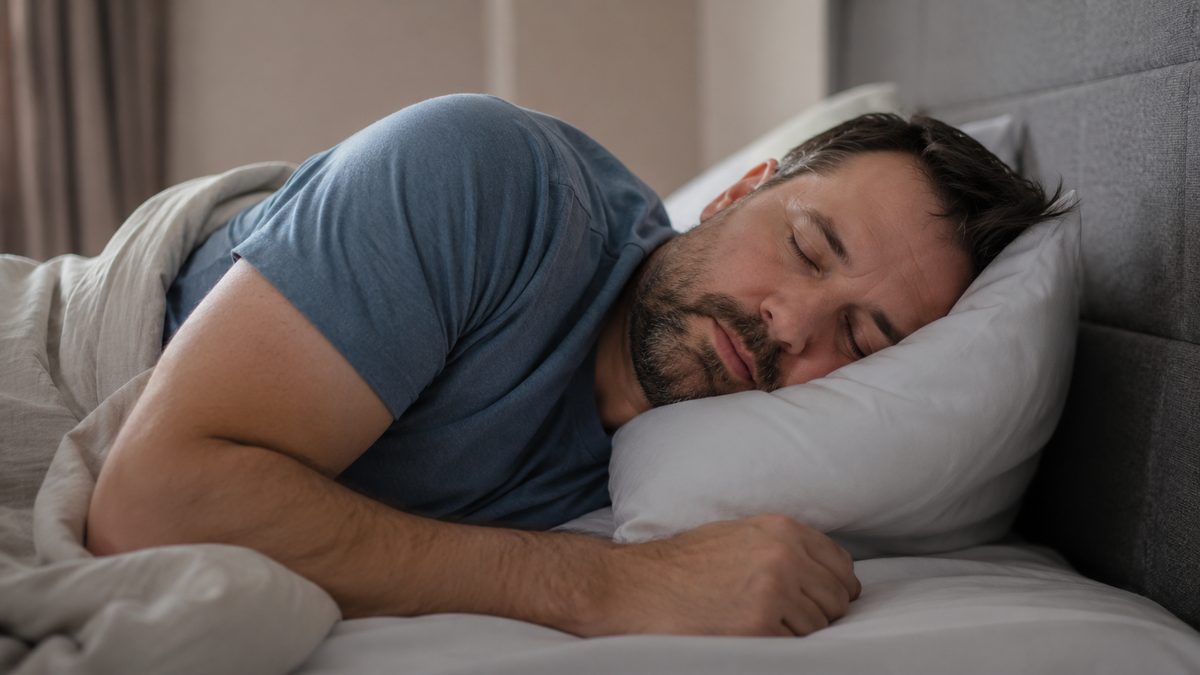
The pillow trick uses specially shaped pillows or strategic positioning to keep your airway open while you sleep. For people with mild-to-moderate positional sleep apnea, the right pillow can cut apnea events by 50 to 70 percent in the first month.
It works because most apneas happen when you sleep on your back. Change that position, and your airway often stays open on its own.
That said, pillows aren't a fix for everyone. If your apnea index is above 30 or your breathing stops in any sleep position, a pillow won't solve the problem. You need CPAP or a medical review. But if your apneas are mainly positional and your severity is mild to moderate, a pillow is a legitimate first-line option worth trying before anything more invasive. mild-to-moderate positional sleep apnea
Why Does Sleeping on Your Back Cause Apnea?
When you lie on your back, gravity pulls your tongue and soft palate toward the back of your throat. That narrows the airway. Your breathing muscles relax during sleep, so there's nothing holding the tissue forward.
The result is partial or full airway collapse, which is obstructive sleep apnea (OSA).
Positional OSA means your apnea-hypopnea index (AHI) in the supine position is at least twice what it is when you sleep on your side. Studies suggest roughly half of all OSA patients fall into this category. For these people, fixing position fixes most of the problem.
One of my clients came in exhausted every morning despite sleeping eight hours. Her CPAP machine sat in the corner collecting dust because she couldn't tolerate the mask. When we looked at her sleep study in detail, nearly all her events were supine. She switched to a contoured lateral pillow and within two weeks reported sleeping through the night without waking. That's not unusual for positional cases.
What Is the Pillow Trick to Stop Sleep Apnea?
The pillow trick refers to any pillow-based method that keeps you off your back or adjusts your neck angle to open the airway. There are a few distinct approaches.
The Lateral Positioning Pillow
These pillows are shaped to make side sleeping more comfortable and harder to roll out of. Some have a raised centre section that creates a gentle barrier against rolling supine. A 28-patient study using a positioning pillow showed significant reductions in AHI both immediately and after one month of use.
Compliance was a noted challenge in that study, which is worth knowing upfront. The pillow only works when you actually stay in it.
The Wedge Pillow
A wedge elevates your upper body at an angle, usually 30 to 45 degrees. This reduces the gravitational pull on airway tissue even when you're not fully on your side. It also helps with acid reflux, which frequently goes hand-in-hand with sleep apnea.
I know this because one of my clients was dealing with both, and the wedge was the one change that addressed both at once.
The Cervical or Neck Extension Pillow
These pillows position your head to extend the neck slightly, which stretches the airway open. Research here is more mixed. A cervical pillow promoting neck extension improved respiratory disturbance index in patients with mild OSA but showed no meaningful benefit in moderate or severe cases.
The mechanism makes anatomical sense, but the clinical results depend heavily on your specific airway anatomy.
The Prone Positioning System
Sleeping face down is the most extreme positional intervention. A mattress and pillow system designed for prone positioning reduced mean AHI from 26 to 8 and oxygen desaturation index from 21 to 7 across 14 patients over four weeks, with supine sleep time dropping from 128 minutes to 10 minutes per night. Those are strong numbers.
Most people find prone sleeping uncomfortable long term, but for those who can tolerate it, the results can be significant.
The Smart Pillow
Smart pillows inflate automatically to reposition your head when snoring or apnea is detected. A study of 23 patients with mild-to-moderate OSA found significant improvements in snore index, oxygen desaturation, and total AHI with a smart antisnore pillow. The seven patients with severe OSA showed no benefit.
That boundary matters. Mild to moderate responds. Severe does not.
What Is the Japanese Trick for Sleep Apnea?
The "Japanese trick" referenced online typically refers to a specific neck positioning technique using a rolled towel or firm cylindrical pillow placed under the neck to extend and open the airway. It draws on the same cervical extension principle as the neck extension pillows studied in clinical research.
Some versions also recommend sleeping in a specific lateral position with the pillow supporting the curve of the neck rather than the head.
The honest answer is that this isn't a uniquely Japanese medical technique. It's a positional intervention using neck extension, and the evidence for it is modest and severity-dependent, as outlined above. It may help with mild positional apnea. It's not a treatment for moderate or severe OSA.
Do Sleep Apnea Pillows Really Work?
For positional OSA with mild to moderate severity, yes. The evidence is consistent across multiple small trials. A head-positioning pillow in 25 patients with mild-to-moderate positional OSA reduced objective snoring index from 218 to 115 events per hour over three nights, with stronger results in overweight patients. That's a near 50 percent reduction in snoring events from a pillow change alone.
For severe OSA, or apnea that occurs across all sleep positions, pillows don't work. A smart antisnore pillow showed zero benefit in the severe OSA subgroup. A cervical pillow showed minimal improvement in severe cases. The research is clear on this point.
A randomized crossover trial compared a vibrating positional belt to a positional pillow in 19 positional OSA patients. Both reduced supine sleep time at home. The pillow performed comparably to a wearable device in a real-world setting. That tells you pillows aren't just a placebo option. They're competitive with other positional therapies when matched to the right patient.
What most articles miss is this: compliance determines outcome more than pillow design. A supine-avoidance study found the intervention was effective but needed nursing support and instruction to maintain adherence.
If you buy a positional pillow, throw it on your bed, and use it inconsistently, you won't see results. Consistent nightly use for two to four weeks is the minimum test period.
What Is the 4 Percent Rule for Sleep Apnea?
The 4 percent rule refers to how oxygen desaturation events are scored during a sleep study. An apnea or hypopnea is counted when blood oxygen drops by 4 percent or more from baseline. This is the standard scoring threshold used to calculate your AHI. A higher AHI means more frequent oxygen drops during the night.
Some labs use a 3 percent threshold instead, which produces a higher AHI for the same night of sleep. This matters when interpreting your results. If your AHI was scored at 4 percent and came back at 12, the same data scored at 3 percent might show an AHI of 18. The threshold affects whether you're classified as mild, moderate, or severe, and therefore which treatments are recommended.
When considering pillow therapy, your AHI under the 4 percent rule should be under 30 for positional pillows to have a realistic chance of meaningful improvement. Above that, positional therapy alone is unlikely to bring you into a normal range.
Three Things Most Articles Get Wrong About Pillow Therapy
1. They Treat It as a Last Resort Instead of a First Option
CPAP is the gold standard for moderate to severe OSA. But many people can't tolerate CPAP. Mask discomfort, claustrophobia, and skin irritation drive dropout rates as high as 50 percent in some cohorts. For positional mild-to-moderate OSA, a pillow is a reasonable first intervention, not a consolation prize.
Starting with the least invasive effective option is good clinical thinking.
2. They Ignore the Role of Weight Distribution
The research on head-positioning pillows found greater benefit in overweight patients. This isn't a coincidence. Excess weight around the neck and throat increases the baseline narrowing of the airway. Positional changes produce larger relative improvements because there's more to gain from opening an already-compromised airway.
If you're carrying extra weight, positional therapy may work better for you than for someone at a lower weight. That doesn't mean weight loss is the only answer, but it does mean the two interventions together are likely more powerful than either alone.
3. They Skip the Two-Week Test
One client tried a wedge pillow for three nights, noticed no difference, and returned it. Three nights isn't enough. The prone positioning trial ran four weeks. The positional pillow trial measured outcomes at one month.
Your body needs time to adapt to a new sleep position, and it takes several nights just to stop unconsciously rolling back to your habitual posture. Two weeks minimum. Four weeks for a proper assessment.
How to Know If Pillow Therapy Is Right for You
You're a good candidate if your sleep study shows positional OSA, meaning your AHI supine is at least twice your AHI on your side. You're also a better candidate if your overall AHI is under 30 and you haven't been diagnosed with severe OSA.
Signs that pillows aren't enough include waking with morning headaches consistently, waking gasping or choking regardless of sleep position, daytime sleepiness that doesn't improve after several weeks of positional therapy, or a partner reporting apnea events when you're already on your side.
If any of those apply, see a sleep physician. Positional therapy is useful but it doesn't replace medical evaluation for moderate to severe OSA.
Frequently Asked Questions
Can a pillow cure sleep apnea?
No. A pillow can significantly reduce apnea events in positional mild-to-moderate cases, but it doesn't address the underlying airway anatomy. It manages the condition by changing the environment. For some people that's enough to sleep normally. For others it's a step in the right direction while they pursue other treatment.
Which pillow is best for sleep apnea?
There's no single best pillow. A firm wedge works well for people who need elevation. A contoured lateral pillow suits people who roll supine during the night. A cervical pillow is worth trying if your apnea is mild and you tend to sleep with your neck flexed forward.
Start with whichever matches your main sleep position problem. Give it four weeks before judging it.
Can I use a pillow instead of CPAP?
If you have mild positional OSA, yes, with your doctor's agreement. If you have moderate or severe OSA, no. Pillows in severe OSA have shown no meaningful benefit in clinical trials. CPAP delivers consistent airway pressure regardless of position. For severe cases, that's irreplaceable.
How do I know if my apnea is positional?
Your sleep study report will show AHI broken down by position. If your supine AHI is significantly higher than your lateral AHI, you have positional OSA. Ask your sleep physician or the reporting clinic for the positional breakdown if it's not clear in your report.
Does the Japanese neck trick work?
It may help with mild positional apnea. The cervical extension principle has research support for mild cases. It's worth trying if your apnea is mild and positional. It has no demonstrated benefit for moderate or severe OSA.
What to Do Next
Check your sleep study for positional data. If supine events are driving your AHI and your severity is mild to moderate, try a firm wedge or contoured lateral pillow for four weeks. Track your morning symptoms: headaches, fatigue, dry mouth.
If they improve, the pillow is working. If they don't, or if your partner still reports apnea events while you're on your side, book a review with your sleep physician. Positional therapy is a real tool. Know its limits and use it where it fits.
Sources
Continue with the Sleep article archive collection.

What Are 10 Signs That My Body Is Healthy?
Read article →
How to Tell if Your Body Is Unhealthy?
Read article →
What Are Signs of Poor Function Health?
Read article →
What Are Some Weird Signs That My Body Is Healthy?
Read article →
What Are Five Signs That I Might Not Be Healthy?
Read article →