What Is the Pillow Trick That Helps With Sleep Apnea?
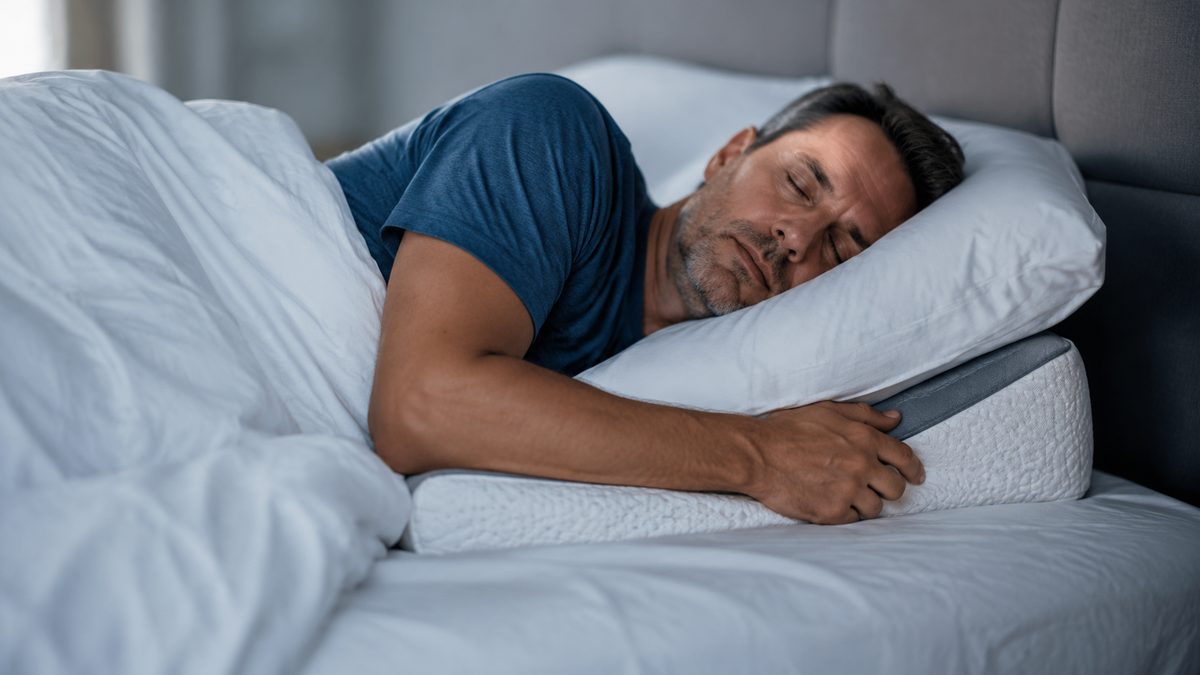
The pillow trick for sleep apnea forces you to sleep on your side or elevates your head to stop your tongue from blocking your throat. When you lie flat on your back, gravity pulls your jaw and tongue down. This blocks your airway and stops your breathing. By changing your sleep position with simple household items, you can keep your airway open throughout the night.
How does the pillow trick stop airway collapse?
Gravity is the main enemy when you sleep on your back. When your body enters deep sleep, your muscles relax completely. In this state, your tongue and the soft tissues at the back of your throat sag. If you lie on your back, these tissues slide backward. They block the pipe that carries air to your lungs. This blockage causes the snoring and gasping sounds of sleep apnea.
The pillow trick fixes this physical block. In my experience, the simplest version uses a tennis ball and a spare pillow. You sew a pocket onto the back of your pajama shirt. You place a tennis ball inside the pocket and close it. When you try to roll onto your back during the night, the ball causes mild discomfort. Your body automatically rolls back to your side without fully waking you up.
My client John tried this method after his partner complained about his loud gasping. He was skeptical that a simple ball could change his sleep. Within two nights, he stopped sleeping on his back. His partner reported that his loud snoring stopped. He woke up feeling rested because his airway stayed open.
You can also use a wedge pillow to elevate your upper body. This is another version of the trick. A firm foam wedge lifts your head and chest at an angle. This angle prevents gravity from pulling your throat tissues straight down. It keeps the airway clear while allowing you to sleep on your back if side sleeping hurts your hips.
What is the Japanese trick for sleep apnea?
The Japanese trick uses a rolled towel to support the natural curve of your neck. Many modern pillows are too soft or too thick. They push your head forward or let it sink too low. Both positions bend your neck and compress your airway. The Japanese method focuses on alignment to keep the breathing passage wide open.
To try this, you roll a small bath towel into a tight cylinder. The roll should be about the width of your fist. You lie on your back and place the rolled towel directly under your neck. Your head should touch the bed, while the towel supports the curve of your spine. This position tilts your chin upward slightly. It lifts your tongue away from the back of your throat.
I remember when one of my clients tried this towel trick. She suffered from morning headaches and throat dryness. She placed the rolled towel under her neck and tied it with hair bands to keep it rolled. She noticed an immediate change. She could breathe through her nose more easily. Her morning headaches disappeared because her neck posture allowed oxygen to flow without interruption.
This method works because it aligns the bones in your neck. When your spine is straight, your throat muscles stay under light tension. This tension stops them from collapsing during deep sleep states.
Do those sleep apnea pillows really work?
specialized sleep apnea pillows work well for positional therapy, but they do not cure the underlying cause of the condition. These pillows fall into two main types. The first type is the wedge pillow. The second type is the contoured CPAP pillow.
Wedge pillows use a slope to lift your torso. This lift reduces pressure on your lungs and throat. Contoured CPAP pillows have cutouts on the sides. These cutouts allow your mask to hang off the edge so it does not seal off or hurt your face. If you use a machine, these pillows keep your mask in place.
What I found was that these pillows help people who suffer from mild sleep apnea. They also help people whose apnea only happens when they lie on their back. However, they do not strengthen weak throat muscles. They do not fix systemic inflammation that narrows your breathing passages.
One of my clients bought an expensive memory foam pillow. It kept her on her side. She snored less, but she still felt tired during the day. Her sleep apnea was linked to poor muscle tone in her airway. While the pillow helped her body position, she needed to address her overall health to get her energy back.
What is the 4% rule for sleep apnea?
The 4% rule is a clinical standard used during sleep studies to measure drops in your blood oxygen levels. When your airway closes, your body starves for oxygen. Doctors track these drops to diagnose the severity of your sleep apnea.
During a sleep study, sensors measure how much oxygen your red blood cells carry. A normal level is between 95% and 100%. If your breathing stops, your oxygen level drops. Under the 4% rule, doctors count every time your oxygen level drops by 4% or more from your baseline. This drop must last for at least ten seconds.
These events are called desaturations. If you have fifteen of these drops per hour, you have moderate sleep apnea. If you have thirty or more drops per hour, your apnea is severe. Each drop triggers a burst of adrenaline. This chemical wakes your brain up to make you breathe again. These constant alarms ruin your sleep quality. oxygen drops
Understanding this rule helps you see why sleep apnea is dangerous. It is not just about snoring. It is about oxygen starvation. When your oxygen drops by 4% dozens of times a night, it strains your heart. It also stresses your brain cells.
What is the new pill for sleep apnea?
The new pill for sleep apnea is a combination drug designed to keep throat muscles active during sleep. Currently, researchers are testing a pill that combines two medicines called atomoxetine and oxybutynin. This combination targets the chemical signals in your brain.
During sleep, your brain reduces the signals that tell your throat muscles to stay open. For people with sleep apnea, this reduction is too extreme. The new pill attempts to keep those muscles active. It stimulates the nerves that control the tongue and throat tissues. This keeps the airway stiff and open, even during deep sleep.
While this chemical approach is exciting, it has limitations. These drugs can cause dry mouth, difficulty urinating, and elevated heart rates. They also fail to address the physical structures of your body. They do not fix tissue swelling or poor general health.
Many people prefer to avoid daily prescription chemicals. They look for natural ways to improve their health. Systemic health determinants, such as your body weight and tissue strength, play a massive role in sleep apnea. Supporting your body naturally can help improve muscle tone without the side effects of new drugs.
How can you treat the root causes of sleep apnea naturally?
To fix sleep apnea long-term, you must look at your overall health. Positional tricks and pillows manage the symptoms. They do not fix why your tissues are weak or inflamed in the first place. You must support your nervous system and your tissue tone.
Animal physiology shows us that some animals sleep in odd positions without their airways collapsing. Their bodies maintain airway tone naturally. In humans, poor muscle tone and tissue inflammation are key determinants of health. When these systems break down, sleep apnea develops.
In my practice, I focus on strengthening the body from the inside out. Homeopathic support can help reduce chronic swelling in the nose and throat. It can also help tone the muscles of the upper airway. By using natural remedies, you can address the body's tendency to hold fluid in the throat tissues.
When I suggest homeopathic remedies to my clients, I look at their whole health picture. I look at their sleep patterns, digestion, and stress levels. For example, one client used natural remedies to reduce chronic sinus congestion. Once his nasal passages cleared, he could breathe through his nose easily. He no longer needed to breathe through his mouth, which stopped his tongue from falling back. You can find resources and guidance for this natural approach at homeopathyplus.com.au.
FAQ
Can I use a regular pillow for the tennis ball trick?
Yes, you can use a regular pillow for your head. The tennis ball trick does not require a special pillow. You only need a tight t-shirt and a tennis ball. The ball keeps you on your side, so your regular pillow just needs to support your head in that position.
Does mouth taping help with sleep apnea?
Mouth taping forces you to breathe through your nose. If your nose is clear, this can help keep your jaw forward and your airway open. However, if you have a nasal blockage, mouth taping can be dangerous. You should resolve nasal congestion before trying it.
Why does my sleep apnea get worse when I sleep on my back?
Gravity pulls your relaxed tongue and soft palate down toward the back of your throat. This blocks the airway. When you sleep on your side, gravity pulls these tissues to the side, leaving a gap for air to pass.
How do I know if my oxygen is dropping at night?
Morning headaches, waking up gasping, and daytime sleepiness are signs of oxygen drops. You can also wear a smart ring or a pulse oximeter during sleep to track your oxygen levels.
Action Plan
Sew a small pocket onto the middle back of a tight t-shirt, place a tennis ball inside, and wear it to sleep tonight to force side sleeping and keep your airway open.

What Are 10 Signs That My Body Is Healthy?
Read article →
How to Tell if Your Body Is Unhealthy?
Read article →
What Are Signs of Poor Function Health?
Read article →
What Are Some Weird Signs That My Body Is Healthy?
Read article →
What Are Five Signs That I Might Not Be Healthy?
Read article →