What Is the Root Cause of Sleep Apnea? The Structural Truth Most People Miss
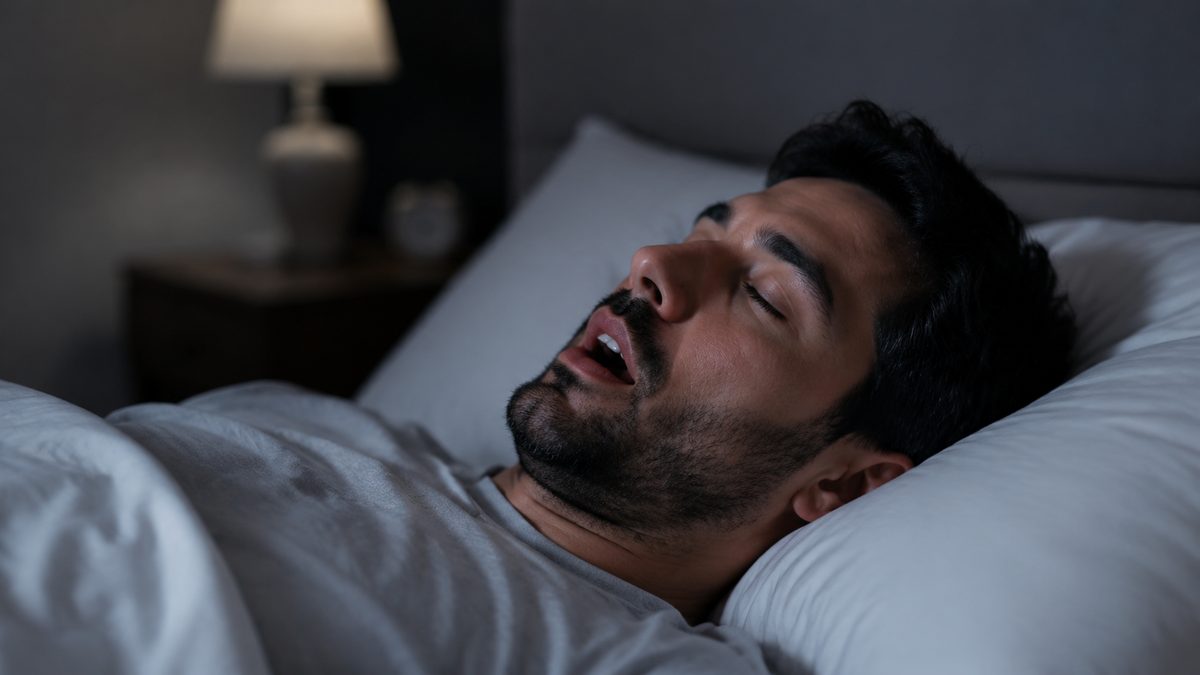
The root cause of sleep apnea is a structural bottleneck in your upper airway. Your airway is already narrower than it should be, and when your throat muscles relax during sleep, that bottleneck becomes a full collapse. Every apnea event is your airway folding in on itself.
The breathing stops. Oxygen drops. Your brain yanks you out of deep sleep to restart the process. This can happen hundreds of times a night without you knowing.
The anatomy is the problem. Everything else, weight, sleep position, alcohol, aging, makes an existing structural problem worse.
What Is the Main Cause of Sleep Apnea?
The main cause is a crowded, narrow upper airway combined with throat muscles that lose tone during sleep. In most adults, this comes down to a few specific structural issues happening at once.
A recessed lower jaw pushes your tongue base backward toward your throat. A low soft palate or enlarged uvula hangs into the airway from above. Narrow nasal passages reduce airflow before air even reaches your throat. Add excess fat around the neck if you carry extra weight, and every layer of tissue compresses the same limited space.
When you're awake, your throat muscles compensate. They hold everything in place despite the tight geometry. During sleep, especially REM sleep when muscle tone drops most, that compensation stops. The airway collapses with each breath. This is obstructive sleep apnea, and it accounts for the large majority of cases.
A meta-analysis of 19 studies confirmed specific jaw and skull measurements that significantly raise sleep apnea risk: a steeper mandibular plane angle, greater distance between the hyoid bone and the jaw, a shorter cranial base, and a longer, thicker uvula. These are not subtle differences. They show up consistently across populations and imaging studies.
Why Your Jaw Shape Matters More Than Most Doctors Mention
One of my clients came in having been told her sleep apnea was just a weight problem. She had lost over 10 kilograms and her sleep test results had barely improved. When we looked more carefully at her history, the structural picture was there from the start: small lower jaw, high arched palate, chronic mouth breathing since childhood.
The weight had made things worse, but it was never the root cause.
This is one of the angles most articles miss entirely. The jaw is central to airway size. A lower jaw that sits too far back, called retrognathia, physically pulls the tongue into the throat. The hyoid bone, which anchors tongue muscles and sits at the base of the throat, drops lower when the jaw is set back. That combination narrows the space where air has to pass.
Facial bone structure is largely set during growth. Mouth breathing in childhood, prolonged bottle or pacifier use, chronic nasal congestion, all of these shift how the face grows. The upper jaw narrows. The lower jaw rotates downward and backward. By adulthood, the airway architecture is already compromised before any other risk factor enters the picture.
What Happens to Kids, and Why Fixing Tonsils Is Not Always Enough
In children, enlarged tonsils and adenoids are the primary driver of obstructive sleep apnea. They physically block the airway from inside. Surgical removal, adenotonsillectomy, resolves the obstruction in most kids and is considered the standard first step.
Here is what often gets missed. After surgery, a meaningful number of children still show signs of sleep-disordered breathing. The reason is that the underlying jaw and facial bone structure was already abnormal before the adenoids or tonsils enlarged.
Researchers reviewing pediatric cases found that after removal, children frequently present with residual issues: a narrow upper jaw, a small or recessed lower jaw, excessive vertical facial growth, and a jaw that has rotated into what clinicians call a Class II hyperdivergent pattern.
The blocked airway from large tonsils masked the deeper structural problem. Once the blockage is cleared, the structural problem becomes visible. Parents are told the surgery worked, but the child continues snoring, waking frequently, and breathing through the mouth. This is just based on what happened to one of my clients whose son had his tonsils removed at age seven and was still snoring loudly at ten.
How Does Obesity Fit In?
Obesity increases risk substantially, especially in adolescents where anatomy and excess soft tissue converge. Fat deposits around the neck add external pressure to the airway. Fat inside the throat itself reduces the lumen, the open channel air flows through. A heavier tongue also contributes to airway crowding during sleep.
But obesity does not create sleep apnea from nothing. It amplifies an already vulnerable anatomy. Lean people develop severe sleep apnea all the time because their jaw structure and airway dimensions are the primary drivers.
In my experience, patients who focus only on weight loss and ignore the structural conversation often see partial improvement at best.
The relationship goes both ways. Sleep apnea itself disrupts hormones that regulate appetite and metabolism. Poor sleep raises cortisol, lowers leptin, and increases ghrelin. Metabolic syndrome and hypertension are consistently associated with untreated sleep apnea.
The less you sleep well, the harder it becomes to manage weight. Treating the airway directly is often the lever that breaks the cycle.
What Is the 4% Rule for Sleep Apnea?
The 4% rule refers to how sleep apnea severity is measured during a sleep study, called polysomnography. An apnea or hypopnea event is only counted in your apnea-hypopnea index score if your blood oxygen level drops by at least 4% during that event. This is the 4% oxygen desaturation threshold.
It matters because different labs use different thresholds. Some use 3%, some use 4%. Using a 4% cutoff produces lower AHI scores than a 3% cutoff for the same patient. Someone might be classified as mild using the 4% rule and moderate using 3%.
This affects diagnosis, treatment eligibility, and insurance coverage. If you have been told your sleep apnea is mild but your symptoms are severe, ask your doctor which desaturation threshold was used in your study.
What Is the Japanese Trick for Sleep Apnea?
The phrase circulates online and usually refers to specific throat and tongue exercises, sometimes called myofunctional therapy, that have been studied in Japan and elsewhere. The exercises target the muscles of the tongue, throat, and face. Done consistently, they can reduce snoring and mild to moderate apnea by improving resting muscle tone so the airway collapses less easily during sleep.
A published meta-analysis found myofunctional therapy reduced AHI scores by roughly 50% in adults and around 62% in children. These are real numbers worth taking seriously. The mechanism makes sense: if the problem is muscles that collapse, training those muscles to hold better tone is a direct intervention.
What I found was that these exercises work best as part of a broader approach. For someone with severe structural problems, tongue exercises alone won't remodel a recessed jaw or widen a narrow nasal passage. But for mild to moderate cases, or as a supporting tool alongside other treatments, they have genuine value.
How to Fix the Root Cause of Sleep Apnea
Treatment works when it targets the actual anatomy causing the collapse.
CPAP therapy delivers continuous positive airway pressure through a mask during sleep. It's the most widely used treatment and works by pneumatically splinting the airway open, preventing collapse regardless of the underlying structure. It doesn't fix the anatomy. It manages the consequence. For people with moderate to severe apnea, it remains the most reliable symptom control available.
Oral appliances physically advance the lower jaw forward during sleep. By moving the jaw, they pull the tongue base and soft tissue away from the back wall of the throat, creating more space. They're most effective in mild to moderate cases where jaw position is a primary contributor. In my experience, patients who find CPAP difficult to tolerate often do well with a fitted mandibular advancement device.
Surgery addresses specific structural problems directly. Nasal septum deviation can be corrected to improve airflow. Enlarged tonsils or adenoids can be removed. Soft palate tissue can be reduced. In more significant cases, jaw advancement surgery moves both jaws forward to expand the entire airway. These aren't minor interventions, but for the right candidate they can resolve the root cause rather than manage around it.
Weight management reduces the soft tissue pressure on an already narrow airway. For people carrying excess weight, even modest reductions can produce meaningful improvement in AHI scores.
Positional therapy reduces apnea events for people whose obstruction is position-dependent. Sleeping on your side prevents the tongue from falling straight back. Some people have a two to three times higher AHI on their back than on their side.
Myofunctional therapy builds resting tone in the airway muscles through targeted exercises. It's most useful in mild cases or as a complement to other treatments.
Why Sleep Apnea Is So Often Missed
Sleep apnea is massively underdiagnosed. Studies focused on people with epilepsy and stroke found that sleep-disordered breathing is present at high rates in both groups but frequently goes undetected. The reason is partly that the symptoms, fatigue, poor concentration, morning headaches, mood changeses, look like dozens of other conditions.
Snoring is dismissed as normal. Partners report the breathing pauses but the person doesn't remember waking.
There's also a diagnostic complexity that catches clinicians off guard. Some cases present as what appears to be central sleep apnea, where the brain fails to send the breathing signal, when the underlying problem is actually obstructive. These transitional or mixed presentations can mask the true obstructive pathophysiology.
Getting an accurate diagnosis requires a proper polysomnography study, not just a home screening device.
Reduced blood oxygen during apnea events stresses the cardiovascular system directly. Recurrent oxygen desaturation increases risk of hypertension, arrhythmia, and other heart-related outcomes. Leaving it undiagnosed is not a neutral choice.
FAQ
Can you have sleep apnea if you are not overweight?
Yes. Jaw structure, tongue size, soft palate anatomy, and nasal passage shape all cause sleep apnea in people who carry no excess weight. Weight is a risk amplifier, not the root cause.
Does sleep apnea go away on its own?
In children, resolving enlarged tonsils or adenoids sometimes resolves apnea, but underlying structural issues often persist. In adults, untreated sleep apnea typically worsens over time, particularly with age-related muscle loss and weight changes.
Is snoring always sleep apnea?
No. Snoring is caused by airway vibration and can occur without apnea. But loud, chronic snoring, especially with witnessed breathing pauses, morning headaches, or daytime fatigue, warrants a proper sleep study.
Can homeopathy support sleep apnea treatment?
Homeopathy is used as a complementary approach to support overall health, reduce contributing factors like nasal congestion and inflammation, and address the constitutional patterns that leave some people more vulnerable. It works alongside, not instead of, structural treatments for the airway. A practitioner experienced in this area can assess what role it might play in your individual case.
How is sleep apnea diagnosed?
Diagnosis requires a sleep study. A full polysomnography measures brain activity, oxygen levels, breathing effort, and body position across the night. The apnea-hypopnea index score it produces determines severity. Home sleep tests are a lower-cost screening option but miss some cases, particularly central or mixed apnea presentations.
What worsens sleep apnea at night?
Alcohol relaxes throat muscles beyond their normal sleep state and reliably worsens apnea. Sleeping on your back allows the tongue to fall directly into the airway. Sedating medications have a similar effect to alcohol on muscle tone. Nasal congestion from allergies or a deviated septum increases resistance and forces the throat to compensate.
What to Do Now
If you suspect sleep apnea, start with a sleep study. Get an actual AHI score and know which desaturation threshold was used. If you've already been diagnosed, ask your doctor whether your treatment is targeting anatomy or just managing airflow pressure around it.
If you have a child who snores heavily or had tonsil surgery and still breathes badly during sleep, have their jaw and palate assessed by someone who understands airway development.
The structural problem came first. The treatment that lasts is the one that addresses it.
Sources
Continue with the Sleep article archive collection.

What Are 10 Signs That My Body Is Healthy?
Read article →
How to Tell if Your Body Is Unhealthy?
Read article →
What Are Signs of Poor Function Health?
Read article →
What Are Some Weird Signs That My Body Is Healthy?
Read article →
What Are Five Signs That I Might Not Be Healthy?
Read article →