What Level of Sleep Apnea Requires a CPAP? AHI Thresholds Explained
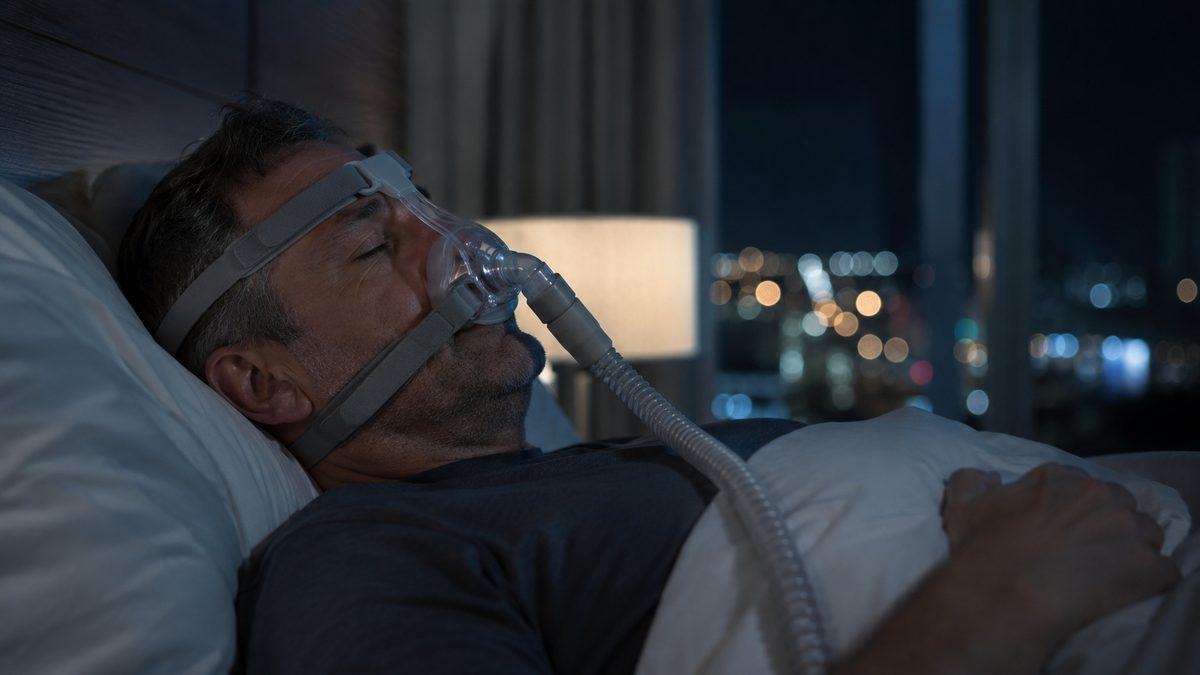
CPAP is typically recommended when your apnea-hypopnea index (AHI) hits 15 or above. That's moderate sleep apnea. If your AHI sits between 5 and 14 but you're exhausted during the day, have high blood pressure, or your oxygen drops below 88% at night, CPAP usually gets recommended anyway.
Severe sleep apnea (an AHI of 30 or more) almost always needs CPAP started quickly. The heart risk is too high to wait.
The AHI tells you how many times per hour your breathing stops or gets dangerously shallow while you sleep. That number drives most treatment decisions, but it's not the only thing that matters.
What Does Your AHI Score Actually Mean?
The AHI scale breaks down like this:
- AHI under 5: Normal. No diagnosis.
- AHI 5 to 14: Mild sleep apnea.
- AHI 15 to 29: Moderate sleep apnea.
- AHI 30 or above: Severe sleep apnea.
Most sleep physicians use these numbers as a starting point, not a final answer. One of my clients came back from her sleep study with an AHI of 11 and felt completely dismissed. Her doctor told her it was mild and sent her home.
But she was falling asleep at red lights. Her oxygen was dipping to 84% repeatedly through the night. She needed CPAP.
The number alone missed the full picture. This is a known problem in sleep medicine. Research confirms that managing sleep apnea based only on AHI is reductive, it misses how the disease changes between people and how differently patients respond to treatment. The number matters. So does everything around it.
How Bad Does Sleep Apnea Have to Be to Get a CPAP Machine?
For most people, the answer is an AHI of 15 or above. At that point, breathing disruptions happen often enough that CPAP becomes the standard first-line treatment, especially because of the cardiovascular consequences that pile up when moderate-to-severe sleep apnea goes untreated.
But there are situations where CPAP gets recommended at lower AHI levels:
- Daytime sleepiness that affects your work, driving, or daily function
- High blood pressure that isn't responding well to medication
- A history of heart disease, stroke, or atrial fibrillation
- Oxygen saturation dropping below 88% for extended periods
- Severe snoring causing relationship or sleep disruption
If your AHI is 5 to 14 and none of those apply, your doctor might try weight loss, positional therapy, or a mandibular advancement device first. Those are reasonable starting points for truly mild, asymptomatic cases.
But if your oxygen crashes below 85% or you're waking up gasping, CPAP should start sooner regardless of your AHI. Oxygen desaturation is a more immediate physical threat than the AHI number alone captures.
What Are 5 Symptoms of Sleep Apnea?
Recognizing sleep apnea before you get a formal diagnosis can push you toward getting tested faster. The five symptoms that show up most consistently are:
- Loud, disruptive snoring, often with pauses where breathing stops entirely
- Waking up gasping or choking, your airway collapses and your brain yanks you awake to restart breathing
- Excessive daytime sleepiness, not just tired, but struggling to stay awake through normal activities
- Morning headaches, caused by the drop in oxygen and rise in carbon dioxide during apnea episodes
- Difficulty concentrating or memory problems, fragmented sleep disrupts the brain's ability to consolidate and process information
I remember one client who came in certain he just needed better sleep hygiene. He was going to bed at 10pm and waking at 6am but still felt wrecked. His wife had moved to the spare room two years earlier because of the snoring.
He had morning headaches almost every day and kept losing his train of thought mid-sentence. His AHI came back at 41. He was in the severe range and had no idea.
These symptoms matter clinically. They can tip the treatment decision toward CPAP even when the AHI sits in a grey zone.
What Is the 4% Rule for Sleep Apnea?
The 4% rule refers to how apnea events are counted during a sleep study. An oxygen desaturation event is recorded when your blood oxygen level drops by 4% or more from baseline during a breathing pause. This is the most commonly used threshold in Australian and American sleep labs when scoring hypopneas (partial breathing reductions, not complete stops).
Why does this matter? Because the 4% rule directly affects your AHI score. Some labs use a 3% desaturation threshold instead, which catches more events and tends to produce a higher AHI.
The same night of sleep, scored differently, can result in different diagnoses and different treatment recommendations. This is one of the things most articles skip entirely.
If you've had a sleep study done and your AHI came back borderline, it's worth asking which scoring criteria were used. A borderline AHI under the 4% rule might be clearly positive under the 3% rule. That can change whether CPAP is on the table.
Once You're on CPAP, What AHI Should You Aim For?
The target on CPAP therapy is a residual AHI below 5 per hour. That's the number your CPAP machine reports after filtering out the events it treated. Modern auto-titrating CPAP devices measure this well, device-reported AHI correlates closely with what a full polysomnography would show.
Long-term CPAP use does reduce AHI and blood pressure in people who use it consistently. But how much benefit you get depends on how severe your apnea was to start and how well you stick with it.
One thing that catches people out is mask type. Oronasal masks (the ones that cover both nose and mouth) can produce higher residual AHI readings compared to nasal masks, even when the pressure settings are identical.
When I worked through this issue with a client whose residual AHI was stubbornly sitting around 9 despite good pressure settings, switching from an oronasal mask to a nasal pillow mask brought it down to 2.8 within a week. Same machine, same pressure, different mask, very different result.
If your residual AHI stays above 5 on CPAP, the first things to check are mouth leak and mask fit before assuming the pressure needs to change.
What Is the New Pill for Sleep Apnea?
Tirzepatide, the GLP-1 receptor agonist used for weight loss and type 2 diabetes, has shown meaningful reductions in AHI in clinical trials for people with obesity-related obstructive sleep apnea. The results have been significant enough that it's generating real interest as an adjunct, or in some cases an alternative, to CPAP in eligible patients.
This is genuinely new territory. For decades, the only real pharmacological approach to sleep apnea was treating the underlying conditions that made it worse. A drug that addresses the anatomical cause, excess soft tissue and fat mass reducing upper airway space, is a different kind of tool.
It's not a replacement for CPAP in most cases right now. It's also not approved specifically for sleep apnea in Australia at the time of writing. But if weight is a driving factor in your sleep apnea and your doctor is managing that alongside your breathing, this is a conversation worth having. Discuss your treatment options with a healthcare provider experienced in sleep apnea management.
What Most Articles Get Wrong About CPAP and AHI
Three things tend to get glossed over or missed entirely.
First: AHI doesn't tell you about oxygen damage. Two people can both have an AHI of 20. One person has brief, shallow hypopneas with minor oxygen dips. The other has full apnea events with oxygen crashing to 78%.
Their AHI is the same. Their actual physiological stress is completely different. The cardiovascular risk, the cognitive impact, the metabolic disruption, they're not the same. The AHI number doesn't capture this.
Second: CPAP compliance matters more than starting it. Getting prescribed CPAP means nothing if the mask is uncomfortable and ends up under the bed. Studies show the benefit from CPAP, including blood pressure reduction, depends heavily on how consistently it's actually used.
Getting the mask fit right from the start, doing a proper titration, and following up if the residual AHI is off are the steps that determine whether CPAP actually works for someone.
Third: mild sleep apnea with the wrong comorbidities is not mild. A person with an AHI of 8, pre-existing heart failure, and nocturnal oxygen desaturation below 88% faces real cardiovascular risk. Their apnea is classified as mild by the numbers, but the clinical picture is not mild. Treatment should reflect the full picture, not just the score.
Frequently Asked Questions
Can you have severe sleep apnea and not know it?
Yes. Some people with AHI scores above 30 sleep through their apnea events without fully waking. Their bed partner notices the pauses and gasping. They just know they feel exhausted and unwell.
This is one reason sleep apnea gets underdiagnosed, the person who has it often can't perceive what's happening while they're unconscious.
Is a home sleep test accurate enough to get a CPAP prescription?
For most adults with straightforward suspected obstructive sleep apnea and no major comorbidities, yes. Home sleep tests are widely used and accepted for diagnosis.
For more complex cases, suspected central sleep apnea, significant cardiac or respiratory disease, or unusual symptom patterns, a full in-lab polysomnography gives more complete data.
Can sleep apnea go away without CPAP?
In some cases, yes. Significant weight loss, alcohol reduction, positional changes, and nasal airway treatment can all reduce AHI. There are people who've reduced their AHI from the moderate range into normal through sustained weight loss.
But for moderate-to-severe sleep apnea, especially with cardiovascular involvement, CPAP remains the most reliable and well-studied intervention.
What happens if you have sleep apnea and don't treat it?
Untreated moderate-to-severe sleep apnea raises the risk of high blood pressure, heart disease, stroke, type 2 diabetes, and cognitive decline. The repeated drops in oxygen and the fragmented sleep create a chronic physiological stress state.
Over years, that accumulates into real cardiovascular damage.
Does CPAP cure sleep apnea or just treat it?
It treats it. CPAP works by keeping your airway open while you sleep using gentle air pressure. When you stop using it, the apnea returns.
It's a management tool, not a cure. Though addressing root causes like obesity or nasal obstruction can sometimes reduce dependence on it over time.
What You Should Do Now
If you're waking up tired, snoring heavily, or your partner has noticed you stop breathing at night, get a sleep study. Don't wait for symptoms to get worse.
Once you have your AHI score, ask your doctor about your oxygen desaturation data alongside the number, not just the headline figure. If you're already on CPAP and your residual AHI is above 5, check your mask fit and rule out mouth leak before anything else. Those two steps fix most compliance problems before they need more complex solutions.
Sources
Continue with the Sleep article archive collection.

What Are 10 Signs That My Body Is Healthy?
Read article →
How to Tell if Your Body Is Unhealthy?
Read article →
What Are Signs of Poor Function Health?
Read article →
What Are Some Weird Signs That My Body Is Healthy?
Read article →
What Are Five Signs That I Might Not Be Healthy?
Read article →