What Qualifications Do I Need for a Homeopath? Your Complete Guide

If you want to practise homeopathy professionally in Australia, you need a recognised qualification from an accredited college, membership with a professional association, and a commitment to ongoing learning. That's the foundation.
Everything else builds on it.
This guide walks you through exactly what that looks like, what the path costs you in time, and what most people get wrong when they start researching this career.
What Is the Qualification for Homeopathy?
The standard entry-level qualification in Australia is an Advanced Diploma of Homeopathy. This is a nationally recognised qualification under the Australian Qualifications Framework (AQF). It sits at AQF Level 6, which puts it on par with an associate degree in terms of depth and rigour. accredited college
Some colleges also offer Bachelor of Health Science degrees with a major in homeopathy. These are three to four year programs and carry more academic weight. If you plan to work alongside other health professionals or want to move into research or teaching later, the degree pathway is worth considering.
The Advanced Diploma takes roughly two to three years full-time. Most students study part-time over three to four years while working.
Core subjects across both qualifications include:
- Homeopathic philosophy and principles
- Materia medica (the study of remedies and their effects)
- Repertory (how to match symptoms to remedies)
- Case taking and analysis
- Human anatomy and physiology
- Pathology and disease processes
- Clinical practice with supervised hours
The supervised clinical component is not optional. You need real case experience before you graduate, and the quality of that training shapes how confident you feel in your first years of practice.
How Do You Become a Homeopath in Australia?
The path has four clear steps.
- Complete an accredited program. Choose a college that is accredited with the Australian Register of Homoeopaths (AROH) or the Australian Homeopathic Association (AHA). Not every college meets this standard. Ask before you enrol.
- Log your clinical hours. Most programs require a minimum of 500 supervised clinical hours. Some require more. These hours are where theory becomes practice, and where most students have their first real breakthroughs in understanding how homeopathy works.
- Join a professional association. AROH and AHA are the two main bodies. Membership signals to clients and other practitioners that you meet professional standards. It also gives you access to continuing education, peer support, and professional indemnity insurance pathways.
- Get professional indemnity insurance. This is not negotiable. You need it before you see clients independently.
There is no government-mandated registration for homeopaths in Australia the way there is for medical doctors or physiotherapists. This is a common point of confusion.
Homeopathy sits within the complementary medicine sector, which is largely self-regulated through professional associations. That means the onus is on you to choose accredited training and maintain membership with a reputable body.
Is a Homeopathic Practitioner a Doctor?
No. In Australia, the title "doctor" is legally protected and reserved for people registered with the Medical Board of Australia. A homeopathic practitioner is not a medical doctor and cannot use that title.
Some homeopaths hold a Bachelor of Health Science or higher, which gives them a strong academic foundation. But that doesn't make them a medical doctor in the legal or clinical sense.
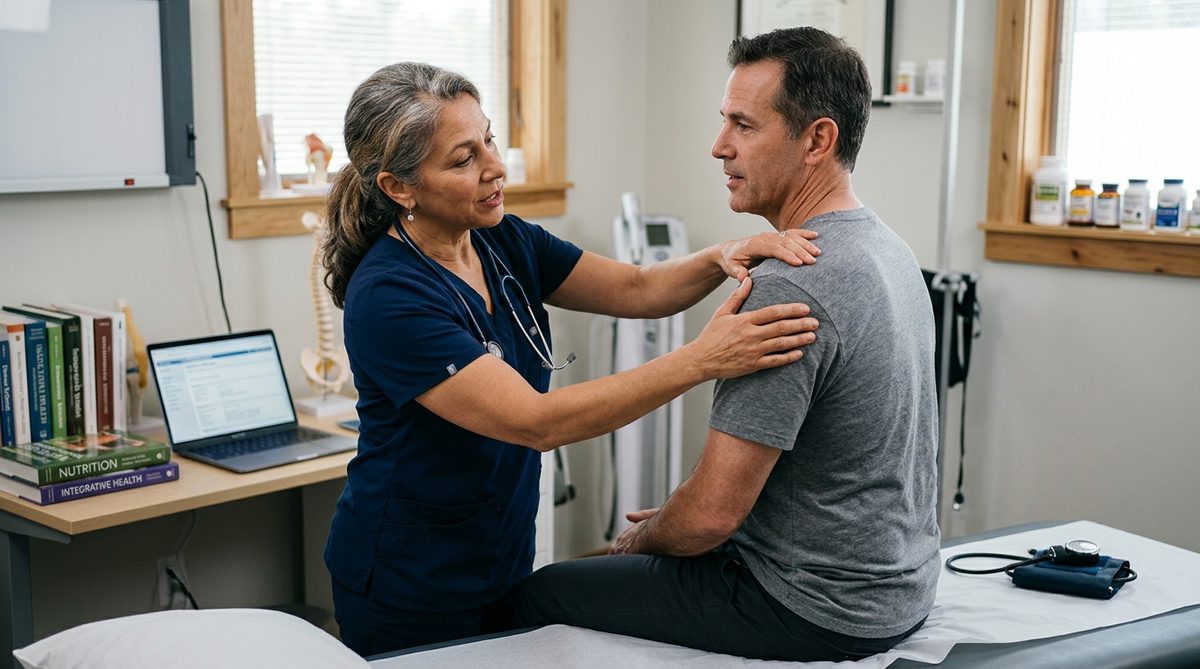
What a qualified homeopath can do is take a detailed case history, analyse symptoms holistically, prescribe homeopathic remedies, and support a client's health over time. Many work alongside GPs, naturopaths, and other practitioners as part of an integrated approach to health.
One of my clients came to me after seeing three different specialists for a chronic skin condition. Each one had addressed a different part of the problem in isolation. What homeopathy offered her was a complete picture. We looked at when the condition started, what made it worse, how she slept, how she handled stress. That whole-person view is what distinguishes homeopathic practice from a purely symptom-focused model.
It's not better or worse than conventional medicine. It's different in approach.
What Skills Make a Good Homeopath?
Technical knowledge of remedies is only part of what makes someone effective in this work. The practitioners I have seen build strong practices share a specific set of skills.
Case taking ability. This is the skill most underestimated by students. Taking a homeopathic case is not an interview. It's a disciplined form of listening where you follow the patient's language, notice what they avoid saying, and build a picture from what emerges. It requires real critical thinking, not just a checklist.
Pattern recognition. Homeopathy requires you to hold many variables in mind at once and find the pattern that fits. This is where the study of materia medica pays off. The more deeply you know your remedies, the faster and more accurately you can match them.
Communication. You're explaining a system of medicine that many clients have never encountered. The ability to make complex ideas simple, without losing accuracy, is essential. If a client doesn't understand what you're doing or why, they won't follow through with treatment.
Ongoing learning. The body of homeopathic knowledge is large and still growing. Practitioners who stop learning after graduation tend to plateau quickly. The ones who keep attending seminars, studying cases, and reading current research stay sharp.
What Most Articles Get Wrong About Homeopathy Training
Here are three things that rarely come up in standard career guides, but matter more than most of what you'll read elsewhere.
The quality gap between colleges is significant. Not all accredited programs are equal. Some have large, well-supervised clinical programs. Others outsource most of their clinical hours to arrangements that give students little real feedback. Before you enrol, ask how many supervised cases you'll complete before graduation, who supervises them, and what the feedback process looks like. I know this because a colleague of mine trained at a college that ticked every box on paper, but her clinical hours were largely unsupervised peer sessions. She spent her first two years in practice feeling underprepared despite having all the right credentials.
The business side is almost never taught. You can graduate with excellent clinical skills and still struggle to build a practice if you have no idea how to attract clients, structure your consultations, handle cancellations, or communicate your fees. Most homeopathy schools teach you how to prescribe. Almost none teach you how to run a small health practice. Budget time and money to fill that gap separately.
Your first three years of practice are still training. The learning that happens in the real world after graduation is different from anything that happens in a classroom. Cases are messier. Clients don't present the way textbook cases do. One of my clients came in with a chief complaint of insomnia, but as the case unfolded it became clear that grief from a loss six years earlier had never been addressed. The remedy that helped her most wasn't the obvious insomnia remedy.
It was the grief remedy. That kind of case is only learned by doing.
What Is the Salary Range for Homeopaths in Australia?
This is a question worth answering honestly rather than optimistically.
Homeopathy in Australia is a private practice profession. There's no Medicare rebate for homeopathic consultations, which means most practitioners run fee-for-service businesses. Income varies widely depending on location, experience, specialisation, and how well you've built your client base.
New graduates typically earn between $30,000 and $50,000 in their first two years while building a practice. Experienced practitioners with an established client base earn between $60,000 and $90,000 annually. Practitioners who specialise, teach, or run group programs can earn more.
The highest earners in homeopathy in Australia tend to combine clinical practice with teaching, online programs, or product lines. A few reach six figures, but this isn't the norm and usually reflects years of practice-building alongside the clinical work.
If income security is your primary concern, homeopathy as a standalone career carries real risk in the early years. Many practitioners work part-time while building their client base, or combine homeopathy with naturopathy or another health qualification to broaden their scope.
Does It Help to Study Naturopathy Too?
Yes, and many Australian practitioners do both. A Bachelor of Health Science in Naturopathy covers nutrition, herbal medicine, and lifestyle medicine alongside homeopathy in some programs. Having both qualifications gives you more tools to work with and a wider potential client base.
The overlap in philosophy between homeopathy and naturopathy is real. Both treat the whole person rather than the isolated symptom. Both work with the idea that the body has an inherent capacity to heal given the right support. The difference is in the tools used and the level of specificity in case analysis.
If you're early in your research, look at colleges that offer combined programs. It can be more efficient than completing two separate qualifications at different times.
Frequently Asked Questions
Do I need a science background to study homeopathy?
No. Most colleges accept students without a science background. You'll study anatomy, physiology, and pathology as part of your program. A genuine interest in health and a capacity for detailed study matters more than prior science qualifications.
Can I study homeopathy online?
Partly. Many colleges offer online theory components, especially since 2020. But clinical training requires in-person work. You can't complete supervised case hours remotely. Check what proportion of any program requires physical attendance before you enrol.
Is homeopathy regulated in Australia?
It's not regulated by the government the way registered health professions are. Professional associations like AROH and AHA provide voluntary self-regulation. This is why choosing an accredited college and maintaining association membership matters for your professional credibility.
How long does it take to become a qualified homeopath?
The Advanced Diploma takes two to three years full-time, or three to four years part-time. A Bachelor degree takes three to four years full-time. Most students study part-time alongside work or family commitments.
Can I specialise in homeopathy for children or animals?
Yes. Post-graduate training in paediatric homeopathy and veterinary homeopathy exists in Australia. These are specialist areas that require your foundational qualification first. Some practitioners build entire practices around one of these niches.
What to Do Next
If you're serious about becoming a homeopath, start here: find two or three AROH or AHA accredited colleges, contact them directly, and ask specifically about their clinical hours program and what supervision looks like. The answer to that question will tell you more about the quality of the training than any marketing material will.
Then sit with a practising homeopath for a session or two as a client. Not to evaluate the medicine, but to understand what the consultation experience actually involves. Knowing what you're working toward before you spend three years training for it is the clearest thinking you can do at this stage.

What Are 10 Signs That My Body Is Healthy?
Read article →
How to Tell if Your Body Is Unhealthy?
Read article →
What Are Signs of Poor Function Health?
Read article →
What Are Some Weird Signs That My Body Is Healthy?
Read article →
What Are Five Signs That I Might Not Be Healthy?
Read article →