What Sleeping Position Worsens Sleep Apnea?
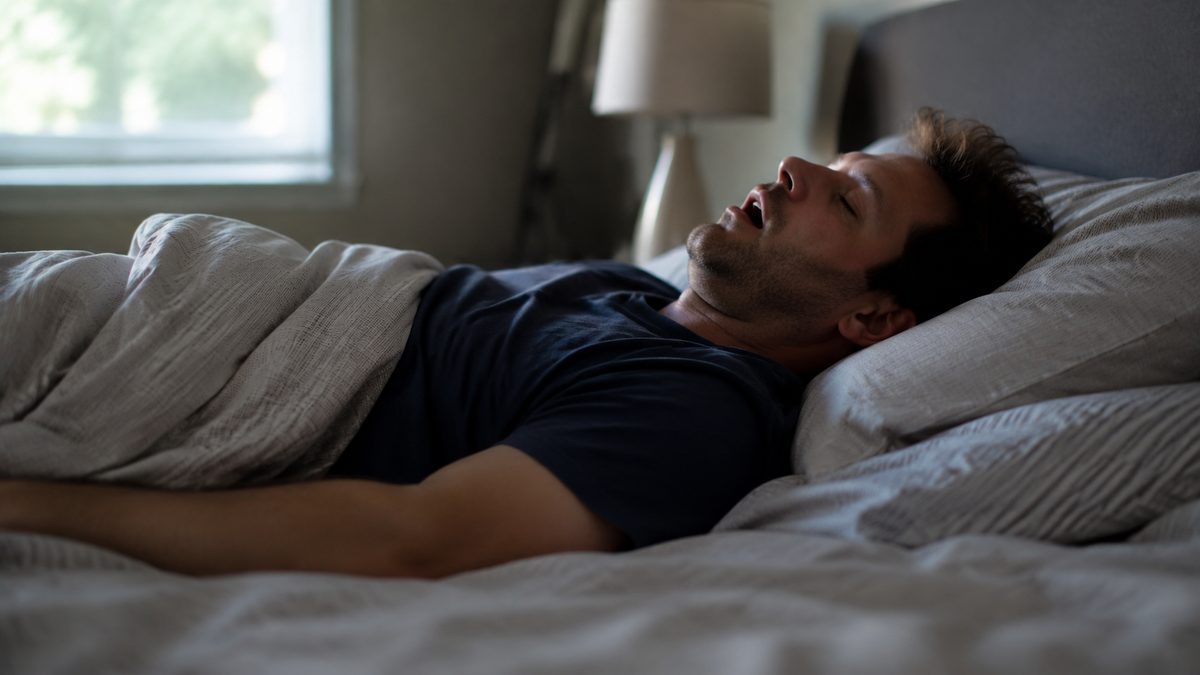
Sleeping flat on your back worsens sleep apnea. When you lie on your back, gravity pulls your tongue down. It pulls your soft palate down too. These tissues block your airway and stop your breathing.
Why does back sleeping block your airway?
During sleep, your muscles relax. In your throat, these muscles hold your airway open. The human throat is soft. It does not have bone to keep it open. When you lie on your back, gravity acts on these relaxed tissues. Your tongue and soft palate fall back. They hit the back wall of your throat. This blocks the air.
When your airway narrows, the air must flow faster. This fast air makes the soft tissues vibrate. That vibration causes snoring. If the airway closes completely, you stop breathing.
When I worked with my client Marcus, he had loud snoring. We did a sleep test. Marcus slept on his back for most of the night. Every time he rolled onto his back, his breathing stopped. His throat closed up. His tongue blocked the air. When he turned onto his side, his snoring stopped. The airway opened. Gravity pulled his tongue to the side instead of down his throat. This is a common issue in clinical medicine.
Is it better to sleep flat or elevated with sleep apnea?
It is better to sleep elevated. Sleeping flat makes sleep apnea worse. When you lie flat, the pull of gravity is strongest on your throat. Your airway collapses easily. Elevating your head and chest changes the angle of gravity. This helps your airway stay open.
When you sleep flat, your abdominal organs push up against your diaphragm. This makes your lungs smaller. Smaller lungs have less outward pull on your airway. This makes the throat tissues more floppy. When you elevate your head and torso, your abdominal organs slide down. Your lungs expand. This expansion pulls on the throat tissues and helps keep them stiff.
In my experience, an elevation of 30 degrees makes a big difference. My client Linda tried this. She had trouble breathing at night. She bought a wedge pillow. This pillow raised her head and upper chest. She noticed an immediate change. She slept through the night. She woke up with more energy. Her body did not have to fight for air. You can also raise the head of your bed. You can place blocks under the bedposts. This tilts the whole bed. It keeps you elevated without using extra pillows.
What is the pillow trick for sleep apnea?
The pillow trick keeps you on your side. You place a long body pillow behind your back. This pillow stops you from rolling onto your back during sleep. You can also place a pillow in front of you. You hug this pillow to keep your body stable.
There are contoured pillows too. These pillows have a hollow center for your head. They have raised edges to support your neck when you sleep on your side. My client David tried a contoured pillow. He found that it stopped his neck pain. It also kept his head tilted back slightly. This tilt helped keep his airway open.
Another option is the tennis ball trick. You sew a tennis ball into the back of your sleep shirt. When you roll onto your back, the ball presses into your skin. This causes mild discomfort. Your body rolls back to the side automatically. You do not even wake up.
My client David tried this trick. He was a lifelong back sleeper. He could not stay on his side. He sewed a tennis ball into his pajama top. It worked. He stayed on his side all night. His wife reported that his loud snoring stopped. His daytime fatigue disappeared.
What is the 4% rule for sleep apnea?
The 4% rule is a standard in clinical medicine. It helps doctors diagnose sleep disorders. During a sleep study, sensors track your blood oxygen. The 4% rule states that a breathing pause must drop your blood oxygen by 4% or more. If it drops this much, it counts as an event.
This drop is called oxygen desaturation. These drops affect your mental states. When your oxygen drops, your brain panics. It wakes you up to breathe. You might not remember waking up. But these brief wakeups ruin your sleep.
In clinical medicine, doctors look at two types of events. One is an apnea. This is a complete stop in breathing for ten seconds or more. The other is a hypopnea. This is a partial block in breathing. To count as a hypopnea, the airflow must drop by at least 30%. This drop must also lead to a decrease in blood oxygen. This is where the 4% rule comes in. Some clinics use a 3% drop. Other clinics use a 4% drop. The 4% rule is stricter. If your oxygen drops by 4%, it shows your body is under stress. This stress affects your determinants of health. It strains your heart. It makes your blood vessels stiff.
My client Arthur had a sleep study. His oxygen levels dropped by 5% many times a night. He met the 4% rule easily. He woke up feeling tired. His brain did not get enough oxygen during the night. This lack of oxygen causes morning brain fog.
How to make your sleep apnea worse?
You can make your sleep apnea worse by making certain choices. Sleeping on your back is the primary way. Drinking alcohol before bed also worsens it. Alcohol relaxes your throat muscles. This makes the airway collapse easily.
Taking sleeping pills has a similar effect. These pills relax your body too much. Your throat muscles lose their tone. Gaining weight also makes sleep apnea worse. Extra tissue around your neck squeezes your airway.
You can also worsen your sleep apnea by sleeping in a room that is too cold and dry. Dry air irritates your nasal passages. This causes swelling. Swollen nasal passages block your nose. This forces you to breathe through your mouth. Mouth breathing worsens sleep apnea. When your mouth opens, your jaw falls back. This pushes your tongue into your throat.
My client Jessica lived in a dry climate. Her sleep apnea got worse in the winter. We added a humidifier to her bedroom. This kept her nasal passages moist. She could breathe through her nose again. Her sleep quality improved.
I remember my client James. He drank beer before bed. His snoring got much worse. His breathing stopped more often. When he stopped drinking alcohol near bedtime, his breathing improved. His throat muscles kept their tone. His airway stayed open.
How does human physiology compare to animal physiology?
Human physiology is different from animal physiology. Most animals do not get sleep apnea. Their throat structure is different. Their voice box sits high in the throat. This position protects their airway.
Humans evolved a lower voice box. This allows us to speak. But it also makes our throat easy to collapse. Why the brain lets these muscles relax during sleep is an unsolved problem. It is one of the unsolved problems in neuroscience. It is also one of the unsolved problems in biology. Our brain stops sending signals to keep the throat open during deep sleep.
In animal physiology, we see that dogs with flat faces can get sleep apnea. Bulldogs, for example, have short airways. Their soft tissue is too crowded. This is similar to humans. But wild animals with long snout physiology do not suffer from this. In clinical medicine, researchers study these differences. They want to find ways to keep the human airway stiff during sleep.
How can you strengthen your throat muscles naturally?
You can strengthen your throat muscles to prevent collapse. When we look at the determinants of health, muscle tone is key. Weak throat muscles collapse easily. Strong throat muscles stay open.
In my practice, I suggest throat exercises. You can slide your tongue backward. You can also hold your tongue against the roof of your mouth. Homeopathy also plays a role. It addresses tissue inflammation. Swollen throat tissue makes the airway smaller. Natural remedies help reduce this swelling.
My client Karen had large tonsils. She had swollen throat tissues. She used natural remedies to reduce the swelling. She also did throat exercises. Her breathing became much quieter. Her airway stayed open during the night.
Frequently Asked Questions
Does sleeping on your side cure sleep apnea?
Side sleeping does not cure sleep apnea. It is a way to manage the symptoms. It uses gravity to keep the airway open. The physical structure of your throat remains the same. You still need to address the root causes of the blockage.
Can you use a tennis ball to stop back sleeping?
Yes. You can sew a tennis ball into the back of your shirt. This is a common method in clinical medicine. The ball causes mild discomfort when you roll over. This forces you to stay on your side.
How does low oxygen affect your brain?
Low oxygen alters your mental states. It causes brain fog. It makes you feel anxious and tired. It also raises your stress hormones. This can lead to high blood pressure over time.
Does alcohol make sleep apnea worse?
Yes. Alcohol relaxes the muscles in your throat. This relaxation makes the airway collapse. Avoid alcohol for four hours before you go to bed.
Why do humans get sleep apnea but animals do not?
Humans have a lower voice box. This allows us to speak. It also creates a floppy area in our throat. Animals have a different airway anatomy. Their throat does not collapse during sleep.
How to improve your sleep posture tonight
You can take action tonight to open your airway. Follow these four steps to improve your sleep.
- Place a firm body pillow along your back. This stops you from rolling over.
- Use a wedge pillow to raise your head by 30 degrees.
- Avoid alcohol for four hours before bedtime. This keeps your throat muscles firm.
- Breathe through your nose. Use nasal strips if your nose is clogged.
Actionable Takeaway
Sew a tennis ball into the back of your pajama shirt tonight to force yourself to sleep on your side and keep your airway open.
Continue with the Sleep article archive collection.

What Are 10 Signs That My Body Is Healthy?
Read article →
How to Tell if Your Body Is Unhealthy?
Read article →
What Are Signs of Poor Function Health?
Read article →
What Are Some Weird Signs That My Body Is Healthy?
Read article →
What Are Five Signs That I Might Not Be Healthy?
Read article →