Which Country Is Best for Homeopathy Treatment? A Practical Guide
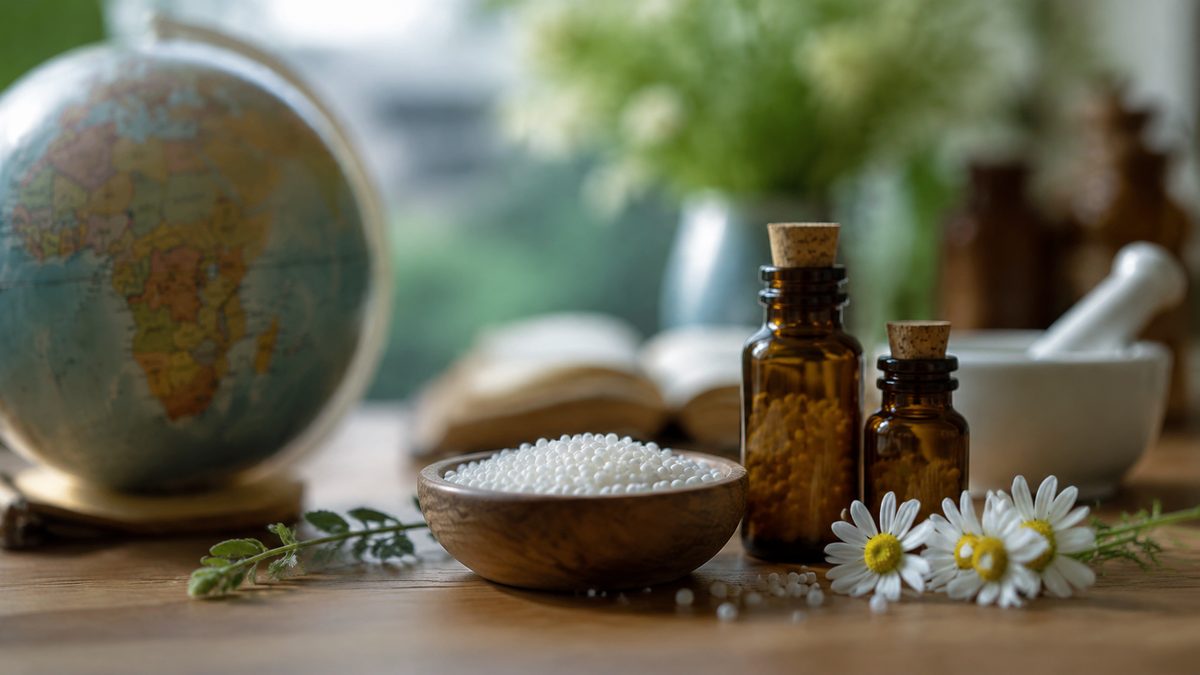
India and Germany lead the field. India has the world's largest number of registered homeopathic practitioners. Germany is where homeopathy started, and its pharmaceutical standards are among the strictest anywhere.
The choice depends on what you need: clinical experience, manufacturing quality, or accessibility.
This article breaks down each major country, what it does well, and what most people get wrong when comparing them.
Which Country Uses the Most Homeopathy?
India uses homeopathy more than any other country. Over 200 million people rely on it as primary care. There are more than 300,000 registered homeopathic doctors working legally under the government system called AYUSH: Ayurveda, Yoga, Unani, Siddha, and Homeopathy.
One of my clients moved from Melbourne to Mumbai for work. She had chronic sinusitis that hadn't responded to three rounds of antibiotics. Her Indian colleague referred her to a local homeopath.
She came back reporting that her symptoms cleared within eight weeks. What surprised her most was the time the doctor spent asking about stress, sleep, and food before prescribing anything.
That's standard in India. The sheer volume of cases Indian homeopaths see gives them a clinical depth that's hard to find anywhere else.
France, Switzerland, and Brazil also have strong homeopathy cultures. In France, the national health system covered homeopathic medicines for decades until 2021. In Brazil, homeopathy is part of public health services and recognized as a medical specialty. acceptance varies a lot by country
Is Homeopathy Accepted Worldwide?
Yes. But acceptance varies a lot by country.
In India, it's a government-regulated medical system with its own universities, hospitals, and licensing bodies. In Germany, licensed medical doctors can specialize in homeopathy. In the UK, homeopathy was available through the National Health Service for over 70 years before funding dropped in 2017.
In Australia, homeopathy sits within complementary medicine. Practitioners operate legally and products are registered with the Therapeutic Goods Administration. The TGA requires all listed homeopathic medicines to meet safety and quality standards before they reach shelves.
I've found that acceptance doesn't always match effectiveness. Some countries with low official acceptance have large populations using homeopathy privately and reporting strong results.
Germany vs India: Which Produces Better Homeopathic Medicine?
This is the most common question I hear. Most articles answer it badly by picking a side without context.
German homeopathic medicines, especially from companies like DHU and Heel, are made under strict pharmaceutical standards. The precision of dilution, quality control, and shelf stability is world-class. If manufacturing consistency matters to you, German medicines are hard to beat.
Indian homeopathic medicines vary more in quality across brands. But top makers like SBL, Schwabe India, and Boiron India produce remedies that meet international standards. India's advantage is repertory depth: Indian practitioners have treated enormous caseloads across diverse populations and have built a clinical knowledge base that reflects this.
I remember one of my clients asking me to compare a German-made Arnica 30C to an Indian-made version for post-surgery bruising. The ingredients are identical by definition since homeopathic potencies are standardized. The difference was packaging, carrier material, and price. She chose the German version for the tamper-evident seal and English labelling. Both would have worked the same way.
The honest answer: German for manufacturing standards, Indian for clinical depth and remedy variety.
Which Is the Best Homeopathic Medicine Company in the World?
Boiron, based in France, is the largest homeopathic pharmaceutical company by revenue and distribution. Their products are sold in over 50 countries and made under strict French pharmaceutical rules. They're known for Oscillococcinum, their flu remedy, and standardised single remedy pellets.
Other companies with strong global reputations:
- DHU (Germany), precise manufacturing, wide remedy range, strong in Europe
- Heel (Germany), known for combination remedies, widely used in integrative medicine
- SBL (India), large range, good quality control, widely available in Asia and Australia
- Schwabe (Germany and India), one of the oldest homeopathic companies, strong presence in both countries
- Nelson's (UK), well-established, used heavily in the UK and Australia
Brand loyalty in homeopathy often comes down to what a practitioner trained with and trusts. A practitioner trained in India often defaults to SBL or Schwabe India. A practitioner trained in Europe may reach for Boiron or DHU first.
What Most Articles Get Wrong About Comparing Countries
1. They confuse access with quality
India has the most homeopaths and the most patients. That's a measure of access and cultural integration, not a guarantee of quality in every clinic. Like any medical system, there are excellent practitioners and poor ones. The volume in India increases the chances of both.
2. They ignore Australia as a serious option
Most comparison articles skip Australia entirely. That's a mistake. Australian practitioners working within the TGA-regulated framework often combine classical homeopathy with a strong understanding of conventional medicine. This matters for complex chronic cases where interactions with pharmaceutical drugs need to be considered.
At HomeopathyPlus in Australia, clients get access to practitioners trained across both systems who can communicate clearly with GPs and specialists. This kind of integrative literacy is often harder to find in countries where homeopathy operates in isolation from conventional medicine.
3. They treat country of origin as a proxy for remedy quality
A 30C potency of Natrum Muriaticum is the same substance whether it was made in Lyon, Mumbai, or Sydney. Manufacturing process, storage, and carrier material can differ. But the active principle doesn't change based on geography.
Choosing a country for treatment purely on where the remedies are made misses the point. The practitioner matters more than the postcode.
What Actually Makes a Country Good for Homeopathy Treatment?
Four things matter most:
- Regulatory framework, Is the practitioner licensed? Are the medicines quality-controlled?
- Clinical volume, How many cases has the practitioner managed? Depth comes from experience.
- Integration with conventional medicine, Can the practitioner liaise with your GP if needed?
- Access and follow-up, Can you get consistent appointments and long-term support?
When I worked through these criteria with a client managing her daughter's recurrent ear infections, she initially wanted to travel to India. But when we looked at it practically, she realized the follow-up problem would undermine everything.
Homeopathy for chronic conditions requires several appointments over months. Flying overseas for each review visit wasn't realistic. She found a practitioner in Australia and got the continuity she needed.
FAQ
Is Indian homeopathy better than German homeopathy?
They're strong in different areas. German homeopathy leads in pharmaceutical manufacturing standards. Indian homeopathy leads in clinical experience and practitioner volume. The remedies themselves, when properly potentised, are equivalent regardless of origin.
Can I get quality homeopathy treatment in Australia?
Yes. HomeopathyPlus operate under TGA regulation, have access to quality international remedy supplies, and often integrate well with conventional medicine. For anyone based in Australia, travelling overseas is rarely necessary.
Is homeopathy legal and regulated in Australia?
Yes. Homeopathic medicines are listed on the Australian Register of Therapeutic Goods. Practitioners operate legally under complementary medicine frameworks. The TGA requires safety and quality standards for all listed products.
Which country has the most homeopathic hospitals?
India. The government-run AYUSH system includes dedicated homeopathic hospitals, clinics, and medical colleges across the country. No other nation comes close in terms of state-funded infrastructure.
Does where a homeopathic remedy is made affect how well it works?
Not in principle. The potency and substance are standardised. Manufacturing quality, storage, and carrier material can vary by brand, which is why choosing a reputable manufacturer matters more than the country of origin.
Is France still a strong country for homeopathy?
France remains home to Boiron, the world's largest homeopathic company. But the removal of national health reimbursement in 2021 has shifted public use. Homeopathy is still legal and widely available privately.
The One Thing to Do Next
Stop searching for the best country. Start looking for the best practitioner you can actually access consistently. Chronic conditions need follow-up. Acute conditions need prompt response.
A skilled practitioner in your own country who can see you regularly will deliver better results than a single consultation in a foreign clinic followed by months of no support.
If you're in Australia, HomeopathyPlus offers consultations with experienced practitioners who work within the Australian regulatory framework and can coordinate with your existing healthcare team. Book a consultation, describe your main concern clearly, and commit to the follow-up appointments. That consistency is where the results come from.

What Are 10 Signs That My Body Is Healthy?
Read article →
How to Tell if Your Body Is Unhealthy?
Read article →
What Are Signs of Poor Function Health?
Read article →
What Are Some Weird Signs That My Body Is Healthy?
Read article →
What Are Five Signs That I Might Not Be Healthy?
Read article →