Who Most Commonly Gets Sleep Apnea? Risk Factors, Warning Signs, and What to Do
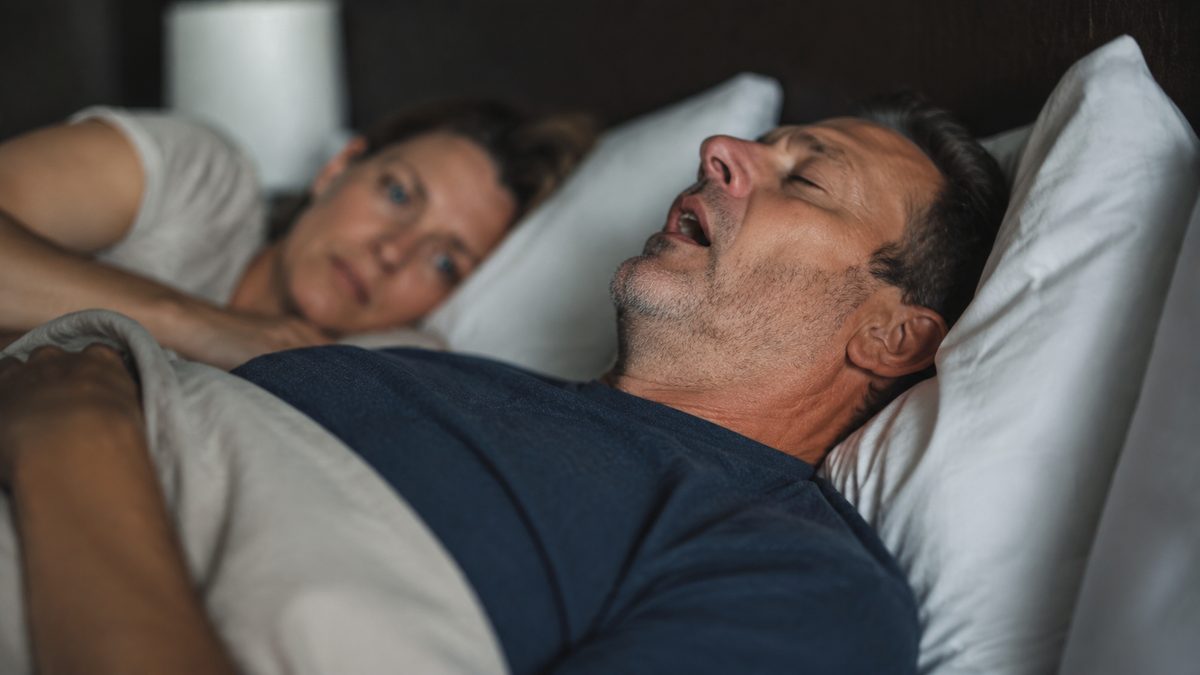
Sleep apnea most commonly affects middle-aged and older men, people with obesity, and anyone over 50. About 1 in 4 middle-aged men has at least mild obstructive sleep apnea, and roughly 1 in 8 has moderate-to-severe disease.
Women have lower rates before menopause, but that changes sharply after it. Postmenopausal women carry nearly double the risk of premenopausal women, approaching male rates. After age 65, both sexes carry substantial risk.
Globally, around one billion adults live with sleep apnea. Most of them have no idea.
If you're male, over 50, carrying extra weight, or managing high blood pressure, heart disease, or type 2 diabetes, your risk is real. If you're a woman with persistent fatigue or poor sleep that doesn't respond to treatment, especially after menopause, sleep apnea may be what no one has checked for yet.
Who Is Most Prone to Sleep Apnea?
The highest-risk group is middle-aged men with obesity. The Wisconsin Sleep Cohort Study, one of the most cited studies in sleep medicine, found that 24% of middle-aged men and 9% of women had five or more breathing interruptions per hour during sleep.
When researchers looked at moderate-to-severe disease with daytime symptoms, 4% of men and 2% of women qualified. More recent data, accounting for rising obesity rates, puts moderate-to-severe sleep apnea at around 13% of men and 6% of women aged 30 to 70.
Age accelerates risk fast. In elderly populations, up to 90% of men and 78% of women show measurable sleep-disordered breathing when tested. That number climbs because airway muscles weaken with age, fat redistributes around the throat, and other health conditions compound the problem.
Obesity is the single biggest modifiable driver. Over half of people diagnosed with obstructive sleep apnea have a body mass index above 30. Extra fat around the neck and throat literally narrows the airway. As obesity rates have risen globally, sleep apnea rates have followed in lockstep.
Beyond sex, age, and weight, certain medical populations carry rates that exceed 50%:
- People with high blood pressure
- People with coronary artery disease
- People with type 2 diabetes or metabolic syndrome
- People preparing for bariatric surgery
- People with a family history of sleep apnea
Family history is an independent risk factor, separate from weight. If a parent or sibling has sleep apnea, your airway anatomy and the way your brain regulates breathing during sleep may already put you at higher risk.
Why Do Men Get Sleep Apnea More Often Than Women?
Men tend to carry more fat around the neck and upper airway. They also have longer, more collapsible airways. Testosterone appears to reduce the stability of upper airway muscles during sleep, while progesterone in premenopausal women may offer some protective effect.
In my experience reviewing cases, the male pattern is easier to spot: loud snoring, witnessed pauses in breathing, waking up gasping, and heavy daytime sleepiness. One of my clients described his wife shaking him awake several times a night convinced he had stopped breathing. That's the classic pattern, and it tends to get referred for testing quickly.
Women's presentations are often quieter and more easily missed. Rather than snoring and gasping, women more commonly report insomnia, fatigue that doesn't improve with more sleep, low mood, and waking repeatedly through the night. These symptoms overlap with anxiety, depression, and thyroid problems, so sleep apnea often gets missed for years.
Here's one of the most important things most articles get wrong: sleep apnea is not a male disease. It's a disease that looks different in women, and healthcare systems have been slow to catch up to that fact.
What Is the #1 Cause of Sleep Apnea?
Obesity is the leading cause of obstructive sleep apnea. It works through a simple mechanical pathway: fat accumulates around the throat and narrows the upper airway. During sleep, muscle tone drops across the body, including in the airway.
In people with a narrow airway from excess tissue, that drop in tone is enough to cause partial or complete obstruction. Breathing stops. The brain sends an alarm signal. The person rouses just enough to reopen the airway, then falls back asleep. This can happen dozens or hundreds of times per night without the person ever fully waking or remembering it.
But anatomy isn't the whole story. The brain's control of breathing during sleep also matters. Some people have airways that collapse easily; others have brains that are slow to respond to falling oxygen levels. Most people with sleep apnea have some mix of both.
Age weakens airway muscles and changes how fat is distributed around the body, both of which raise risk. Alcohol and sedatives relax airway muscles further, worsening apnea in people who already have it. Nasal congestion from allergies or a deviated septum forces mouth breathing, which destabilizes the airway further.
What Happens to Women After Menopause?
This is where sleep apnea in women is most underestimated. Before menopause, women have roughly half the sleep apnea rate of men. After menopause, that gap closes dramatically.
Postmenopausal women have approximately double the prevalence of premenopausal women, with rates approaching those seen in men of the same age. The loss of progesterone and estrogen removes what appears to be a protective effect on upper airway muscle tone and respiratory drive. Women also gain weight around the abdomen and neck after menopause, adding mechanical pressure on the airway.
I remember when one of my clients, a 56-year-old woman, came in reporting she hadn't slept properly in three years. She had been through perimenopause, was on HRT, and had tried multiple sleep aids. No one had screened her for sleep apnea because she didn't snore, and her husband slept in another room.
When she finally had a sleep study, her AHI was 22, well into the moderate range. Three months into treatment, she said it was like someone had turned the lights back on.
If you're a postmenopausal woman with fatigue, unrefreshing sleep, or mood changes that aren't responding to treatment, sleep apnea belongs on the list of things to rule out.
What Is the 4% Rule for Sleep Apnea?
The 4% rule refers to how sleep apnea is measured and diagnosed. During a sleep study, sensors track your blood oxygen levels throughout the night. An oxygen desaturation index, or ODI, counts how many times per hour your blood oxygen drops by 4% or more from its baseline.
When this happens repeatedly, it signals that breathing is being interrupted enough to reduce oxygen delivery to your brain and body. This 4% threshold is used because it distinguishes true breathing events from normal minor fluctuations in oxygen.
A high ODI at the 4% threshold correlates strongly with the apnea-hypopnea index, the main diagnostic measure, and is often used in home sleep testing devices as a simpler way to flag significant sleep-disordered breathing.
In practical terms: if your oxygen drops 4% or more 15 times an hour, that's moderate sleep apnea. At 30 or more events per hour, it's severe. Many people are surprised by how often this happens without them knowing, because the micro-arousals that reopen the airway are too brief to register as full waking.
What Is the Japanese Trick for Sleep Apnea?
The phrase circulating online refers to mouth taping during sleep, a practice that has gained attention in Japan and elsewhere as a way to encourage nasal breathing and reduce mild sleep apnea symptoms. The idea is simple: breathing through the nose filters, humidifies, and slows airflow compared to mouth breathing, which can destabilize the airway.
Some small studies suggest that encouraging nasal breathing reduces snoring and mild apnea events in people whose primary issue is mouth breathing. Myofunctional therapy, which involves exercises to strengthen the tongue and throat muscles, has shown more consistent evidence and is used across many countries including Japan as a complement to other treatments.
Here's what happened to my clients who tried mouth taping without a proper diagnosis first: for some with very mild snoring, it helped them feel more rested. For those with actual moderate-to-severe sleep apnea, it changed nothing meaningful.
The mechanism of obstructive sleep apnea goes well beyond mouth breathing. Mouth taping doesn't replace a sleep study or CPAP therapy for anyone with a real diagnosis. Use these approaches as additions to proper care, not replacements for it.
What Are the Warning Signs You Should Not Ignore?
The classic signs in men are loud snoring, choking or gasping during sleep (reported by a partner), and waking up feeling unrefreshed no matter how many hours you slept. Heavy daytime sleepiness, falling asleep at the wheel or during quiet activities, morning headaches, and difficulty concentrating round out the picture.
In women, the warning signs skew differently. Insomnia, frequent night waking, fatigue that persists despite adequate sleep time, low mood, and anxiety are more common presentations than snoring. Women with these symptoms, particularly after menopause, often cycle through multiple diagnoses before anyone checks for sleep apnea.
In both sexes, high blood pressure that is difficult to control is a red flag. Untreated sleep apnea causes repeated spikes in blood pressure through the night, and it's one of the most common reversible causes of resistant hypertension. If your blood pressure is hard to manage and you haven't been screened for sleep apnea, that's worth raising with your doctor.
What Most Articles Miss About Sleep Apnea Risk
Three things rarely appear in standard coverage of this topic.
First, lean people get sleep apnea too. Anatomy matters as much as weight. A naturally narrow jaw, large tonsils, or a recessed chin can create an airway that collapses easily during sleep regardless of body size.
When I tried to explain this to a client who was fit and slim and kept being dismissed because he didn't fit the stereotype, he said it was the first time a practitioner had taken his symptoms seriously. His sleep study showed an AHI of 18.
Second, the connection to metabolic health runs both ways. Obesity raises sleep apnea risk, but sleep apnea also worsens insulin resistance, promotes weight gain through hormonal disruption, and makes type 2 diabetes harder to manage. Treating sleep apnea without addressing metabolic health, or treating metabolic health while missing sleep apnea, leaves half the problem unsolved.
Third, sleep apnea in children is missed far more often than most people realize. Enlarged tonsils and adenoids are the main cause in children, and the symptoms look nothing like adult sleep apnea: behavioral problems, hyperactivity, poor concentration, and bedwetting are more typical than snoring. Children diagnosed with ADHD should be screened for sleep apnea before or alongside any other assessment, because the overlap in symptoms is significant.
Frequently Asked Questions
Does sleep apnea go away on its own?
Rarely. In cases driven purely by obesity, significant weight loss can reduce or resolve it. In most people, it persists or worsens without treatment. The airway anatomy and brain signaling patterns that drive it don't self-correct.
Can thin people have sleep apnea?
Yes. Jaw structure, neck anatomy, tonsil size, and the brain's respiratory control all contribute. About 30 to 40% of people with sleep apnea aren't obese.
Is sleep apnea genetic?
Partially. Family history is an independent risk factor. The inherited traits involved include facial anatomy, airway size, and how the brain responds to low oxygen during sleep.
What happens if sleep apnea goes untreated?
Untreated sleep apnea significantly raises the risk of high blood pressure, heart attack, stroke, type 2 diabetes, motor vehicle accidents, and premature death.
Can a homeopathic or natural approach help with sleep apnea?
Supportive approaches, including addressing inflammation, managing weight, improving nasal breathing, and supporting nervous system regulation, can reduce severity and complement conventional treatment. They work best alongside, not instead of, a proper diagnosis. If you want to explore a whole-person approach to sleep and related health concerns, a practitioner who looks at the full picture can help identify what's driving your symptoms. A whole-person approach to sleep apnea integrates medical treatment with lifestyle support.
What to Do Now
If you're male, over 50, or carrying extra weight, ask your doctor for a sleep study. You don't need to be falling asleep at the wheel to qualify. Unrefreshing sleep and morning fatigue are enough.
If you're a postmenopausal woman with persistent fatigue, insomnia, or mood changes that aren't responding to treatment, put sleep apnea on your list and push for a referral. The standard symptom picture used to screen for sleep apnea was built on male data, and it misses women regularly.
If you have high blood pressure, heart disease, or type 2 diabetes, ask specifically about sleep apnea screening. These conditions travel together, and treating one without addressing the other limits how much improvement you'll see.
A home sleep test is now widely available and far less disruptive than an overnight lab study. There's no good reason to wait.
Sources

What Are 10 Signs That My Body Is Healthy?
Read article →
How to Tell if Your Body Is Unhealthy?
Read article →
What Are Signs of Poor Function Health?
Read article →
What Are Some Weird Signs That My Body Is Healthy?
Read article →
What Are Five Signs That I Might Not Be Healthy?
Read article →