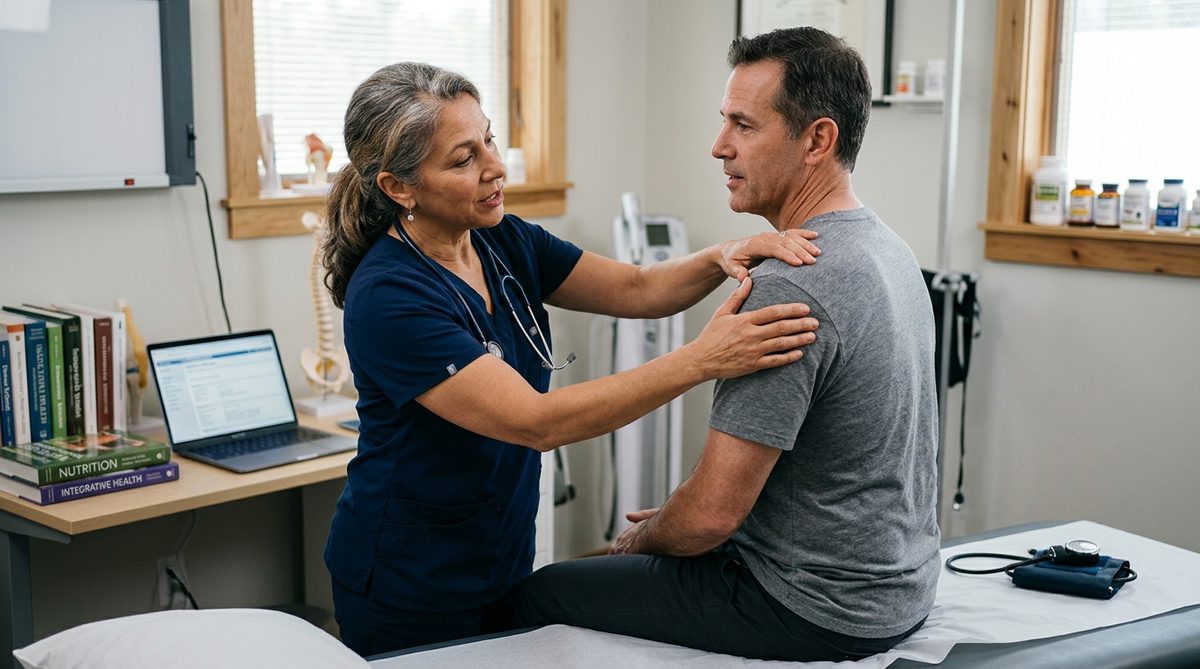
Whose framework provides the foundation for nursing assessment and diagnosis using the 11 functional health patterns?

Marjory Gordon's framework provides the foundation for nursing assessment and diagnosis using the 11 functional health patterns. Gordon created the model to help nurses gather and organise health details in the same clear way. It looks at how a person manages daily life, not just a disease, symptom, or body system.
The name matters because this nursing framework has a clear job. It supports clinical thinking and nursing diagnosis. It doesn't replace a physical exam, pathology testing, a Medical diagnosis, or urgent care. Learn more about functional health assessment approaches and their clinical application.
Getting the source right helps students explain the model clearly. It also helps nurses use it within the right limits.
Why does Marjory Gordon receive credit for the framework?
Marjory Gordon was a nurse theorist, teacher, author, and leader in nursing diagnosis. She created the functional health pattern approach to sort assessment findings into common parts of human function. Her work gave nurses a shared way to turn a flood of patient details into useful clinical patterns.
Before making a nursing diagnosis, a nurse needs to know what the person can do, what has changed, and how that change affects daily life. A symptom list rarely tells the whole story. Gordon's functional health patterns give the assessment a clear path.
Nursing organisations sometimes get credit for the framework because it appears in textbooks, assessment forms, and diagnosis guides. Those groups may support its use, but they didn't create it. The framework comes from Gordon's work.
Spelling causes mistakes too. Her first name is Marjory, with an o, not Marjorie. A clear academic answer should name Marjory Gordon and call the model a nursing assessment framework that supports nursing diagnosis.
What does it mean to call the model a foundation?
A foundation shapes the work built on top of it. Here, the framework guides what a nurse asks, sees, checks, and records. It then helps the nurse compare findings and spot links between them.
The framework isn't a script that spits out a diagnosis. Think of it as a map. The map shows areas that need attention, but the nurse still chooses where to look closer.
Clinical skill matters. Two people may give similar answers and still need very different care.
Poor sleep, for example, may look like a problem on its own. A closer check might show that pain wakes the person, less movement has affected work, and worry is changing food intake. Now the findings form a connected pattern.
The nurse can then decide which responses fit nursing care and which ones need another health professional's review.
That's why the word functional matters. The nurse looks at how the person feels and manages their health. A test result may explain one body part, while the framework shows what it means for the person's activity, comfort, relationships, safety, and ability to care for themselves.
How did the framework change the way nurses gather information?
The model moved assessment away from a loose pile of facts. It gave nurses a repeatable way to gather Data from across the person's life and health. That lowers the chance of chasing the first symptom while missing a linked concern.
Picture a patient admitted after several falls. Recording the falls is vital, but it doesn't explain why they happened. A structured assessment may find poor vision, broken sleep, low food intake, dizziness after medication, fear of walking, or trouble reaching the bathroom.
Every finding changes how the nurse views the risk.
The best assessments move from broad questions to focused checks. A nurse may begin by asking what has changed at home. The reply can lead to questions about timing, severity, triggers, and the effect on daily tasks.
Observations and clinical records can then back up or challenge what the person said.
What I found was that a pattern only becomes useful when the nurse ties it to function. Writing “sleep poor” says very little. Recording that the person wakes five times due to breathlessness, sleeps in a chair, and feels too tired to make meals gives the care team something real to assess and act on.
Why is a nursing diagnosis different from a Medical diagnosis?
A Medical diagnosis names a disease, injury, or pathological condition. A nursing diagnosis describes how a person responds to health, illness, treatment, risk, or a life change. Both can exist at once, but they answer different clinical questions.
A doctor may diagnose pneumonia. A nurse may find linked problems with breathing, activity tolerance, sleep, or managing care at home. The medical label guides disease treatment.
Nursing diagnoses shape bedside care, teaching, support, and monitoring.
Gordon's framework doesn't give nurses the power to diagnose a disease. It helps them spot findings that call for nursing action or referral. Chest pressure, sudden weakness, severe breathing trouble, confusion, or rapid decline need urgent clinical review.
Putting these findings into an assessment form must never slow down escalation.
This difference is often missed in short study answers. The functional patterns support nursing assessment and diagnostic thinking. They don't replace medical assessment, lab work, imaging, or specialist review.
How should nurses use the framework without turning it into a checklist?
A checklist asks if someone ticked a box. A good assessment asks whether the nurse understands the person's situation well enough to make a safe choice. Each pattern may need a quick screen, but deeper questions should follow the person's needs.
One patient may need detailed questions about pain, movement, sleep, and support at home. Another may need more focus on treatment knowledge, medicine use, food access, or coping. Asking every possible question can wear the person out and bury urgent facts under routine notes.
A useful approach is to:
- Start with the person's main concern and immediate safety needs.
- Screen broadly for changes in function.
- Follow important answers with specific questions.
- Compare reported information with observations and records.
- Group related cues before selecting a nursing diagnosis.
- Refer findings that fall outside nursing scope.
One of my clients called an assessment “a long interview where nobody asked what mattered.” The framework wasn't the problem. The form had taken over the conversation.
A better interviewer would hear the main concern, check urgent risks, and use the framework to fill in missing context.
The person's own words need care as well. A label like “non-compliant” can hide cost, side effects, weak instructions, cultural concerns, memory problems, or a treatment plan that doesn't fit daily life. Gordon's model works best when it opens the door to more questions instead of shutting it.
What mistakes weaken an answer about the framework?
The first mistake is naming the wrong source. Nursing taxonomies, professional groups, and textbook authors may teach or build on diagnostic practice, but the functional health pattern framework belongs to Marjory Gordon.
The second mistake is treating the patterns as diagnoses. They're assessment categories. The nurse gathers findings within and across them, then uses clinical thinking and accepted diagnostic standards.
Another mistake is thinking each finding fits neatly into one area. Human function overlaps. Pain can affect movement, sleep, appetite, mood, focus, work, and relationships.
The nurse should record the clearest evidence and link related effects without copying the same line across the whole assessment.
One more error is giving the framework too much power. It can help organise details, but it can't prove that they are true or complete. Patients may forget things, and records may be old.
Language barriers can change meaning. Observations can also be wrong. Nurses must check major findings when safe care rests on them.
Why does context matter when interpreting the Data?
Health details get meaning from timing, setting, personal goals, and usual function. Five hours of sleep may be normal for one adult and a steep drop for another. Help with meals may be needed because of short-term pain, a long-term disability, low income, or poor access to food.
Culture and personal beliefs may shape how someone talks about illness, family roles, treatment, and self-care. The nurse should ask what an answer means to that person. Assumptions can turn a helpful framework into a source of mistakes.
Context also guards against false confidence. A person may say they take medicine as directed but have read the label wrong. Someone else may seem withdrawn because they're in pain, can't hear the questions, or need an interpreter.
Each cause needs a different response.
There's a wider lesson here for anyone checking health claims, including claims about complementary care. A structured history may help people explain symptoms and their effects on daily life, but it can't prove that a product caused an improvement or decline. Serious, new, or worsening symptoms need assessment by a properly qualified health professional.
How can students give a precise answer in an exam or assignment?
Start with the creator and the purpose. Say that Marjory Gordon developed the functional health pattern framework to organise nursing assessment findings and support nursing diagnosis. That wording names the person, the framework, and its correct clinical role.
Then explain that the model sorts details about the person's responses and daily function. If the task needs more detail, explain how nursing diagnosis differs from Medical diagnosis. Also say that clinical thinking is still needed to check assessment findings.
If the assignment needs a source, citations should lead to Gordon's original work or an authoritative nursing reference. A study guide can jog your memory, but it's weaker evidence than the original author or a recognised nursing source. Check the required citation style and edition before you submit.
Don't pad the answer with a full rundown of every pattern unless the task asks for it. Authorship and purpose are the key points here. A tight answer shows more understanding than a long list that never explains how assessment supports diagnosis.
What should you remember when applying the answer?
Remember the limit as clearly as the name: Marjory Gordon created the framework, and nurses use it to organise assessment Data that may support nursing diagnosis. The framework guides questions and checks. It doesn't make an automatic choice, establish a Medical diagnosis, or replace referral.
Actionable takeaway: Name Marjory Gordon as the model's creator, then use Gordon's functional health patterns to gather and connect evidence before making any nursing judgement.
Common questions
Who authored the framework that provides the foundation for nursing assessment and diagnosis using functional health patterns?
Nursing theorist Marjory Gordon created the Functional Health Patterns framework. Nurses use it to assess patients and identify health needs.
What are the 11 functional health patterns in Gordon's model?
The 11 functional health patterns are health management, nutrition, elimination, activity, sleep, thinking and sensing, self-view, roles and relationships, sexuality, coping, and values and beliefs. Together, they give nurses a full picture of a person's health and daily life.
Can you provide some sample questions and answers for Gordon's 11 Functional health pattern test?
Sample questions include, “How do you manage your health?” with “I take my medicine daily,” and “How well do you sleep?” with “I sleep about seven hours.” Other examples are, “What do you usually eat?” with “I eat three balanced meals,” and “How do you handle stress?” with “I talk to my family.”
What is Gordon's approach in nursing?
Gordon's approach organizes a nursing assessment into 11 areas of health and daily living. It helps nurses collect complete information, find problems, and plan care for each patient.

What Are 10 Signs That My Body Is Healthy?
Read article →
How to Tell if Your Body Is Unhealthy?
Read article →
What Are Signs of Poor Function Health?
Read article →
What Are Some Weird Signs That My Body Is Healthy?
Read article →
What Are Five Signs That I Might Not Be Healthy?
Read article →