Why Did I Suddenly Develop Sleep Apnea? Real Causes and What to Do
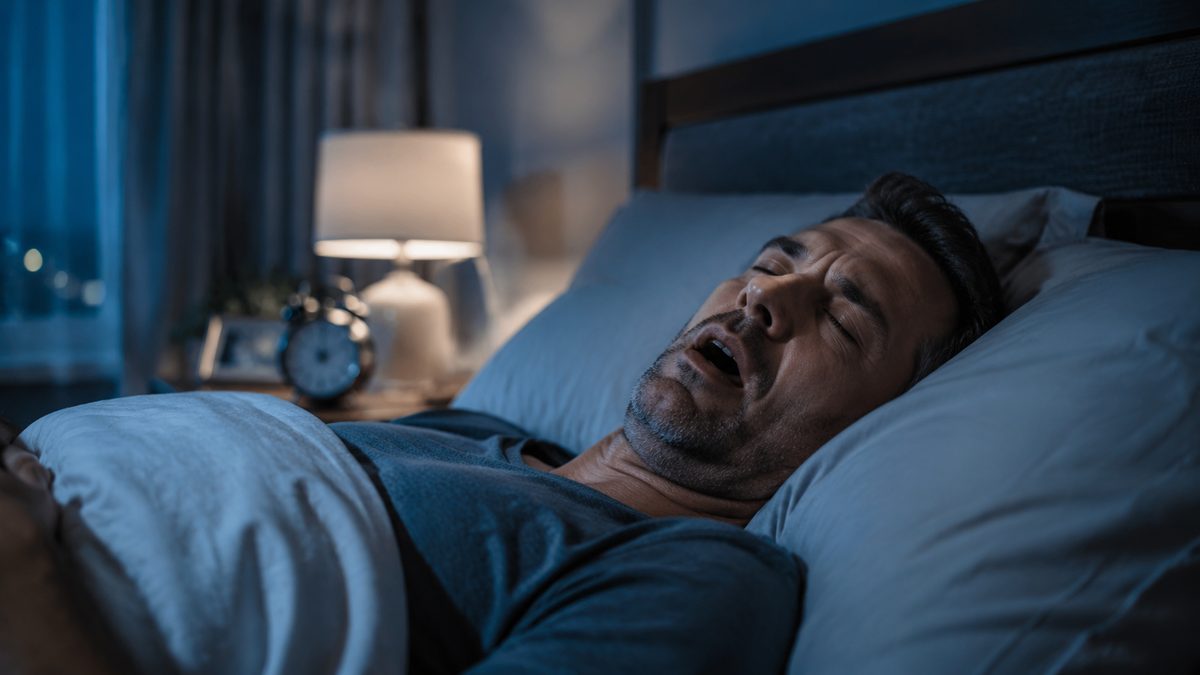
Sleep apnea that appears overnight almost always has a trigger. In most cases, it's not truly sudden, your airway was already vulnerable, and something finally pushed it past the threshold. That trigger is usually weight gain, a hormonal shift, a new medication, or a cardiovascular change.
The good news: identifiable triggers mean there are things you can actually fix.
If you've started waking up gasping, your partner is reporting that you stop breathing in your sleep, or you feel wrecked no matter how many hours you get, that's the pattern. Here's what's likely behind it.
What Does "Suddenly Develop Sleep Apnea" Actually Mean?
Your airway doesn't collapse overnight for no reason. Obstructive sleep apnea (OSA) happens when the soft tissues at the back of your throat relax during sleep and block airflow. Most people who develop it suddenly were already close to the edge, a narrower-than-average airway, a genetic tendency toward fat storage in the neck, or mild muscle tone loss that hadn't yet caused symptoms.
Then something tipped them over. One of my clients described it well: she went on a medication for anxiety, gained about 12 pounds over three months, and suddenly her husband couldn't sleep in the same room. Nothing had changed for years, then everything changed at once. That's the tipping point in action.
Central sleep apnea is different. It happens when the brain fails to send the right signals to your breathing muscles, and it's more often linked to heart failure or neurological conditions. Most people asking this question have obstructive sleep apnea, so that's the focus here.
What Are the Most Common Triggers?
Weight Gain
This is the single most common reason. Even 10 to 15 pounds of weight gain can convert borderline anatomy into clinically significant airway collapse. Fat deposits in the pharyngeal tissues physically narrow the airway.
Added abdominal weight reduces how much your lungs can expand, which means the airway has less structural support during sleep. More weight, more risk. Roughly 34% of middle-aged men and 17% of women already meet diagnostic criteria for OSA, with numbers rising steeply as BMI increases.
If you've gained weight recently and your sleep changed around the same time, that's not a coincidence.
Hormonal Changes
Menopause is one of the most underdiagnosed triggers in women. Estrogen and progesterone help maintain upper airway muscle tone. When they drop, that protection goes with them. Women who had no sleep apnea before menopause can develop it within months of the transition.
In men, declining testosterone contributes to fat redistribution toward the abdomen and neck, and may reduce the drive to keep upper airway muscles active during sleep. I've seen this pattern repeatedly in men in their late forties who swear they've always been good sleepers.
New Medications
Benzodiazepines, opioids, muscle relaxants, and even some antihistamines relax the muscles that keep your airway open. If you started a new medication and your sleep deteriorated around the same time, bring that up with your doctor.
Alcohol does the same thing. It's essentially a short-acting sedative that relaxes pharyngeal muscles for the first few hours of sleep.
Cardiovascular Changes
OSA prevalence reaches 40 to 80% in people with hypertension, heart failure, atrial fibrillation, coronary artery disease, and stroke. That's not a small overlap, it's a bidirectional relationship. Heart failure can directly trigger central sleep apnea through changes in how the body regulates breathing. New or worsening hypertension is both a cause and a consequence.
If your doctor recently flagged high blood pressure for the first time, ask about sleep apnea screening explicitly.
Nasal Obstruction
Worsening seasonal allergies, a deviated septum, nasal polyps, anything that forces you to breathe through your mouth at night destabilizes the airway. Mouth breathing changes the pressure dynamics in the throat and makes collapse more likely.
Why Am I Suddenly Having Sleep Apnea at This Age?
Sleep apnea can develop at any age, but onset peaks in middle age. The American Academy of Sleep Medicine data shows prevalence rising sharply through the 40s and 50s for both men and women. Muscle tone in the pharynx decreases with age, fat distribution shifts, and hormonal protection fades, all of which narrow the margin for error in your airway.
Younger adults can develop it too, usually from tonsil and adenoid enlargement, a structurally narrow jaw, or rapid weight gain. One of my clients was 26 when she was diagnosed, and her main trigger was a 20-pound weight gain during a stressful period at work combined with a jaw structure that was always a little cramped.
There's no safe age bracket. If the symptoms are there, age doesn't disqualify you.
What Could Be Mistaken for Sleep Apnea?
Several conditions produce similar symptoms and are worth ruling out.
- Upper airway resistance syndrome (UARS): Breathing is restricted but not fully blocked. AHI scores look normal, but sleep is still fragmented. People feel exhausted and often get missed in standard screening.
- Insomnia with sleep fragmentation: Frequent waking without the airway component. Fatigue patterns can overlap heavily.
- Hypothyroidism: Causes fatigue, weight gain, and can actually contribute to sleep apnea by reducing upper airway muscle tone. Sometimes treating the thyroid resolves or reduces OSA.
- Periodic limb movement disorder: Repetitive leg movements during sleep that fragment rest. Partners notice movement, not gasping.
- Narcolepsy: Excessive daytime sleepiness is the overlap. But narcolepsy involves cataplexy and sleep attacks, not nighttime breathing events.
- Acid reflux (GERD): Can cause nighttime waking, throat clearing, and choking sensations that mimic apnea events.
A proper sleep study, either a home sleep apnea test or an in-lab polysomnography, is the only way to confirm which of these you're actually dealing with.
What's the 4% Rule for Sleep Apnea?
The 4% rule refers to how apnea and hypopnea events are scored during a sleep study. A hypopnea (partial airway restriction) counts toward your apnea-hypopnea index (AHI) when it causes a 4% or greater drop in blood oxygen saturation. Some scoring systems use a 3% threshold, which catches more events and results in higher AHI scores for the same night of sleep.
Why does this matter? The threshold used can change whether you're diagnosed at all, or whether your OSA is classified as mild, moderate, or severe. If you've had a sleep study done at one lab and then another, the numbers might differ based on which threshold they applied.
More importantly, research shows that oxygen desaturation severity, not just your AHI score, drives the real downstream risks. Hypoxemia is what damages the heart, brain, and vascular system. A person with a moderate AHI but deep oxygen drops may face more risk than someone with a higher AHI but shallower drops.
What Most Articles Get Wrong About Sudden Sleep Apnea
Three things come up in my experience that don't get enough attention.
First: Weight is treated as the only story. It's the most common trigger, yes, but I've worked with people who had no meaningful weight change and still developed OSA after starting a new blood pressure medication or going through menopause. If you're not overweight, that doesn't mean your symptoms aren't real or that the cause isn't findable.
Second: The cardiovascular connection is underplayed in general health content. OSA doesn't just result from cardiovascular disease, it actively accelerates it. Intermittent oxygen drops cause endothelial dysfunction, ramp up sympathetic nervous system activity, and promote systemic inflammation that damages arteries and promotes clotting. Untreated OSA and heart disease feed each other.
If you have resistant hypertension or atrial fibrillation that's hard to control, undiagnosed OSA may be part of why.
Third: People wait too long. The average time between first symptoms and diagnosis is several years. That gap matters, because every year of untreated moderate-to-severe OSA is time spent with intermittent hypoxia cycling through your cardiovascular and nervous system.
How Serious Is This? When Do You Actually Need to Act Fast?
If you're experiencing choking or gasping awakenings, witnessed apneas (someone watched you stop breathing), severe daytime sleepiness that affects your driving or work, or oxygen saturation drops you've picked up on a pulse oximeter, get evaluated within days, not weeks.
For milder symptoms, heavier snoring, feeling less rested, morning headaches, a few weeks to arrange testing is reasonable. But don't sit on it for months. The American Heart Association recommends proactive OSA screening for anyone with resistant hypertension, recurrent atrial fibrillation, or moderate-to-severe heart failure, given that prevalence in these groups exceeds 40%.
What Actually Helps
The approach depends on severity and what triggered it, but here's what the evidence supports.
Weight loss is first-line alongside CPAP for people who are overweight. Losing 10 to 15% of body weight can reduce AHI by 30 to 50%. That's a meaningful reduction, sometimes enough to move from moderate to mild or even resolve it.
CPAP remains the most effective treatment for moderate-to-severe OSA. It keeps the airway open with continuous positive air pressure. People either adapt to it or they don't, but those who use it consistently see real improvements in daytime function, blood pressure, and cardiovascular risk markers.
Medication review is often overlooked. If a sedative, opioid, or muscle relaxant is contributing, your doctor may be able to adjust the dose or switch to something that doesn't relax airway muscles. Never stop a prescribed medication without talking to your doctor first, but do have that conversation.
Treating nasal obstruction helps more than people expect. Nasal corticosteroid sprays for allergies, or addressing a structural issue like a deviated septum, can reduce the driving force behind mouth breathing and improve airway stability.
Avoiding alcohol within 3 to 4 hours of bedtime is a simple, zero-cost change that reduces pharyngeal muscle relaxation during the first sleep cycles.
Positional therapy works when OSA is position-dependent. Supine sleep worsens airway collapse significantly for many people. Staying off your back, sometimes as simple as sewing a tennis ball into the back of a sleep shirt, can cut event frequency substantially.
Homeopathic and naturopathic support can form part of a broader management plan, particularly around inflammation, hormonal balance, and sleep quality. At Homeopathy Plus, there are options worth exploring alongside conventional diagnosis and treatment.
FAQ
Can sleep apnea really develop overnight?
It feels that way, but the underlying vulnerability built up over time. A trigger, weight gain, medication, hormonal change, crossed the threshold and made it symptomatic.
Can stress cause sleep apnea?
Stress doesn't directly cause airway collapse, but it can drive weight gain, increase alcohol use, and worsen inflammation, all of which raise OSA risk indirectly.
Is sleep apnea permanent once it develops?
Not always. If the trigger is reversible, a medication, significant weight gain, nasal obstruction, addressing it can reduce severity substantially or resolve it. Structural causes are less reversible without intervention.
Can I test for sleep apnea at home?
Yes. Home sleep apnea tests measure airflow, oxygen saturation, and breathing effort. They're accurate for diagnosing moderate-to-severe OSA. In-lab polysomnography is more comprehensive and better for complex cases.
What age does sleep apnea usually start?
Onset peaks in the 40s and 50s, but it can develop at any age. Younger adults are more likely to have structural causes like enlarged tonsils or jaw anatomy. Older adults face age-related muscle tone loss as the main driver.
What to Do Now
Look for your trigger first. Review any medications started in the past six months. Assess any weight change, even modest. Consider where you are in a hormonal transition. Check whether nasal congestion has worsened.
Then book a sleep study. A home test is a reasonable starting point. Don't wait for symptoms to escalate.Sources
Continue with the Sleep article archive collection.

What Are 10 Signs That My Body Is Healthy?
Read article →
How to Tell if Your Body Is Unhealthy?
Read article →
What Are Signs of Poor Function Health?
Read article →
What Are Some Weird Signs That My Body Is Healthy?
Read article →
What Are Five Signs That I Might Not Be Healthy?
Read article →