Why Is Coffee Not Allowed in Homeopathy? What You Actually Need to Know
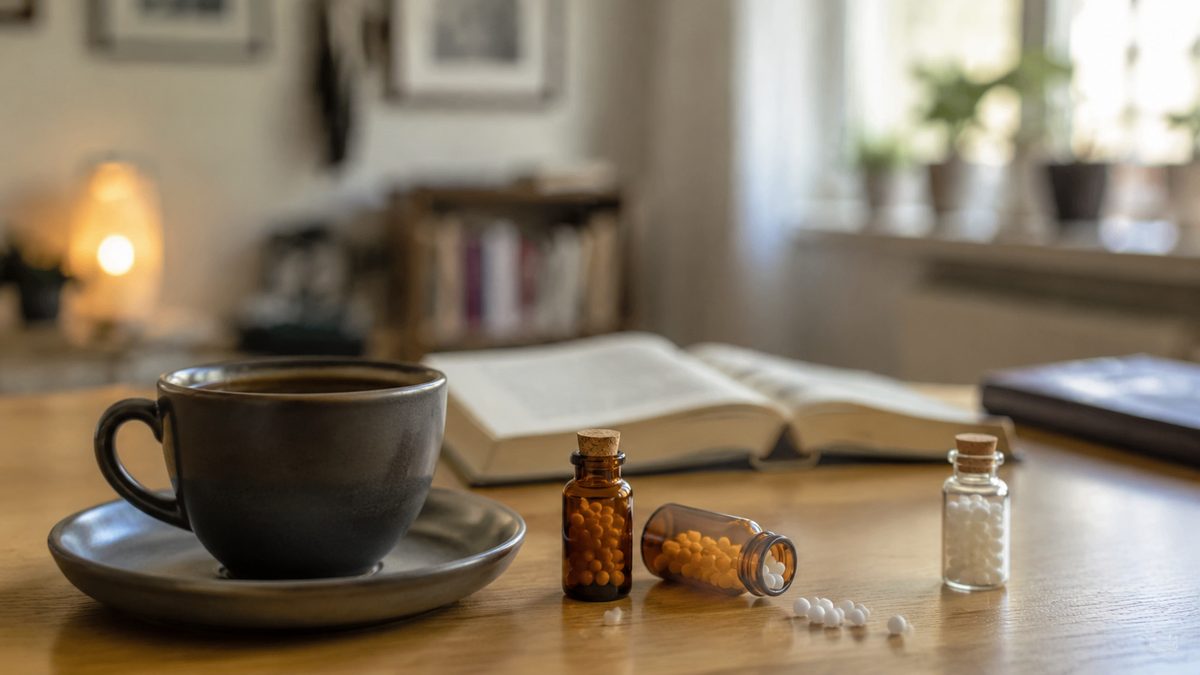
Coffee blocks homeopathic remedies. That's the short version, and it's what most homeopaths will tell you on your first visit. But the fuller answer is more interesting, and more practical, than a blanket ban.
This article explains what's actually happening, which substances cause real problems, and what the evidence from clinical practice looks like. If you've been told to avoid coffee and want to know why, or if you're wondering whether your morning cup is undoing your treatment, read on.
Does Coffee Actually Affect Homeopathy?
Yes, coffee can interfere with homeopathic treatment. The reason goes back to Samuel Hahnemann himself, the founder of homeopathy, who identified coffee as one of the primary antidoting substances. An antidote, in homeopathic terms, is anything that cancels out or disrupts the action of a remedy.
Hahnemann observed in clinical practice that patients who drank coffee often stopped responding to their remedies. He documented this repeatedly. His clinical records showed that when the same patient resumed coffee, improvement stalled. When they stopped, it returned.
This isn't just historical lore. In my experience working with people new to homeopathy, the ones who struggle to see results are often the ones who kept drinking coffee or resumed it too quickly. homeopathic treatment
One of my clients tried Natrum muriaticum for grief-related insomnia and reported zero improvement after two weeks. When I asked about her routine, she was drinking two strong espressos a day. We held the remedy, she reduced her coffee intake, and within a week the remedy began to work.
I know this is anecdotal, and I say that clearly. But it lines up with what Hahnemann wrote and what many practitioners observe.
What Is Actually Happening When Coffee Antidotes a Remedy?
Homeopathic remedies work on what practitioners call the vital force, the body's self-regulating intelligence. The remedy acts as a signal. Coffee, particularly because of its strong stimulant effect on the nervous system, is thought to create enough biological noise to cancel that signal.
Caffeine is powerful. It stimulates the central nervous system, raises cortisol, affects sleep architecture, and alters digestive function. From a homeopathic standpoint, anything with that level of physiological impact has the potential to override a remedy's subtle action.
There's also a specific connection worth knowing: one homeopathic remedy is actually made from coffee. It's called Coffea cruda, prepared from raw, unroasted coffee beans. It treats hypersensitivity, mental overactivity, and sleeplessness caused by a racing mind.
The very substance that antidotes remedies is also, in homeopathic form, a remedy itself. That's not a contradiction. It's exactly how homeopathy works: a substance that causes symptoms in large doses is used in potentised form to treat those same symptoms.
What Should Be Avoided in Homeopathy?
Coffee gets the most attention, but it's not the only concern. Here's what most homeopaths will ask you to limit or avoid during treatment. Coffee gets the most attention, but understanding other foods that interact with homeopathic remedies is equally important.
Strong Aromatic Substances
Camphor is considered the most powerful antidote in homeopathy. It appears in chest rubs like Vicks VapoRub and in some muscle creams. Many homeopaths will ask you to switch to non-camphor alternatives during treatment.
Menthol and eucalyptus in high concentrations are also flagged by some practitioners. Peppermint is another one. Strong peppermint toothpaste or peppermint tea, especially taken close to when you take a remedy, is something many homeopaths ask their patients to swap out.
I've switched clients to mild, spearmint-based toothpaste and it's made a noticeable difference in how consistently they respond.
Strong Recreational or Medicinal Drugs
Recreational stimulants, heavy alcohol use, and some pharmaceutical medications can interfere. This doesn't mean you stop prescribed medication. It means your homeopath needs to know what you're taking so they can account for it in treatment.
Homeopathy works alongside conventional medicine, but the practitioner needs the full picture.
Handling Remedies Incorrectly
Strong light, heat, and strong electromagnetic fields can degrade remedies. Keep them away from direct sunlight and don't store them near phones or microwaves. Touch them as little as possible. Tip them into the cap and from the cap onto your tongue.
Food and Drink Close to Dosing
Take remedies on a clean mouth, at least 15 to 20 minutes away from food, drink, and tooth brushing. The reason is practical: you want the remedy absorbed through the mucous membranes without interference from anything else.
Can I Drink Milk While Taking Homeopathy Medicine?
Milk is generally fine. It doesn't have the antidoting reputation that coffee, camphor, or peppermint carry. Most homeopaths won't ask you to avoid milk entirely.
That said, avoid drinking milk right before or right after taking a remedy, for the same reason you'd avoid any food or drink close to dosing. Give it 15 minutes either side. Beyond that, milk isn't considered a problem in standard homeopathic practice.
Some practitioners working with highly sensitive patients or very high potencies may suggest a stricter protocol, but for most people in most situations, milk isn't an issue.
The Part Most Articles Get Wrong
Here are three things that get misrepresented or skipped in most coffee-and-homeopathy articles.
1. Not Every Homeopath Agrees on Coffee
Some contemporary homeopaths, especially those trained in more recent schools of thought, take a more measured view. They argue that Hahnemann's concern was with large quantities of strong coffee, not with a single weak cup.
They point out that in countries where coffee drinking is near-universal, classical homeopathy still produces results. What I've seen in practice is that it depends on the person and the remedy.
Someone taking a deep constitutional remedy, where the homeopath is trying to stimulate a long-term change in chronic illness, probably needs to be stricter. Someone taking an acute remedy for a cold or fever can often be more relaxed about it. Context matters.
2. Stress Antidotes Remedies Too
This one almost never gets mentioned. Hahnemann listed strong emotional disturbances as antidoting agents. Severe fright, grief, anger, or persistent stress can disrupt a remedy's action just as coffee can.
I've seen clients whose remedy stopped working during a period of intense stress at work, then resumed when things settled. The remedy hadn't changed. Their internal state had. This tells us something important: homeopathy isn't a pill you take and forget. The conditions around taking it matter.
3. The Coffee Ban Can Become a Barrier to Treatment
One of my clients came to me having been told by a previous practitioner that she had to give up coffee completely before treatment could begin. She drank two cups a day and wasn't willing to stop. So she never started treatment. That's a problem.
A more useful approach is to reduce intake, avoid coffee close to dosing, and see what happens. For many people, that's enough. Treating the coffee rule as absolute creates an obstacle that stops people from accessing care they might genuinely benefit from.
How to Protect Your Remedy's Action
If you want the best chance of your remedy working, here's what actually makes a difference.
- Take remedies at least 30 minutes away from coffee or strong herbal teas.
- Swap camphor-containing products for alternatives during treatment.
- Use a mild toothpaste without strong menthol or eucalyptus.
- Store remedies in a cool, dark place, away from electronics.
- Take remedies on a clean mouth. Nothing for 15 to 20 minutes before or after.
- Tell your homeopath about all medications, supplements, and major lifestyle factors.
These steps cost very little and significantly improve the likelihood that treatment will work.
FAQ
Can I drink decaf coffee during homeopathic treatment?
Most homeopaths say decaf is safer than regular coffee, but it's not completely neutral. Decaf still contains trace caffeine and has a strong aromatic profile. Some practitioners are fine with it. Others prefer patients avoid it.
Check with your homeopath, and take it well away from remedy doses.
How long after taking a remedy can I have coffee?
Wait at least 30 minutes. Some homeopaths say one hour for higher potencies. The goal is to let the remedy be fully absorbed through the mucous membranes before introducing anything that could interfere.
What is Coffea cruda used for in homeopathy?
Coffea cruda is a remedy made from raw coffee. It treats sleeplessness caused by mental overactivity, hypersensitivity to pain, and a mind that won't stop. It's commonly used for people who lie awake with thoughts racing, feel everything too intensely, or are overstimulated by excitement or joy.
Does green tea antidote homeopathic remedies?
Green tea contains caffeine and some aromatic compounds. It's generally considered less problematic than coffee, but some sensitive patients do react to it. If your treatment isn't progressing as expected, green tea is worth examining.
Can children have their remedies if they just ate?
Try to wait 15 minutes after a meal or drink. For acute situations where a child is upset or unwell, a slight gap is still better than nothing. Do your best with the timing, and don't skip the remedy because the timing wasn't perfect.
Why does camphor antidote more strongly than coffee?
Camphor is considered the most universally antidoting substance in homeopathy. It disrupts the vital force so strongly that Hahnemann used Camphor as an antidote to poisoning by other substances. Its action is broad and powerful.
Coffee is a concern, but camphor is the one that most experienced homeopaths treat as a hard rule.
What to Do Now
If you're starting homeopathic treatment, do these things before your first remedy:
- Move coffee to earlier in the day and keep it away from when you'll be dosing.
- Check your bathroom cabinet for camphor products and replace them.
- Switch to a mild toothpaste without strong menthol.
- Tell your homeopath everything you're taking, including supplements and over-the-counter medicines.
These four steps set up the conditions for your remedy to work. The remedy does the rest.
Continue with the Homeopathic remedies and practice collection.

What Are 10 Signs That My Body Is Healthy?
Read article →
How to Tell if Your Body Is Unhealthy?
Read article →
What Are Signs of Poor Function Health?
Read article →
What Are Some Weird Signs That My Body Is Healthy?
Read article →
What Are Five Signs That I Might Not Be Healthy?
Read article →